


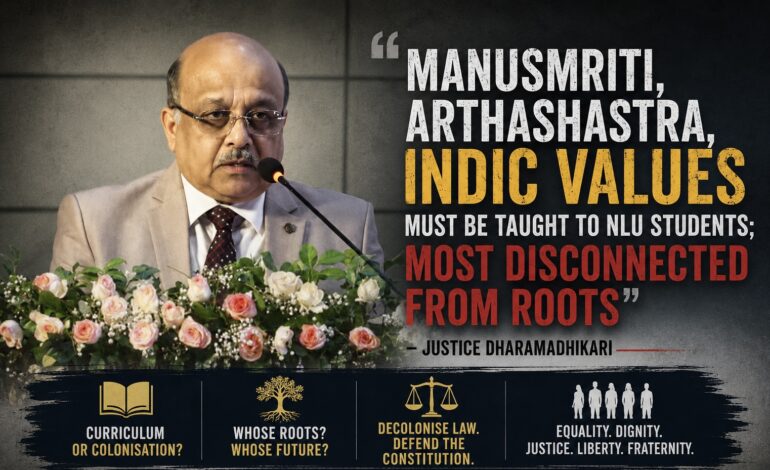
“Manusmriti, Artashasthra, Indic values must be taught to NLU students; Most Disconnected from Roots”
– Justice Dharamadhikari
Justice Dharmadhikari’s recent assertion that the curriculum of National Law Universities (NLUs) must be tied to the “roots” of the Manusmriti and Arthashastra is a profound discursive move. It is not merely a pedagogical suggestion; it is a strategic deployment of power aimed at re-centering Brahmanical logic within the secular framework of Indian law. To grasp the gravity of this statement, we must deconstruct it as an attempt to ensure the subaltern remains a perpetual student of their own oppression, while providing the dominant class with a renewed, “authentic” justification for their embedded superiority.
I. The Orientalist Construction of “Roots”
Edward Said’s Orientalism holds that power justifies itself by constructing a “truth” about the Other through an organised “geographical and historical imagination.” Justice Dharmadhikari advanced a form of pirated Orientalism by defining “Indic values” through a narrow, Sanskrit eye. Just as Europeans defined “The Orient” as mystical and stagnant, the Judge defines “The Indic” as synonymous with Brahmanical texts. He creates an imaginary historical “Golden Age” rooted in the Manusmriti, ignoring the actual material history of conflict and diversity in India. This is how the hegemony is constructed epistemically.
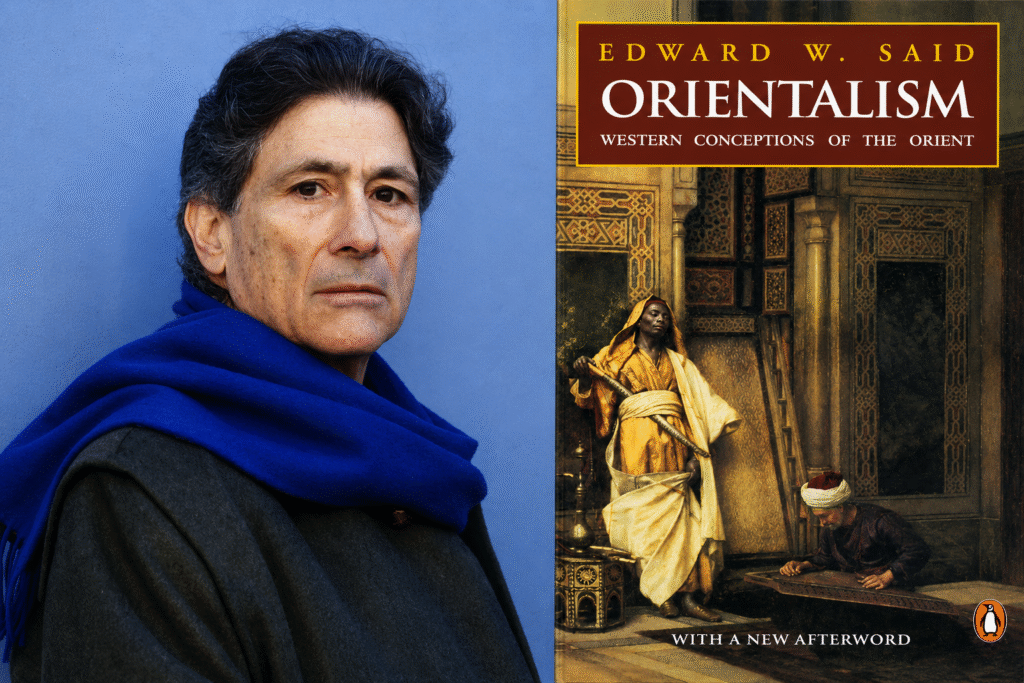
Said noted that the Orientalist scholar claims to know the “Other” better than the Other knows themselves. Here, the Judge positions himself as the authority on “roots,” telling the subaltern student that their current identity (based on the Constitution) is a “Westernised” error that only his “Indic” knowledge can fix.
Foucault argued that “Truth” isn’t absolute; it’s whatever a society’s discourse accepts as true. By tying the NLU curriculum to the Manusmriti, the Judge is attempting to shift the Regime of Truth.
If the Manusmriti becomes the “root,” then legal “merit” is no longer measured by one’s understanding of egalitarianism, but by one’s proficiency in hierarchical scriptures.
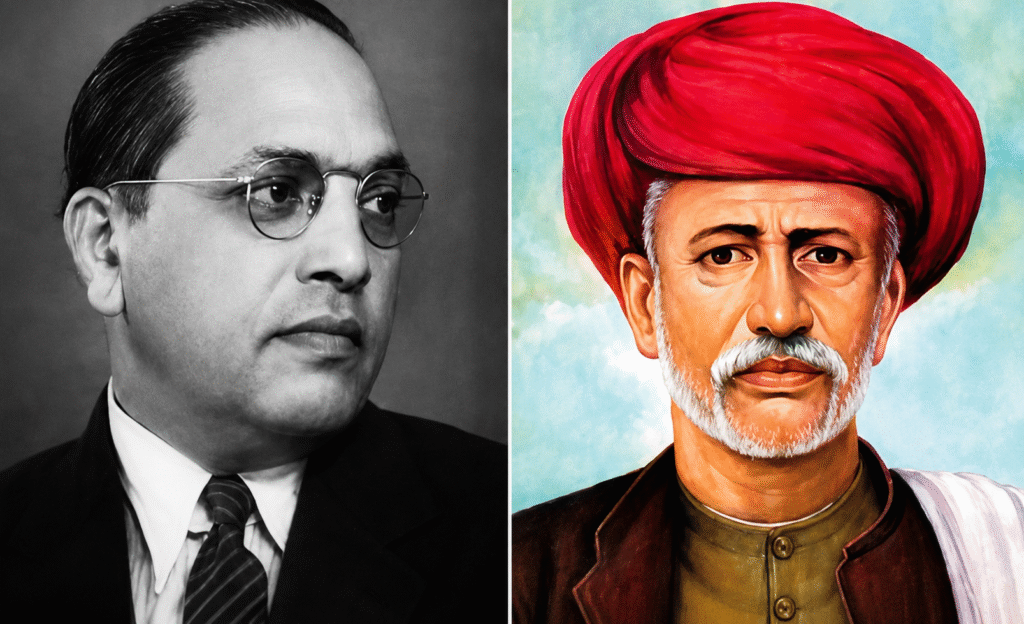
Knowledge of the Manusmriti becomes a prerequisite for exercising power in the courtroom. By making these texts part of the curriculum, the state doesn’t need to force compliance; students will self-regulate, studying the very texts that dehumanise them in order to pass exams and gain judicial clerkships. The Judge’s discourse attempts to keep the “subjugated Knowledge of Ambedkar, Phule, secular and egalitarian constitution hidden under the weight of the Manusmriti.
In this discourse, the NLU student is cast as the “disconnected Other”, a colonised mind that has lost its way in the Constitution’s “Western” logic. To “save” this student, the Judge proposes a return to “roots.” However, as Edward Said argued, the definition of the “root” is always an exercise of power. By selecting the Manusmriti, a text that codified the legal dehumanisation of Shudras and women, as the typical Indian root, the Judge commits two simultaneous erasures:
- The Erasure of Subaltern History: He silences India’s diverse, egalitarian traditions, including the Buddhist Dhamma, the Charvaka materialists, and the Bhakti radicals such as Kabir and Ravidas, who explicitly rejected the Manusmriti.
- The Sanctification of Hierarchy: He presents a text of social apartheid as a source of cultural pride. This is the hallmark of Said’s “hegemonic discourse”: it demands that the marginalised accept the oppressor’s history and knowledge as their own.
II. The Conflict of Moralities: Ambedkar’s Critique
While Said provides the framework for understanding how discourse is constructed, B.R. Ambedkar offers an analysis of its social impact. In Annihilation of Caste, Ambedkar argued that the Hindu social order rests on “Graded Inequality.” The Manusmriti is the legislative blueprint for this inequality.
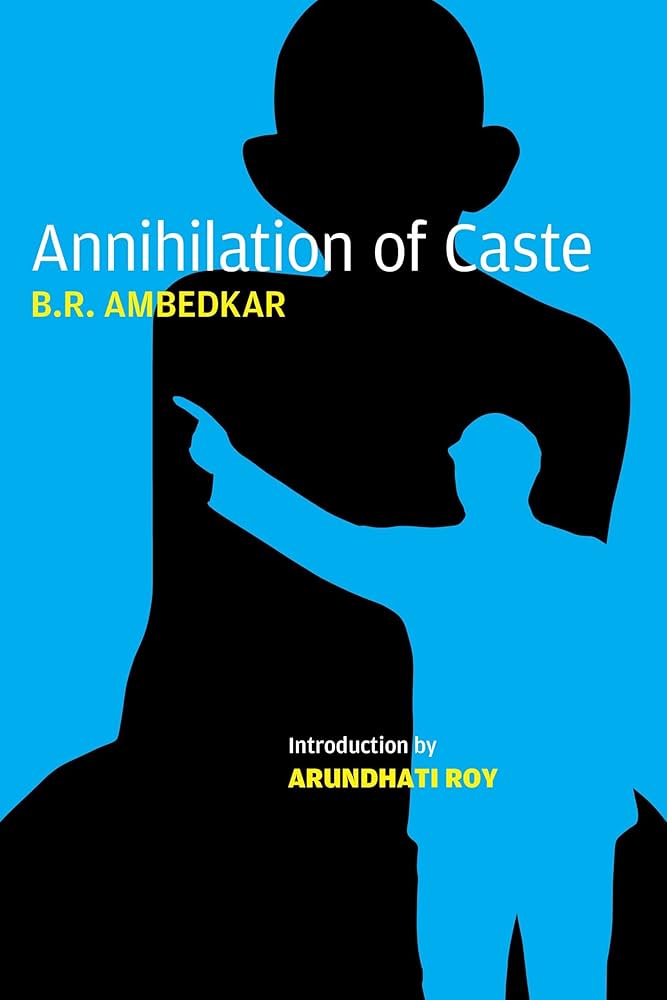
For Ambedkar, the Indian Constitution was not merely a legal document but a revolutionary break from the Manusmriti. Justice Dharmadhikari’s statement seeks to heal this rupture by folding the Constitution back into the very tradition it was meant to dismantle.
III. The Problem of “Traditional Public Morality”
Ambedkar warned that “Constitutional Morality” is not a natural sentiment in India; it must be cultivated. When a member of the higher judiciary advocates the Manusmriti, he effectively champions “Public Morality” (Caste morality) over the Constitution. This creates a dangerous interpretive environment:
If a judge regards the Manusmriti as a “root” of judicial wisdom, how will they interpret cases involving caste atrocities, manual scavenging, or Dalits’ land rights and minority rights?
The “merit” of a law student is reframed from their ability to defend human rights and the dignity of life to their ability to conform to “cultural compliance” with the dominant cultural codes, Brahmanical texts and discourse.
IV. Epistemic Violence and the “White Mask”
Forcing subaltern students to study the Manusmriti as their “legal heritage” inflicts psychological trauma. Frantz Fanon argued that colonised people are compelled to wear a “White Mask” to be recognised as human by the master. In the Indian legal profession, subaltern students are often compelled to wear a “Brahmanical Mask.” They must master the language, etiquette, and now the “scriptures” of their oppressors to be deemed “meritorious.” Justice Dharmadhikari’s proposal formalises this requirement. It suggests that a Dalit student’s “disconnection” is a flaw, whereas, in reality, their disconnection from the Manusmriti is a prerequisite for their survival as a free citizen.
The statement reinforces the idea that merit is a social construct designed to protect power. The judge characterises students as “disconnected.” In this view, “merit” is no longer about one’s grasp of constitutional law or human rights, but about one’s proximity to the “Indic” (Brahmanical) canon. By centring ancient Sanskritic texts in modern legal education, the judiciary creates a new “hidden merit.” Students from dominant-caste backgrounds, who possess social capital and familiarity with these texts, will naturally appear more “connected” and “meritorious.” Meanwhile, the subaltern student is cast as “rootless.” This ensures that the upper echelons of the judiciary remain a “closed loop,” admitting only those who “respect” the traditional hierarchy. This judicial statement confirms that the “plight of the subaltern” remains pathetic not for lack of legal protection, but because the interpretive power over those protections rests in the hands of an elite that still views the Manusmriti as a source of wisdom rather than a document of historic crime.
V. The Path Forward: Decolonising the “Indic”
A truly decolonised Indian legal education would not seek “roots” in a text that Ambedkar publicly burned. Instead, it would find its roots in:
The Charvaka and Buddhist traditions of empirical evidence and human equality. The Phule-Ambedkarite movement, which provided the first true critiques of Indian social structure. The Constitution itself, which was a radical break from the very “Indic values” the Judge now seeks to resurrect.
The “Hidden Agenda” in Justice Dharmadhikari’s statement is the eternalisation of the subaltern as a student, never a master. By insisting that subaltern lawyers return to “roots” defined by their oppressors, the system ensures they are always in a position of “learning” or “correcting” their “disconnected” state. They are never allowed to author the law; they are only allowed to be its subjects, “re-educated” into the Brahmanical fold.
This is why Ambedkar burned the Manusmriti. He understood that we cannot build a “New India” on a “Root” meant to be a shackle.
The Constitution was meant to be the new root, but as the judge’s statement shows, the old guard is desperately trying to transplant the tree back into the soil of hierarchy.
VI. Institutional gatekeeping: Indian and American models
The Indian and U.S. judicial systems represent two distinct models of institutional gatekeeping. While the U.S. uses a Political-Executive model (Presidential nomination with Senate confirmation), India uses a Judicial-Oligarchic model (the “Collegium”), in which sitting judges appoint their successors.
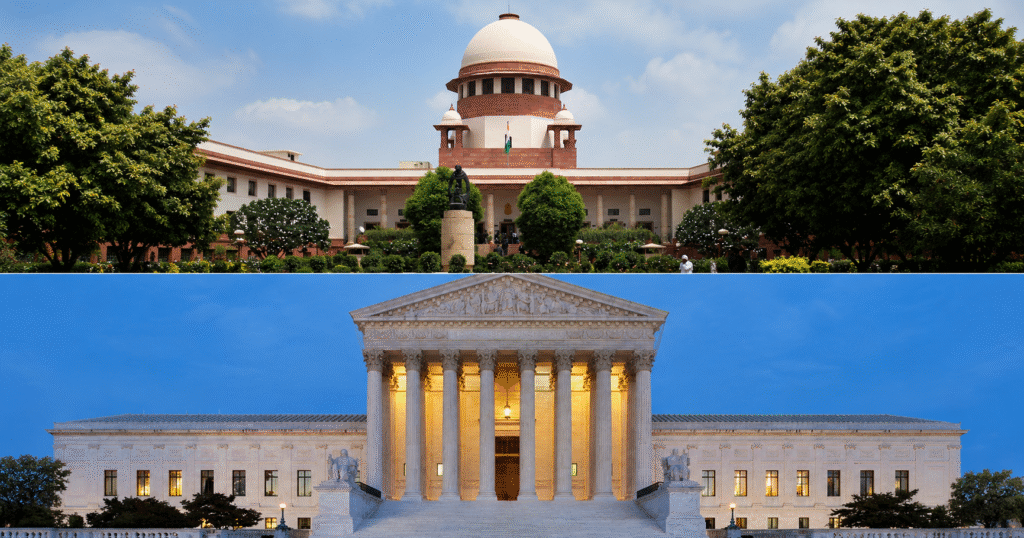
The results for marginalised identities, caste in India and race in the U.S., reveal how these structures either facilitate or block social representation.
The most striking difference is how “representation” is treated. In the U.S., judicial appointments are viewed as a means of political and social legacy, often prompting deliberate efforts to diversify the bench. In India, the Collegium prioritises “merit” and “seniority”, terms that often mask inherited social capital.
Data show that 33% of US Supreme Court judges are people of colour, whereas in the Indian Supreme Court, SC/ST representation is well below 10% (2 of 34). Data from 2018–2024 showed that nearly 79% of High Court appointees were from “General” (dominant) castes, despite those groups constituting a minority of the population.
In the U.S., a growing legal theory holds that a justice’s lived experience (as a minority, a woman, or an immigrant) enhances the “epistemic quality” of the court. In India, this is often dismissed as “identity politics.” The Indian bench remains socially homogeneous, critics argue, producing a “Brahmanical gaze” in cases involving land rights, tribal displacement, and caste atrocities.
VII. The Hidden Agenda: Eternalising the Subject
The hidden agenda in the Judge’s remarks is the eternalisation of the subaltern as a student, never a master. By insisting on these “roots,” the dominant class reinforces its own superiority as the “natural” heirs of Indian wisdom. The marginalised are kept busy “connecting” with a past that denies their humanity, ensuring they never have the institutional space to claim Interpretive Power.
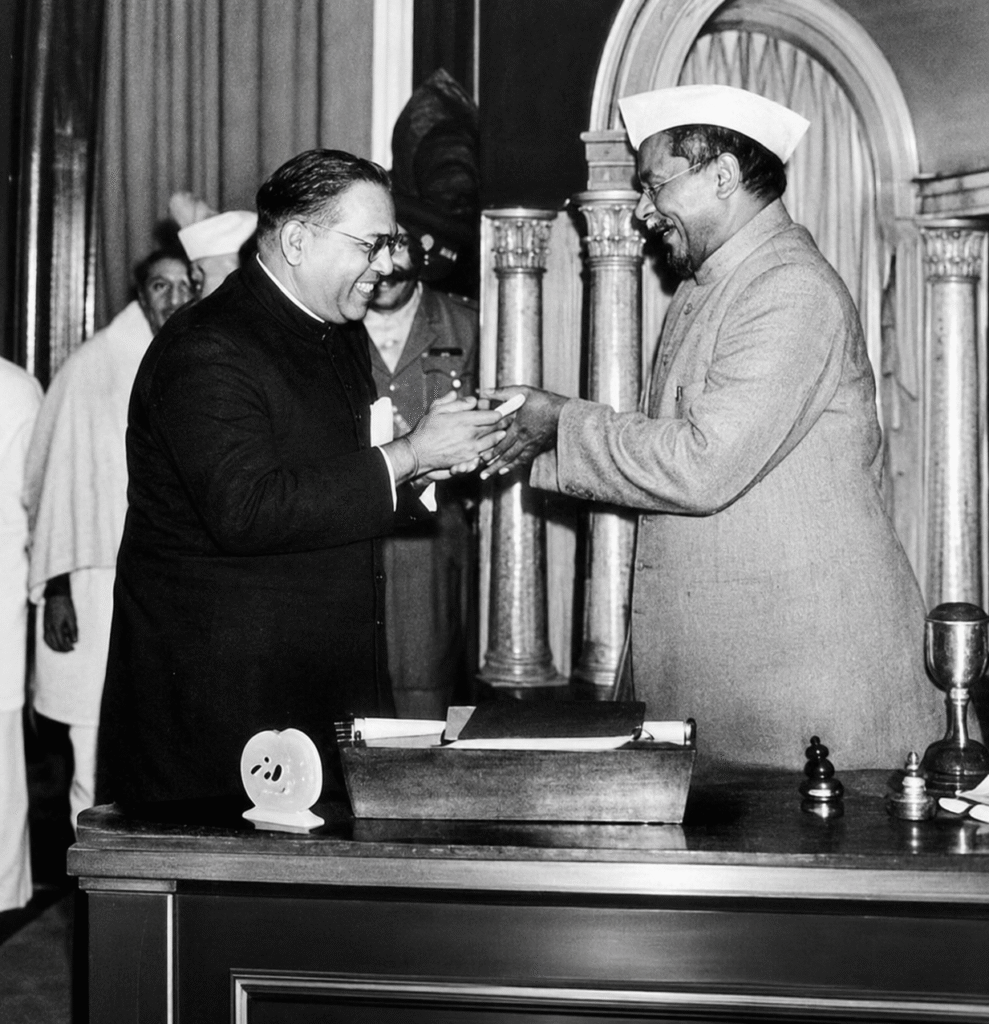
November 26, 1949
Dr B.R. Ambedkar designed the Indian Constitution as a radical break with the past. He understood that we cannot build a new republic on a root that is a shackle. Resistance, therefore, must begin with refusing to be “re-connected” to a past designed to be a prison. The “roots” of modern Indian law lie not in ancient codes but in the struggle for equality that the Manusmriti sought to crush.








The AIDEM� raises important questions about constitutional values, social justice, and the continuing influence of hierarchical thinking in society. The article thoughtfully connects democracy, equality, and Dr. Ambedkar’s vision of constitutional morality in today’s context. A powerful and intellectually engaging read.