



I did not know that a little piece of fried fish could give me a new identity. Before I narrate this tale of culinary confusion, let me make one thing absolutely clear: I am now, for all practical purposes, a vegetarian. Yes, I have the occasional fling with a fish, but that’s about it. I may not qualify for the title of “pure vegetarian,” but neither do I deserve to be branded a hard-core non-vegetarian.
Given a choice, I will happily choose rice and dal fry, cooked North Indian style, with a side of Baingan Bharta. Or, if I’m in a nostalgic Kerala mood, rice and sambar accompanied by avial and thoran. Hyderabadi biryani and Arabic-style Kuzhimanthi? Thank you, but no thank you. My palate doesn’t respond to such invitations.
Still, I do not believe in dying for the sake of vegetarianism. If one day I am marooned on an island where fish leap into the boat uninvited, I will not faint in horror. I will fry one, say grace, and eat it with philosophical detachment.
When I joined The Tribune, Chandigarh, I was told there existed a rule that non-vegetarian food should not be consumed on the premises. I didn’t check the rulebook because I had the rare privilege of going home for lunch. The canteen, I was told, didn’t serve omelettes or anything remotely ovoid.
At home, my wife rules the kitchen with quiet authority. She cooks with the precision of a dietician and the compassion of a grandmother. She knows exactly what her sons, grandsons, and daughter-in-law want — and what I shouldn’t have. I stopped going to the fish market long ago. I now order fish online — a modern concession to old cravings.
Last weekend, I planned a trip to Sihora in Madhya Pradesh. My wife, ever the planner, told me to “order fish online before you leave.” I obediently ordered a large, boneless, skinless piece of neymeen (kingfish). I didn’t look at the price. After all, it was for her — and you don’t check the price tag when you’re trying to buy affection.
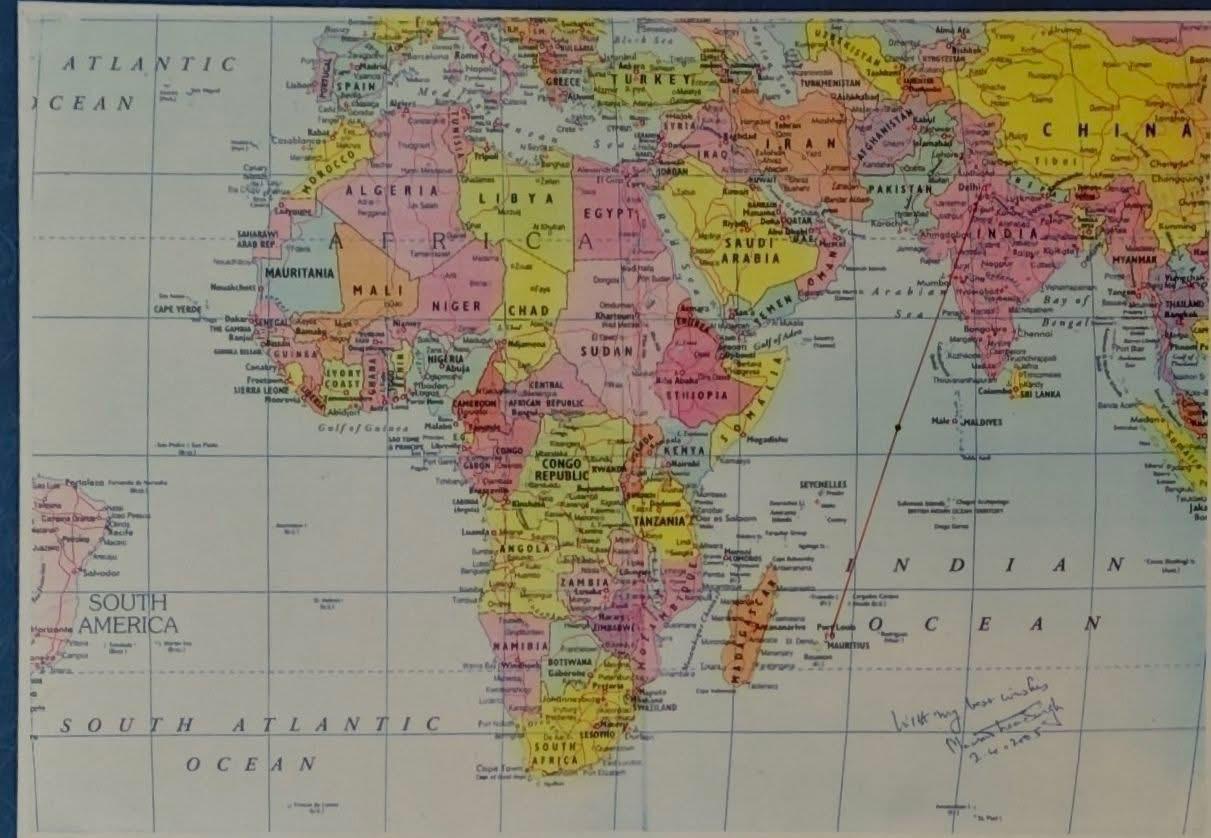
When the order arrived, she stared at the bill as though I had bought a diamond ring or imported caviar from the Caspian Sea, which I first tasted when I accompanied Prime Minister Manmohan Singh on a visit to Mauritius.
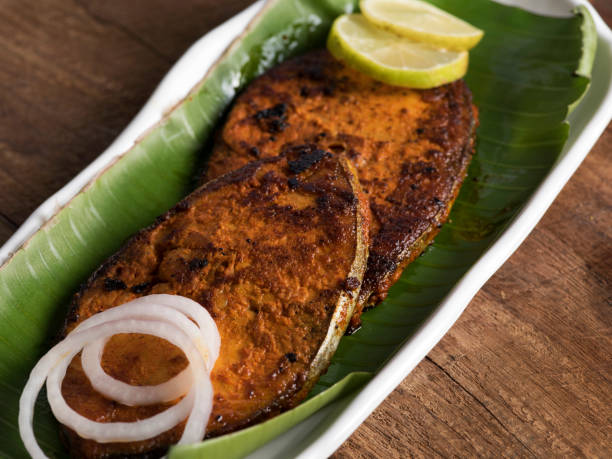
Anyway, since my train didn’t have a catering service, she prepared dinner for me — rice with moru curry and two vegetable dishes. Then, almost shyly, she asked, “Shall I pack a small piece of fried fish?” I nodded. I knew what a rare commodity it was. It went into my tiffin box like a precious relic.
Now comes the interesting part.
My fellow passengers were a cheerful Sindhi family — a father and his twin children, a boy and a girl, both in their early twenties. Across the aisle sat a Jain girl in her late twenties who worked for a Swiss-based company in Delhi. All were headed to Jabalpur.
The Sindhi gentleman, clearly a veteran traveller, knew every railway caterer between Agra and Gwalior. He ordered snacks from one and dinner from another, as if this train journey were a gastronomic pilgrimage. The Jain girl, meanwhile, spoke at length about the horrors of attending a Syrian Christian wedding in Kerala where even the air smelled of seafood. She had survived on rice and sambar, like a Jain Robinson Crusoe.
When dinnertime arrived, the compartment turned into a buffet of aromas — pizza, pulao, and parantha perfume all mingling in the air. I quietly opened my tiffin, released the fragrance of moru curry, and, yes, my sacred piece of fried fish.
I ate in peace, oblivious to the social storm that was about to follow. After the meal, the Sindhi gentleman looked at me thoughtfully and asked, “Are you a Muslim?”
I was taken aback. “No,” I said. “I’m a Christian.”
His eyes widened in mild surprise, perhaps even disappointment.
For a moment, I wondered what had triggered that assumption. Was it my salt-and-pepper moustache? I remembered my brother-in-law Bobby who had once grown a majestic beard, only to be mistaken repeatedly for a Muslim. He shaved it off in exasperation, declaring, “It’s easier to lose a beard than an identity.”
Trying to lighten the mood, I asked the Sindhi gentleman if he had ever visited Sindh, the land of his ancestors. He bristled immediately. “Why do you ask?” he shot back, as though I had accused him of crossing the border without a visa.
I explained that I had actually visited Sindh in Pakistan once, and that calmed him. His frown melted into nostalgia as he began talking about his grandfather’s migration after Partition.
Yet, I couldn’t shake off his question: why did he think I was a Muslim?
And then, it hit me — the fish!
That single, innocent piece of fried kingfish, golden and fragrant, had become the smoking gun of identity politics in our compartment.

Perhaps he thought it was beef fry — the horror of horrors! Maybe the way I handled it — reverently, carefully, with visible delight — gave the impression of ritual devotion. Or perhaps, in our deeply polarised food culture, eating anything that once had a heartbeat automatically changes your religion.
What an irony! For the early Christians, the fish — not the cross — was the true symbol of their faith. It was their secret sign of fellowship, drawn on the sand to identify one another in times of persecution. But here I was, nearly two millennia later, eating a piece of fried fish that made someone forget my faith altogether!
What the ancient symbol once unified, my railway dinner divided.
As I packed my tiffin box, I looked at the empty plastic container that had once held my neymeen. I whispered a quiet eulogy to the fish that had not only satisfied my hunger but also briefly transformed me into a member of another faith.
Next time, I told myself, I’ll carry curd rice and pickles. Less symbolic. Less confusing.
And if anyone asks about my religion again, I’ll simply say, “It depends — fried or curried?”








Should you be so finicky about your identity. A mixed race seems exotic to me😊