Dissecting the SIR Ploy and Its Portents for India


PART III — From Voter Deletion to Redefining the Nation
At stake in struggles over voting rights is never just representation, but the deeper question every modern nation must answer: who constitutes “the people.” Constitutions are not merely legal documents; they are moral settlements about belonging. When the meaning of citizenship begins to narrow, the identity of the nation itself begins to change — often without a formal declaration, but with lasting consequences.
This is the third and final part of the full transcript of Dr. Parakala Prabhakar’s CGS Memorial Discourse at Thrissur on 21.01.2026

Was there anyone here who was not a voter in 2002–2003?
Let me ask you something. At any point did you have to go to a government office and prove that you were a citizen of India in order to remain on the voters’ list? Did you have to submit documents to establish your eligibility as a voter? Did that ever happen to you?
It did not happen to me. I suspect it did not happen to most of you either.
So this is new. This has not happened before.
This is not about dead people. It is not about foreigners. It is not about those who are absent. It is not about those who have shifted. It is not about some routine purification of electoral rolls.
Then what is this about?
Let us look at the second phase of SIR. This process is now underway in nine states and three Union Territories. Take Uttar Pradesh. The published figures show that 2.89 crore people have been deleted. That is 18.7% of the electorate of Uttar Pradesh. Who are these people?
In Gujarat, the figure is 73 lakh people, about 14.5%. In Tamil Nadu, 97.37 lakh people, which is 15.9%. In West Bengal, 54 lakh, around 7.59%. Rajasthan, 42 lakh, roughly 7.65%. Madhya Pradesh, 42.7 lakh, about 7.45%. Chhattisgarh, 27 lakh, which is 12.88%. Kerala, 24.8 lakh, again about 12.88%. In the Andaman and Nicobar Islands, though the population is small, 20.62% of voters are being deleted. Puducherry, 10.12%. Lakshadweep, 2.4%.
So, across these regions, on average, roughly 14% of the electorate is being cut down.
Why? Who are these people? Is this administrative cleaning? It is not clean. It has nothing to do with S-A-D-D. Something else is happening here.
In total, across these nine states and three Union Territories, about 6.5 crore people are facing disenfranchisement.
Now put that number in perspective. For us in India, 6.5 crore may sound like just another statistic. But there are about 175 independent sovereign countries in the world whose entire population is less than 6.5 crore. In effect, entire countries’ worth of people are being removed from the voter rolls.
This is a massive exercise in disenfranchisement. Universal adult franchise is in peril. There is no doubt about that.
In fact, 85 to 90 percent of countries in the world have populations of 6.5 crore or less. That is the scale of what the Election Commission of India is enabling.
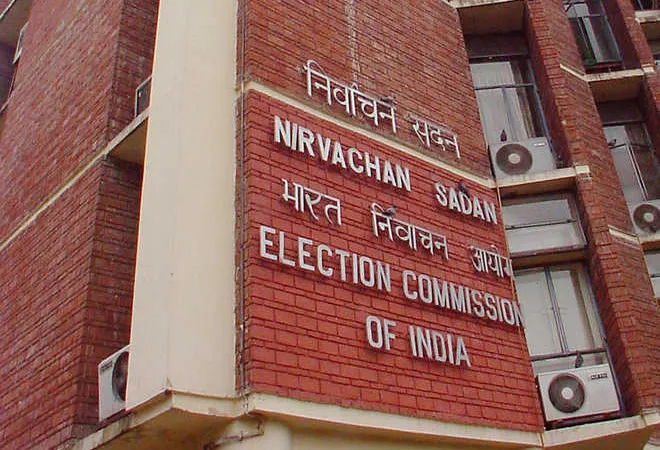
When I go around and speak — here, or in interviews online — and say that the Election Commission is doing this, a friend once told me, “Why are you worried about the Election Commission? Don’t worry. The Bharatiya Janata Party has different wings for different tasks. To mobilize women, there is the Mahila Morcha. For farmers, the Kisan Morcha. For the youth, the Yuva Morcha. And to conduct elections and manage outcomes, there is the Election Morcha — the Election Commission of India.”
He said it, not I. I do not mention his name because I do not wish to endanger him. But the remark stays with you.
Many intellectuals, activists, political parties, and leaders are treating this as merely an election-related issue. I want to submit something deeper. Please think about this carefully. This is not just an election issue. It is an effort to fundamentally alter the character of the Indian nation.
This is not about who wins or loses one election. That is secondary. This is about something much larger and much deeper.
When nation-states began to emerge in the modern world — formally after the Treaty of Westphalia in 1648, though the process began earlier in the 12th and 13th centuries — societies everywhere faced a foundational question: what is a nation?
Yes, you build a state. You establish a legislature, an executive, and a judiciary. You decide how power is distributed, who gets elected, and how they are held accountable. That is the state structure.
But then comes the second and deeper question: who belongs to that state? Who is the nation?
Across Europe, the Americas, Africa, and Asia, societies answered that question in exclusionary terms. The nation was defined as people who shared the same language, the same religion, the same culture, and the same race. Those who did not fit that definition were outsiders.
Outsiders could be expelled. If expulsion was not possible, they could be eliminated. If elimination was not feasible, they could be tolerated — but without full rights, without citizenship, without political belonging.
They might be allowed to live there, work there, shop there, move about — but they were not part of the political community.
India did something unprecedented.
When India gained independence, it did not define the nation in terms of religion, language, race, or culture. Our founding parents did not debate who belonged and who did not. They took a radical step. They said: whoever lives within the territory of India is a citizen of India with full rights.
That is unique. The American Declaration of Independence spoke of lofty equality, but Black citizens had to wait nearly two centuries for full voting rights. India did not wait. Men and women, rich and poor, educated and uneducated — all were given equal political voice from the very beginning.
That was the universal adult franchise in India. Nowhere else did it happen in that way.
Today, however, there are voices saying that India belongs only to one religion. That India is a Hindu nation — a Hindu Rashtra. That others have no equal claim here. That minorities can be attacked, marginalised, lynched, or pushed out.
Notice something unprecedented: for the first time in independent India, the Union Cabinet has no Muslim member, even though Muslims are the largest minority in the country. Not only that, the ruling party has no Muslim member in its parliamentary ranks in either House. In states where it has ruled for a long time — Gujarat, Uttar Pradesh — it does not even field Muslim candidates.
The message is clear: “You are not wanted.”
What cannot be done openly — what cannot be done through physical elimination — can be done politically.
You kill citizenship by killing franchise. If you strip people of the vote, you strip them of meaningful citizenship.
Imagine an entire colony where none of the residents has a vote. Will any politician come there with folded hands seeking support? Will they ensure electricity, water, sanitation, garbage collection? Political power determines who is seen and who is ignored.
If phase after phase of SIR proceeds — second phase, third phase, further phases — and crores are deleted, leaving only people of a particular religion, culture, or language on the rolls, then India need not formally declare itself a theocratic state. It will have become one in practice.
That is why I say SIR amounts to a form of peaceful political genocide.
This is not merely an electoral issue. It is not just the universal adult franchise that is in danger. What is in danger is the Republic itself — the idea of India, the core values embedded in the social compact we adopted in 1950 in the form of the Constitution of India.
That is what is under threat.
And that is why I came here — not only to honour the legacy of Kerala Shastra Sahitya Parishad and Prof. Sivasankaran, but to make an appeal.
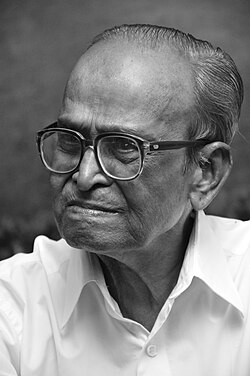
Do not imagine Kerala is immune. Do not think the Western Ghats will protect you. Ideological forces that seek to redefine India have been working here for decades. They have openly described this land as home to their “enemies” and spoken of cleansing.
What is happening through SIR is not a cleaning of electoral rolls; it is a political cleansing.
We have already seen electoral shifts here aided by artificial vote inflation and manipulation. SIR, combined with such electoral engineering, can alter outcomes even in states that consider themselves politically resistant.
So my appeal is simple: those who can speak, speak. Those who can write, write. Those who can mobilize, mobilize. If you cannot lead, support those who do. If you cannot support materially, support morally. Encourage them. Stand with them.
For a hundred years, a disciplined ideological force has worked to reshape India. Where is the organized force to defend the Constitution and the core values of our public life?
We must build it. We do not have much time. If this slide is not arrested soon, reclaiming the idea of India may become impossible.
Please wake up. And help others wake up. Thank you.
Read parts 1 and 2 here.