


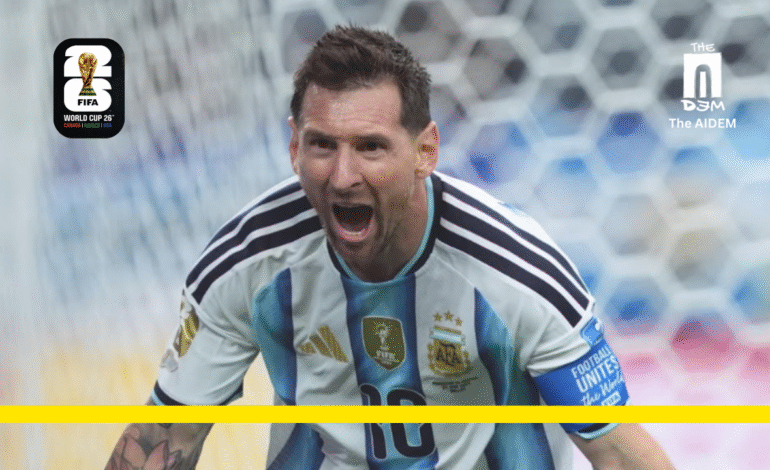
Lamine Yamal being hailed a genius “like Dalí or Michelangelo,” by his spanish team coach, Luis de la Fuente Castillo, also provided an inspiration to Wordsmith to connect their immortal artistry with the arabesque woven on soccer grounds by the greatest footballing wizard of all time
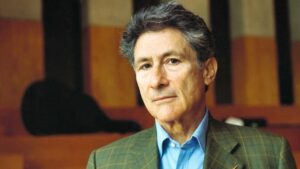
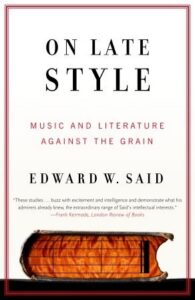
Towards the End of his activist life, the Palestinian American humanist flag bearer of the post-structuralist left in America, Edward Said became fascinated with the phenomenon of “late style”. His intellectual endeavour was to portray how an artist deals with the onset of age, and how inevitable decay imbues the creative individual with an awareness of one’s oeuvre and the universal reaction to that. In On Late Style – published posthumously in 2006 – he highlights those whose terminal output assume a holistic dimension, as though they “crown a lifetime of aesthetic endeavour,” as he discerns in Bach, Matisse, Rembrandt, and Wagner.
Continuing this critical investigation the London-based writer Nicholas Delbanco’s Lastingness: On the Art of Old Age {Hatchette, 2011} looks at both those who thrived in sunset years – Sophocles, Yeats, Monet, Liszt – and those who lapsed into silence, or lost their invention and vitality, into which deck he slots Saul Bellow, James Baldwin and Norman Mailer. In Malayalam Basheer, and M T Vasudevan Nair, without casting aspersions on their epochal literary legacy would be egregious examples; the obverse being Punathil Kunjabdulla and C V Sreeraman.
In football as in politics, most prolonged careers end in failure, as is the case with the Portuguese Ronaldo, the lesser compared to his Brazilian predecessor-namesake, the two-time world champion, the legendary Nazário. A counterpoint is the former’s infinitely greater contemporary Argentine, still thriving in the current FIFA World Cup 2026.
In footballing years, 39, makes Messi a veritable geriatric, and a near dinosaur. The 2022 World Cup was his seemingly final opus, a footballing version of Beethoven’s last string quartets or Monet’s lily ponds, inspiring messianic passion in his legion of fans. And what imparted a universal thrill at Argentina’s ultimate triumph into something worthy of adoration is how this victory was both the culmination of a fabled career and the embodiment of ‘late style’, a performance infused by a raw melancholic undercurrent of near closure.But, the world had reckoned without his genius to blossom even ‘later’ than the imagination of Said could conceive of, when on June 22, ‘Pulguita’ {little flea}, as he was christened by his older brothers in honour of his playing style in the dirt of Rosario, Argentina, became the topmost goal scorer in the history of the World Cup.
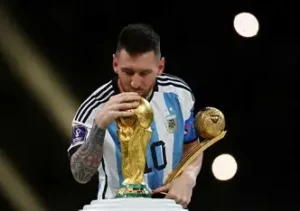
Of the eighteen he has scored so far there is one mind-boggling statistic that validates the above proposition. That is the insane fact that twelve of those goals on football’s greatest stage have come after he turned 35. To put that number in perspective, one should remember that the great Pelé scored the same number in his fabled World Cup career. It is greater than the entire output of the illustrious roster of those, who have netted ten or more goals in World Cups. The complete list reads: the Hungarian Sándor Kocsis and German Jürgen Klinsmann with 11 each; Helmut Rahn {Germany}, Gabriel Batistuta {Argentina}, Harry Kane and Gary Lineker {both English}, Teófilo Cubillas {Peru}, Thomas Müller {Germany}, and the Polish Grzegorz Lato with ten each to their credit.
In this later avatar, without the legs to carry him through a grueling ninety minutes of full time, Messi has become miserly with his movements. Rather than pretending to be a young man, he plays like an older one. He mooches through games, conserving himself for the moments that he can assert himself; sometimes walking three miles a game. He shows a remarkable awareness about how he might be able to parcel out his dwindling corporeal self of ageing bone, muscles, and tissue. He cleverly bides his time, making intelligent choices as when to unleash himself fully. In a world that fetishises youth, Messi epitomises late style, making a strong statement of why quite often it is the grandest.
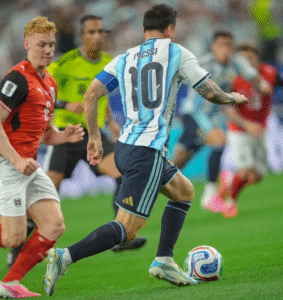
The manner of Messi pacing himself was best captured by José Luis Mendilibar, the astute former Eibar coach, who once said that the Argentine captain “parks” better than anyone. He looks as if he is not doing anything, as if he has stopped, but although he may have pulled over, he has not stopped. Instead, he is watching, calculating. The ’22 and the ’26 World Cups are testimony to that. According to the Spanish daily sports tabloid Marca, Mendilibar’s actual words of grudging admiration were: “This b…..d rests in the game. He knows when he has to participate, when to rest.”
There is a well-established phenomenon in elite sport called the “quiet eye”. It describes how those at the pinnacle of a sport keep a perfectly still gaze for a fraction longer than their less illustrious counterparts, fixing on a part of the ground, or ball, or bend on an F1 circuit, thus extracting more information before they execute. Evidence suggests that when people are under pressure, or panicking, the eyes become “noisy”, flitting around without focusing sufficiently. Messi of the ‘late style’ is the best exponent of the “quiet eye”. The rest of this tournament might yet prove further evidence of such soccer sorcery from the Maestro.








“This is much more than a football article; it is an exploration of creativity, aging, and reinvention. Messi’s later years remind us that greatness is not merely about physical brilliance but about discovering new ways to shape the game and inspire those who watch it.”