New Laws: Faster Justice, Fading Freedom


The new criminal laws promise efficiency, but retaining colonial-era acts keeps India’s democracy shackled to its past.
There are reports that the conviction rate under the new criminal laws — namely the Bharatiya Nyaya Sanhita (BNS), Bharatiya Nagarik Suraksha Sanhita (BNSS), and Bharatiya Sakshya Adhiniyam (BSA) — has accelerated, leading to quicker dispensation of justice.
The new laws were enforced in July last year, and reports claim that conviction rates have risen from 18 per cent to 80 per cent in various districts across the country. This improvement is being attributed to strict timelines for charge-framing and judgments, along with the increased use of digital and video evidence.
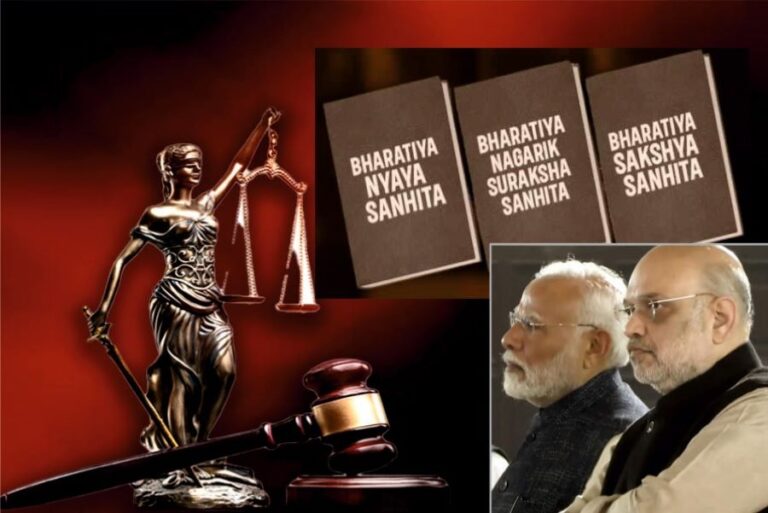
Describing the introduction of the new laws as the biggest reform of the 21st century, Union Home Minister Amit Shah recently said that the country’s criminal justice system would soon become the most modern in the world. He added that by 2027, justice would be delivered within three years.
While this is welcome, the world’s largest democracy continues to retain certain British-era criminal laws that were originally enforced by the colonial rulers to muzzle protests during India’s independence movement. Unfortunately, these draconian laws have been allowed to remain in force under the present dispensation.
Laws such as the sedition law, the criminal defamation law, the National Security Act (NSA), and the rechristened Unlawful Activities (Prevention) Act (UAPA) continue to be misused to suppress or discourage criticism of the government. Law enforcers apparently feel that any criticism of the government amounts to criticism of the country itself.
There are numerous examples of such misuse. The continued denial of bail to student activist Umar Khalid for the last five years is a case in point.
Khalid was arrested on September 13, 2020, in connection with the Delhi riots and was subsequently charged under the UAPA for offences including sedition, murder, promoting enmity between religious groups, unlawful assembly, and rioting, among others.
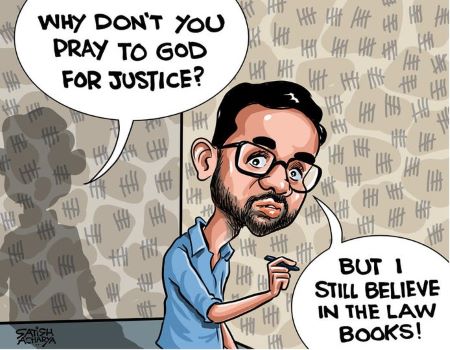
Although the UAPA was originally intended for terrorism-related cases, its ambit has now been stretched to cover even minor offences.
Unlike other laws, where the accused is presumed innocent until proven guilty, under the UAPA, the burden of proving innocence lies on the accused. This law has been misused by successive governments.
Recently, well-known environmentalist and Ladakh-based activist Sonam Wangchuk was arrested under another such law, the National Security Act (NSA), where again the onus is on the accused to prove that he is not guilty. Bail is generally denied to those arrested under these laws.

Sedition and UAPA provisions have been invoked against retired bureaucrats, judicial officers, and journalists for simply raising demands for justice. A couple of years ago, a 22-year-old girl was charged with sedition for raising slogans against the government, while an octogenarian was imprisoned for alleged anti-national activities.
Official data from the National Crime Records Bureau (NCRB) confirms that there has been a sharp increase in the number of people booked under these laws.
Another law that deserves to be scrapped is the criminal defamation law — a relic of colonialism that has no place in a modern democracy. It is heartening that the Supreme Court has recently observed that defamation should be decriminalised. The outdated law was enacted in 1860 to suppress public debate against the British government.
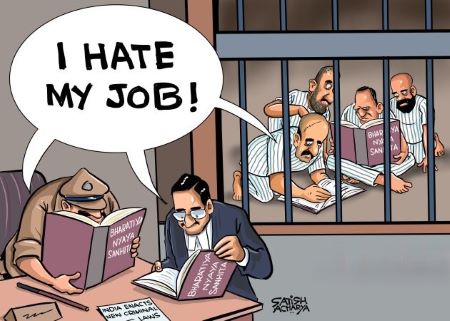
Several other countries, including the United Kingdom itself, have scrapped their criminal defamation laws, but India continues with this archaic provision, even though some other reforms have been introduced under the BNS.
Experts point out that there are sufficient remedies available in civil law to deal with defamation, and criminalising speech is not justified.
We continue to use criminal defamation provisions against political opponents, journalists, and activists. Such cases drag on for years, often ending in acquittal. However, in most cases, the long and tedious process itself becomes the punishment.
This article was originally published in Punjab Today and can be read here.