


At a time when India’s democracy is bruised by institutional drift and shrinking space for dissent, Rahul Gandhi’s repeated “horse” analogy demands more than chuckles, it demands scrutiny. When the Leader of the Opposition frames politics as a stable of racehorses, showpieces, and the lame, he unwittingly reveals the Congress party’s deeper malaise: a culture of theatrical messaging, weak grassroots investment, and parachuted leadership. This article isn’t merely about a flawed metaphor, it’s about what it conceals. Can a party obsessed with categories and optics reclaim the ethical spine of politics? And more urgently- what sort of horse is Rahul Gandhi himself?
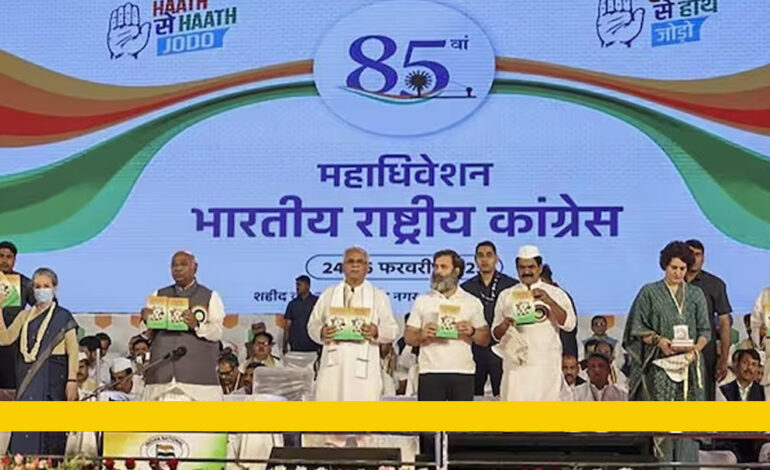
Rahul Gandhi, on more than one occasion, has likened party leaders to three kinds of horses: wedding horses, racehorses, and lame ones. He recently used this analogy in a speech at the Congress Workers Convention in Bhopal, Madhya Pradesh. He had used the same analogy in a speech at another workers’ convention in Gujarat earlier this year. This repeated reference to the analogy, which reflects his understanding of the Indian political system, raises important questions: Is politics a horse race? Are political leaders horses?
#WATCH | Bhopal, Madhya Pradesh: Lok Sabha LoP and Congress MP Rahul Gandhi says, “…Now we have to differentiate between a race horse and a wedding horse and lame (langda) horse.”
“…The district president has come here, and there will be some of you who work for the… pic.twitter.com/t5hr3mswCs
— ANI (@ANI) June 3, 2025
At a time when institutions entrusted with safeguarding constitutional norms and spirit are under attack from an impunitive central government, much depends on Rahul Gandhi’s ability, as the Leader of the Opposition in the Lok Sabha, to rally support for a credible alternative. However, if he is sincere about this analogy, he should also understand the larger import it carries. Put simply, it symbolises significant political and organisational challenges for the Congress party as well as opposition politics in general.
The Problem with the Analogy
Metaphors are common tools in political speech. If not used properly, metaphors may, as Aristotle warned over two millennia ago, be “difficult to grasp, nor obvious, or they will have no effect.” Gandhi used his horse analogy to describe party leaders before an audience of grassroots workers. But this analogy falls short on several counts.
By categorising leaders as horses—whether race, display, or lame—Rahul Gandhi has inadvertently othered them from the workers, casting them as a different species altogether. If he views political leaders as ordinary party workers who have risen through the ranks, then this analogy collapses under its own weight. If every leader begins as a worker, then each one is a horse to begin with. So, who is to blame when a worker turns into a display or lame horse? The worker? The system? The leadership?
If Gandhi sees structural flaws as the reason for such failures, does he admit any personal accountability? After all, he has been at the helm for over a decade. In the end, the analogy clouds more than it reveals.
Organisational Gaps and Leadership Culture
For Rahul Gandhi, this analogy may well reflect the worldview shaped by his political upbringing. The Congress party has a long history of parachuting leaders into positions of influence—people with little connection to grassroots politics. Rahul Gandhi, himself a product of this political culture, continues to elevate close aides and backroom staff into key roles. Take Krishna Allavaru, the AICC in-charge of Bihar, as a recent example. These appointees often lack a constituency of their own and do not emerge from the grind of ward- or village-level politics.

There is also a recurring pattern of assigning senior leadership roles to individuals who switch over from other parties, only to leave when the tide turns. Rita Bahuguna Joshi, who served as Uttar Pradesh Congress chief after joining from the Samajwadi Party, eventually defected to the BJP in 2016. When such leadership choices dominate, it’s no wonder politics starts resembling a race or an event, and leaders are mere showpieces or performers.
Words Matter: The Problem with Flawed Messaging
“Karte karte gadbada deta hai. Zyada bol deta hai” (He keeps doing well and then suddenly sidetracks. He goes overboard), said an old Congress sympathiser in Varanasi. While few doubt Rahul Gandhi’s sincerity or commitment, many wish he chose his words more carefully. Workers’ conventions or political rallies demand clarity and motivation, not ambiguity and dramatics.
Even setting aside the Congress claim that BJP-aligned media distorts Gandhi’s speeches, his attempts at cuteness or wit often confuse rather than inspire. Workers end up guessing whom he is referring to, losing the core message in speculation. Why rely on puzzling metaphors when plain, direct communication could be far more effective?

Rejecting the Horse Framework
To engage with the horse analogy is to validate a fundamentally flawed understanding of politics. Politics is not a race, nor are leaders like horses; to be groomed, paraded, or discarded. Political leadership remains, at its core, a form of public service.
Political parties gain traction not from grand speeches or media spectacles but through the tireless work of local leaders who act as bridges between the state and ordinary citizens. These ward- and district-level functionaries help implement welfare schemes, resolve local grievances, and check bureaucratic overreach. They are, in essence, the living face of the party in the lives of everyday people.
The BJP’s panna pramukhs exemplify this: ordinary workers who build and sustain voter engagement, even as Modi dominates the national stage. These grassroots leaders matter. And how a party treats them often determines its long-term relevance.
The Real Challenge for the Opposition
Ram Manohar Lohia, the socialist leader and freedom fighter, reminded the political class as well as the public that politics is a short-term religion—a vocation of service. Rahul Gandhi, or any leader aspiring to build a resilient political alternative, must internalise this ethic.
To continue with a reference to the RG analogy, the problem is not the absence of strong horses; it is a lack of trust and investment in ordinary workers who can rise to leadership through service, not favoritism. When politics is reduced to races and rallies, its democratic foundation erodes.
If Congress hopes to be more than just a namesake opposition, it must build organizations that empower genuine public servants. Political power, after all, is not a prize to be won in a race, but a responsibility to be wielded in service of the people.









If Congress has to survive, grow and become strong, then it has to be revamped completely. Making someone like Mr.Kharge as leader alone will never yield results. Before it’s too late(now itself it’s bit late only), Ghandhis need to act prudently
You are right. It needs more than piecemeal approach, as you have rightly suggested.