

S. Janaki : A Voice Beyond Time

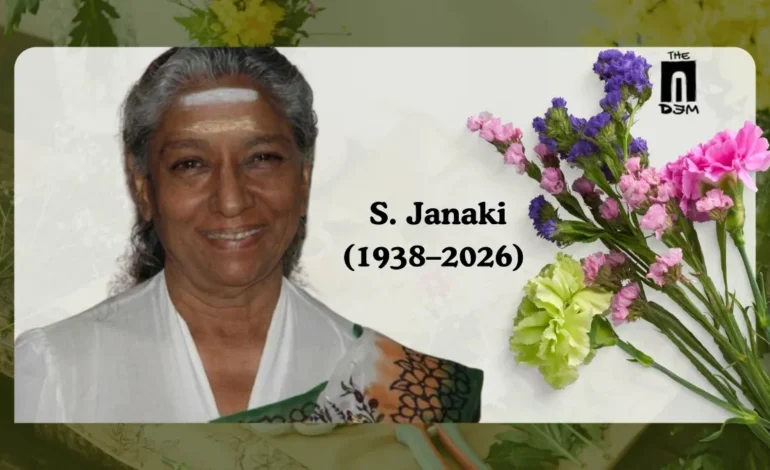
Ordinarily, I would not have written about S. Janaki (1938–2026). I have always followed certain personal rules while writing obituaries. I prefer to write about people I have known personally, met at least once, or whose lives intersected with mine in some meaningful way.
Janakiamma, as she was popularly known, fulfilled none of these conditions. I never had the privilege of meeting her. I never even saw her in person. She passed away following age-related complications, and every newspaper, television channel and digital platform has already chronicled her remarkable journey. At first glance, it seemed there was little left for me to add.
Yet, I found myself compelled to write this tribute.
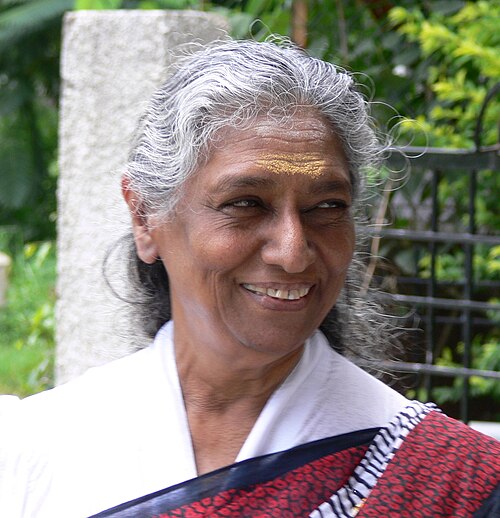
The reason is simple. There are a handful of voices that become inseparable from one’s life. S. Janaki’s was one such voice for me. It did not merely entertain; it enchanted. I have listened to most of her Malayalam songs over the decades. Even today, I can hum many of them, though I cannot sing them. Her voice possessed an almost mystical quality that transcended the ordinary.
Listening to Janakiamma was like being transported into another realm where worldly anxieties simply ceased to exist. Every note carried emotional depth, every pause conveyed meaning, and every modulation reflected extraordinary sensitivity. Her singing united melody, emotion and language so seamlessly that the listener became completely immersed in the music. It was an experience that celebrated not merely the seven notes of Carnatic music but the limitless possibilities of the human voice.
Although she rendered countless romantic melodies with unmatched grace, it was her devotional songs that touched me most deeply. Romantic songs spoke of earthly emotions—love, longing and separation. I still remember the haunting melody in which a forlorn lover turns restlessly from side to side on her bed, unable to sleep because of separation from her beloved. Janaki could make such emotions come alive.
Yet her devotional songs possessed an altogether different power. They elevated the listener, inspiring reflection, humility and spiritual peace. Those songs have remained with me long after many popular film songs faded from memory.
The truth is that no genre of music lay beyond her reach. Whether it was classical, semi-classical, folk, devotional, romantic, melancholic, playful or philosophical, she sang each with astonishing ease. During a career spanning several decades, she recorded more than 40,000 songs in seven languages, an achievement that very few singers anywhere in the world can equal.
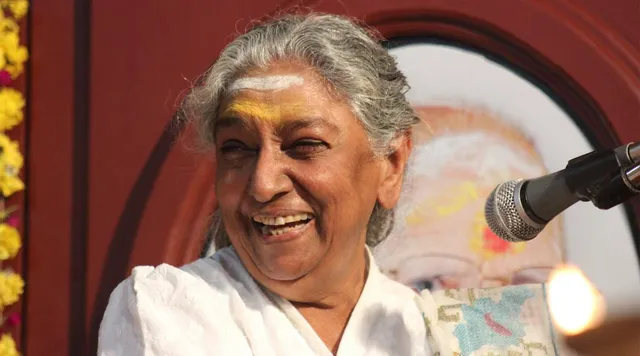
When my nephew, Stebin Ben, decided to pursue music as his profession, one of my friends advised me that he should undergo rigorous training in Carnatic classical music if he wished to succeed. There was considerable wisdom in that advice. I did not have the heart to point out that Janakiamma had not undergone formal institutional training in classical music.
Of course, she had the invaluable advantage of learning from some of the finest composers and musicians with whom she worked. She absorbed knowledge through observation, discipline and relentless practise, proving that dedication can sometimes compensate for the absence of formal education.
One aspect of her personality that earned my admiration was her quiet dignity. She was among the very few artists who declined a Padma award, not out of arrogance or wounded pride, but because she believed the recognition had arrived far too late in her life. There was immense grace in that decision. She felt that such honours should acknowledge an artist while society can still meaningfully celebrate that contribution.
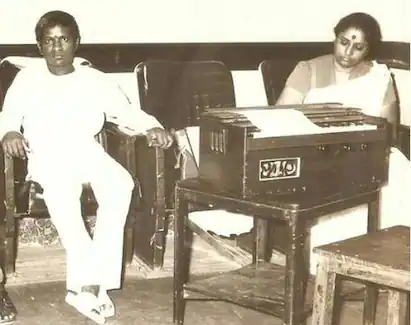
Her disappointment was understandable. She often recalled the case of the legendary playback singer P. Leela, who was awarded the Padma Bhushan only after she had passed away, the announcement coming just days after her death. Janakiamma believed that recognition delayed to such an extent lost much of its significance.
Another example strengthened her conviction. The great Hindi playback singer Shamshad Begum, whose unique style continued to shine even during Lata Mangeshkar’s era, received the Padma Bhushan in 2009 when she was already in her nineties and suffering from memory loss.
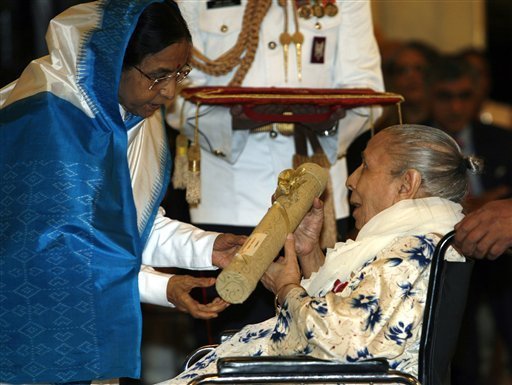
Images of her being wheeled to Rashtrapati Bhavan to receive the honour were deeply moving. Her vacant expression suggested she scarcely understood what was taking place. Janakiamma did not wish honours to become ceremonial gestures devoid of meaning.
Many people described her as the “Lata Mangeshkar of the South.” While the comparison was intended as praise, one distinguished music director remarked that the comparison should perhaps be reversed. If any comparison was necessary, Lata ought to be called the “S. Janaki of the North.” It was a tribute to Janakiamma’s extraordinary stature.
There was never any rivalry in Janaki’s mind. She admired Lata Mangeshkar immensely. In fact, she transformed admiration into an unusual method of self-improvement. She would play her songs on a tape recorder, lower the original vocal track and sing those portions herself while retaining the original orchestral accompaniment. She repeated this exercise until the song was complete.
By doing so, she effectively recreated the song in her own voice without altering the orchestration. She is said to have practised this way with around 35 of Lata’s songs. Those fortunate enough to hear these recordings reportedly found it difficult to distinguish where Lata’s voice ended and Janakiamma’s began. These recordings were never intended for commercial release; they were simply part of an artist’s lifelong quest for perfection.
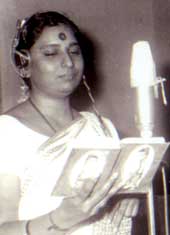
Ironically, the singer whose voice became inseparable from Malayalam cinema was not a Malayali by birth. Born and brought up in Andhra Pradesh, she nevertheless acquired such flawless Malayalam diction that generations of listeners assumed she belonged to Kerala. Her pronunciation, emotional expression and understanding of the language were so perfect that no trace of linguistic distance remained. That achievement alone speaks volumes about her professionalism and respect for the language she sang in.
While writing this tribute, I relied on the biographical details meticulously documented in Ravi Menon’s book. Ravi Menon is, in my estimation, a living encyclopaedia of Malayalam film songs, and his work has preserved invaluable details about many of our greatest musicians.
With Janakiamma’s passing, India has lost not merely the “Nightingale of the South” but a voice that belonged to the entire nation. Awards, records and statistics tell only a fraction of her story. Her true legacy lives in the hearts of millions whose lives she enriched through music. As long as there are listeners who cherish melody, emotion and beauty, S. Janaki will continue to live through her songs. That is the immortality every artist dreams of, and few achieve.
May her noble soul rest in eternal peace.









*S. Janaki’s voice was never just music—it was emotion, memory, and comfort for millions across generations. This heartfelt tribute beautifully captures the timeless legacy of an artist whose songs will continue to inspire long after the final note. A fitting homage to a true legend. Rest in peace, Janaki Amma.*