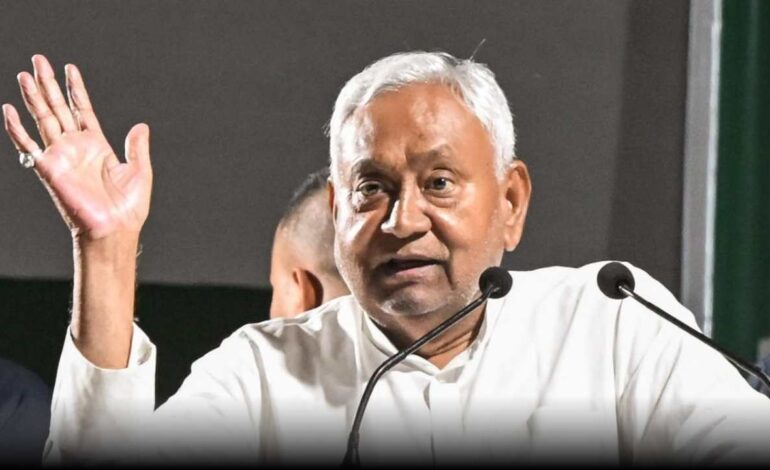
On November 6, 2025, as Bihar votes in the first phase of polling, senior journalist and author Nalin Verma’s fortnightly column in The AIDEM, Everything Under The Sun, continues with a retrospective on longstanding Chief Minister Nitish Kumar’s political legacy — one marked by striking highs and lows. Everything Under The Sun is a column that addresses diverse themes ranging from politics and social issues to culture and literature — abiding passions of this veteran writer and teacher. This is the 20th article in the series.
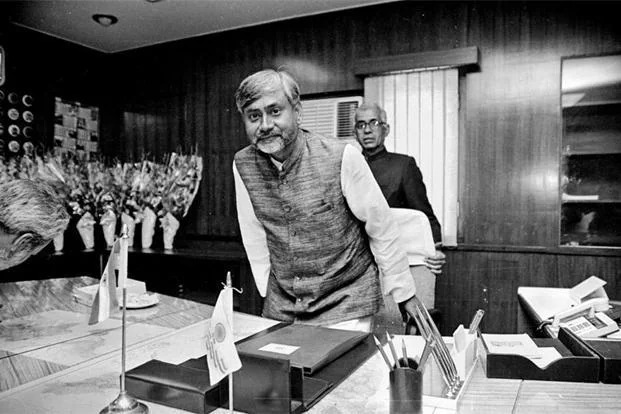
With the Bharatiya Janata Party (BJP) leadership signalling the end of Nitish Kumar’s 40-year legislative career by refusing to project him as the National Democratic Alliance’s (NDA) chief ministerial candidate, my thoughts drift back to 1989, when I travelled with the then-rising politician on his first Lok Sabha campaign from Barh.
I accompanied him in his black Ambassador car as we set off from the Beerchand Patel MLA Clubhouse in Patna for Barh, nearly 80 kilometres east. The three-hour drive offered ample time for conversation. It was his first Lok Sabha contest and my maiden assignment as a journalist covering the polls. Both of us were novices on the paths we had chosen, and both were nervous in our own ways.
That shared anxiety perhaps forged a bond between us. Amid largely informal exchanges, I asked Nitish, “If you win, whom will you support as Prime Minister — Vishwanath Pratap Singh, Chandra Shekhar, or Devi Lal?”
“We are from the Lok Dal stream and belong to Devi Lal’s camp, though V.P. Singh has captured the people’s imagination. But my immediate goal is to win the Barh seat. You should focus on assessing whether I can defeat Ram Lakhan Singh Yadav,” he replied, a trace of uncertainty in his voice.
Our journey was often interrupted by small groups of people lining the rugged National Highway 31. Nitish would step out to exchange pleasantries with voters. After more than four hours, the car finally reached a modest Janata Dal office in Barh.
“Now, please explore the villages of the constituency on your own. That way, you can better gauge my chances,” he said.
After a day-long tour involving close interactions with voters across the Barh constituency, I returned to Patna and filed my report. It predicted that Nitish could defeat Ram Lakhan Singh Yadav, a Congress stalwart and the mightiest Yadav leader in the pre-Lalu Prasad era. My chief reporter, the late Narmadeshwar Sinha, was sceptical. “You’re too young and inexperienced. Never be definitive; Ram Lakhan is a veteran, and Nitish is a rookie.” Nonetheless, he forwarded the report to editor P.S. Sen, who liked it and personally headlined it: “The ‘Sher’ May Be Tamed This Time.”
The story ran in six columns on the front page of The Hindustan Times. Ram Lakhan Singh Yadav was known as Sher-e-Bihar. When the results were declared, Nitish had indeed trumped Ram Lakhan, marking his Lok Sabha debut. His trust in me deepened, as did our closeness.
The years rolled on. Nitish never looked back. He became a deputy minister in V.P. Singh’s Janata Dal government and went on to win the Barh seat for five consecutive terms. Along the way, he parted ways with his closest friend from student days, Lalu Prasad Yadav, but continued to grow in stature and strength.
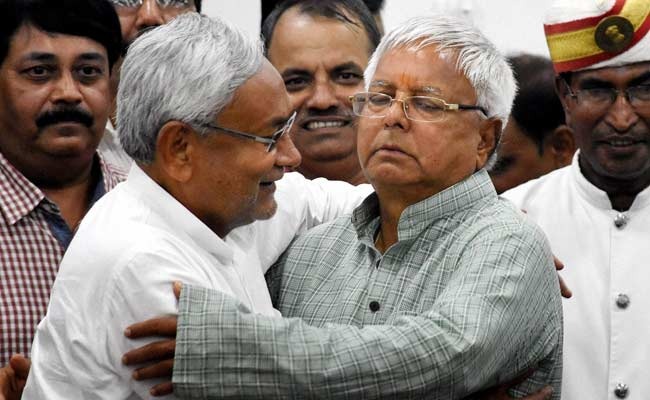
What propelled his rise was a sharp political mind, coupled with deep insight into Bihar’s social equations and inter-caste dynamics. Unlike the flamboyant, natural mass leader Lalu, Nitish excelled as a theorist and practitioner of power politics. Operating largely behind the scenes and keeping his cards close to his chest, he strategised and executed moves with remarkable dexterity.
Combining this with a keen ability to play the caste card, he not only toppled the Lalu-Rabri regime in 2005 but also unveiled his governance vision by launching an era of infrastructure development — roads, electricity, schools, and hospitals. He complemented these projects with deft social engineering: carving out the Extremely Backward Classes (EBCs) from the Mandal bloc of backward castes and the Mahadalits from Ram Vilas Paswan’s Dalit base.
While allied with the BJP, he also introduced welfare schemes for Pasmanda Muslims, securing a section of the Muslim vote. This built him a formidable voter base, rendering him indispensable and firmly entrenched in power during the first decade of his rule.
The Arrival of Narendra Modi and the Decline of Nitish
Thirty-six years after his Lok Sabha debut from Barh in 1989, Nitish Kumar confronts an existential crisis. The rise of Narendra Modi — bolstered by his alter ego from Gujarat, Union Home Minister Amit Shah — triggered the systematic erosion of the political edifice Nitish had painstakingly built. Once Modi assumed the prime ministership, Nitish found himself perpetually locked in a struggle to preserve the mechanisms that had sustained him for so long.
In his dogged pursuit to retain his political capital — EBCs, Mahadalits, a section of Muslims, and his secular socialist image — Nitish resorted to repeated flip-flops. Leveraging control over his core vote banks, he oscillated between Lalu Prasad Yadav and Narendra Modi four times between 2015 and 2024.
In the process, he substantially eroded both his support base and his ability to drive development projects. Whether allied with the BJP or the RJD-Congress-Left combine, the Modi-Shah machine relentlessly raided his vote bank — deploying Hindutva mixed with generous welfare doles to lure vulnerable sections in the absence of grassroots political leadership.
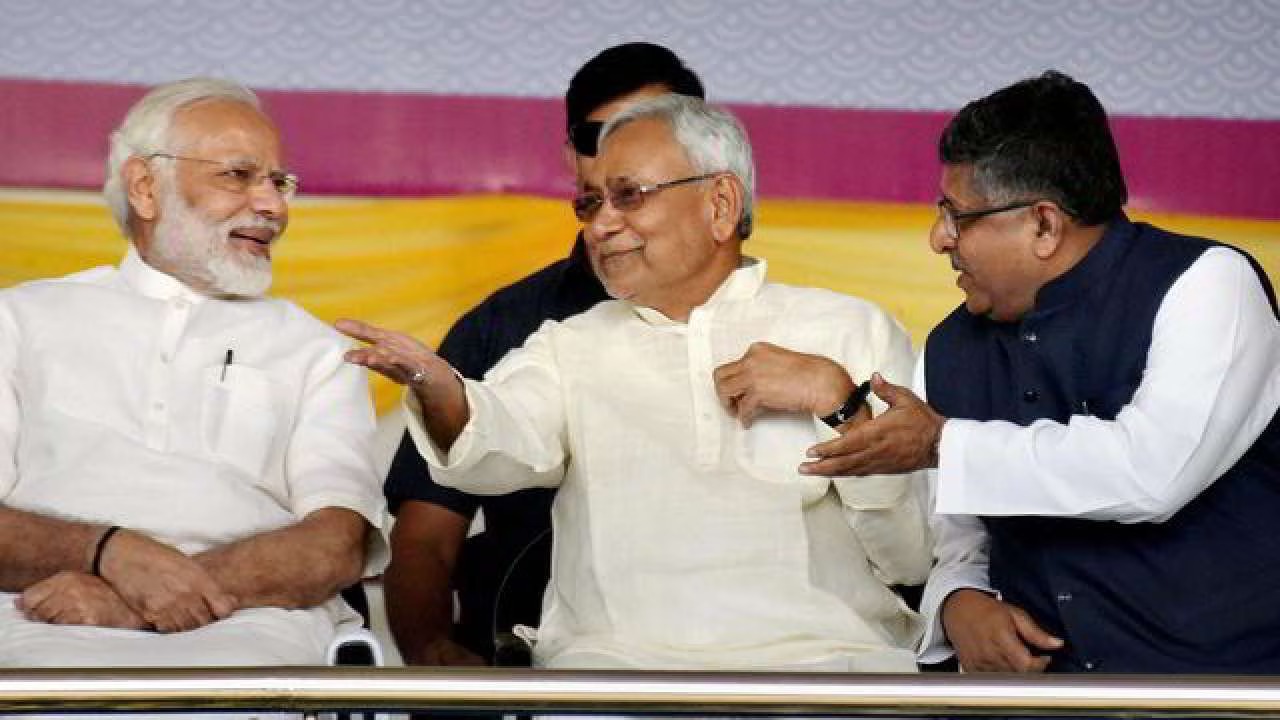
The Modi-Shah duo installed him as Chief Minister in 2020 despite the JD(U) winning only 43 seats — trailing third behind the RJD and BJP — fearing he might defect to the RJD-led alliance. Nitish did switch to the Mahagathbandhan in 2022, only to return to the BJP in 2024. But now, Modi and Shah appear determined to end Nitish’s manoeuvres even before the results are out.
Despite intense pressure from his inner circle, the BJP leadership has refused to project him as the chief ministerial face — even though the party is contesting only 101 seats and cannot form a government without JD(U)’s support. The duo has called his bluff, calculating that in a post-poll scenario, they can poach JD(U) MLAs and install their own chief minister — as they did in Maharashtra, Karnataka, and Madhya Pradesh.
The BJP may also perceive an opportunity in Nitish Kumar’s reportedly deteriorating mental and physical health.
Weak Links in Nitish’s Personality and Operation
Nitish’s strengths — rooted in his adept social engineering and reliance on bureaucracy — contained the seeds of his weaknesses, which Modi and Shah have systematically exploited. He entered politics alongside George Fernandes, the era’s firebrand socialist leader.
Yet Nitish treated George more as a mascot, pursuing his own agenda while ensuring George retained Lok Sabha membership alternately from Muzaffarpur and Nalanda. George, essentially a trade unionist known for mobilising industrial workers, lacked the acumen to navigate Bihar’s caste complexities.
As Nitish gained mastery over caste equations, he sidelined George and appointed Sharad Yadav as JD(U) president. Sharad, a dyed-in-the-wool socialist, was a Yadav from Madhya Pradesh tasked with challenging Lalu’s dominance in Bihar — a state where Lalu had a far stronger base. Sharad never felt secure in Bihar politics; dependent on either Nitish or Lalu for his parliamentary berth, he could neither lead them nor assert independence. In theory, Sharad may have possessed greater ideological depth, but such insight suits an academic better than a practising politician.
Mulayam’s Legacy in Nitish’s Context
In certain respects, Nitish Kumar can be compared to Mulayam Singh Yadav in terms of stature within their respective states. Nitish hails from the Kurmi community — an upwardly mobile backward caste, though numerically inferior to the Yadavs in Bihar.
Mulayam, too, came from a backward caste not as dominant in Uttar Pradesh as the Yadavs are in Bihar. But unlike Nitish, who avoided cultivating leadership among other OBCs, Mulayam groomed an entire generation of leaders in the socialist mould, evolving from Dharti Putra to Netaji.
With an impeccable grasp of grassroots dynamics, he nurtured talent across castes. He recognised regional nuances — distinguishing between Kurmis of western and eastern Uttar Pradesh — and promoted Uttam Patel and Beni Prasad Verma accordingly.
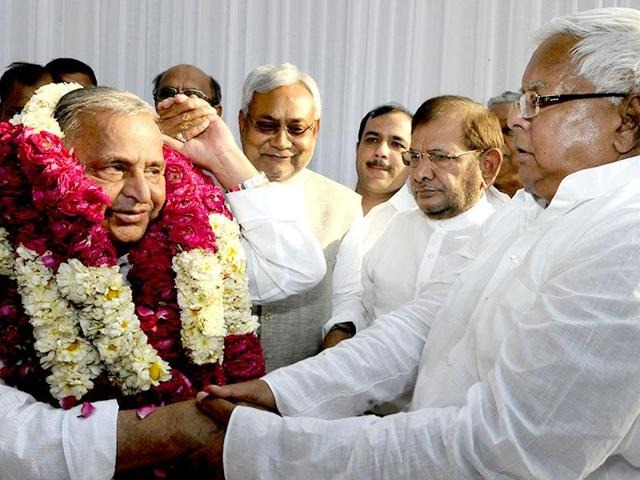
He extended his influence beyond backward castes. Among upper castes, he promoted socialism through Brahmin leader Janeshwar Mishra, whom he dubbed “Chhota Lohia”. Nor did he neglect Muslims: he transformed Azam Khan from a modest activist into a fiery socialist leader who challenged the nawabs and elites of western Uttar Pradesh.
In his lifetime, Mulayam built and fortified a second generation of socialist leadership across castes and communities — a legacy his son Akhilesh Yadav has inherited and sustained. Akhilesh’s PDA (Pichhra-Dalit-Alpsankhyak) formula traces its roots to Mulayam’s classical socialist practice.
In stark contrast, Nitish avoided building grassroots leadership. His base of EBCs and Mahadalits remains largely intact, yet these impoverished groups are vulnerable to BJP manipulation in the absence of strong local leaders. Nitish’s overreliance on the bureaucracy to execute his developmental and political vision left him without credible lieutenants.
Now, surrounded by easily poachable aides like Sanjay Jha and Lallan Singh, Nitish faces political isolation. It is not merely his declining health that undermines him, but the glaring absence of a second line of defence to shield him from the BJP’s manoeuvres.
He awaits the inevitable gloom in helplessness.
Read more from this Series: Everything Under the Sun.