


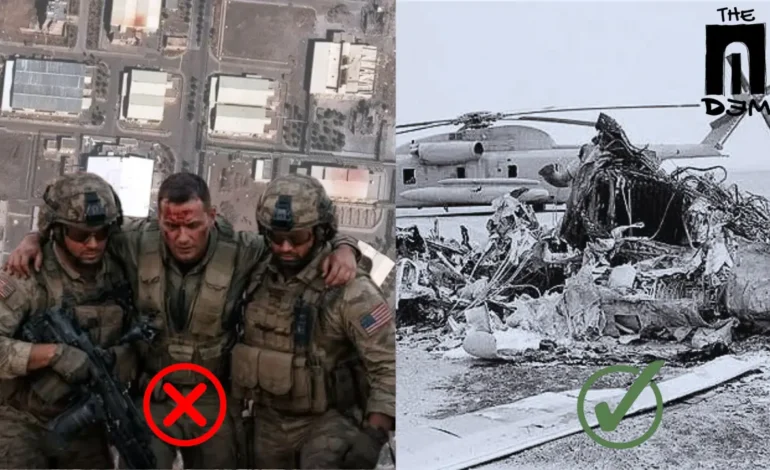
The current media focus on the “rescue of a downed pilot” is being characterised as a strategic smokescreen designed to conceal a massive military catastrophe in Iran. This incident is being compared to the failed Carter-era rescue mission, “Operation Eagle Claw”, which resulted in significant American casualties and ultimately led to Reagan displacing Carter in the White House.
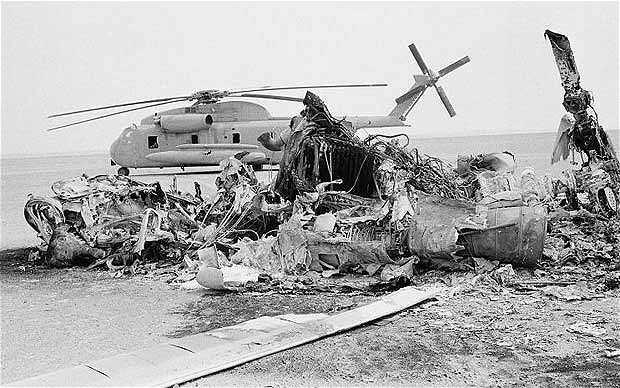
Observers suggest that a disaster of even greater proportions unfolded over the last 48 hours, potentially involving a botched attempt by U.S. Special Forces to seize Iranian nuclear material or attack the Natanz nuclear facility.
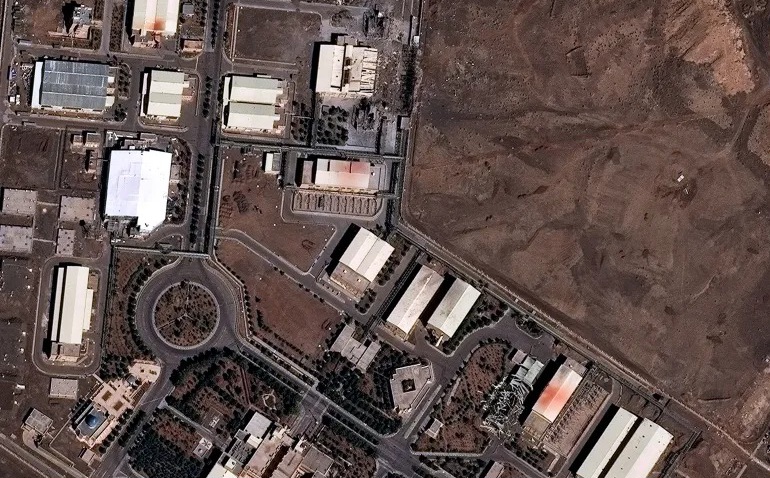
Critics point to a major geographical inconsistency in the official account: the location where the pilot was reportedly rescued (marked in blue on maps) is hundreds of miles away from the actual crash site (marked in red). While the administration promotes a “leave no man behind” narrative to maintain public morale, the reality appears to be an unmitigated tactical failure.
There are reports that the mission proceeded despite strong opposition from the Army Chief. It is suggested that his refusal to agree to the high-risk operation resulted in his immediate dismissal—clear evidence of the internal friction surrounding the mission’s execution.
While the U.S. remains silent on its losses, Iran has released imagery of downed C-130 transport aircraft, showing visible bullet holes in the airframes. Reports from the ground even claim the discovery of American remains, specifically a skull, among the wreckage.
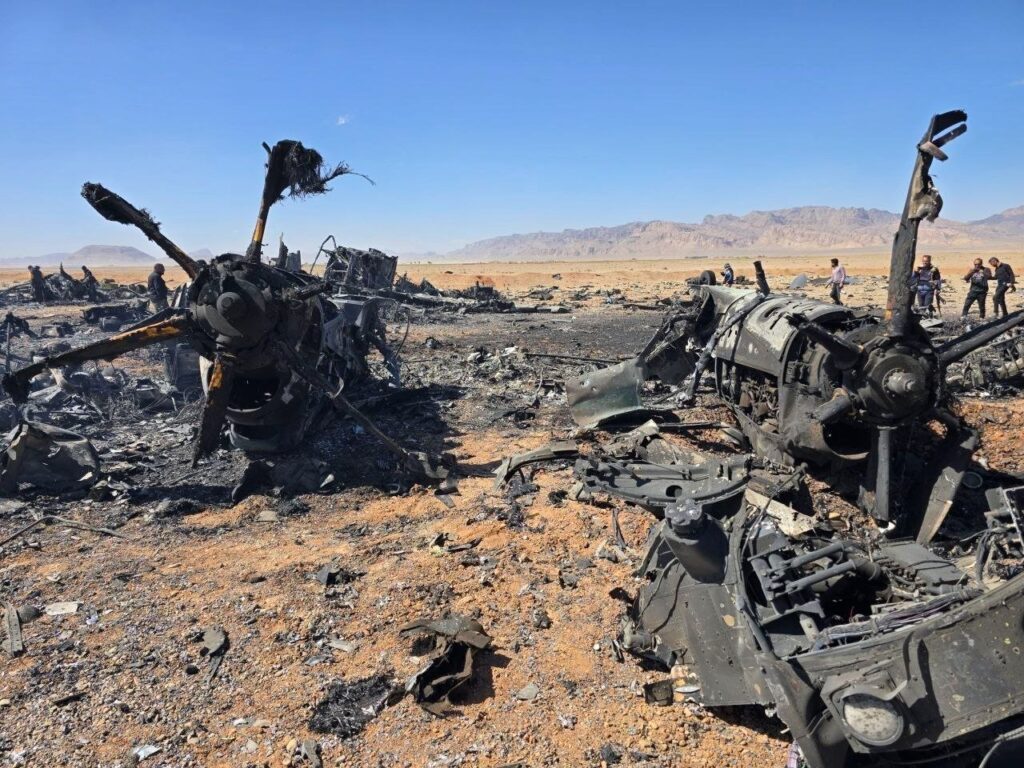
Confirmed/High-Probability Losses:
- 2× HH-60 helicopters: Damaged
- 1× MH-6 Little Bird: Destroyed
- 1× A-10 Thunderbolt II: Destroyed
- 2× C-130 Hercules: Destroyed
- 1–2× MQ-9 Reapers: Destroyed
Unconfirmed/Possible Damage:
- 1× F-16 Fighting Falcon: Issued emergency squawk
- 1× KC-135 Stratotanker: Issued emergency squaw
- 1× A-10 Thunderbolt II: Reported emergency landing (unverified)
The Trump administration is accused of blatant spin doctoring to avoid the political fallout of a failed raid. By piggybacking the disaster onto a “feel-good” rescue story, the US government is allegedly concealing the fact that nearly a dozen aircraft, along with scores of personnel, were lost in a mission that went awry. For students of military history, the striking parallels between this event and the 1980 hostage crisis disaster offer a grim view of history repeating itself.










:
“An intriguing and sharply argued piece that draws compelling parallels, while questioning the narrative behind a complex and sensitive operation.”