


On the Ethics of Digital Memory and Bajaj’s 100-Year Film
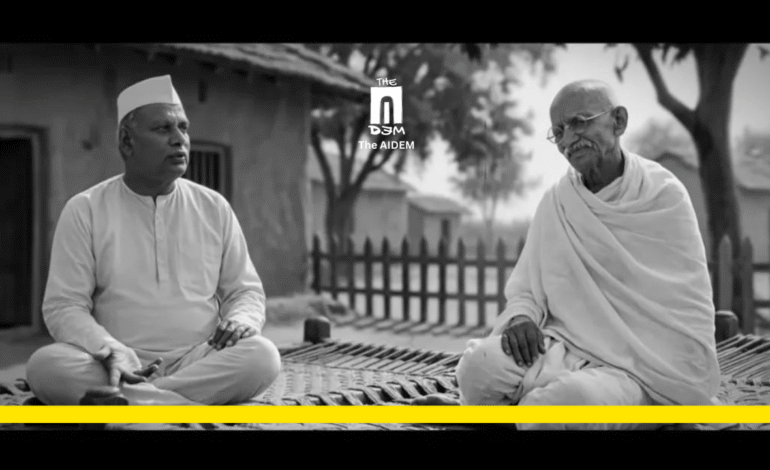
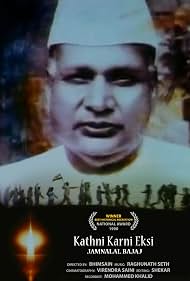
The Bajaj Group took up a unique project to commemorate 100 years. It revived Mahatma Gandhi. Directed by Rajkumar Hirani and “entirely crafted Gandhi and his message using Artificial Intelligence.” “Kathni Karni Ek Si” depicts Gandhi travelling back to modern-day India at Jamnalal Bajaj’s request to determine whether Gandhian principles are still upheld in the Group’s operations a century later.
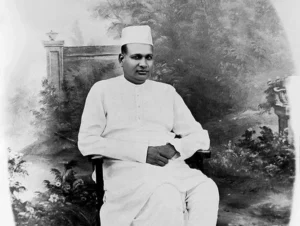
The endeavor is poignant. The founder of the Bajaj group was not your typical businessman. Jamnalal Bajaj (1889–1942) was Gandhi’s “fifth son” in addition to providing funds for his pursuits. Following Gandhi’s return from South Africa, Bajaj “took an instant liking to his teachings” and gave Sevagram Ashram 20 acres in Wardha. During World War I, he gave up his magistrate position and Rai Bahadur title to support the liberation fight. He provided funding for women’s emancipation, the khadi industry, Dalit welfare programs, and “Goseva.” He participated in the Dandi March, Non-Cooperation, Nagpur Jhanda Satyagraha, Boycott of Simon Commission, and made Wardha the focal point of the freedom movement.
Following Dandi March, Jamnalal Bajaj spent two years in prison. “There was no work of mine in which I did not receive his fullest co-operation in body, mind, and wealth,” Gandhi said of Bajaj in Harijan in 1942. Bajaj epitomised Gandhi’s concept of “trusteeship,” which stands for wealth held in one’s hand for the sake of society, and his legacy is therefore inextricably linked to India’s freedom movement and Bhoodan Andolan.
After Jamnalal’s persuasion, Gandhi lived in Bajajwadi in Wardha. This is where the Quit India Resolution’s initial draft was written. The second generation of Bajaj was as committed. Ramkrishna Bajaj was imprisoned during the Quit India Movement for four years, from 1942 to 1946. Kamalnayan Bajaj “fulfilled Gandhiji’s constructive programs and fought against social discrimination.” Gandhi’s relationship is central to the AI narrative. In assessing Bajaj’s legacy, it attempts to highlight the Bajaj group as “businessmen of conscience.”
The movie accurately depicts this period of history. It presents Bajaj as a collaborator in Gandhi’s concept of Swaraj rather than simply a benefactor. Jamnalal’s Gandhian philosophy is summed up in the title, which means “one’s actions must match one’s words.” It is uncommon for a $250 billion company to base its corporate narrative on conscience rather than quarterly performance.
This is the first significant AI movie about a national hero in India. The benefits are obvious. In the words of Hemant Shringy of Wondrlab, “Using AI as the medium was symbolic… technology can elevate timeless storytelling while remaining rooted in human values.” AI enabled Hirani to reproduce 1940s Wardha and contemporary boardrooms without prohibitive cost, making history accessible to Gen-Z. It creates enormous opportunities for the future and democratises heritage filmmaking. These days, smaller trusts and organisations can use celebrities to spread their message and win people around to their organization and way of thinking.
However, the question of ethics and consent remains unresolved. Gandhi is unable to agree. A national asset could become a brand mascot if an AI likeness is used. Is Gandhi’s “approval” of Bajaj in the movie a fake endorsement? AI has hallucinations as well. Gandhi was a complicated man. He spoke out against the accumulation of riches and lauded Jamnalal while remaining cautious of businessmen. The subtlety of Gandhi’s personality is erased by a sanitised AI. This creates a precedent, which is more risky. What would prevent political parties from forcing Gandhi to campaign for it in 2029, if Bajaj could bring him back to life for its 100 year celebration? Can he be used by a cow vigilante organization to incite animosity within a community? Can a company utilise Gandhi to promote their cotton and khadi brand, or can he be used to glorify the Varna system?
Although Bajaj accurately identifies the movie as AI-generated, it makes no claims about any professional review of the script’s historical accuracy. Gandhi’s conversations had to be restricted to his own proverbs, right? However, Gandhi was modest enough to acknowledge that he was a lifelong learner and that his ideas evolved over time. So, which saying is the most authentic to be used as part of an AI film script.
Most importantly, the purpose matters. Using AI for education and commemoration could be fine but for commercial or political propaganda can open up a whole lot of problems and confrontations. India lacks a ‘Digital Heritage Charter.’ We still don’t have rules or even an opinion for using the digital likenesses of freedom fighters. Internationally, there are benchmarks. We can base our efforts in this direction on UNESCO’s guidelines on AI Ethics and its 2003 ICH Convention. Technically, for someone as important as the legacy of Gandhi, there is a need to train AI on verified Gandhi heritage portal footage, his collected works and not random internet data, to reduce bias and hallucination.
What would Gandhi have thought of this film? He distrusted machinery that displaced the charkha, yet used films and radio for swaraj. His test was simple, does it serve sarvodaya – uplift of the last person? He’d likely accept AI if it teaches Jamnalal’s jail term and bhoodan andolam to the new generation. But he’d recoil if it became a tool to gloss over inequality and advertise a brand.
As a centenary film, Hirani couldn’t be critical in his subject treatment. It canonizes rather than interrogates. The AI Gandhi is a device to validate Bajaj, not to challenge viewers. The film succeeds as tribute and as an experiment.
But it asks a question India must answer now. Who owns Gandhi’s digital soul? The answer cannot be corporations or digital code. It must be the people. People with ethics, not just with the knowledge of AI and technical skills.








Very pertinent questions raised.
“This article raises an important question: can Gandhi’s legacy belong to any one individual, institution, or political ideology? Gandhi’s persona was shaped by his lifelong commitment to truth, non-violence, and public service. Perhaps the true custodians of his legacy are those who continue to practice these values rather than merely claim ownership of his image. A thoughtful and timely reflection
Trust this story to present a digital personality rights policy to the government
Balanced view on the ethics of AI adaption. Enjoyed reading.