

The Five Philosophers of Football

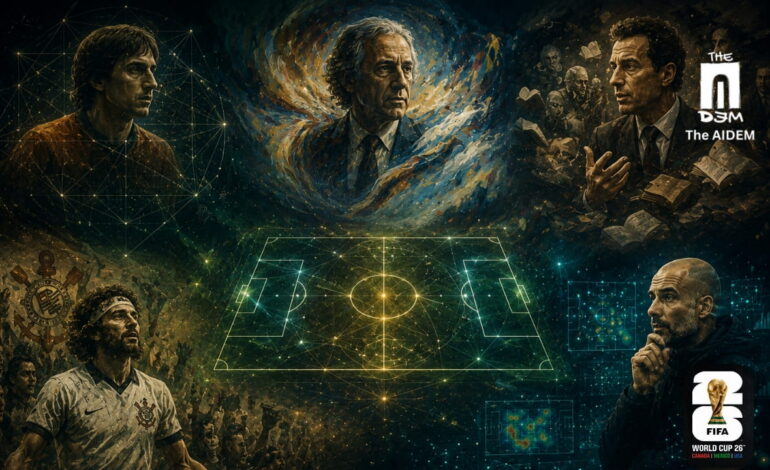
The AIDEM’s countdown to the FIFA World Cup 2026 continues with the essay exploring the reflections of five thinkers that address a single central question: What is football for? Each of them offers a distinct answer, but are they on some trajectory of reconciliation?

“Football is a metaphor. It simplifies the concepts that shape our existence: justice, fatality, reason, instinct, compassion, cunning, gratitude, and morality. Abstractions that find full expression in the moment of a game. A representation that can enter into myth, revealing the profound order that governs life, epicising themes that are rarely present in everyday experience: glory, courage, hostility.” Piero Trellini in The Match
Every age discovers its own language for discussing the human condition. The twentieth century increasingly found itself speaking through sport. Seems absurd? Twenty-two players pursue a ball around a rectangular field while millions watch. How does that evoke philosophical reflection? Yet, the deeper one looks at football, the harder it becomes to dismiss it merely as entertainment. Football has become one of the principal ways modern societies imagine themselves.
The great clubs of Europe are repositories of memory. Entire generations remember where they were when Maradona dribbled past England, when Zidane head-butted Materazzi, when Iniesta scored in Johannesburg, or when Messi finally lifted the World Cup in Qatar. Football has become one of the modern world’s great theatres of meaning.
https://www.youtube.com/watch?v=jb16JvUCVQs
And, thus, some of its greatest practitioners asked questions beyond tactics and trophies. What does it reveal about human beings? How should talent relate to the collective? What is the relationship between freedom and discipline? Can excellence be engineered? Can creativity be organized? These are not football questions; they are civilization questions. Football merely provides the stage on which they are performed.
Five figures stand apart for transforming football into a vehicle for thought: Johan Cruyff, César Luis Menotti, Sócrates, Jorge Valdano, and Pep Guardiola. Each seeks an answer to the same question: What is football for?
Football is about understanding space. ~ Hendrik Johannes Cruyff
Johan Cruyff’s greatest contribution to football was not tactical; it was perceptual. He changed what football looked at. Before Cruyff, football largely revolved around players. Coaches discussed positions, opponents, formations, and individuals. The football field seemed crowded with bodies competing for possession. Cruyff became fascinated by the spaces between players. Sounds simple, but it was revolutionary.
Cruyff watched football by following possibilities. The future interested him more than the present. He arrived at an insight: the game is fundamentally a struggle over space. And, the player who understands space understands football.
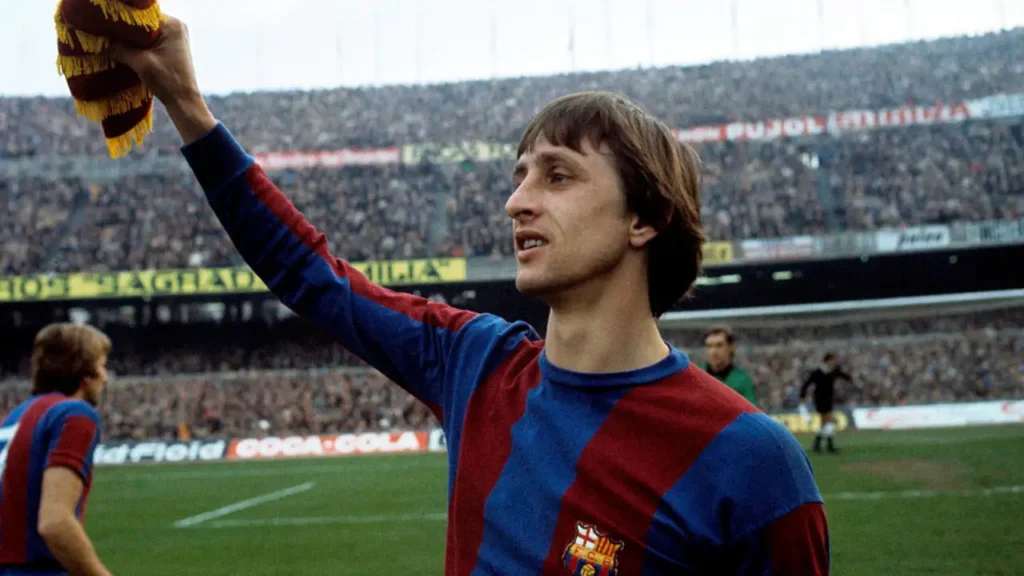
The pass itself is not the important event. What matters is the space created before the pass and the possibilities that follow it. The dribble changes geometry. Football becomes a shifting architecture of relationships, distances, and opportunities. Cruyff’s observation that football is played with the brain is often misunderstood. He was not praising intelligence; he was describing a way of seeing. Great footballers notice patterns before others recognize them. They enter the future slightly earlier than everyone else.
Cruyff’s vision resembles the moment when a physicist suddenly perceives an invisible structure beneath apparently chaotic phenomena. What Newton discovered in falling apples and planetary motion, Cruyff sought in football. Beneath the apparent disorder lay hidden patterns. Yet patterns alone cannot explain why football moves us. Geometry can organize a city. It cannot explain why people love it.
Cruyff’s famous dictum, ‘Toeval is logisch’ (coincidence is logical), captures this football philosophy, that football’s apparent chaos often conceals an underlying geometry. What spectators often describe as luck, chance, or coincidence is frequently the visible consequence of invisible preparation. Teams that occupy space intelligently, move collectively, and anticipate possibilities create conditions in which favourable outcomes appear accidental to outsiders. Chance remains real, but an intelligent organization determines the likely beneficiary. Indeed, one could almost place Cruyff beside chemist Louis Pasteur’s famous observation: “Chance favours only the prepared mind.”
Cruyff translated that insight into football.
Football is about freedom and beauty. ~ César Luis Menotti
If Cruyff was football’s architect, Argentina’s Menotti was its philosopher. Few coaches have thought more deeply about the moral dimensions of football. To many observers, Menotti’s preference for attacking football appeared aesthetic. His brand of football was about beauty and elegance, they said. This interpretation missed the depth. For Menotti, beauty was not decorative. Beauty was ethical.
Menotti’s core values were freedom, creativity, beauty, expression, individuality, and cultural identity. He believed football should reflect the best possibilities of human freedom. Victory mattered, but it was not enough. His sentiment can be summarized as, “Winning is important. But the manner of winning reveals who you are.”
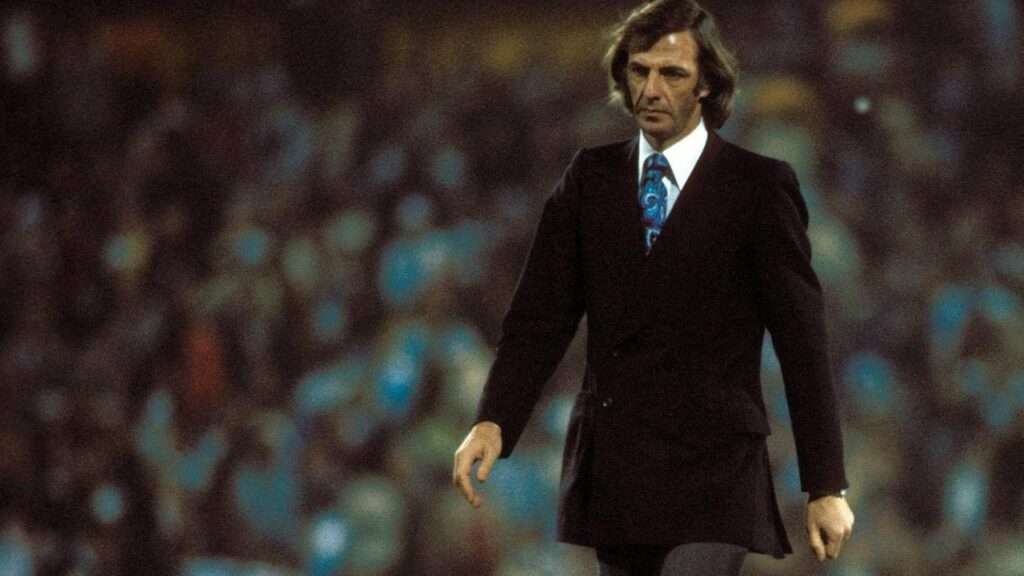
The football field became a small republic in which larger human values revealed themselves. A society that celebrates freedom should celebrate freedom on the pitch. A society that values imagination should encourage imagination in its footballers. A society that admires creativity should resist reducing the game to mere efficiency. Menotti’s football was therefore not simply a style of play. It was a vision of human flourishing.
Human beings need beauty and results. Civilization itself oscillates endlessly between these demands. Menotti’s philosophy lies in refusing to surrender beauty entirely to practicality. He insisted that efficiency alone cannot satisfy the human spirit.
Football is about meaning and leadership. ~ Jorge Valdano
Jorge Valdano inherited his compatriot Menotti’s humanism but transformed it into something more intimate. Where Menotti spoke about freedom and style, Valdano became fascinated by leadership, fear, confidence, and meaning. He spent much of his post-playing career trying to understand why some groups achieve extraordinary things while others fail despite possessing equal talent. He repeatedly returned to a remarkably simple conclusion: Every team is a state of mind.
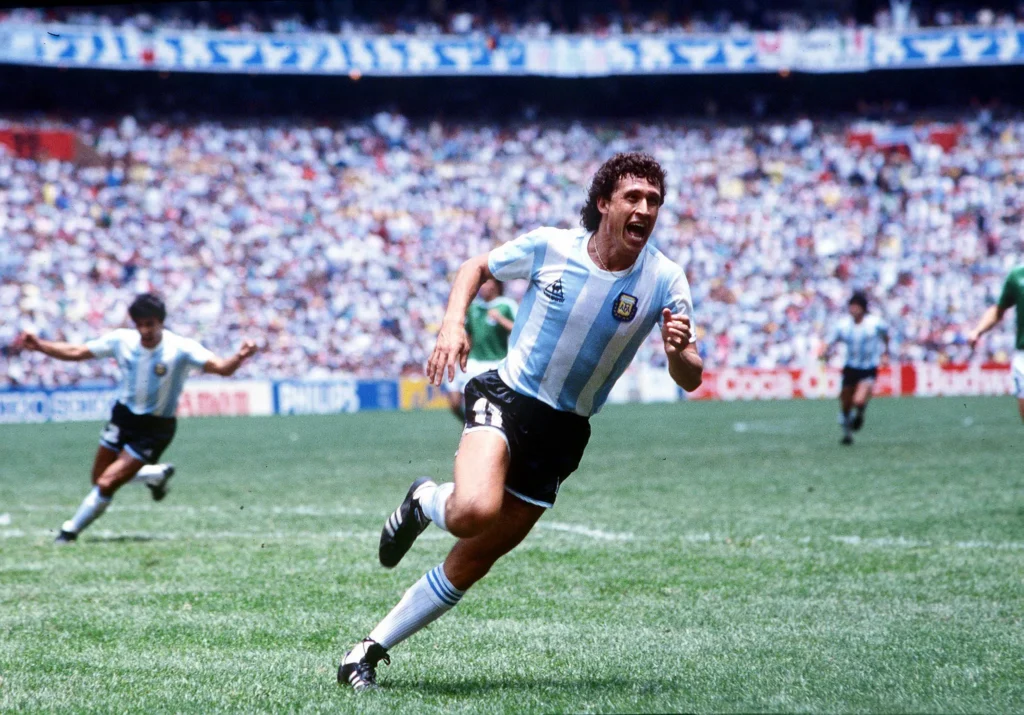
Modern organizations are obsessed with structures. They study incentives, processes, systems, and metrics. Valdano does not reject these, but he points out that every structure ultimately operates through human beings. The most sophisticated plan in the world passes through minds occupied by doubt, hope, courage, insecurity, and belief. Thus, football is a study of collective psychology. The great leader does not merely organize. He creates meaning. He transforms anxiety into confidence. He aligns ambitions. He creates trust. He converts a collection of individuals into a community.
Valdano was fascinated by the emotional realities hidden behind the movement of the ball. Why do some teams become stronger after adversity while others collapse? Why does belief spread through a dressing room? Why does confidence sometimes seem contagious? These questions place football in direct conversation with military history, political leadership, and organizational theory. Valdano’s football is ultimately about the human condition.
Football is about citizenship and human dignity. ~ Sócrates Brasiliero
Medical doctor. Captain. Political activist. Public intellectual. No footballer has travelled further beyond football than Sócrates. During Brazil’s military dictatorship, he helped create one of the most remarkable experiments in sporting history: Democracia Corinthiana. This was not simply a football innovation; it was an attempt to rethink authority. Players voted on decisions. Hierarchies were questioned. Participation replaced command. The football club became a laboratory for citizenship.
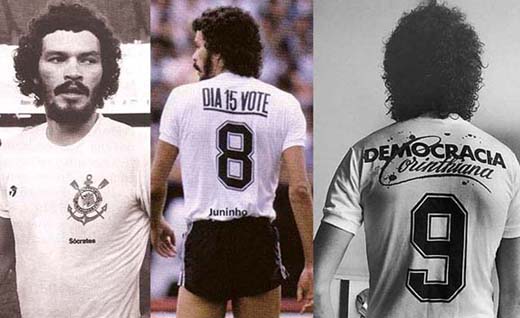
Sócrates asked a question almost nobody else had dared to: Can football teach people how to govern themselves?
This is a profoundly political question, but not a partisan one. It concerns the nature of freedom. Modern institutions often assume that efficiency requires hierarchy and that excellence demands control. Sócrates suspected otherwise. He wondered whether responsibility might flourish under participation and whether freedom itself could become a source of strength. In this sense, he resembles the great civic thinkers of antiquity more than a conventional footballer. The field became a classroom; the dressing room, a civic institution; and football, a rehearsal for democracy.
Football is about reconciling freedom and structure. ~ Pep Guardiola
Cruyff’s understanding of space, Menotti’s defense of creativity, Valdano’s concern with human beings, Sacchi’s organizational discipline, and modern analytics’ obsession with measurement all illuminate part of the same reality. Guardiola refuses to choose between them.
Guardiola attempts something more ambitious: he seeks reconciliation.
The great debates of football increasingly appear false from his perspective. Freedom versus structure. Creativity versus discipline. Art versus science. Humanity versus analytics. These oppositions dissolve. The purpose of structure is not to eliminate freedom; it is to create freedom. The purpose of positional play is not to constrain imagination; it is to generate possibilities for imagination. The purpose of analysis is not to replace intuition; it is to improve intuition.
Guardiola’s football represents a kind of synthesis. The highest forms of excellence emerge not when one principle defeats another but when seemingly contradictory principles learn to coexist.
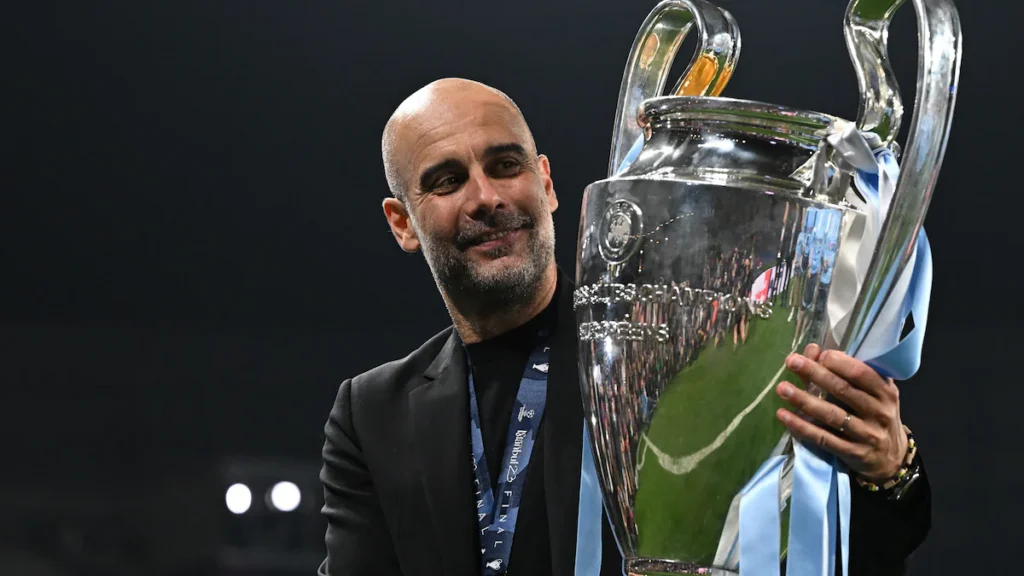
At this point, football begins to reveal its power as a metaphor for human life. These five thinkers address questions faced by every civilization. Football condenses them into ninety minutes.
This may explain why the game continues to fascinate billions despite its apparent simplicity. Beneath the goals and trophies lies something deeper. Football has become one of the few remaining arenas where modern societies continue to debate the relationship between freedom and order, individual brilliance and collective purpose, science and art, efficiency and meaning. The observations and investigations over the years merge into a philosophy of human flourishing. And perhaps that is why football remains larger than any statistic, any trophy, or any result. For beneath the game lies a question that every generation must answer anew: Not how football should be played. But how human beings should live.

Check in tomorrow for our next article in the series leading to the FIFA World Cup 2026.
This series is a concise version of a long-format Substack series on the World Cup by JP Santhanam. The Substack post can be read here.
Related Stories: FIFA World Cup 2026








“A fascinating exploration of football beyond tactics and statistics. The blend of philosophy, leadership, creativity and analytics shows why the game continues to inspire millions across generations. Thought-provoking and beautifully written.”