Rashtriya Swayamsevak Sangh (RSS) marks its centenary this year. Founded on 27 September 1925 in Nagpur by Dr. Keshav Baliram Hedgewar, the RSS has grown into one of the most powerful extra-political organisations in the country. Its celebrated organisational discipline and social mobilisations have translated into deep political influence. Yet alongside that power lies a complex and contested legacy – one that must be examined in the light of India’s constitutional ideals, pluralist promise and social justice imperatives.
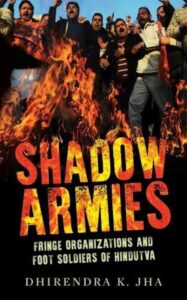
Dhirendra K. Jha, in “Shadow Armies: Fringe Organisations & Foot Soldiers of Hindutva” (2019), cautions that the Sangh was designed not simply as a cultural society but as “a disciplined Hindu militia to safeguard a community under siege” (Jha 2019, p. 13). That framing is central to understanding how, over time, the RSS’s aims and actions have often clashed with patterns of exclusion and ideological rigidity.
Foundational Fault Lines: Caste, Gender, and Leadership Exclusion
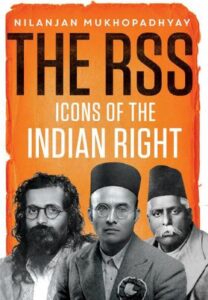
Although the RSS projects itself as a force for Hindu unity, from its earliest years it reproduced deep social hierarchies within its own ranks. Nilanjan Mukhopadhyay, in “RSS: Icons of the Indian Right” (2009), observes that “despite the rhetoric of Samajik samrasta (social harmony), the Sangh remained an upper-caste preserve, with negligible representation from Dalits (Adivasis) or backward classes in leadership roles” (Mukhopadhyay, 2009, p. 45).
This exclusion is mirrored in gender dynamics. Women are never included in the RSS itself but channelled to the separately organised Rashtriya Sevika Samiti. Shamsul Islam, in “RSS, School Textbooks and the Murder of Mahatma Gandhi” (2013), characterises this arrangement as emblematic: “The Sangh’s imagination of society is deeply patriarchal, where the woman is to be the custodian of tradition, not an equal partner in leadership” (Islam 2013, p. 98).
Ideological Dissonance: Resistance to Constitutional Principles
The RSS’s foundational principles clashed with India’s constitutional order. Golwalkar, the second Sarsanghchalak, rejected the idea of secular, pluralist governance. “The worst thing about our Constitution is that it has absolutely nothing which can be called our own,” he wrote in “Bunch of Thoughts” (1966). Golwalkar openly derided the spirit of the Constitution as alien, writing that minorities should “merely coexist, not be assimilated” and warning that their refusal to adopt the Hindu culture and worldview rendered them “a threat” to national unity (Bunch of Thoughts, p. 52).
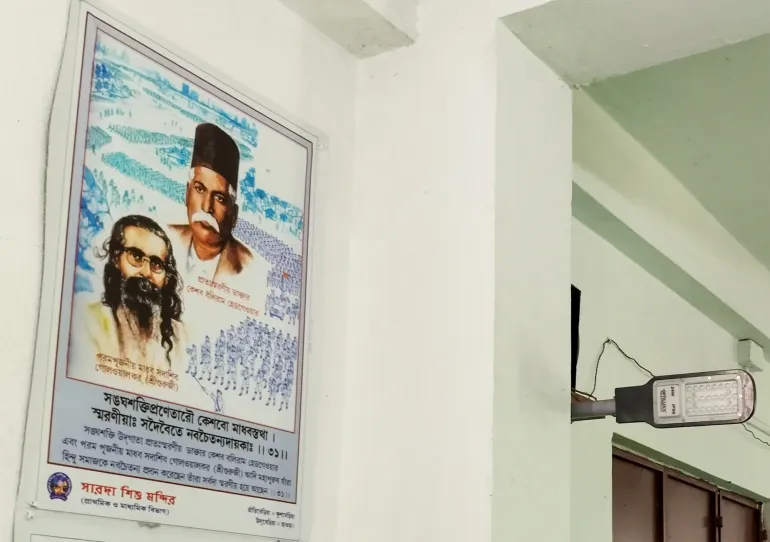
This disdain extended to social equality. For Golwalkar, caste hierarchy was “natural” and integral to social order. “The idea of a casteless society is utopian,” he argued, dismissing egalitarianism as Western contamination.
A Quiet Bystander: The RSS And the Freedom Struggle
In the most critical moment of India’s national movement — the anti-colonial struggle — the RSS stood apart. Instead of mass political mobilisation, it focused inward, cultivating cultural strength. Scholars have pointed out that the Sangh largely abstained from the Quit India movement and other landmark campaigns against colonial rule. Even as leaders like Gandhi, Nehru, Bose and Azad were imprisoned, the RSS maintained silence.
B.R Ambedkar famously remarked that the Sangh “stood aloof” during the struggle (Ambedkar, What Congress and Gandhi Have Done to the Untouchables, 1945). Even Sardar Vallabhbhai Patel criticised the RSS for its limited contribution to the national cause.
The Shadow of Violence: Gandhi’s Assassination and Aftermath
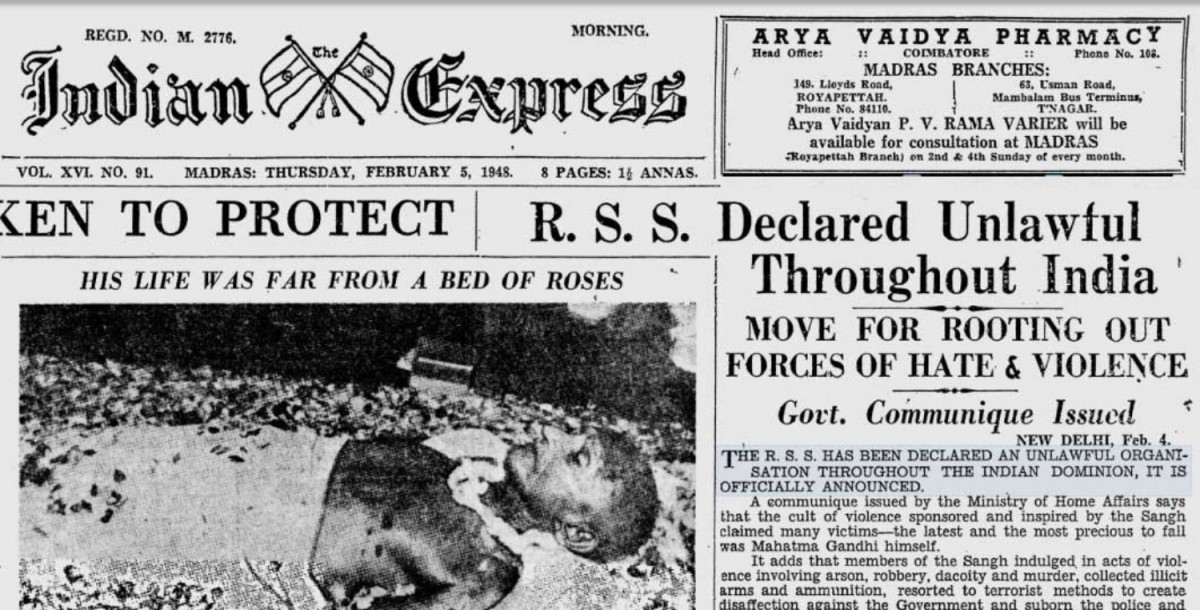
The assassination of Mahatma Gandhi in January 1948 remains among the darkest chapters in modern India. Nathuram Godse, Gandhi’s assassin, had been associated with the RSS. While the Sangh formally denied involvement, the government banned it for nearly two years.
Sardar Patel wrote to M.S. Golwalkar in September 1948 that “all their [RSS’s] speeches were full of communal poison… they created an atmosphere in the country in which such a ghastly tragedy became possible” (Patel, Collected Works, Vol. 10, p. 395).
Secrecy, Bans, and the Accountability Deficit
Over its 100 years, the RSS has weathered multiple bans – 1948 (after Gandhi’s death), 1975 (during the Emergency), and again in 1992 (after the Babri Masjid demolition). Yet each time, it re-emerged stronger, expanding its reach into education, media, trade unions, and civil society. This growth, however, has come with limited transparency. Despite its vast influence, the RSS is registered not as a political entity but as a “cultural organisation,” shielding it from public scrutiny and democratic accountability.
From Margin to Mainstream: Political Symbiosis
The RSS and its political arm, the Bharatiya Janata Party (BJP), have perfected a nationalist narrative, blurring the lines between cultural and political power. The Sangh functions as a major ideological, cadre-recruiting, and policy-shaping force behind the BJP. As Christophe Jaffrelot notes, “The Hindu Rashtra is no longer an abstract dream; it is being legislated, normalized, and institutionalized” (Hindu Nationalism, 2021, p. 101).
Authoritarian Resonances: Foreign Influences and Ideological Parallels
Golwalkar drew inspiration from European fascist models. In “We, or Our Nationhood Defined” (1939), he praised Nazi Germany for its “race pride” and “purging” of minorities. Scholars have noted these resonances as more than incidental, suggesting a worldview hostile to pluralism, dissent, and individual freedoms (Fascism & Nationalism, 2019, pp. 48–53).
Toward a Candid Reckoning
As the RSS turns 100, its legacy demands rigorous scrutiny. Its foundational exclusionary impulses, resistance to constitutional values, and ambivalence toward democracy sit uneasily with India’s pluralist vision. The essential question is whether a century-old organisation that once stood apart from the freedom struggle and harboured disdain for constitutional ideals can meaningfully align with the republic’s democratic aspirations.
This article was originally published in “The Emerging World” Daily, published from Delhi.