


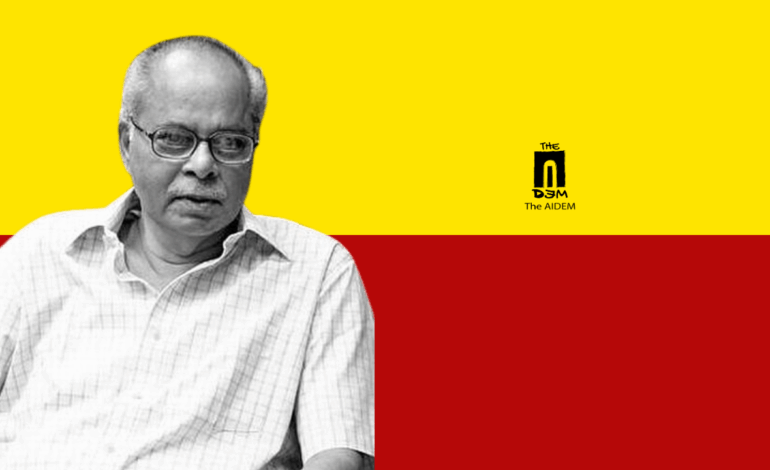
When I say that Professor . K.N. Panikkar, who passed away in Thiruvananthapuram on March 9, was the “father” of Keralam, many may laugh. They would say that honour belongs to Parasuraman, the warrior-sage who, legend says, hurled his axe into the sea and reclaimed the land that became Kerala from the Arabian Sea.
Others would point to different origins of the idea of Kerala. At the Kerala Club in New Delhi—founded by V.P. Menon in 1939—we often remind ourselves that when the Club was established there was no political entity called Kerala. There were only three regions: Travancore and Kochi, ruled by Maharajas, and Malabar, administered directly by the British as part of the Madras Presidency.
Followers of the Ramakrishna Mission, including my friend Prof. Rajasekharan Nair of Ottapalam, would credit the spiritual awakening brought by the disciples of Swami Vivekananda. One such disciple introduced the Mission to Kerala and established an ashram on the banks of the Periyar, sowing seeds of a broader cultural identity.
Yet, if I were to identify someone who persistently imagined the region as a coherent intellectual and cultural entity, I would say it was Prof. K.N. Panikkar. For him, the land was not merely “Kerala” but “Keralam”—a term he used consistently in his writings long before the present demand to officially rename the state gains parliamentary approval and presidential assent.
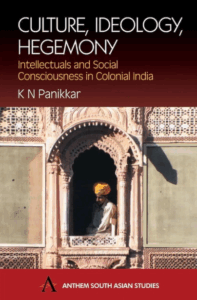
Few may know that Panikkar almost always used the term “Keralam” in his scholarly work, although he wrote largely in English. I first noticed this about 35 years ago while reading his book Culture, Ideology, Hegemony: Intellectuals and Social Consciousness in Colonial India, published by Tulika. The name of the state appeared several times in the book, and every single time it was written as “Keralam”.
At first I thought it was an editorial oversight. But the repetition made it clear that it was deliberate. Panikkar was making a point about cultural identity, historical memory and linguistic authenticity.
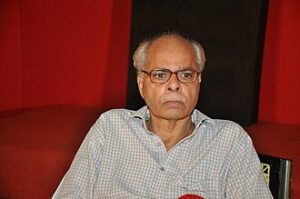
I met Prof. Panikkar only once, when he addressed a gathering at the Kerala Club in New Delhi. At that time he was Professor of Modern History at the Centre for Historical Studies, Jawaharlal Nehru University. What struck me most was the simplicity with which he spoke about complex historical questions. There was no intellectual arrogance, no attempt to overwhelm the audience with jargon. Instead, he spoke like a teacher eager to share knowledge.
That meeting encouraged me to read him more closely. Around the same time I had begun writing a long-running column in the Indian Currents at the request of its editor, Fr. Xavier Vadakkekara. Those were turbulent years. The Mandal Commission report had ignited fierce debate about caste and social justice. L.K. Advani’s Rath Yatra had intensified communal tensions across the country.
Communalism, secularism and nationalism were subjects that dominated public discourse. In trying to understand these developments, I found myself returning repeatedly to Panikkar’s writings. Under the pseudonym “Bharat Putra,” which I used for the column, I quoted him frequently. In fact, he became my favourite author to cite.
His works on communalism, colonial ideology and the peasant movement in Kerala provided intellectual clarity in a time of confusion. Panikkar did not treat communalism merely as a political phenomenon. He analysed its historical roots, its ideological structures and the social forces that sustained it.
Equally illuminating were his writings on the Renaissance movement in nineteenth-century India. Kerala’s first Chief Minister, E.M.S. Namboothiripad—himself an accomplished historian—held Panikkar’s scholarship in high regard. Such was his appreciation that EMS wrote a blurb for one of Panikkar’s books, an endorsement that spoke volumes about the historian’s intellectual stature.
Panikkar wrote extensively about the social and cultural transformations associated with the Indian Renaissance, led by figures like Raja Rammohun Roy and Bankim Chandra Chatterjee. He also explored the social movements within Kerala itself, examining how the region experienced its own form of renaissance through struggles against caste oppression and social stagnation.
One of Panikkar’s essays introduced me to O. Chandu Menon’s famous novel Indulekha. Although the first Malayalam novel to appear was Appu Nedungadi’s Kundalatha in 1887, critics widely regard Indulekha, published in 1889, as the first truly accomplished Malayalam novel, combining literary sophistication with social insight.
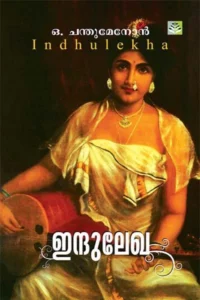
For Panikkar, Indulekha was far more than a romantic tale. The novel tells the story of Indulekha, a highly educated and intelligent Nair woman, and her love for Madhavan, a Western-educated young man. Their relationship symbolises the emergence of a new social order shaped by education, rationality and self-respect. The story unfolds against the background of a society dominated by conservative Brahminical customs and outdated feudal practices. Indulekha refuses to submit to a marriage proposal from an elderly Namboothiri Brahmin who embodies those traditions. Instead, she asserts her right to choose her partner.
In doing so, the novel captures the clash between tradition and modernity that defined Kerala’s social transformation in the late nineteenth century. Panikkar saw the novel as a powerful reflection of a society in transition.
About 12 years ago I visited Kottakkal to address a meeting and had the opportunity to see the museum established by the Kottakkal Arya Vaidya Sala. The institution was founded by Vaidyaratnam P.S. Varier in 1902, a visionary who played a pivotal role in reviving Ayurveda in Kerala.
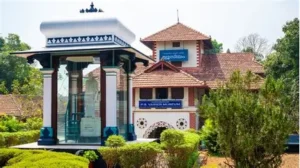
At a time when traditional medicine faced neglect under colonial rule, Varier institutionalised Ayurvedic practice, combining classical knowledge with organised production of medicines and modern methods of training practitioners. The museum there documents not only the history of the institution but also the broader heritage of Ayurveda in Kerala. It is a reminder that indigenous knowledge systems could adapt and flourish in the modern age when guided by enlightened leadership.
What fascinated me during that visit was Panikkar’s observation about Varier’s extraordinary popularity among the people. Varier was so deeply respected that during communal disturbances in the region, it was the local Muslim community that voluntarily stood guard outside his house to protect him.
That anecdote illustrates the kind of social harmony that once characterised Kerala’s public life. Panikkar also wrote about the history of Ayurveda itself. He pointed out that certain traditional beliefs sometimes hindered its scientific development. For instance, the notion that no sharp-edged instrument should be used on the human body effectively discouraged surgical innovation, limiting the scope of the medical tradition.
His writings were equally insightful on the subject of marriage reform in Kerala. He examined the struggles against the oppressive customs that once prevailed in the Namboothiri community, where Brahmin men could claim relationships with women outside their caste while denying them dignity and legitimacy.
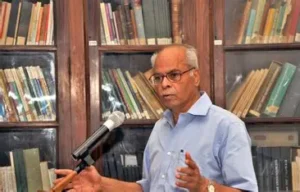
At JNU, Panikkar was a contemporary of the eminent sociologist Prof. T.K. Oommen. Both scholars eventually rose to become Deans around the same time. Yet their intellectual journeys were quite different. Panikkar was associated with the dominant Marxist scholarly tradition at JNU, which shaped much of the university’s historiography. Prof. Oommen, on the other hand, was more of a lone voice, often standing apart from the prevailing ideological camps and sometimes paying the price for that independence.
It seems almost providential that the younger of the two scholars passed away only a few days before Prof. Panikkar.
After retiring from JNU, Panikkar returned to Thiruvananthapuram, where he continued to remain intellectually active. He chaired committees, led institutions and remained engaged in public debates on history, culture and secularism.
What distinguished Panikkar’s scholarship was his refusal to accept simplistic narratives of the past. He rejected both imperialist interpretations that glorified colonial rule and narrowly nationalist histories that ignored social contradictions. Instead, he examined intellectual history through the lenses of culture, ideology and social change.
For readers like me, his writings opened windows into the complex processes that shaped modern India. As news of his passing spreads, scholars and students across the country will remember him as a formidable historian. For some of us, however, he will also remain the thinker who insisted on calling our state “Keralam,” reminding us that history is not merely about the past but also about how we imagine ourselves. May his soul find eternal rest.







As usual Philip sir captures the essence of a person in his obituary. This one is even more beautifully articulate as it talks about one of India’s greatest and people oriented historians , KN Psnnikkar . Adieu KNP sir abd salaams Philipsir
“A fitting tribute to K.N. Panikkar and his deep understanding of Kerala’s history and identity.”