

A Lullaby for Zeinab of Minab

Some wars are narrated through maps, missiles, and strategy. Others are remembered through lullabies, school bags, and the silence left behind in a child’s bed. In his 31st edition of Everything Under the Sun, Nalin Verma moves beyond the abstractions of geopolitics to tell the story of Zeinab of Minab—a little girl whose life, like many others in war’s shadow, was reduced to the cold phrase “collateral damage.” Through memory, metaphor, and moral proximity, the column asks a haunting question: What does power mean when it cannot restore a child’s lost tomorrow?
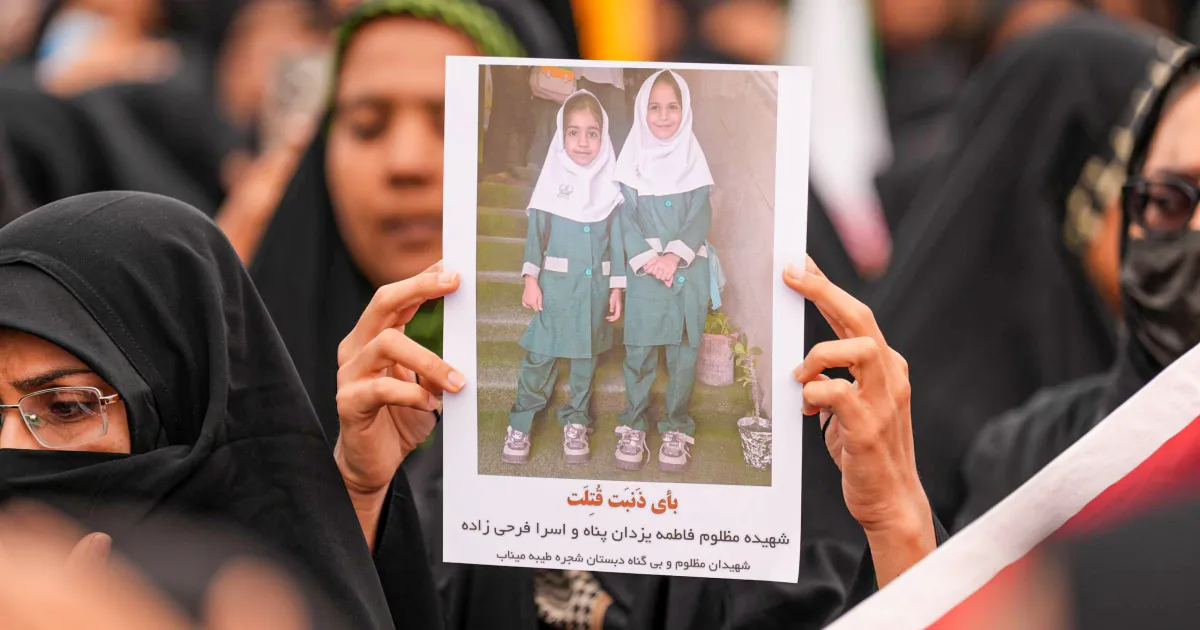
Lālo lālo, nahāl-e nakhl-e man
Bādā ke bād rishe-at rā nashkanad
Māh sekke-ye noqre dar āsemān
Tā shab gozarad, khābi barāyat bekharad
(Lalo, Lalo, my date-palm shoot; may the wind not break your roots.
The moon is a silver coin in the sky, to buy you a dream as the night goes by.)
Zeinab’s mother sang the lullaby to make her baby sleep on the night before dropping her to school the next morning. Zeinab ate a piece of flatbread with white cheese and a bit of date syrup or carrot jam. Her mother packed Zeinab’s tiffin with slices of mango, nuts, and a simple sandwich for the mid-morning meal.
Zeinab, with a colourful satchel bobbing like a flower against the desert dust on her back, joined her friends—walking in groups or riding on the backs of their fathers’ motorbikes—to her primary school. But at 10:45 on February 28, Zeinab was among those buried in the chaotic debris of the primary school building.
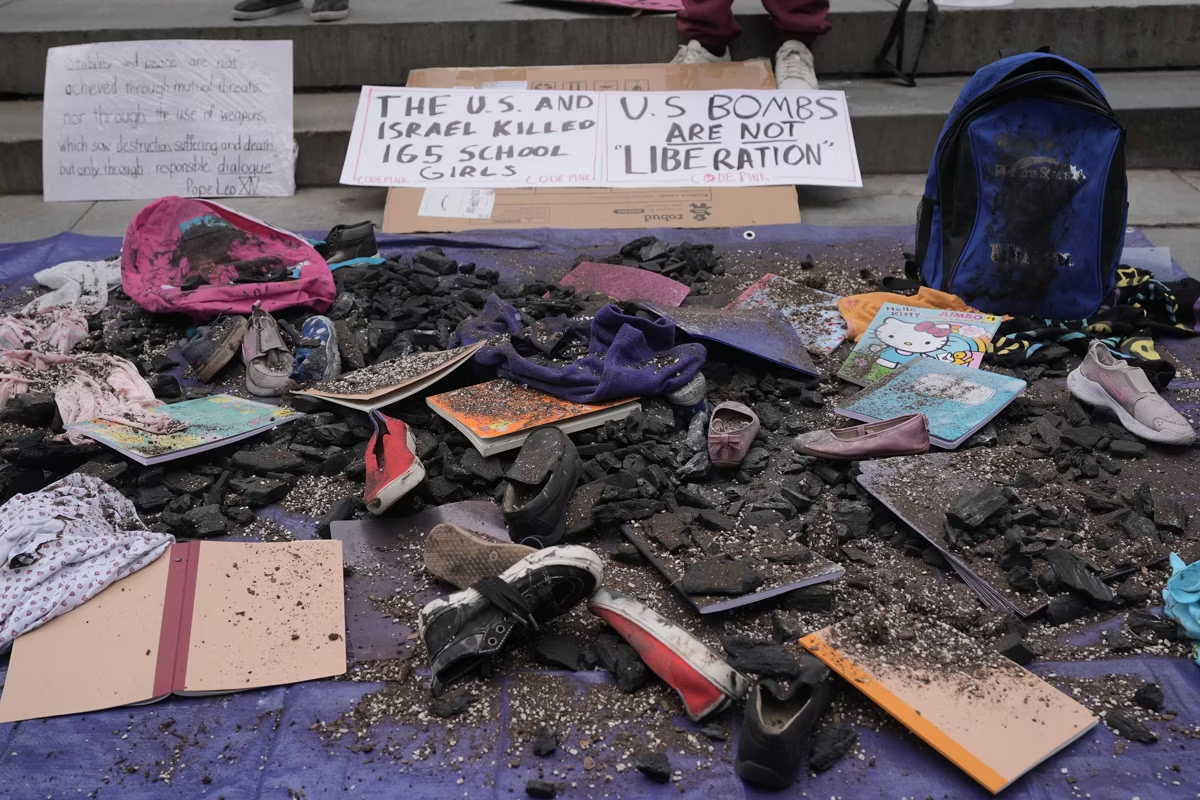
Pink plastic sandals lay on an overturned bookshelf, covered in grey concrete powder. It is not known whether the sandals belonged to Zeinab. But it hardly matters. Zeinab was among the 168 to 180 girls, aged 7–12, now part of the “collateral damage” that the Tomahawk missile had caused at the school.
Yours truly is a journalist by training—supposed to employ the formula of the five “Ws and an H” (where, when, who, what, why, and how)—to ensure truthfulness and authenticity in reportage. You may wonder—and rightly so—whether this description has taken care of the ethics and elements of journalism.
It is true that the Shajareh Tayyebeh school at Minab in the Hormozgan province of Iran is located 4,000 to 5,000 kilometres away from this writer’s village in the Indo-Gangetic plains of India. It is, of course, a big distance on the geographical map. But Minab and its people stay in our backyard in terms of moral distance.
Zeinab: The Mah-Pishano
Zeinab was a Mah-Pishano. Mothers and teachers in Minab call a loving, bright, kind, and beautiful girl Mah-Pishano (“moon on the forehead”), the way we call our daughter—bright and beautiful—chand ka tukda (a piece of the moon). For the world leaders—Donald Trump and Benjamin Netanyahu—Zeinab and her school were a strategic location in the vicinity of the Islamic Revolutionary Guard Corps (IRGC). For the Tomahawk-operating generals, Zeinab was a target.
Yours truly—a poor pen-pusher admittedly bereft of knowledge and expertise in geopolitics, military operations, and the oil economy—can’t see beyond the tiffin box, the school bag, and the stories of the moon and stars that shine on our mango orchards and palm trees, as ubiquitous in Minab as in the villages of the Indo-Gangetic plains and those south of the Vindhyas in India.
Shajareh Tayyebeh means “The Blessed Tree”—a name rooted in a spiritual metaphor of a tree that provides shade and fruit to all. We in India might be speaking Urdu—a fusion of Hindavi and Persian—Hindi, Bhojpuri, Awadhi, Konkani, Malayalam, Tamil, Telugu, Kannada, and others. But the metaphor of the tree—a selfless giver—is the same. Our villages and towns have countless schools named after trees.
Zeinab might not have carried even the worth of a dot in the vast statistics of “collateral damage” prepared by the “data experts”. But hers was a 100 percent loss for her parents. Can the scientific tools and technologies boasting of their accuracy and masterful efficacy measure the emptiness that her empty bed has created for her parents and relatives? Does Trump, who boasts of his “superpower” status, carry the power to fill the emptiness that Zeinab has left behind?

Zeinab was Mah-Pishano. She had memorised the Quran and was preparing for a national recitation contest. The Tomahawk missile, propelled with “precision” and “accuracy”, stole the futures of the community members who lost Zeinab among the 168–180 others, including her Khales (school teachers who also act as doting aunties for the Zeinabs).
The Tomahawks, worth millions of dollars, were reduced to debris and wreckage. There was no taker for the machine at the school. But the dented walls of the Shajareh Tayyebeh school had paintings of green leaves, apples, and mangoes—a reminder that Zeinab, her friends, and the Khales might have picked up the paintbrush to paint the stories of fruits, plants, and flowers on the walls.
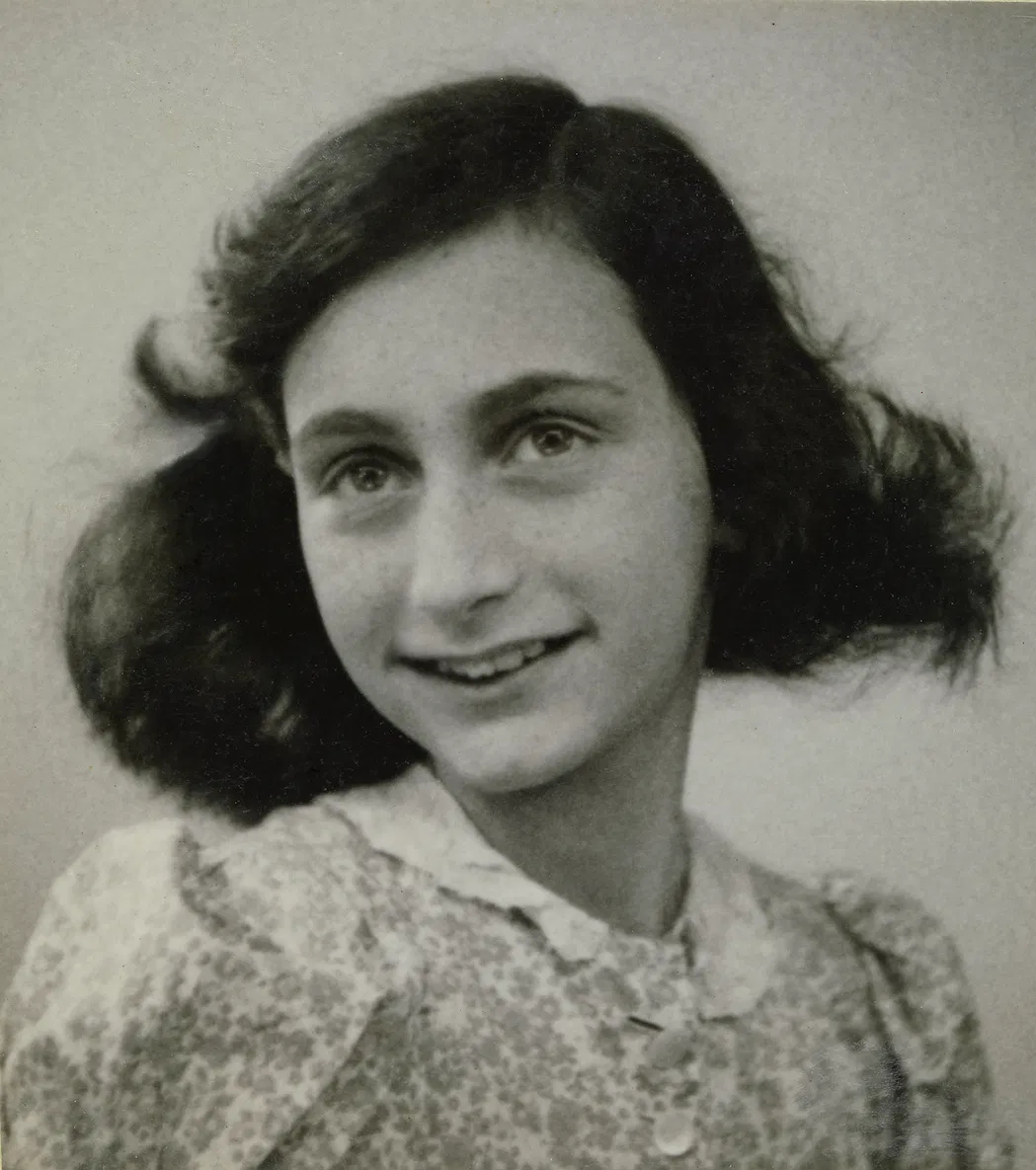
The Tomahawk is dead. Other war machines, too, will die. And so will the “world leaders” boast of their power and resources. But Zeinab will live in her paintings, school bag, tiffin, and sandals, the way the young girl Anne Frank lived in her diary during World War II in 20th-century Europe.
People of our generation who were born and grew up under the star- and moon-filled skies of the villages of north India vividly remember our mothers babbling to us when we were Zeinab’s age and cried: “Chanda mama, aarey awaa-paarey awaa, nadiya kinare awaa, sona ke katorwa me doodh-bhat lele awaa” (Uncle Moon, come by the riverbank, bring a bowl full of milk and rice for my child). It is just like Minab mothers who sing for their crying babies: “Lulu, lulu, my flower, don’t cry / The night is long, the stars are high.”
Like the villages in Bihar and Uttar Pradesh—and also those in Kerala and Tamil Nadu—the schoolchildren in Hormozgan province of Iran came from families of agriculturists, palm and mango growers, shopkeepers, and small-time traders at the nearby naval and transit hubs.
Minab is famous for the Panjshambe Bazaar (Thursday Market), where the air smells of dried limes and incense. The children often play with miniature clay pots called jahleh. These are traditional water jugs; craftsmen often make tiny versions for children to play “house” with—just like in Munshi Premchand’s classic children’s story Eidgah, in which children buy clay toys from the local mela.
Mothers and grandmothers of Minab often weave small birds or fans out of palm fronds (pish) to give to the children. These are the “small toys” of the soil—biodegradable, handmade, and scented with the earth—just as our elders twisted paper to make boats or wove tiny baskets from strands of hay for us to play with when we were small children. The Hormozgan villages are filled with mango orchards and palm trees, mirroring what one sees while walking on the gravel paths of the Indo-Gangetic plains or south of the Vindhyas.
Nitish Kumar’s Cycle Revolution
As late as 2007–08, Bihar’s chief minister, Nitish Kumar, gave bicycles to schoolgirls. It was a mesmerising sight to see girls who had been engaged in gathering firewood and herding goats riding bicycles in colourful school uniforms with school bags on their backs in Bihar’s countryside.
Nitish instantly became Nitish chacha (Uncle Nitish) for these girls. The turn of political events may have paved the way for his exit as Bihar’s chief minister. He might have his share of achievements and underperformance in his more than two decades in power. But he will go into Bihar’s folklore for giving the pleasure of the bicycle and the dream of speed to goat-herding and firewood-gathering girls—the cycle story will last for a long time.

A Pledge
I pledge the remuneration for this column to the parents and relatives of Zeinab and the other children of the Shajareh Tayyebeh School in Minab. I humbly request the management of The Aidem and Madhyamam to channel my remuneration to the family members of the victims.
I know it is a very small amount. But it is not a favour. Rather, it is a debt on me, in the sense that I know about these children through the folktales, ballads, verses, dastangoi, and stories of Ferdowsi, Omar Khayyam, Amir Khusro, and Mirza Ghalib, and the numerous Sufi saints who wrote and spoke by fusing Persian and Hindustani languages and dialects, as well as the traders who travelled between Iran and India for centuries.
Zeinab is no different from my own children.







“A touching and poetic piece that beautifully reflects emotion and humanity.”
The author’s narration is deliberately poetic because the human pain of lost childhood, broken dreams, innocence, and humanity often resists plain reportage. Poetry becomes the most fitting vessel to carry such grief. In the wilderness of war, his voice emerges as a serene reminder of shared humanity, echoing the ancient Indian ideal of Vasudhaiva Kutumbakam — the world as one family. Every wound, every loss, is not confined to a nation or a people, but is common to all human beings.
At the same time, the author does not abandon the journalist in him. He challenges himself with the five fundamental questions of journalism — Where, When, Who, What, Why, and How. Each is answered contextually, grounding the elegiac prose in factual scaffolding.
Yet, if one strips away context, the answers become universal:
A deeply moving article that shifts our attention from geopolitics to lived experience. Reminded that war is ultimately and disproportionately felt through ordinary lives. Quietly powerful and necessary reading
Heart touching story.