

The Biopolitical Anatomy of Hindutva Fascism: Part II: SIR, EVMs and the Judiciary

The Architecture of Exclusion: Necropolitics and the Hazardous Citizen
To understand the operational logic of contemporary majoritarian governance, we must look beyond the reassuring rhetoric of constitutional democracy and examine the citizen’s physical body. At its core, citizenship is the violent imprint of the nation-state on the human form. Those whose bodies fall outside this sovereign mark are not merely seen as uncivilised or unmapped; they are structurally marked as targets for systemic elimination. As Giorgio Agamben famously observed, the sovereign sphere includes life primarily through its exclusion, defining a body by its capacity to be killed. Consequently, entry into the polis is never unconditional; it is permanently anchored in the structural possibility of expulsion.
This reality thoroughly dismantles the modern fiction that human rights are inalienable from birth. Proclaiming the existence of natural rights obscures a deeper, more troubling mechanism: the law inscribes itself onto your biological form the moment you enter the world, instantly circumscribing existence within parameters policed by a sovereign who arbitrates what constitutes a protectable and worthy life.
This structural stratification has deep historical and cultural roots. In the ancient Greek polis, women and slaves were entirely excluded from political life and relegated to the realm of bare animal existence (zoe). Similarly, the traditional Indian caste system organised society by dividing populations into those with surplus social capital and those without, marginalising Avarna and Dalit communities and reducing them to beasts of burden through a traditional, ritualistic biopolitics.
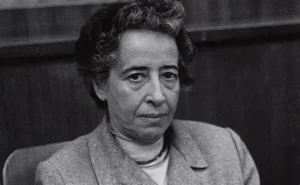
While modern democracy apparently extends political rights to all, the underlying exceptions persist. Hannah Arendt exposed this systemic vulnerability by questioning the existence of a foundational “right to have rights.” Without this primary, irrevocable guarantee, any specific civil right can be suspended or revoked by the state at will. A body stripped of this structural protection moves from a state of qualified political life (bios) to a phase of bare life, where its franchise is stripped by opaque administrative measures, and ultimately into the “death worlds” of permanent, unlivable conditions. Such a body becomes depoliticised, de-nationalised, and destined for institutional annihilation (like Umar Khalid and other UAPA victims).
This violent gap between abstract legal definitions and brutal lived experience is vibrantly illustrated by the targeted treatment of the politically or physically vulnerable. The tragic incarceration and structural neglect of the late activist Father Stan Swamy demonstrate how state security pretexts are weaponised to deny basic human dignity and judicial empathy, completely severing formal citizenship from actual human existence.
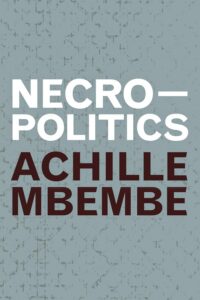
In the contemporary landscape, dissenting intellectuals (labelled “urban Naxals”) and Indian Muslims are subjected to a terrifying mutation of this power, rendered necropolitical citizens. Through the lens of Achille Mbembe’s Necropolitics, the sovereign power to dictate who may live and who must die, the state constructs “death worlds” for politically inconvenient populations.
In life, these populations are pushed to the fringes, harassed by selective administrative tools such as the Special Intensive Revision (SIR) and the UCC, and threatened with legal exile. Yet a supreme irony occurs at the moment of biological collapse: the state recognises their citizenship primarily in death or through the execution of state violence on their lives. The living body is treated as an existential threat that must be subdued, whereas the deceased body is perfectly safe; it can be seamlessly reintegrated into the legal record through meticulous posthumous processing, inquests, and closed case files. Thus, they become citizen by death; a sort of necropolitical citizenship is emerging.
To maintain this absolute control, the state capitalises on the latent vulnerability embedded in every civic body. By levying sweeping charges of treason, waging war against social justice movements, and branding critics or writers as national security threats for merely possessing radical literature, the sovereign instils a pervasive state of fear. The law ceases to function as an objective arbiter and instead becomes a tool of majoritarian discipline. By systematically assigning disparate values to majoritarian and minority lives, the legal system enforces an ethnic democracy, a political ecosystem in which the state manages populations not to protect them, but to legally manage their elimination.
The Judicial Rubber-Stamp: EVM Opacity and the Legalisation of the SIR hunting
This biopolitical shift from public sovereignty to bureaucratic control is not achieved merely through overt violence; it is systematically entrenched through the legal architecture of the democratic state, where judicial mechanisms increasingly insulate the apparatus of power from public oversight. The erosion of the citizen’s democratic agency is dual-pronged: it targets how votes are counted and, more fundamentally, who is allowed to remain on the voting rolls in the first place.
The first mechanism was legitimised by the Supreme Court’s judgment on Electronic Voting Machines (EVMs) and Voter Verified Paper Audit Trail (VVPAT) verification. In that case, the Court rejected petitions led by the Association for Democratic Reforms (ADR) seeking 100% physical verification of VVPAT slips. By prioritising automated efficiency over absolute transparency, the Court detached the biological voter from independent validation of their franchise. Public intellectuals such as Yogendra Yadav noted that reducing voting to a state-managed computational loop isolates the citizen. The Court ruled that popular suspicion of proprietary source code is insufficient grounds to disrupt bureaucratic machinery, affirming that the citizen’s expressive political act (bios) is subordinate to executive design.

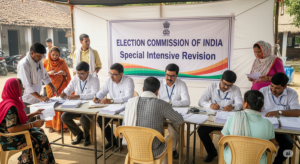
However, this electronic opacity forms only the defensive perimeter of the state. The offensive biopolitical manoeuvre is found in the Supreme Court’s landmark judgment upholding the Election Commission of India’s (ECI) Special Intensive Revision (SIR).
Delivered by a Bench led by Chief Justice Surya Kant, the judgment unanimously upheld the ECI’s authority to deploy the SIR under Section 21(3) of the Representation of the People Act, 1950, and Article 324 of the Constitution. The petitioners argued that the SIR was a surreptitious, backdoor move to conduct citizenship screening and mass profiling under the guise of purifying electoral rolls. Under the cover of this non-transparent process, a partisan ECI has conducted sweeping purges of voter registries, deleting more than 10% of voters across multiple states and disproportionately targeting minority populations, particularly Indian Muslims.
The profound danger of the SIR judgment lies in its striking internal contradiction, which exposes the thanatopolitical character of the contemporary state. On the one hand, the Supreme Court attempted to provide an alibi for its decision by declaring that deletion from an electoral roll “does not amount to a declaration that the individual is not a citizen of India.” It framed the deletion merely as the “Commission’s inability to be satisfied” for electoral purposes.
Yet, in the very same breath, the Court directed the ECI to forward all such deleted names to the competent authorities under the Citizenship Act within four weeks, setting a strict deadline for the “adjudication of their citizenship” before the upcoming elections.
This directive turns the foundational presumption of regular citizenship on its head. By sending millions of arbitrarily deleted individuals to executive tribunals under the Ministry of Home Affairs, the Court has institutionalised a mechanism that shifts the entire burden of proof onto marginalised individuals. The biological body is stripped of its political skin (the franchise) by an opaque administrative swipe, and is then forced to prove its right to exist before the lethal apparatus of state citizenship laws.
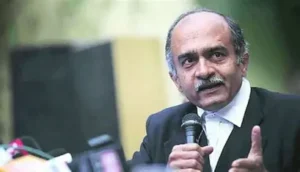
Senior advocate Prashant Bhushan delivered a strong critique of the verdict, calling the development “very unfortunate for democracy” and explicitly accusing the Election Commission of “working as an agent of the BJP.” Bhushan’s intervention cuts to the core of the institutional collapse: when the apex court validates an opaque, executive-led hunt that strips millions of their political status without prior due process, long after elections have already been altered by these very deletions, the judiciary ceases to be a shield against tyranny. Instead, it becomes the ultimate legitimising organ of fascist majoritarianism.
When the EVM-VVPAT judgment and the SIR verdict are integrated, the full anatomy of Hindutva’s biopolitical state is laid bare. The SIR hunt determines which bodies are excluded from the polis altogether, reducing them to Homo Sacer, bare lives marked for legal and political exile. Meanwhile, the unverifiable EVM matrix ensures that the bodies permitted to remain within the polis are reduced to compliant components of a state-controlled ritual.
Through this dual design, the transition from democracy to an ethnic fascism is completed, not by violating the law, but by rewriting it to ensure that the preservation of majoritarian purity becomes the highest constitutional mandate.
Read the first part of the article here








“A powerful reminder that football is much more than a sport. At its best, the beautiful game creates spaces for dialogue, empathy and collective hope, often bridging divides that politics and diplomacy struggle to overcome. An insightful reflection on football’s potential as a force for peace and social justice.”
Apologies for my previous comment—it was posted inadvertently and does not represent my opinion. After reading the article, I find its analysis insightful and thought-provoking, especially in highlighting concerns about democratic institutions and accountability. Thank you for bringing these issues into public discussion.