

Indian Farming Crisis : The Third Way — Part 1

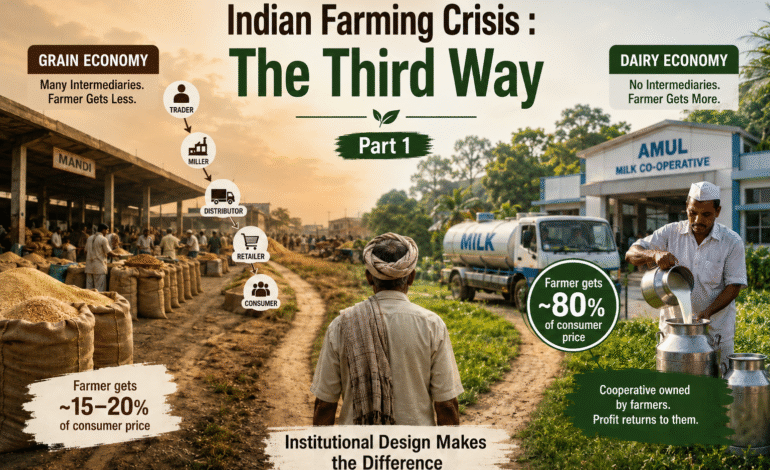
India’s farm crisis has produced two familiar camps: those who want more price guarantees for grain farmers and those who want the state to step back and let markets decide. Both camps are missing a more important question. Why does India’s dairy economy—with no price floors, no government procurement, and no subsidies—deliver farmers eighty per cent of what consumers pay, while the grain economy, supported by three lakh crore rupees of annual subsidy, cannot manage half that?
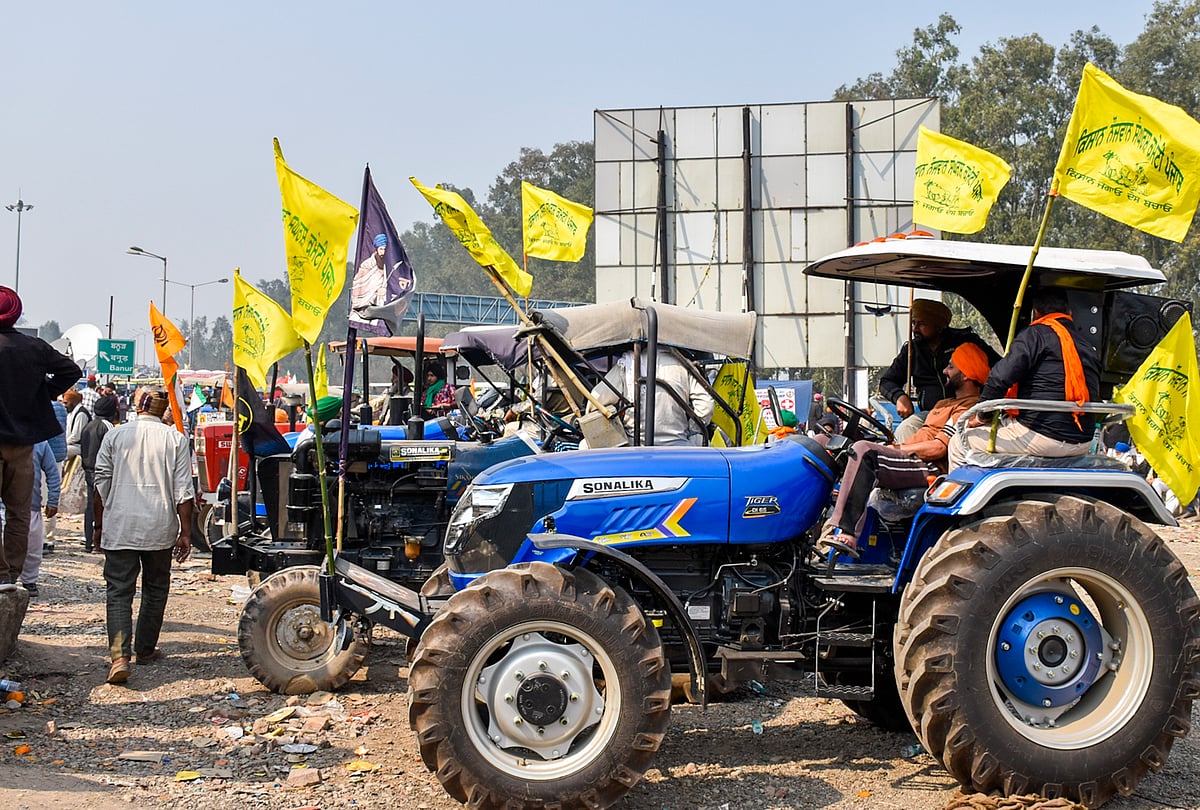
In February 2024, farmers from Punjab and Haryana marched on to Delhi again. Their demands were specific and, in the way that politically explosive demands tend to be, economically complicated: a legal guarantee of minimum support prices for twenty-three agricultural commodities, pricing based on a formula recommended by the Swaminathan Committe and the resolution of several other longstanding grievances about debt, pensions, and electricity. The police deployed water cannons and tear gas at the state border. The highway became a standoff. The nation watched.
Some Indian economists watched too, and they were not in agreement. Professor Ashok Gulati, one of India’s Free market Farm economists, argued that making the minimum support price legally enforceable would actually harm farmers in the long run—distorting production decisions, discouraging diversification, and locking the country into a grain monoculture that is already straining soil, water, and the budget simultaneously. Other analysts warned that pricing grain according to the Swaminathan formula—which adds a fifty per cent return over the full cost of production, including the imputed cost of family labour and land—would add as much as twenty per cent to food prices, pushing inflation in a country where the urban and rural poor spend nearly half their income on food.
On the other side, advocates of private investments, argued that the solution was to open agriculture to corporate supply chains—the model that the government had attempted and passed three farm laws in 2020, triggering a year-long farmer protest that eventually forced a humiliating repeal. The advocates of free markets had not succeeded in persuading the farmers, and the advocates of price floors had not succeeded in persuading the economists. The conversations were going in circles reaching nowhere.
This essay proposes a different starting point. Neither the MSP camp nor the private-investment camp has adequately answered the question posed most clearly by the comparison that sits directly in front of them, if they would only look: why does India’s dairy economy work well for farmers, while the grain economy works so poorly?
Indian dairy farmers receive eighty per cent of the consumer price for their milk. American dairy farmers, in one of the world’s most sophisticated agricultural economies, receive thirty.
The Budget That Reveals The Contradiction
In her 2024 interim budget, Finance Minister Nirmala Sitharaman allocated roughly 2.95 lakh crore rupees to agriculture and allied sectors. Of this, dairy received nine thousand crore rupees—about three per cent of the total. The remaining ninety-seven per cent went to food grain sector.
This might seem proportionate until you look at the underlying economics. In 2022-23, India’s dairy producers generated two hundred and thirty million tonnes of milk. That same year, grain producers generated three hundred and thirty million tonnes of food grain. The volumes are in the same order of magnitude. But in economic value, dairy has now surpassed food grain—contributing roughly five per cent of India’s GDP and sustaining the livelihoods of eighty million milk producers.
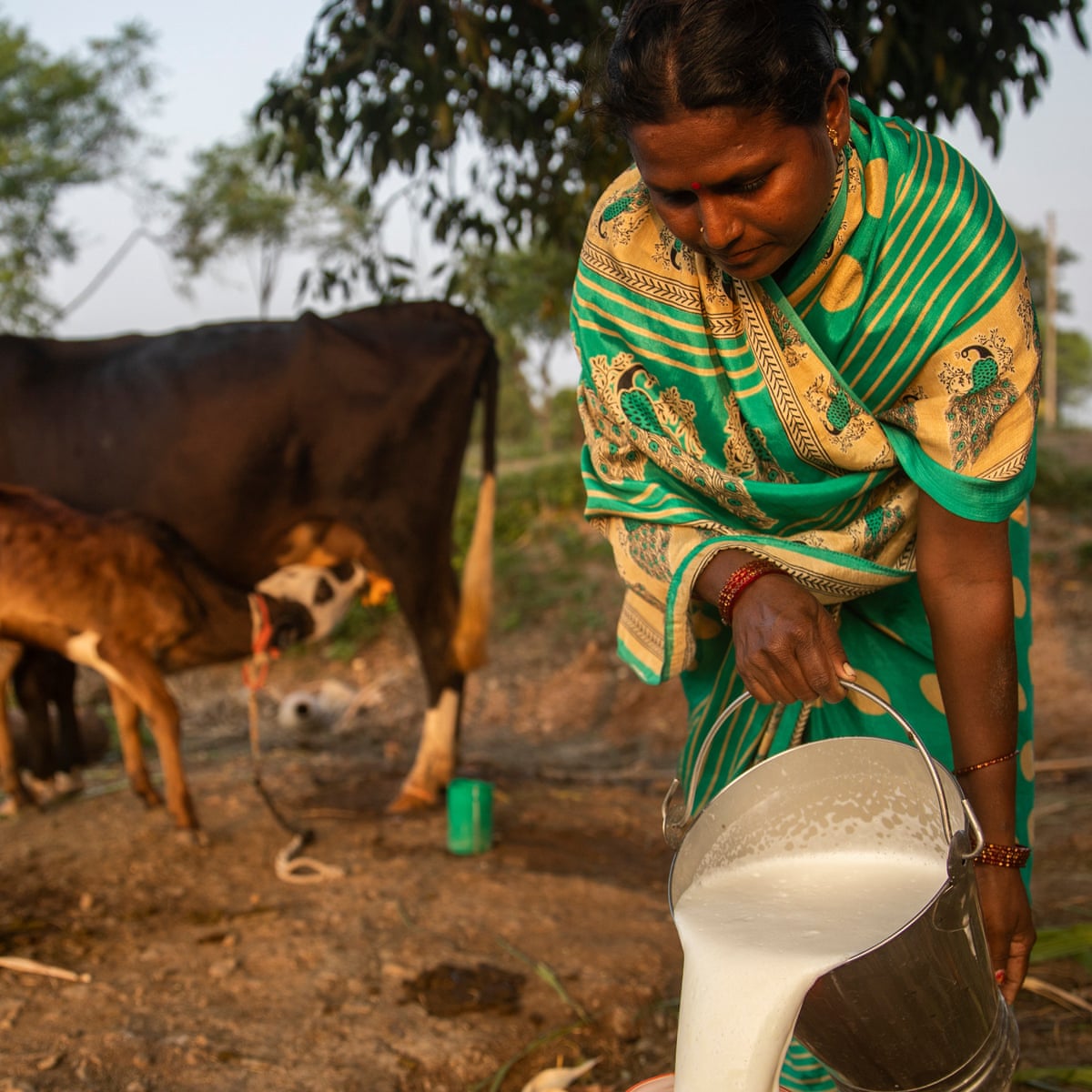
Here is the striking fact: those eighty million dairy farmers receive none of the procurement support at minimum price guarantee, and very little input subsidy that their counterparts in grain farming receive. And yet, on the measure that actually matters—the share of the consumer’s rupee that reaches the producer—dairy farmers do dramatically better.
Indian dairy farmers receive approximately eighty per cent of the retail price of milk as their procurement price. This figure has no parallel in any agricultural commodity in any country. American dairy farmers—operating in a sophisticated market economy receive about thirty per cent of what consumers pay. The three-hundred-percentage-point gap between India’s dairy farmers and America’s dairy farmers is not an accident. It is the product of a specific institutional structure that India built, starting in the nineteen-fifties, and has since largely forgotten to replicate.
Green and White: Two Revolutions, Different Premises
Independent India’s two greatest agricultural achievements are the Green Revolution and the White Revolution. Both transformed the country. India went from chronic food deficit to being the world’s second-largest grain producer. It went from milk scarcity to being the world’s largest milk producer. Both outcomes are genuine and consequential.

But the two revolutions were built on entirely different premises, and that difference has produced entirely different long-term consequences. The writer and policy thinker Arun Maira, writing in The Hindu, has drawn this contrast with unusual precision. The Green Revolution’s goal, he argues, was national food security: produce more grain, eliminate the famines, achieve self-sufficiency. The White Revolution’s goal was different: improve the incomes of small milk producers.

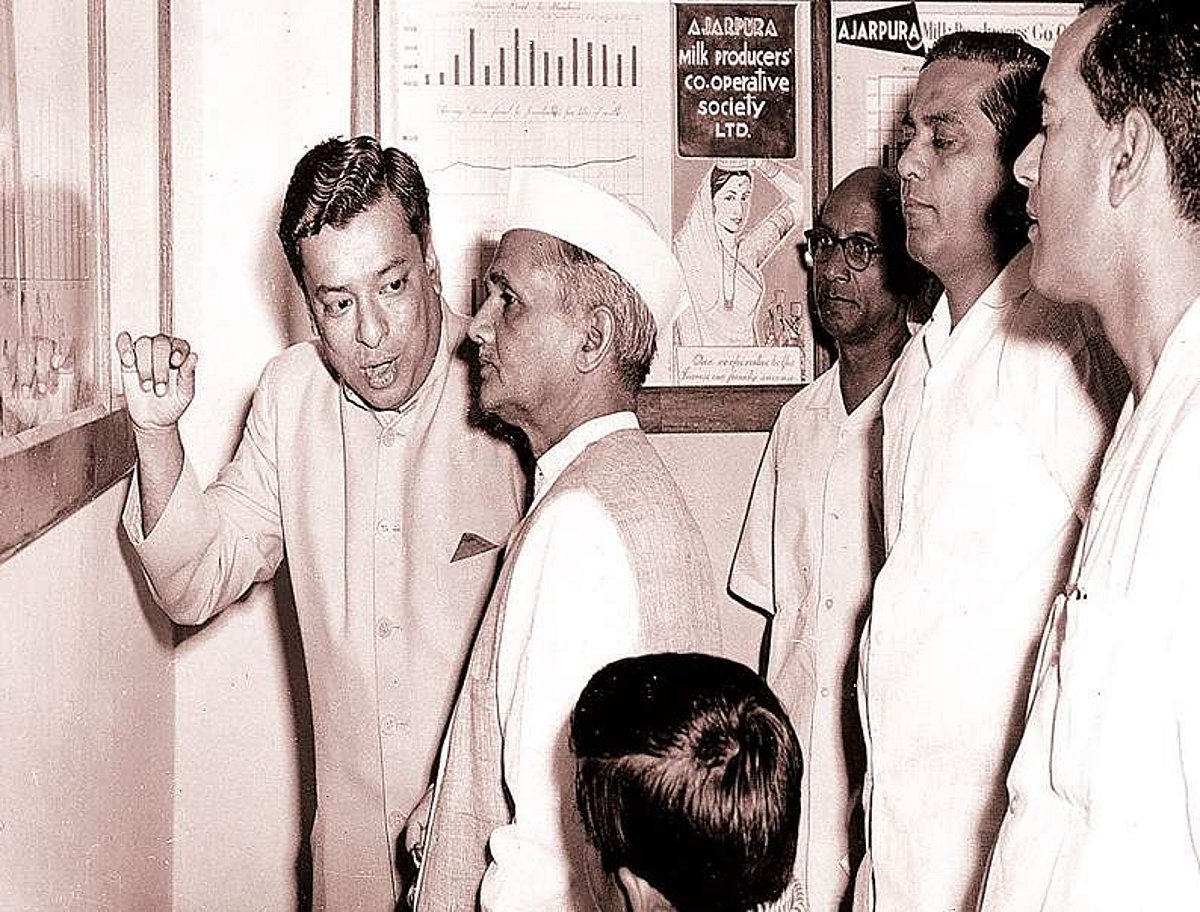
The Green Revolution pursued its goal through technology, irrigation infrastructure, and yield improvement. It was a production-side intervention, designed by farm scientists and implemented through government machinery. The farmer was the executor; the state was the designer. The White Revolution, by contrast, was a socio-economic intervention before it was a technological one. It was driven by the conviction—insisted on by Verghese Kurien, who ran the programme from a village in Gujarat—that the institutional structure of the supply chain mattered more than the biology of the cows.
The result of this difference is visible in the budget: the Green Revolution still requires annual subsidy of roughly three lakh crore rupees to keep functioning. The White Revolution requires almost none. Both produced abundance; only one produced a structure that sustains itself.
“A democratic economy means an economy that is of the people, by the people, and for the people. The Green Revolution gave India food security. The White Revolution gave Indian farmers a stake in the enterprise. They are not the same thing.”
Why the Grain Chain Fails Farmers
To understand why grain farmers receive so little of the consumer’s rupee, you have to follow the supply chain from the field to the table.
The government directly procures roughly fifteen to sixteen per cent of India’s food grain production at the minimum support price. This procurement is the mechanism through which the price floor operates. The government then distributes a large portion of this grain to poor households at heavily subsidised or zero cost under the Food Security Act of 2013. The current government has extended this programme to eighty crore people—fifty-seven per cent of India’s population—for the next five years.
This creates a structural paradox that policymakers have not resolved and may not be able to resolve within the current framework. When fifty-seven per cent of the population receives grain free of charge or close to it, the demand for grain in the open market collapses. Open-market prices fall far below the minimum support price. But if the government stops its free-grain programme, those eighty crore people face a food security crisis. And if the government stops its procurement programme, farmers are forced to sell their grain in the open market at these suppressed prices and face misery.
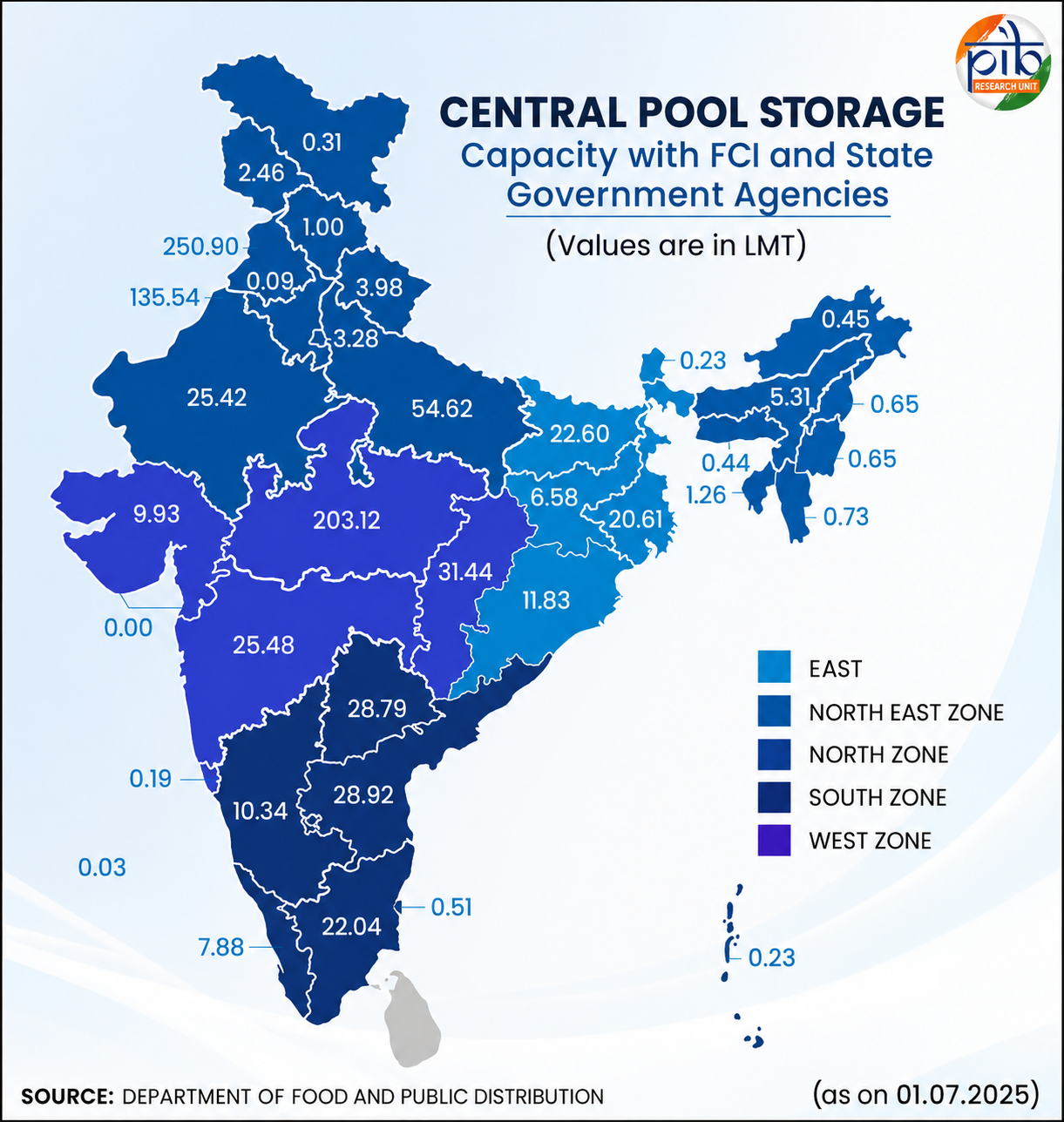
The government is therefore locked into procuring grain in quantities two to three times the actual requirement of the distribution programme, to support-food grain production. Warehouses across India are stocked with grain that serves no immediate purpose except to keep the floor from collapsing. The system requires its own excess to function.
Of the eighty-five per cent of grain production that the government does not procure, farmers must sell into the open market. And in that open market, they face a chain with two to three profit-taking intermediaries between farm and plate: the trader who aggregates grain at the mandi, the miller who processes it, and the retail distributor who sells it. Each of these entities extracts a margin. Each has more financial staying power than the small farmer with two and a half acres who cannot afford to hold his crop waiting for a better price. The consequence is systematic: in most years and most markets, the open-market price for grain is below the minimum support price, because the artificially suppressed demand—created by the free-grain programme—meets a chain of financially powerful intermediaries who set prices at the farmer’s expense.
This is not a market failure in the conventional sense. It is a structure that was created by policy, perpetuated by policy, and has now become impossible to dismantle without a crisis.
The open-market price for grain is, in most years, below the minimum support price. The free-grain programme that is supposed to help the poor has become the mechanism by which farmers are kept poor.
Why Dairy Works Differently
Milk and grain are produced in the same fields, by many of the same farmers, under the same weather. But the commercial structures that carry them from farm to consumer are entirely different.
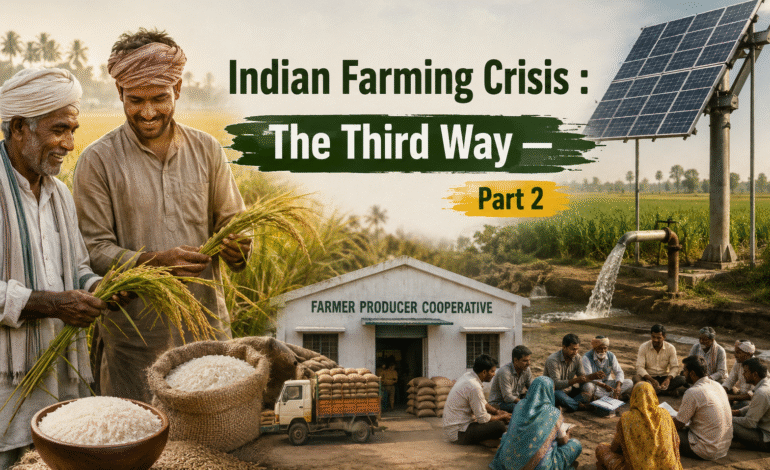
The dairy cooperative—Amul is the archetype, replicated in various forms across twenty-two states through Operation Flood—is owned by the farmers who supply it. There are no profit-taking intermediaries between the farmer and the consumer. The cooperative collects, chills, processes, packages, and distributes. The margin that would otherwise be captured by a chain of private traders accumulates within the cooperative and is returned to farmer-members through the procurement price, dividends, and services. This is why eighty per cent of the consumer’s rupee reaches the farmer: the leakage points have been eliminated by design.
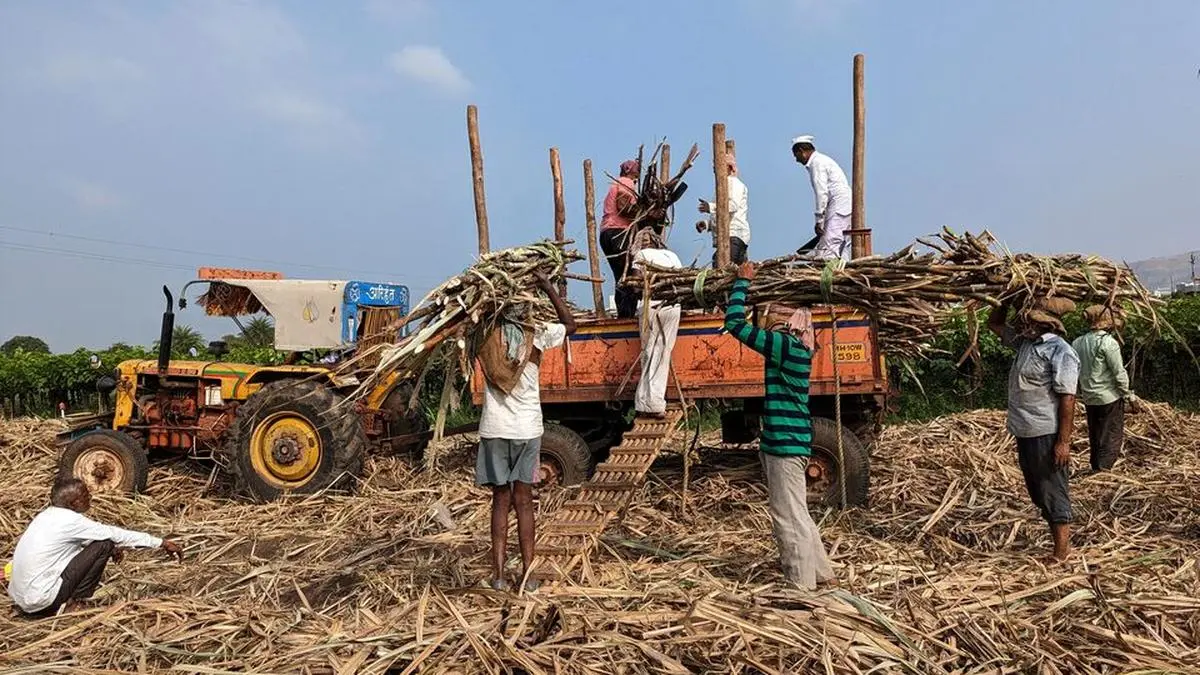
The private market for grain has no equivalent structure. The co-op equivalent for grain—an institution owned by farmers that processes their output and sells directly to consumers—barely exists at scale in India. Where it does exist, as in the sugarcane cooperative mills of Maharashtra, it provides a floor that the open market cannot. Sugarcane farmers, despite the well-documented political problems with Maharashtra’s co-ops, receive better prices than almost any comparable crop. The mechanism is the same: the cooperative eliminates the intermediaries.
The lesson is not complicated. It is simply that the White Revolution succeeded not because of subsidies but because of institutional design. And the Green Revolution has failed to sustain farmer incomes not because of insufficient subsidies but because the institutional design has always been wrong.
The second part of Third Way follows tomorrow







Balasubramaniam Muthusamy exposes the real contradiction at the heart of India’s farming crisis: the problem is not simply too much state intervention or too little market freedom, but a deeply flawed institutional structure. The success of the dairy cooperative model shows that when farmers own and control the value chain, they can claim a far greater share of the consumer’s rupee. The “Third Way” is therefore not another slogan—it is a serious call to rethink agricultural policy around farmer ownership, collective power and economic dignity.