Forging a BRICS Energy Cooperation: Fault Lines and Implications – 2

Challenges Posed to the Decarbonisation Process.
Even as the climate crisis has become a stark reality before us, reducing carbon emissions—the driving force behind it—has already gained acceptance among nations at the global level. While the scientific community repeatedly calls for accelerating the pace of decarbonisation, political and administrative leaderships can be seen adopting an indifferent approach towards it. India’s policy on reducing carbon emissions is also passing through a similar experience. The reality is that the targets in the existing declarations cannot be achieved without integrating the decarbonisation process as part of the country’s overall economic development strategies.
It was at the 2021 Climate Summit (COP26) that the Indian Prime Minister announced India’s goal of achieving ‘zero emission’ of carbon from greenhouse gases by 2070. In 2022, the ‘Long-Term Low Emission Development Strategy’ submitted by India to the UNFCCC was the policy reflection of this announcement. This policy document deals with seven major strategic shifts covering power generation systems, transport, urbanisation, industry, CO2 removal, afforestation, and related reforms in economic/financial policies.
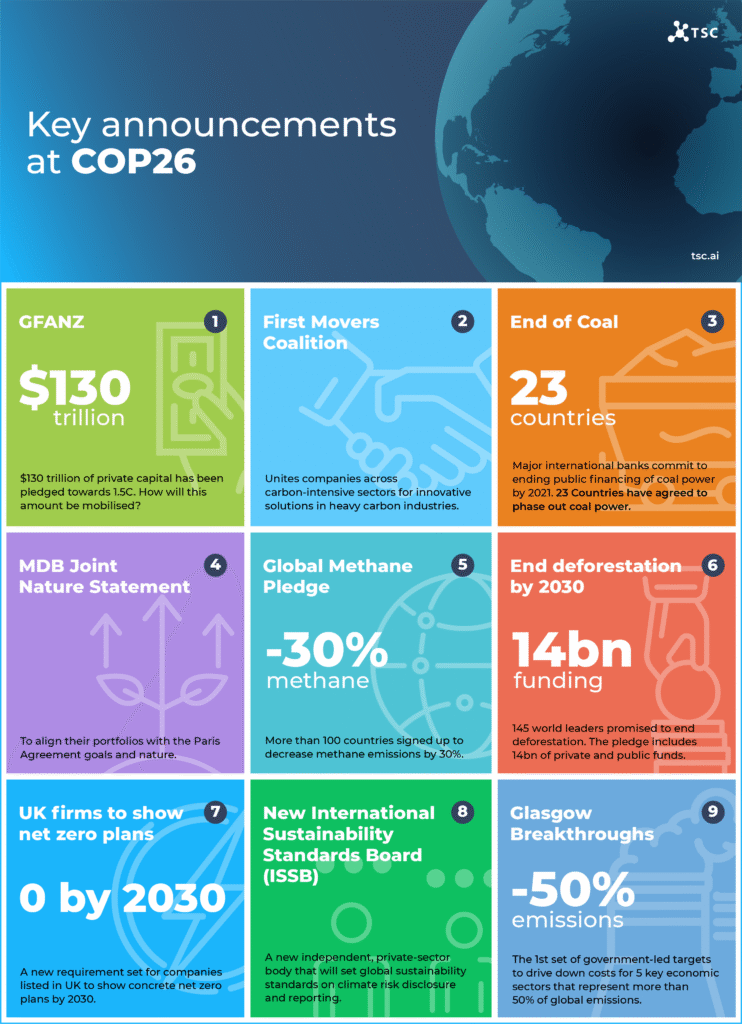
The updated ‘Nationally Determined Contributions’ (NDCs) for the period 2031–2035 were approved by the Union Cabinet in March 2026 and submitted to the UNFCCC. The strategic changes indicated in the policy document include achieving 60% of cumulative installed electricity generation capacity from non-fossil fuel energy sources by 2035, creating an additional carbon sink equivalent to 3.5–4.0 billion tonnes of CO2 through forest and tree cover by 2035, and ensuring climate-friendly development practices and climate-resilient infrastructure.
Potential Impacts On Decarbonisation Programmes
The energy security discussions at the 18th BRICS Summit held in Delhi in September 2026, and the ‘Delhi Declaration’ formulated as part of it, have a non-negligible potential to exert a negative influence on carbon emission reduction (decarbonisation) efforts at both global and national levels. Rather than the phased elimination of fossil fuels, the Delhi Declaration puts forward a model of ‘just, orderly and inclusive’ transition that prioritises energy security, developmental needs and national circumstances.
Through this declaration, BRICS leaders are underlining that fossil fuels will continue to play a crucial role in the global energy mix, especially in emerging markets and developing economies. While presenting the resolution of the climate crisis and ‘just, orderly, equitable and inclusive’ energy transitions consistent with Sustainable Development Goal 7 (affordable and clean energy) for reducing greenhouse gas emissions as fundamental objectives, the emphasis in the policy document is on maintaining a technology-neutral approach, treating energy security as the foundation of economic development and national security, and ensuring market stability, uninterrupted energy availability, robust supply chains and expansion of energy-sector infrastructure.
This framing carries several deeper risks. By stressing uninterrupted fossil-fuel availability and the expansion of related infrastructure under a “technology-neutral” banner, BRICS members risk locking themselves into high-carbon assets—new coal plants, gas pipelines and oil refining capacity—with lifespans of 30–40 years. Once built, these assets create strong economic and political incentives to keep them running, making later phase-outs far more costly and difficult. Such carbon lock-in directly undermines the timelines required for 2030–2035 NDC targets and India’s 2070 net-zero goal.
It cannot be ruled out that the BRICS Energy Cooperation may adopt an indifferent approach towards reducing the use of fossil fuels, particularly in the short-to-medium term. The major BRICS economies—China, India, Russia and Indonesia—have officially accepted the position of focusing more on coal, oil and gas sources for energy security and development. They reject the scientific community’s repeated appeals that the use of hydrocarbon fuels needs to be reduced in the near future itself. BRICS countries receive political cover for maintaining or expanding fossil-fuel capacity. Prioritising industrialisation, electricity availability or low prices naturally pushes the ‘decarbonisation’ process backwards. It compels greater focus on investments based on fossil fuels as a reliable energy source. The consequence is often the disruption of the timelines prepared for the green energy transition.
Russia and, to a lesser extent, other members derive substantial budget revenues from hydrocarbon exports. Any collective BRICS stance that treats fossil fuels as enduring pillars of energy security effectively protects these fiscal interests. This creates a structural bias against aggressive demand-side reduction policies and can spill over into joint financing or technology-sharing arrangements that favour fossil pathways over renewable ones.
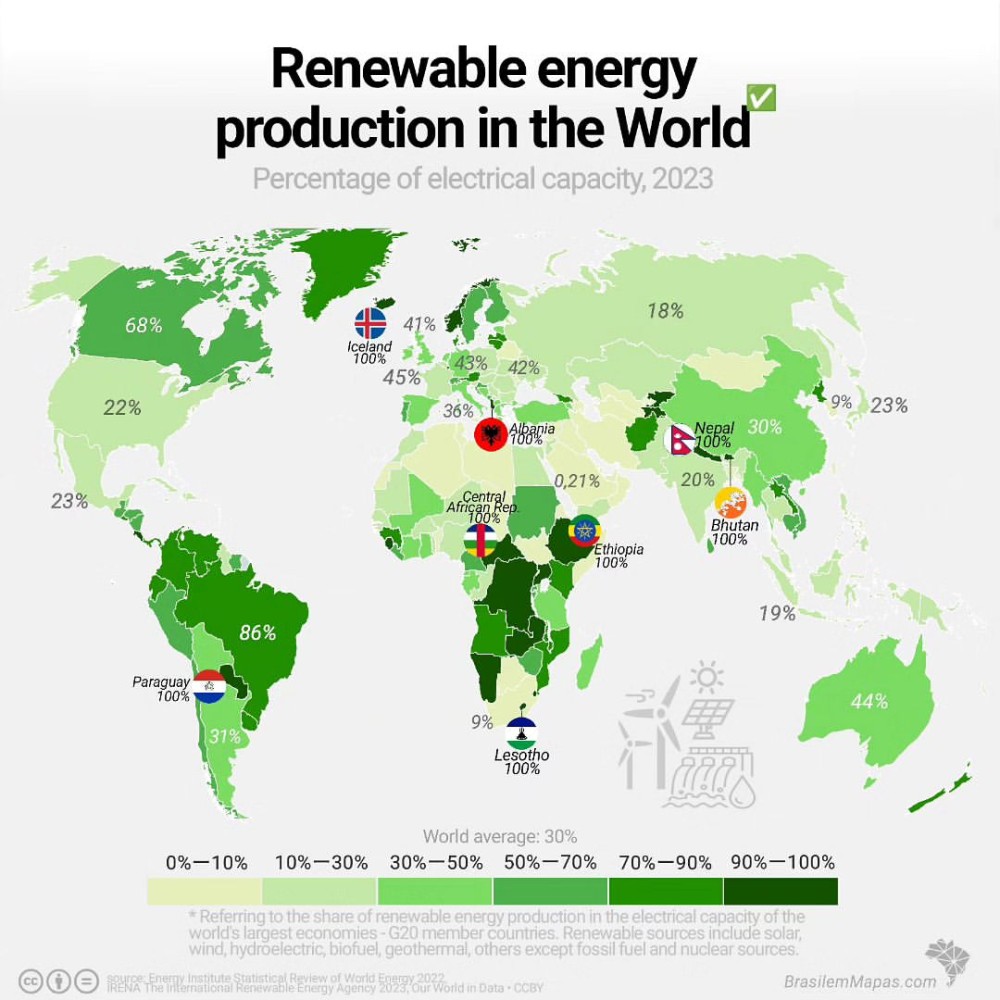
Although BRICS member countries, mainly India, China and Brazil, have so far achieved significant gains in renewable energy production, the possibility that strategic ties with the world’s largest hydrocarbon-exporting countries could slow the progress of the aforementioned renewable energy projects cannot be dismissed. For fossil-fuel exporting countries, an increase in budget revenues remains one of their unshakeable objectives. Consequently, the agreements and conditions prepared under the BRICS Energy Cooperation may hinder general decarbonisation measures.
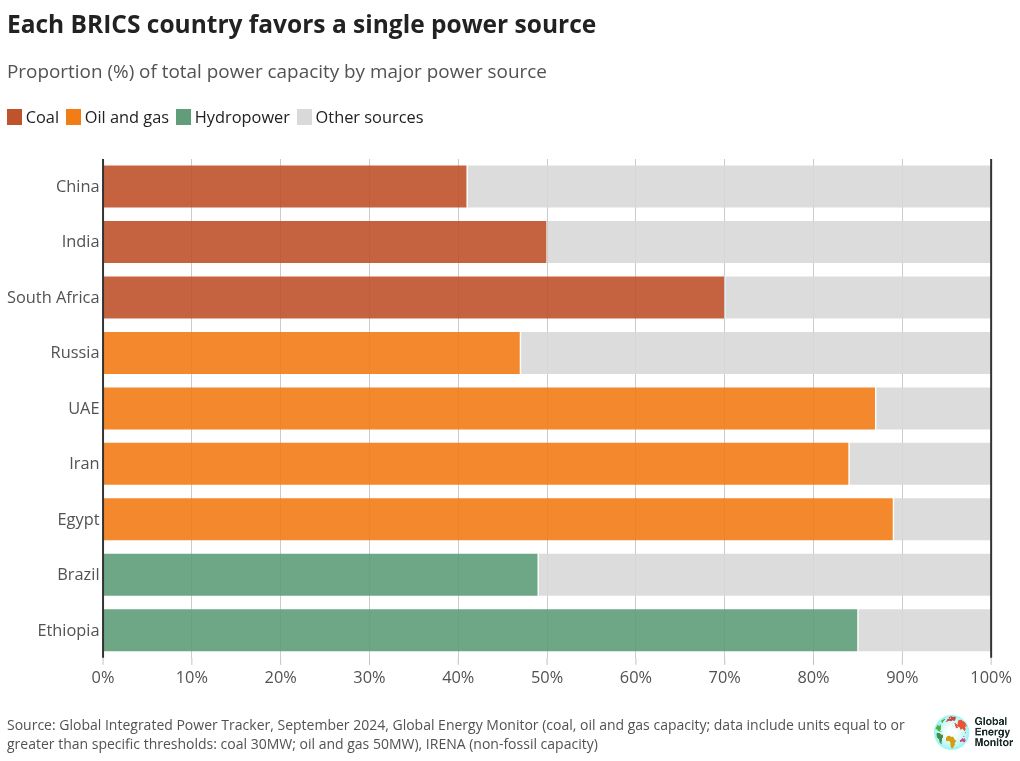
Closer energy ties within BRICS between large consumers (India, China) and large producers (Russia, Saudi Arabia, UAE & others) can create mutual dependence that discourages rapid demand reduction. Exporters have little incentive to accelerate the energy transition when their primary customers continue to signal long-term demand, while importers gain short-term price and supply stability at the expense of long-term climate and air-quality goals.
Large-scale BRICS cooperation on fossil-fuel infrastructure and supply-chain security can also channel public and private capital—including through new development banks or bilateral deals—toward hydrocarbons rather than renewables, storage and grids. This competition for finite investment resources slows the scaling of the very technologies (solar, wind, batteries, green hydrogen) that India and other members have already shown they can deploy successfully.
In practice, the invocation of a “just, orderly and inclusive” transition often shifts the emphasis from rapid emissions cuts and protection of vulnerable communities to the right of developing countries to expand energy access via the cheapest or most reliable available sources—frequently coal or gas. This redefinition risks turning “justice” into a justification for delayed action rather than accelerated support for clean alternatives in the Global South.
When a group representing a large share of global emissions and population publicly stresses the continued centrality of fossil fuels, it also provides political cover for other emerging economies to soften their own NDCs or delay more ambitious updates. The result can be downward pressure on overall global ambition, making the 1.5 °C pathway even harder to achieve. For India specifically, sustained political emphasis on fossil fuels for “energy security” can translate into slower policy signals, delayed retirement of inefficient coal plants, and continued subsidies or financing preferences for thermal power. This mixed messaging risks undercutting investor confidence in the renewable sector precisely when acceleration is most needed to meet the 60 % non-fossil capacity target by 2035 and the additional carbon-sink commitments.
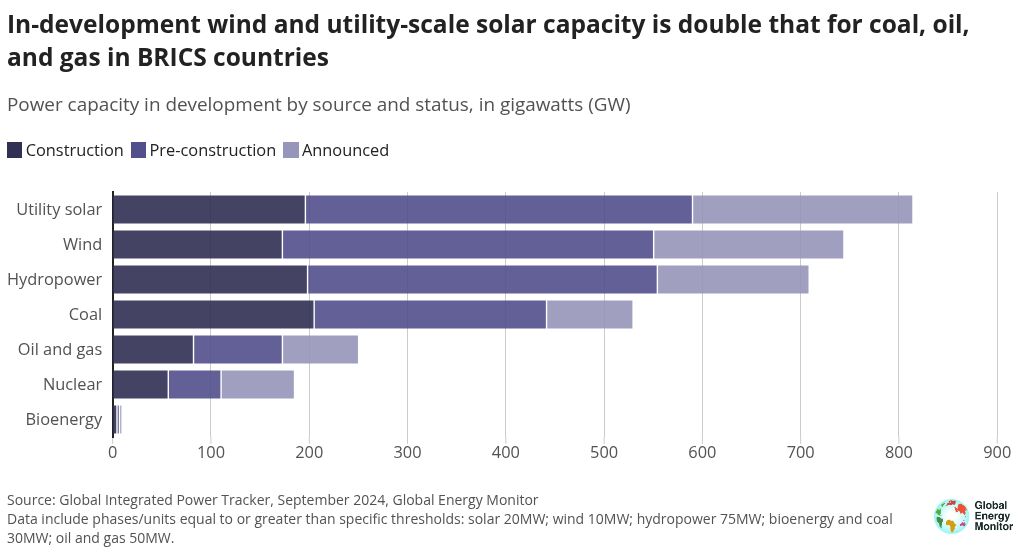
In general, this stands in opposition to the global consensus on a rapid and phased phase-out of fossil fuels, and it may also adversely affect the status-quo-oriented energy transition in the Global South. By presenting continued fossil-fuel reliance as a legitimate developmental choice rather than a transitional necessity, the BRICS position can influence other developing countries that look to the grouping for leadership. The cumulative effect may be a broader slowdown in the Global South’s energy transition, even in nations that have fewer domestic fossil resources and greater renewable potential.
To read the other articles in this series, click here.