

Artificial Intelligence: The Next Stage of Digital Capitalism

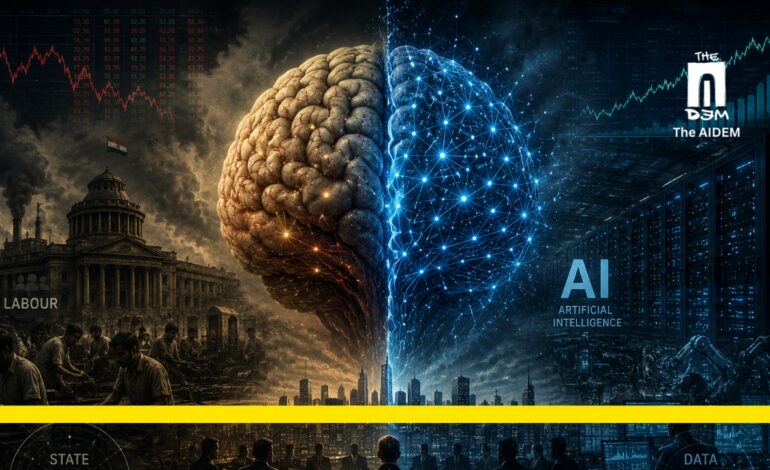
The AI industry is at a crossroads. The major players are vying for control of this technology, which has the potential to transform human life dramatically. And so are governments. In spite of numerous warnings from prominent experts about the likely dangers of the technology, there has been no let-up in this pursuit. But lately a lot of people have started to worry that this high-stakes game is going to cause major disruption to the economy, win or lose.
On the one hand, there are apprehensions that the introduction of AI will disrupt existing business models and result in widespread job losses. The panic triggered by a recent update to Anthropic’s ‘Claude Coworks’ AI agent demonstrates the gravity of these concerns.
These updates, which demonstrated that AI can easily take over even complex white-collar jobs, sent the IT stock market into a frenzy. Since then, there has been a great deal of discussion about the impact of AI on traditional IT. Many analysts believe it will render traditional software-as-a-service (SaaS) business models obsolete, resulting in job losses and industry disruption. The media has even coined a new term, SaaSpocalypse, to describe such a future.
On the other hand, there is a lingering fear that the return on trillions of dollars of private investment in the sector will not be as spectacular as expected. Any evidence that such fears are justified can seriously damage investor confidence with consequences for the wider market and the entire financial system. And the risks could get worse because of a growing trend of interdependent investments. Large technology companies are investing heavily in AI startups, and those startups often use this funding to buy products and services from the same companies that invested in them. For example, OpenAI is a major customer of AI chips made by Nvidia, one of its key investors. Such circular investment deals can cause everything to collapse like a house of cards if one link breaks. The fallout of an AI bubble burst will not be limited to the stock market; it will have serious repercussions for the global economy itself.
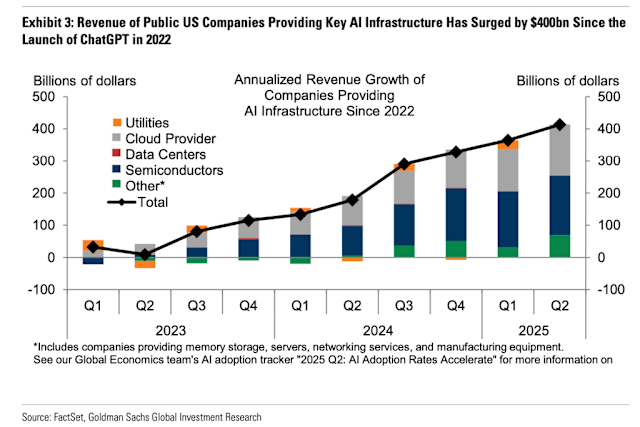
In short, the sector is currently teetering between hope, greed and panic. Just as the Internet industry recovered from the ‘dot-com bubble’ crash in the 1990s, there is a good chance that AI will do the same. But the concerns about huge disruptions mentioned above are still valid. Understanding the political and economic drivers of AI is critical for understanding the implications of today’s boom and confronting future challenges.
From Data Warehouses To Markets: The Evolution of AI
The history of AI is as old as computers. However, despite the fact that the theoretical foundations of machine learning and neural networks were developed in the last century, commercially viable AI solutions did not emerge. These periods of stagnation, known as the ‘AI Winter’, came to an end with the emergence of “digital capitalism”. The term was first popularised by American scholar of communication, media and information studies Dan Schiller in his book “Digital Capitalism: Networking the Global Market System” in 1999. It describes how technologies developed by governments and the military, such as the Internet, were gradually commercialised and integrated into the market economy.

Undoubtedly, the digital revolution has brought about many great positive changes in all areas of human life. However, it eventually led to an exploitative global economy in which large digital companies wield enormous power.
One consequence of digital capitalism was the creation of massive online repositories of information. These repositories contain not only a vast amount of human knowledge, but also detailed information about people’s daily activities and social interactions. It did not take long for capitalism to recognise the enormous market potential of this “big data”. However, the data was too large for human intelligence or standard computer programmes to handle, necessitating the use of machine learning technologies. Along with this, modern chips such as GPUs, which can provide unprecedented computing power required to perform operations, were introduced. AI recovered from its winter slump.
Applications of AI were mostly confined to algorithms in search engines and digital platforms initially. But it evolved into an independent service in a short time. Revolutionary advancements with ‘large language models’ trained on the vast database of information on the Internet gave it a boost. It has rapidly advanced from the stage of simply producing text to the point where it can produce images and videos and complete complex tasks such as professional-level coding without human assistance.
A New Phase Of Digital Capitalism
A characteristic of digital capitalism is that technology has become an independent business sector, supported by finance capitalism, which is willing to make speculative investments with high risk tolerance. This is the foundation of the AI industry. But at the same time it represents a new phase of digital capitalism. There are several factors that make the AI era a unique new phase:
One: The internet arrived at the dawn of digital capitalism with the promises of decentralisation and freedom, though that is no longer the case. But AI has been far too centralised from the beginning. Its rapacious hunger for computing power and energy means the capital investment needed is enormous. This has led to an oligopoly in the AI sector. The industry is powered by big tech companies like Microsoft, Alphabet and Meta, a handful of startups like OpenAI and Anthropic, and the financial capital interests that back them.
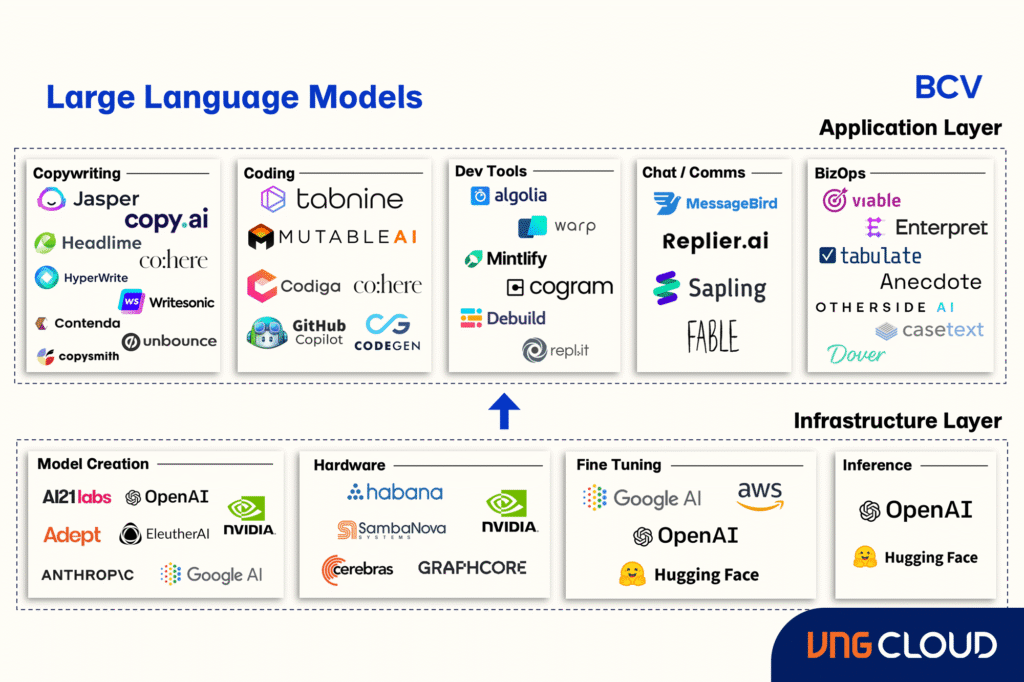
Two: Industry’s ultimate aim is artificial general intelligence that outperforms human intelligence. Most of these companies believe that scaling up, or using more and more data and computing power, is the best way to achieve this goal. This obsession with hyperscale and cutthroat competition means the industry has to ignore environmental issues and other impacts altogether.
Three: As AI’s reliance on chips, data centres and energy increases, the firms that supply this infrastructure are becoming more important. In some instances, they have become more valuable than the software companies. That explains why a chipmaker like Nvidia is now one of the most valuable companies in the world. The need for physical infrastructure behind information technology has never been more apparent.
Four: Digital capitalism emerged when technologies developed with public money were then opened up for civilian use. But today’s AI has gone down a different road. A lot of its development has been in private companies. In the meantime, in this age of grave threats to free trade and globalisation, AI companies are compelled to form alliances with governments to ensure the supply chain of the goods required for infrastructure development and to get regulations eased. It’s not a one-way street. In turn, governments are trying to control this technology on a need basis, from national security to economic supremacy and imperialist/totalitarian aspirations. This creates conditions for the emergence of a ‘corporate-state complex’ where the profit motives of corporations and the interests of the state converge.
Five: Instead of focusing on state-of-the-art AI models, China, the world’s second-largest AI power, is emphasising inexpensive and practical tools that can enhance productivity in sectors like agriculture, industry and education. But how much this Chinese approach will influence the global AI landscape in the long run remains to be seen. Moreover, the Chinese Communist Party’s tight control over AI development could separate China’s own AI ecosystem from the global mainstream.
In short, the development of AI technologies is unfolding in a complex interplay of the interests of private capital and governments. This results in the neglect of public interests. AI indeed has the potential to solve some of humanity’s most pressing problems, ranging from medicine and climate science to education. But the technology is increasingly deployed strategically to maximise profits, replace human labour and strengthen the power of corporations and the state.
The Future Of Work
What the AI wave will do to the workplace ultimately is still an open question. But the challenges that it is already posing in areas like programming, content creation, and white-collar jobs can be taken as a sign of big changes to come. Historically, new opportunities have arisen roughly at the same rate as old jobs have disappeared. This is because capitalism’s survival depends on constant expansion into new markets. This helps to create new jobs. One of the big questions right now is whether this pattern will continue with AI.
Interestingly, Karl Marx’s analysis of mechanisation under capitalism in his 19th-century magnum opus Das Kapital and other works is relevant even today in the AI debate. He argued that mechanisation replaces “living labour” with “dead labour”, or machines, but only human labour creates new value. Machines merely pass on to the final product the value that was expended in making them. Nonetheless, businesses have all the reasons to use machines. Mechanisation can boost productivity, reduce labour costs, and thus increase profits, at least in the short run. Furthermore, as machines replace human labour in many fields, workers’ ability to bargain for higher wages or better working conditions diminishes.
But the need to spend more capital on mechanisation as part of competition ultimately leads to a decline in the rate of profit. Another repercussions of mechanisation is the crisis of overproduction as the rise of unemployment and income reduction hits consumption. Newer forms of mechanisation, such as autonomous AI agents, robots embedded with AI algorithms, and monitoring and control systems, make these crises severe. Capitalism will find it harder to create sufficient new jobs to replace those that are lost.
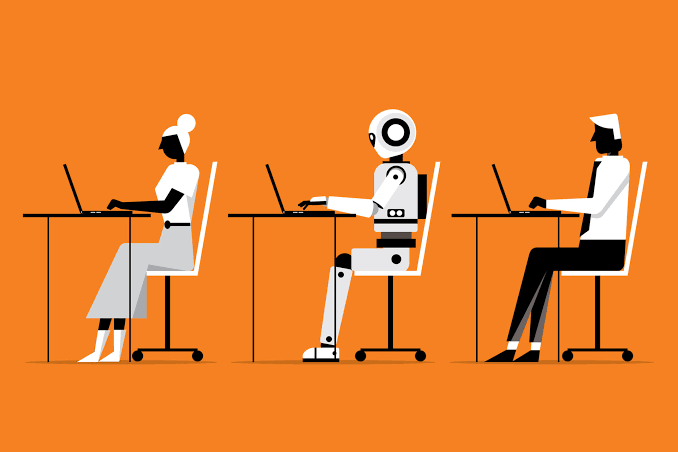
Moreover, the internal structure of capitalism itself is shaken when machines begin to take over human labour altogether, since it is based on labour-based value creation, commodity production and their markets. Marx’s observations on the evolution of society’s “general intellect” in Grundrisse offer some useful insights into the situation. What he calls “general intellect” is the social knowledge of human society, including science and technology that gets embodied in machines and systems of production. As capitalism evolves, this intellect becomes a direct force of production. And the creation of value depends less on individual human labour.
AI can be seen as the most sophisticated form of this “general intellect”. It is the outcome of the vast accumulation of knowledge by humanity. So it definitely has the potential to liberate people from many forms of repetitive and burdensome labour. But under the exploitative capitalist system, this potential may not be fully realised. The proliferation of AI could mean good, meaningful jobs are hard to find. The disruptions caused by AI can make society more exploitative and inhumane in the absence of concrete steps to ensure effective social control over its dangers. That choice is not technological, but political.
Different Facets Of Alienation
The impact of AI extends far beyond the workplace. It is not only a technology but also a social force that shapes the way people think, communicate, and understand the world around them. One of the consequences of the overreliance on such technologies is the increased sensation of alienation that the individual is experiencing from their organic social relationships with fellow human beings and their environments.
Machine learning algorithms that control digital platforms do more than just learn as much as they can about individual users. As Shoshana Zuboff explains in her book ‘The Age of Surveillance Capitalism: The Fight for a Human Future at the New Frontier of Power’, the algorithms also shape their behaviour in accordance with the demands of the market.

Take social media algorithms, for example. They manage to make it seem that what matters most to an individual is online acceptance and recognition. Digital life and its compulsions then begins to take precedence over real human relationships. This happens not by accident. It is the results of the algorithms that treat the individual’s online identity as a product to be measured, marketed, and monetised. Digitally alienated individuals lose touch with their natural selves and authentic relationships.
The rise of generative AI is transforming the way knowledge is created, disseminated, and consumed. Overreliance on AI can significantly impair an individual’s ability to think critically. Marxist thinker Harry Braverman observed the phenomenon of ‘de-skilling’ on shop floors, and it is now spreading to knowledge work as well. As AI takes over more tasks related to research, writing, and analysis, people may become less inclined to develop these skills themselves. The result could be a growing dependence on machines for knowledge and judgement. This shift from deep learning to cognitive dependence could have profound consequences for education and the development of critical thinking.
We live in a complex world where it is impossible to distinguish machine-generated content from human-generated content. The segregation of the public sphere into “echo chambers”, combined with fake news and algorithmic personalisation, undermines democratic debate. As thinkers like Habermas foresaw, this eliminates the possibilities for collective deliberation. At the same time, new AI-powered surveillance systems pose an unprecedented threat to personal liberties.
In short, AI is alienating on multiple levels: by completely delegating work to machines, humans become disconnected from their own actions. Allowing algorithms to govern relationships separates them from others. Finally, passive consumption of information distances them from critical knowledge.
As algorithms begin to determine our preferences and behaviour in advance, individual freedom becomes a delusion. Organic social relationships disappear. AI promises empowerment but instead delivers enslavement and surveillance. This paradox is not a coincidence. It reflects the power dynamic of the socio-economic context in which it evolves and operates.
Fetishism of Artificial Intelligence
One of the prominent ideological tenets of digital capitalism is the assertion that the majority of social problems are essentially technical in nature. So, solutions are also technological. It sometimes goes so far as to claim that technological advancement drives all historical and social changes. Such beliefs completely ignore the objective socio-economic causes of the problems. This leads to ‘technology fetishism’, where technology is thought to possess magical powers. It is similar to what Marx calls ‘commodity fetishism’ in Das Capital. He uses this term to describe the belief that commodities have inherent value and “magical” power that are unaffected by the social relations, including human labour, that produce them.
Technological fetishism regards AI as an autonomous and inevitable force destined to improve human life. In doing so, it divorces AI from its socio-historical context. This delusional thinking obscures the material conditions, human labour, and power dynamics underlying its development. Concealing the social nature of AI and its implications, it makes the current direction of AI look like a natural progression that cannot be contained. Democratic debate about it naturally becomes impossible. In a recent article for the Monthly Review, John Bellamy Foster delves deeply into the fetishism of AI.

Equally concerning is the false belief that the presence of an algorithm ensures objectivity. AI has already demonstrated that it is not immune to societal prejudices and discrimination and that it frequently reinforces existing structural inequalities. It often reinforces dominant worldviews. As our reliance on it grows, the space for critical and creative human intervention shrinks. Humans’ natural proclivity to ask questions becomes one of deference to external sources of intelligence.
AI, which strives to surpass human intelligence, is not ideologically neutral. It can’t be. It is deeply rooted in current socio-economic relations and power structures. Abandoning AI fetishism and the delusions that accompany it is the first step towards reimagining it with true liberating potential.










“A thought-provoking article that goes beyond the usual hype around AI and highlights its deeper economic and social implications. The piece effectively shows how artificial intelligence is not just a technological innovation but also a tool shaped by existing structures of power, profit, and control. An important reminder that discussions about AI must include questions of equity, labour, and democratic accountability.”