

Saga of a Swadeshi University: JMI and the Decolonisation of Education


In the shadow of colonial classrooms designed to mould obedient subjects, a quiet revolution took root. Jamia Millia Islamia was not founded by decree but by defiance, born of a nation’s refusal to let its mind remain enslaved. It was an audacious experiment: to imagine an education free from imperial influence, guided instead by faith, self-reliance, and moral courage. As India’s freedom struggle unfolded in the streets, Jamia waged its own battle in the lecture hall, proving that decolonization begins not with slogans, but with the reclaiming of thought itself. This is the saga of a Swadeshi University—and of intellectual independence.
The history of modern India is often told through political movements, acts of civil disobedience, and legislative milestones. Yet, the story of Jamia Millia Islamia offers a deeper, more intimate chapter, the intellectual struggle for national sovereignty. Celebrating its 105th Foundation Day on October 29, Jamia’s saga is the story of a Swadeshi University—an institution that served as a critical national response to colonial education and became a living laboratory for the ideals of self-reliance and freedom that animated the entire independence movement. It was not born from a government decree but from a radical act of protest.
The Call for Swaraj
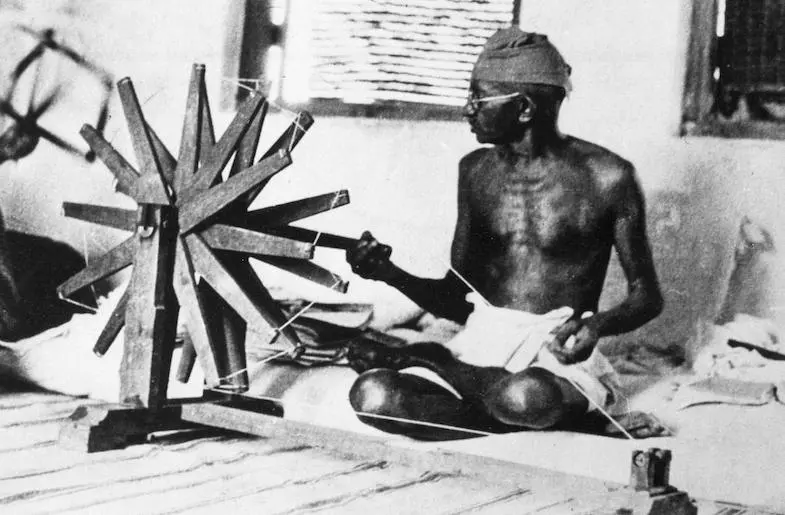
The year 1920 marked a decisive turn in India’s struggle for independence. When Mahatma Gandhi addressed the Calcutta Session of the Indian National Congress on the 4th of September, he galvanised the nation by declaring that the achievement of Swaraj—complete self-rule—was India’s final, non-negotiable goal. To realise this vision, he proposed a detailed programme of progressive non-violent non-cooperation that sought to paralyze the British administration by dismantling its cultural and economic foundations.
Gandhi’s programme was built on seven key points. It included, the surrender of colonial titles and honours, the boycott of foreign goods, the abandonment of government jobs, the withdrawal from colonial law courts, the shunning of foreign clothes, and, most significantly, the withdrawal of children from government-controlled schools and colleges. For Gandhi, these institutions were factories of colonial mimicry, designed to sever the intellectual roots of the Indian populace. In their place, he urged the immediate creation of national institutions that would educate youth in the genuine spirit of self-reliance (swadeshi) and the commitment to freedom. This was a challenge of profound logistical and philosophical complexity, requiring immense conviction and sacrifice.
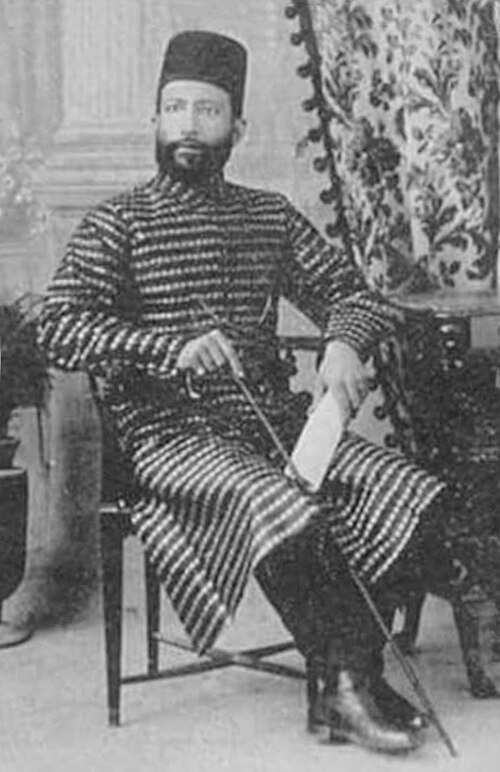
Among those who took up this challenge with remarkable dedication was Hakim Ajmal Khan—a renowned Unani physician, committed philanthropist, and nationalist leader of towering stature. Working alongside Gandhi and the influential Ali brothers, Mohammad Ali and Shaukat Ali, Ajmal Khan became the primary driving force behind the establishment of a swadeshi university. The vision was clear, an institution that would be entirely free from colonial influence, funded by national contributions, and deeply grounded in Indian cultural values and the spiritual ethics of Islam.
The Intellectual Crucible
The initial spark for this monumental undertaking ignited around the idea of starting a National Muslim University in Aligarh. The founders harboured the ambitious hope that the celebrated poet-philosopher Mohammad Iqbal, whose intellectual stature and literary depth were widely considered comparable to that of Rabindranath Tagore, would serve as its inaugural Vice-Chancellor.
Gandhi himself recognised the magnetic appeal of Iqbal’s leadership. He wrote to the philosopher from Lahore, expressing his profound admiration and assuring him that the university would prosper under his “cultured leadership.” Furthermore, Gandhi pledged that all necessary expenses, scaled appropriately “to the new awakening,” would be met entirely by funds raised through national contributions, ensuring the institution’s financial independence from the British crown.
However, Mohammad Iqbal ultimately declined the invitation. His response, as later cited by historian Ramachandra Guha, offered a significant, pragmatic counter-argument that helped refine the subsequent educational mission of the Jamia. Iqbal explained that while he deeply respected the idea of a nationalist institution, the Muslim community’s most immediate and critical need was not literature or philosophy, but rather technical education that could facilitate their economic independence in a rapidly changing world. Iqbal advised that “Those behind the new university will be well advised to make it an institution devoted mainly to the technical side of the natural sciences, supplemented by such religious education as may be considered necessary.” This insistence on practical, vocational training became a cornerstone of Jamia’s later curriculum.
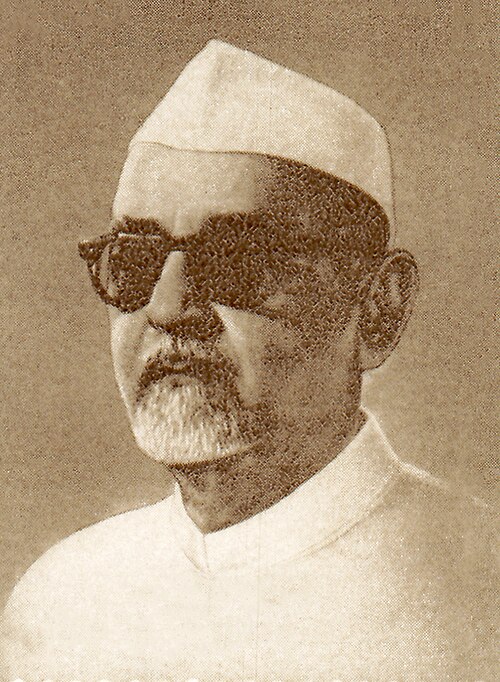
Following Iqbal’s refusal, Gandhi turned his attention to a young and promising educationalist: Dr. Zakir Husain, who was then pursuing his doctoral research in Germany. Deeply inspired by Gandhi’s commitment to self-reliance and the vision of national education, Zakir Husain expressed his complete willingness to join the effort once he returned home. He promised to devote his entire life to the cause, a pledge he would honour years later, joining Jamia immediately after his return to India in 1926. With Iqbal’s path divergent and Husain still abroad, the responsibility for transforming the national vision into a physical reality fell squarely upon Hakim Ajmal Khan. He was ably supported by other key founders and nationalist stalwarts, including Dr. Mukhtar Ahmad Ansari, Maulana Mohamed Ali, and Abdul Majid Khwaja. These men collectively steered the effort through the political turbulence and logistical challenges of its birth.
Birth and Doctrine
The surging tide of the Non-Cooperation Movement provided the immediate catalyst and organizational structure for this educational dream. Responding directly to Gandhi’s call to boycott colonial education, a core group of nationalist teachers and students took the radical step of withdrawing from the existing Muhammadan Anglo-Oriental (MAO) College in Aligarh. They viewed the M.A.O. College, once a pioneering Muslim institution, has grown too compliant and closely intertwined with the British establishment’s interests. On 29 October 1920, the Jamia Millia Islamia was formally founded in Aligarh. The founding ceremony was a powerful display of nationalist unity and Islamic scholarship, inaugurated by Shaikh-ul-Hind Maulana Mahmud Hasan of Deoband, who had only recently returned from years of politically motivated exile in Malta.
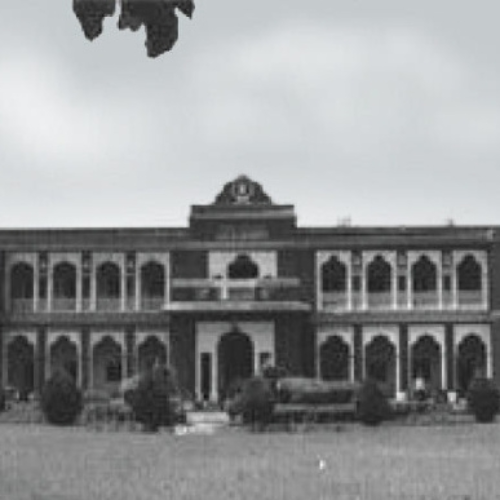
In his historic and fiercely patriotic address, Maulana Mahmud Hasan articulated the university’s two-fold mission, binding together faith and national duty: “If the students of Muslim institutions where modern sciences are taught are kept ignorant of their religion and their national duties, such institutions weaken the prestige of Islam. Therefore, we lay here the foundation of a university that shall be independent of government control, based on Islamic principles and national aspirations.” The foundational structure reflected this dual commitment to faith and freedom. Hakim Ajmal Khan was appointed the first Amir-e-Jamia (Chancellor), serving as the institution’s moral and guiding authority. Maulana Mohamed Ali became its first Shaikh-ul-Jamia (Vice-Chancellor), responsible for its academic and administrative direction. Abdul Majid Khwaja was another of its indispensable key founders. From its inception, Jamia Millia Islamia represented the harmonious fusion of the spiritual ethics of Islam with the political and social energy of India’s burgeoning nationalist movement.
No to Colonial Model
The founding of Jamia was not a quiet addition to the educational landscape; it was an open schism. The conflict centred specifically on the established Muhammadan Anglo-Oriental (M.A.O.) College, with which Hakim Ajmal Khan had a long history, dating back to the late nineteenth century when he served as physician to the Nawab of Rampur and frequently mediated financial support for the college.
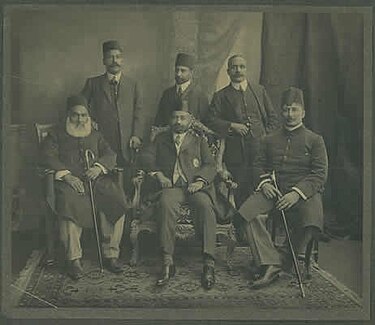
By the early twentieth century, the college had become the flashpoint for a deep division within the Muslim community: the division between the pro-British and the nationalist factions. Leaders like Sahibzada Aftab Ahmad Khan, Nawab Muzammullah Khan, and Nawab Ishaq supported maintaining close ties with the colonial government, viewing their patronage as essential for Muslim progress. In stark opposition, the nationalist leaders—Hakim Ajmal Khan, the Ali brothers, and Nawab Viqar-ul-Mulk—advocated strenuously for a truly national Muslim university, unbound by colonial grants or influence. The Non-Cooperation Movement of 1920 intensified these divisions beyond reconciliation. Ajmal Khan and his colleagues made a final, impassioned appeal to the MAO College authorities: renounce government grants and adopt a nationalist orientation. When this appeal was categorically rejected, the nationalist faction took the dramatic step of issuing a direct call upon the student body to leave the college and join the new swadeshi institution.
Despite threats of government reprisal and academic ruin, the appeal succeeded. Approximately 300 students walked out of the MAO College. These protesting students were immediately sheltered and supported by Ajmal Khan and his associates. This mass withdrawal was more than a transfer of enrollment; it was a powerful, symbolic act of intellectual rebellion. The Jamia Millia Islamia thus emerged as a direct, living protest against the very idea of colonial dependence in education, positioning itself as the academic arm of the Non-Cooperation Movement.
Relocation and Struggles
In the years immediately following its founding, the fledgling university faced daunting financial and administrative pressures. The political climate was hostile, and the financial resources came only from unpredictable national contributions. Recognizing the challenges and seeking a more stable environment, Hakim Ajmal Khan formally announced his intention to shift Jamia from Aligarh to Delhi on 17 March 1925, a decision made with Gandhi’s explicit consent.
The move was driven by both logistical convenience and ideological necessity. Delhi was Ajmal Khan’s natural home base, the location of his successful medical practice, his major philanthropic efforts, and the famed Tibbia College (another of his great institutions). By bringing Jamia closer to Tibbia, he hoped, as he put it, that “the twin institutions might prosper under his care.” Jamia was temporarily relocated to a rented building in Karol Bagh, Delhi. The move did not immediately solve its financial struggles. Maulana Mohammad Ali movingly captured the burden carried by its founder: “The Tibbia College was the child of Hakim Saheb’s youth, and Jamia the child of his old age.” Gandhi’s unwavering support, both moral and critical financial, was essential for the university’s day-to-day survival during this lean period.
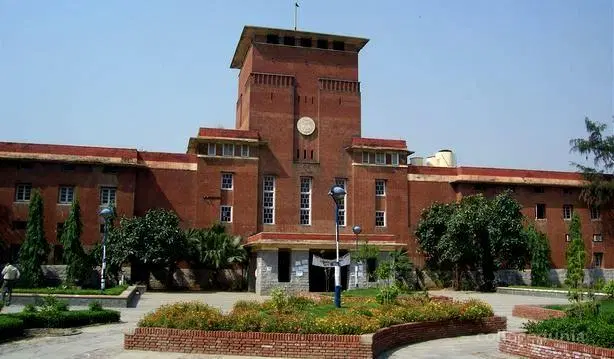
Then, tragedy struck. Hakim Ajmal Khan passed away in 1927, leaving behind an institution still grappling with immense challenges. His death was a devastating blow, forcing the young university to immediately prove its ability to survive without its primary patron.
It was at this critical juncture that the earlier promise of Dr. Zakir Husain became the institution’s salvation. True to his word, he had returned to India in 1926 and joined Jamia immediately. He was soon joined by other dedicated scholars, including Dr. Abid Husain and Prof. Mohammad Mujeeb. This group of committed educators, inspired by the spirit of Gandhian sacrifice, took over the administration and philosophical direction of the university. Together, they transformed Jamia from a mere protest movement into a practical laboratory for educational reform, implementing the principles of Nai Taleem—learning through craft, community service, and profound self-reliance.
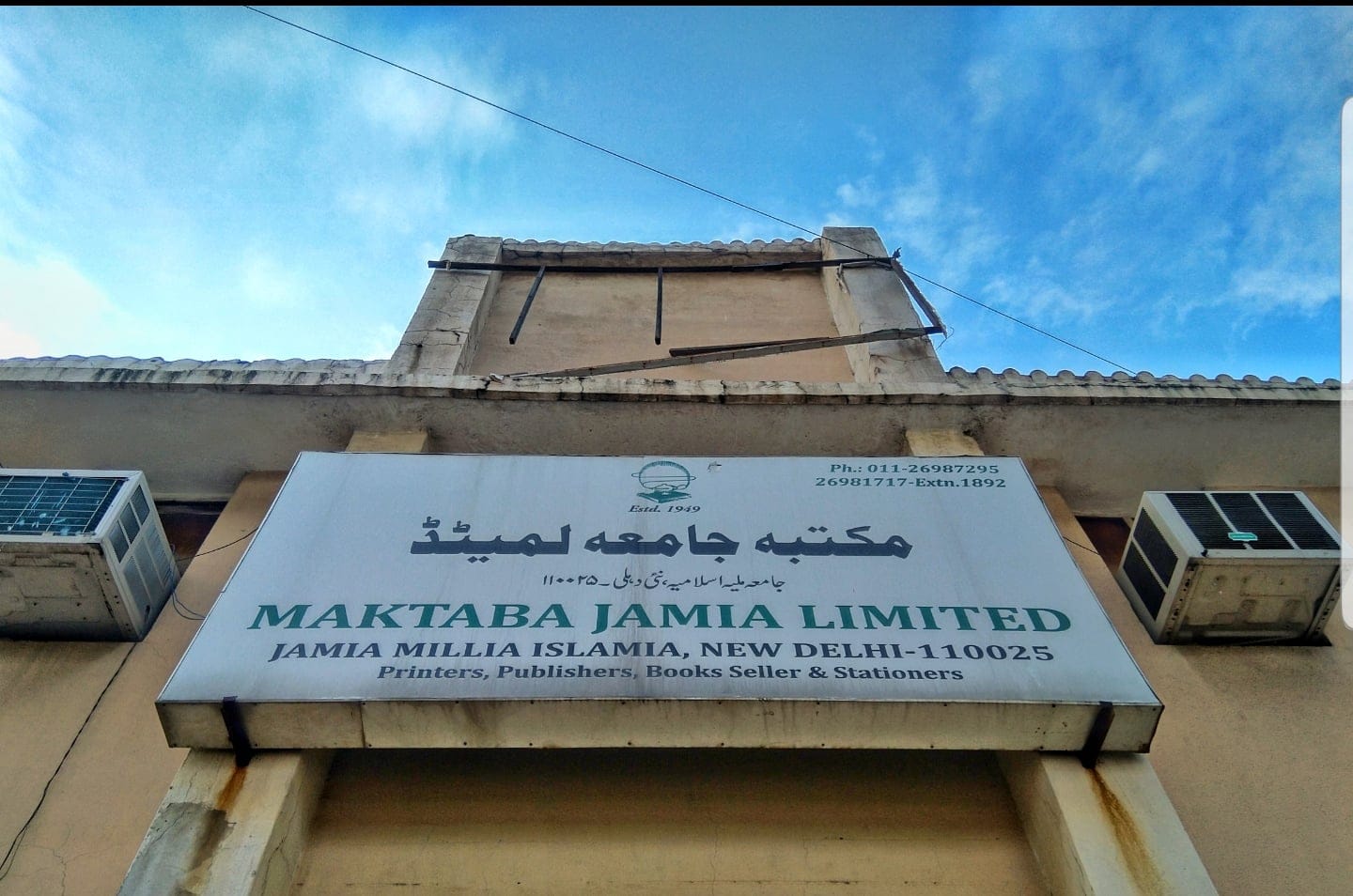
Further solidifying its intellectual independence, Jamia reorganised its Department of Printing and Publications in 1928 into three distinct and critical units: the Jamia Press at Darya Ganj, responsible for printing; the Urdu Academy for language development; and the Maktaba Jamia (publishing house). These were headed respectively by Prof. Mujeeb, Dr. Abid Husain, and Mr. Hamid Ali. This establishment provided Jamia with vital intellectual autonomy and a much-needed platform to disseminate nationalist and educational thought in Urdu across the subcontinent, thereby asserting cultural sovereignty.
The Okhla Laboratory
The next significant milestone in Jamia’s evolution was its move to a permanent home. On 1 March 1935, the foundation stone of a new, dedicated campus was laid at Okhla, which was then a quiet, semi-rural village on the southern edge of Delhi. By 1936, nearly all core departments—with the exception of the Jamia Press, Maktaba, and Library—had made the shift to Okhla.
The move was symbolic of Jamia’s rebirth, planting the institution firmly in the soil of the nation’s capital, deliberately removed from the colonial shadow that still fell over Delhi’s administrative centre. The Okhla campus rapidly became the physical hub for innovative and often radical experiments in basic education, rural reconstruction, and community service. Under the guidance of Zakir Husain and his colleagues, the ethos of Nai Taleem became the daily reality of the campus. The spinning wheel (charkha) and hand spindle (takli) were integrated into the daily routine, reflecting the essential Gandhian ethic of self-help and self-sufficiency. Education was inextricably linked to vocational and practical training, ensuring students not only read about the nation but also contributed physically to its future.
Crucially, the leadership of Jamia made a conscious decision to keep the university away from partisan politics, focusing its limited resources and enormous energy instead on the more difficult, long-term task of building character and fostering nationhood through education. The university’s commitment extended far beyond its enrolled students. It organised adult education and night schools for local workers, women, and the underprivileged, thereby making Jamia a genuine people’s university and an agent of social transformation long before India achieved independence.
Jamia in Independent India
Although Jamia Millia Islamia was born directly out of the protest of the Non-Cooperation Movement in 1920, its mission was never one of mere transient political agitation. Its founders viewed education not as a means to secure government employment, which was the goal of the colonial system, but as the essential path to national regeneration and self-determination. As Hakim Ajmal Khan declared prophetically in his 1921 address, emphasizing the pragmatic necessity of the Swadeshi model: “I am very happy that craft and vocational training are made compulsory for everybody under the new system of education adopted by Jamia Millia.”
Following Independence in 1947, the university continued its steady growth, all the while painstakingly retaining its unique founding ethos of service and self-reliance. Its trajectory of institutional maturity was finally recognised on December 26, 1988, when Jamia was declared a Central University by an Act of Parliament. This momentous event fulfilled the ultimate vision of its founders—the dream of a national seat of learning, rooted deeply in India’s unique culture yet open intellectually to the world, finally granted the official recognition and support it had long earned through decades of struggle.
A century later, Jamia Millia Islamia stands not simply as an academic institution but as a profound, living symbol of India’s intellectual and moral struggle for self-reliance. In an era where globalised education often aggressively promotes consumerism, hyper-specialization, and cutthroat competition, Jamia’s origins offer a powerful reminder of a distinctly different, more purposeful ideal: education as an instrument of liberation, character formation, and social responsibility. Its dramatic transformation from a modest swadeshi university operating in a rented house in 1920 to a Central University in 1988—and today, a globally ranked institution—embodies the profound and often painful journey of India itself, the path from colonial subjugation to intellectual sovereignty. The indelible spirit that inspired Gandhi, the relentless Ajmal Khan, the self-sacrificing Zakir Husain, and countless dedicated teachers and students continues to animate its halls: the foundational belief that true education must first and foremost serve the nation and the cause of humanity.
Conclusion
While the original idea of Jamia Millia Islamia was undoubtedly inspired by the national vision of Mahatma Gandhi, it was the relentless dedication, wisdom, tireless efforts, and immense personal sacrifice of Hakim Ajmal Khan that ultimately nurtured it into a living, functioning institution. Ajmal Khan’s commitment ensured that the dream of a truly national Muslim university not only survived political hostility and financial adversity but flourished into a powerful educational model.
Born in protest, nurtured in adversity, and matured through decades of dedication to its core ideals, Jamia Millia Islamia remains an enduring testament to the power of swadeshi ideals in combating colonial domination—not through mere confrontation, but through the creative and lasting assertion of selfhood. Its saga is not merely the story of one university, but a crucial, inspiring chapter in the making of modern India—a potent reminder that independence, to be meaningful and complete, must always begin in the classroom, where the minds of future generations are shaped.








I am student of this university. No one told us these great things in our department. Thank you