


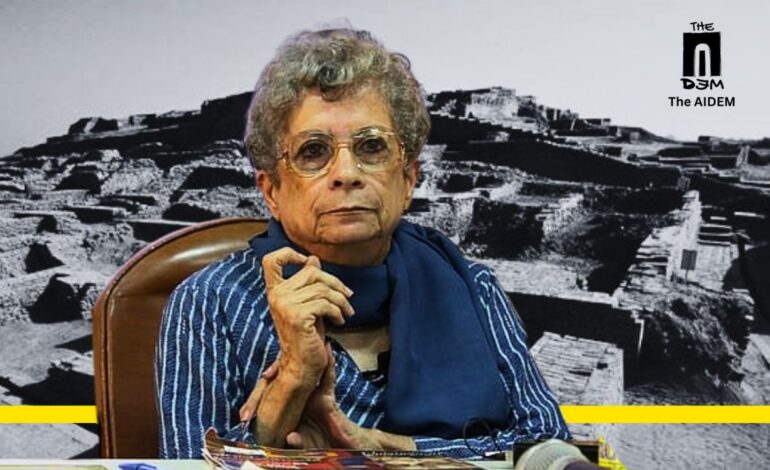
The death of Shereen Ratnagar at the age of 82 marks the passing of one of India’s most formidable scholarly minds — an archaeologist who refused to allow history to become captive to mythology, political spectacle or civilisational vanity. For more than five decades, Ratnagar stood at the intersection of archaeology, history and public intellectual life, defending the discipline from distortion while opening new pathways for understanding the ancient world through material evidence, economic structures and social relations.
At a time when the study of antiquity is increasingly subjected to ideological appropriation, Ratnagar remained unwavering in her insistence that archaeology must answer to evidence rather than sentiment.
Her scholarship on the Indus Valley Civilisation fundamentally reshaped the understanding of Harappan society, moving it away from mystical narratives and toward a historically grounded interpretation of urbanism, trade, labour and political organisation.
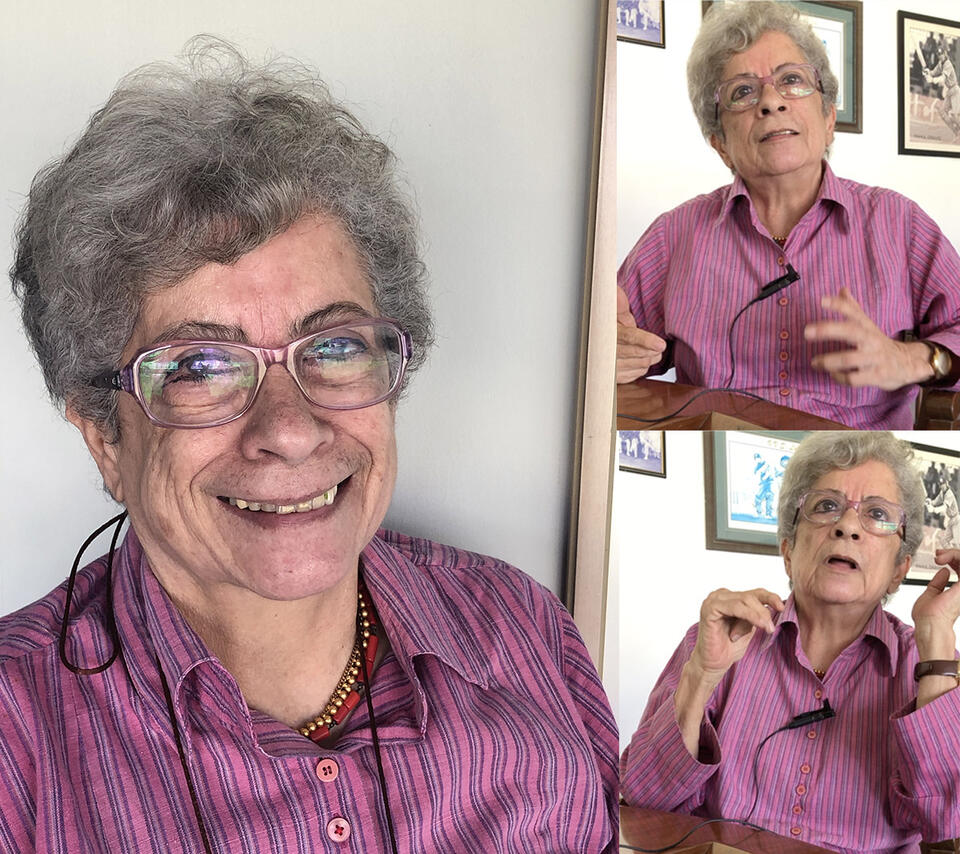
Born in Mumbai in 1944 into a distinguished Parsi family, Ratnagar grew up in an atmosphere deeply connected to literature, public life and intellectual inquiry. She studied at St Xavier’s College before entering the Deccan College Post-Graduate and Research Institute in Pune, one of India’s premier centres for archaeology and ancient history. Her academic training later took her to University College London, where she specialised in Mesopotamian archaeology, a field that would significantly influence her comparative approach to ancient civilisations.
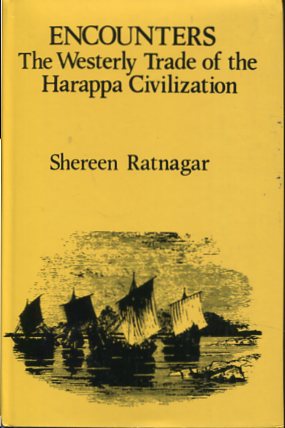
This comparative lens became central to her later work. Ratnagar was among the earliest Indian archaeologists to systematically examine the Indus civilisation not as an isolated cultural entity but as part of an interconnected ancient world shaped by trade routes, maritime exchange and economic networks extending into Mesopotamia and the Persian Gulf. Her seminal work, Encounters: The Westerly Trade of the Harappa Civilization, remains one of the most important studies of Harappan external trade.
Through painstaking analysis of seals, ceramics, raw materials and exchange systems, she demonstrated that the Harappans were deeply embedded in transregional economic processes. In doing so, she challenged older nationalist frameworks that tended to imagine ancient Indian civilisation as culturally self-contained and civilisationally pure.
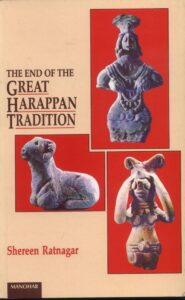
Ratnagar’s scholarship consistently foregrounded questions of production, class, labour and state formation. Unlike romanticised accounts that reduced the Harappans to a mysterious or spiritually advanced civilisation, she approached them as a complex urban society shaped by material conditions and social contradictions. Her books, including Understanding Harappa, Trading Encounters, and Harappan Archaeology: Early State Perspectives, reflected a sustained engagement with historical materialism and political economy. She examined how ecological conditions, craft production, resource control and exchange networks contributed to the rise and decline of early urban formations.
In many ways, Ratnagar belonged to a generation of scholars who transformed Indian historiography by resisting both colonial distortions and nationalist simplifications. Yet she also stood apart because of the intellectual courage with which she entered public controversies. She was never content to remain confined within academic institutions. Her interventions repeatedly challenged attempts to communalise archaeology or deploy it in service of majoritarian political projects.
This became especially evident during the Ayodhya dispute. Ratnagar emerged as one of the most prominent scholarly voices questioning the archaeological claims advanced to support the Ram Janmabhoomi movement.
At a moment when archaeological interpretation itself was being mobilised to legitimise a deeply polarising political campaign, she insisted on methodological rigour and evidentiary caution. Her critique was not merely technical; it was a defence of the very principles of historical inquiry. She warned repeatedly that archaeology loses its integrity when conclusions are predetermined by ideology.
Her position invited hostility from right-wing groups and sections of the media that increasingly viewed dissenting scholarship as anti-national. Yet Ratnagar remained unyielding. She understood that the stakes were larger than a single historical dispute. What was under threat, she argued, was the capacity of a society to distinguish between evidence and belief, history and propaganda.
Ratnagar was equally important for the feminist and critical perspectives she brought into archaeology. She questioned long-standing assumptions surrounding Harappan figurines commonly labelled as “Mother Goddesses,” arguing that many such interpretations emerged from colonial-era patriarchal biases rather than conclusive archaeological evidence. Her critique opened up broader conversations about how gendered assumptions shape historical interpretation itself.
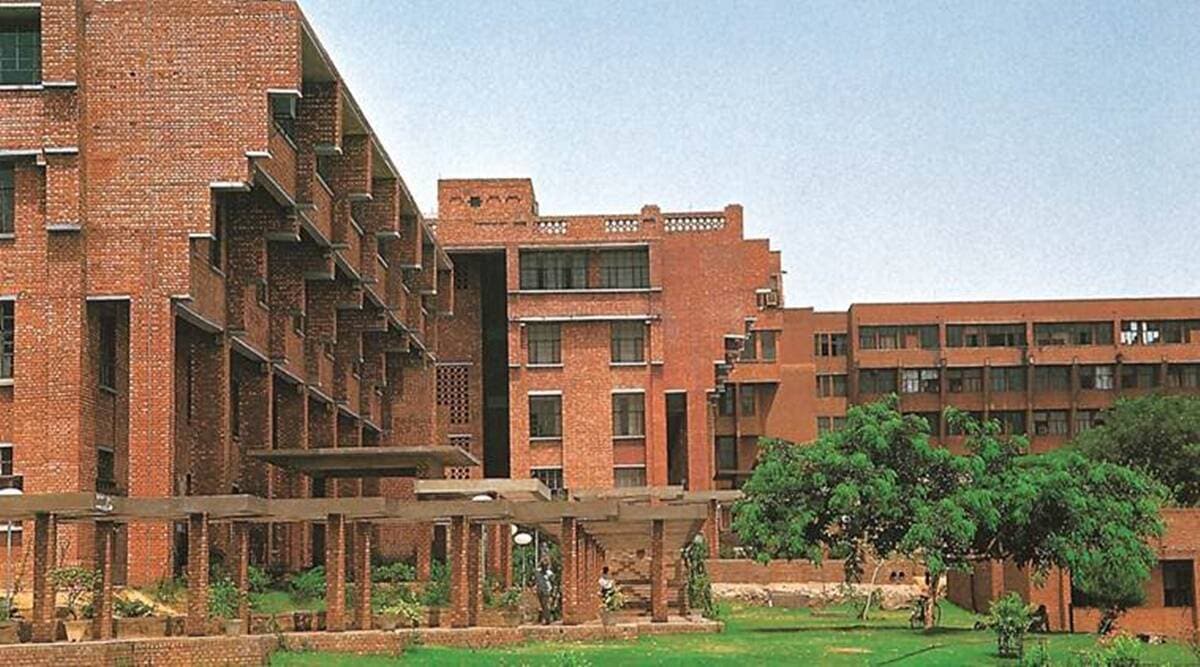
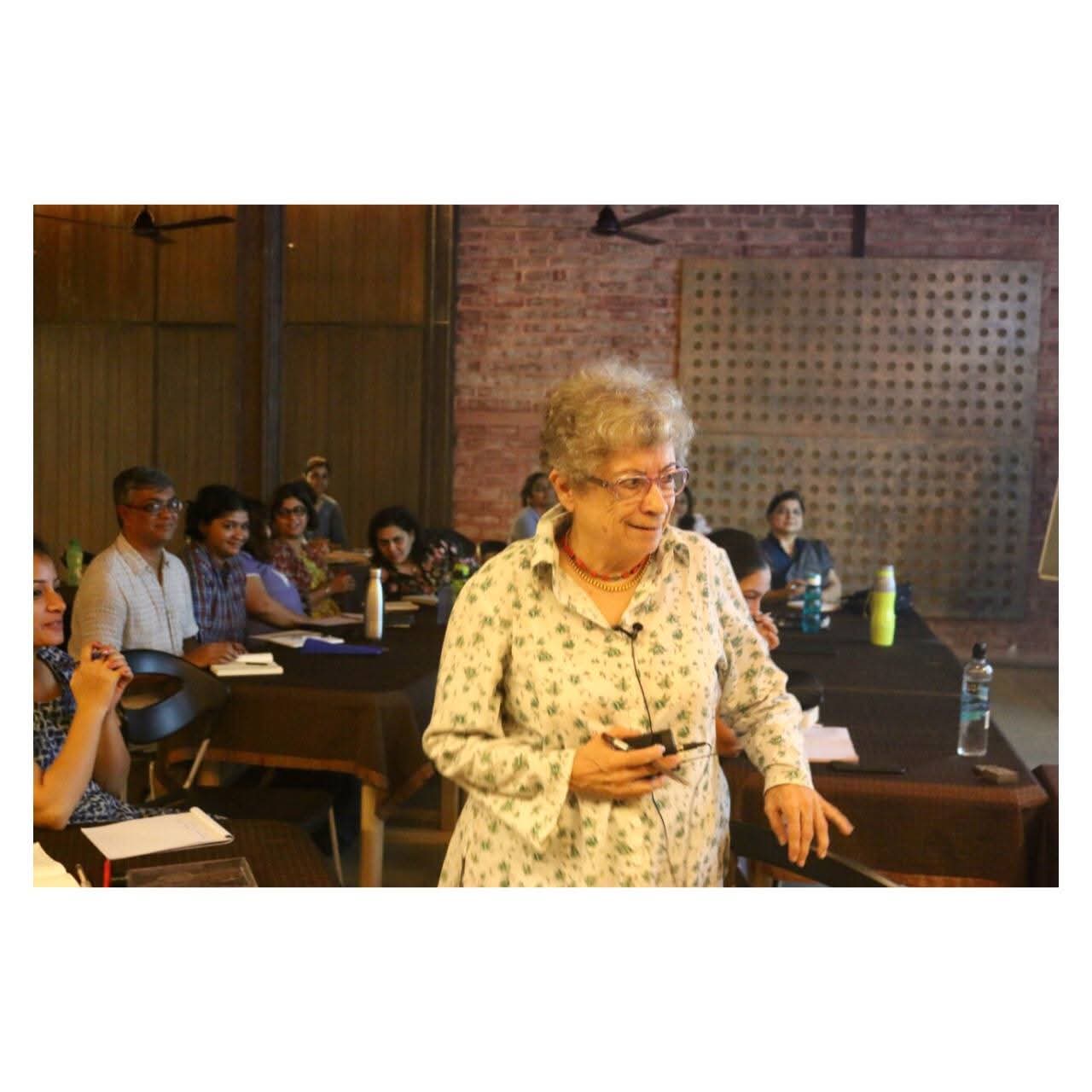
As a teacher at the Centre for Historical Studies in Jawaharlal Nehru University, Ratnagar influenced generations of historians, archaeologists and researchers. Students often remembered her as intellectually demanding yet deeply generous — a teacher who pushed them to interrogate evidence rigorously while remaining attentive to the ethical and political dimensions of scholarship. Her lectures were marked not by academic ornamentation but by analytical precision and moral clarity.
Even after retirement, Ratnagar remained publicly engaged. She continued writing essays, giving interviews and participating in debates around heritage, nationalism and historical method. In her later writings, she expressed increasing concern over the erosion of scientific temper and the growing politicisation of historical institutions in India.
She viewed these developments not as isolated academic problems but as symptoms of a broader democratic crisis in which institutions of knowledge were being subordinated to ideological agendas.
What distinguished Ratnagar throughout her career was not merely her scholarship, impressive as it was, but her refusal to separate intellectual life from public responsibility. She believed that historians and archaeologists carry an obligation to confront distortion, especially when political power seeks legitimacy through manipulated narratives of the past.
Her passing therefore represents more than the loss of an eminent archaeologist. It marks the departure of a generation of public intellectuals who treated scholarship as a form of democratic responsibility rather than professional advancement. In today’s climate — where mythology is routinely repackaged as history and evidence is often subordinated to identity politics — Ratnagar’s work acquires renewed urgency.
The civilisation she spent her life studying was one built on movement, exchange, labour and coexistence across vast geographies. Against contemporary attempts to weaponise the past into rigid cultural certainties, Shereen Ratnagar consistently reminded us that history is always more complex, more entangled and more human than ideological narratives allow.
Her legacy survives not only in her books and archaeological contributions, but in the intellectual ethic she embodied: sceptical without cynicism, rigorous without dogma, and courageous without theatricality. In an age increasingly hostile to dissenting scholarship, that legacy would prove more valuable than ever.









A thoughtful tribute to Shereen Ratnagar and her lifelong commitment to honest, evidence-based archaeology. The article beautifully highlights her intellectual integrity, scholarly rigor, and fearless dedication to understanding history through facts rather than ideology. Her contributions to the study of the Indus Valley Civilization and archaeological research will continue to inspire students, researchers, and all those who value critical thinking and scientific inquiry.
A thoughtful , analytical ,balanced tribute Shama Sarin. In Shereen’s death the world of archeology and the discipline of history has lost one of its foremost objective practitioners . Salutations to Shereen Ratnagar . Salaams to Shama too