


Under the flickering tube lights of a typical classroom, rows of silent children stare at a blackboard that rarely ever looks back. Their questions remain stuck in their throats, replaced by rehearsed answers and the ticking urgency of the next exam. In this tightly wound machinery of marks and discipline, some creative endeavours in cinema emerge as an unlikely refuge, and a quiet act of defiance.
Devesh Dubey traces how films like Taare Zameen Par, Sthanarthi Sreekuttan and 12th Fail rescue lost voices, challenge the tyranny of syllabus-bound thinking, and remind us: real learning begins not with answers, but with the freedom to feel, falter, and ask.
In our country, the school is an institution where, after admission, the first thing children are forced to do is to silence or stifle their curiosity. They speak less, listen more, and most of what they hear is recycled from a syllabus or from an old teacher’s file. On one side is the blackboard, on the other, a line of children. Everything is arranged to leave no room for thought. Teachers arrive like bank cashiers, process their tasks, and log off. And the children spend the whole day memorizing what is predetermined to be asked in the next exam.
Today, education has become a factory where a child who asks questions is considered a disturbance, and the one who remains silent is labeled disciplined. Thankfully, cinema still breathes. Otherwise, Ishaan from Taare Zameen Par would have been called a “low IQ case” and sent to a hostel, the mother in Nil Battey Sannata wouldn’t have even been allowed inside the school, and Manoj from 12th Fail would have been declared lazy by some coaching institute. And if a teacher like Sthanarthi Sreekuttan were to appear, he would be transferred immediately. How dare anyone give children the freedom to think?
What the system fears is not questions, but the sparkle in children’s eyes, because that very sparkle sometimes dares to speak the truth.
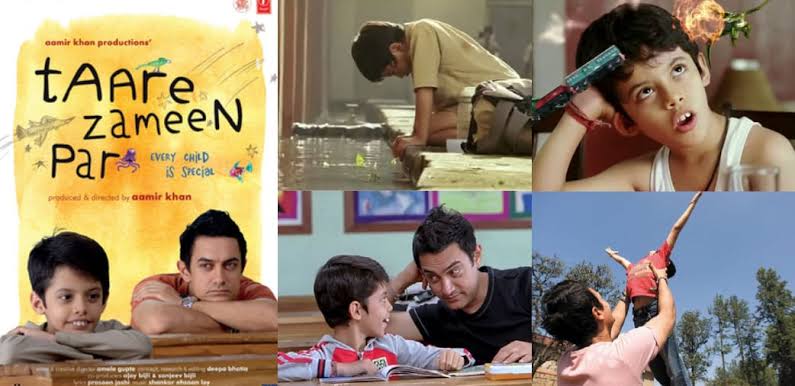
In Taare Zameen Par, Ishaan is a child who understands the world not through letters but through colors. He is not slow, just different. But being different makes him a failure in both school and at home.
Then comes Ram Shankar Nikumbh, a teacher who reads more in the eyes of children than in textbooks. He doesn’t just teach, he understands. “Every child is special,” he says — not a slogan, but a philosophy that unsettles the system at its core.
Sitare Zameen Pe continues this journey. This time, it’s about children burdened by stress, pressure, and isolation. The message of the film is clear: those who appear quiet often carry the most inside them.
The film reminds us that no child can learn unless they feel safe. If schools are to become true centers of learning, they must make space for empathy and dialogue. A child’s mistake should not be punished but treated as an opportunity to learn.
Nil Battey Sannata is the story of a mother who wants her daughter to study, but the daughter does not consider herself capable of studying. The film shows that when society, schools, and sometimes even families decide what someone can or cannot become, children give up even before they start dreaming.
But when that same mother goes to school herself, sits in her daughter’s class, and explains that education is not the privilege of a particular class, real change begins. Its message cuts deep: “Nothing in life is free, except a mother’s dreams.”
12th Fail tells a story where grit matters more than textbooks. Manoj fails repeatedly but never gives up. The limitations of government schools, societal expectations, poverty, and uncertainty all stand like walls in front of him.
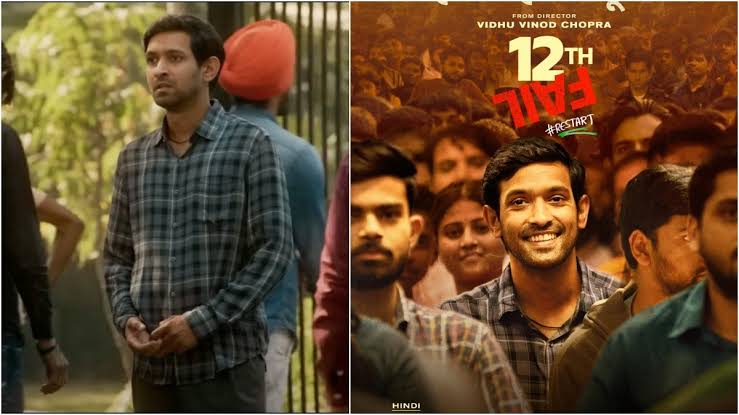
That wall collapses when a true teacher, a real guide, tells him, “You don’t pass by cheating, but with courage.” This isn’t just about UPSC, it’s about the daily, silent struggle for education millions endure without voice or platform.
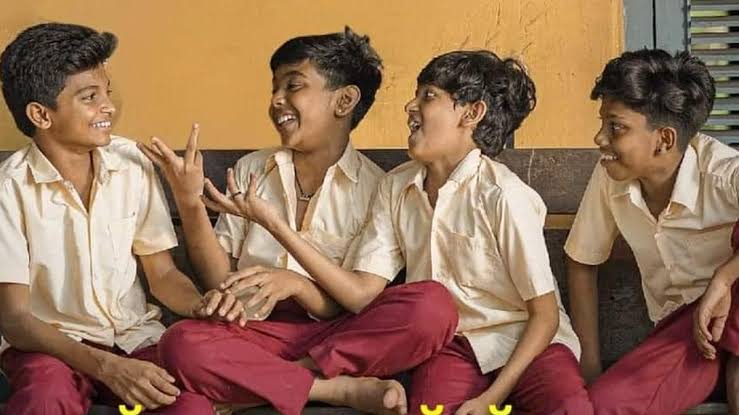
Sthanarthi Sreekuttan (2024), an important Malayalam film, breaks the silence of an education system where good teachers get lost. Sreekuttan, shuffled from school to school, lacks permanence, but his words root themselves in the minds of children.
He is not afraid of questions. He welcomes them. He doesn’t just teach answers, he gives the freedom to think. In his class, discipline comes not from fear, but from understanding.
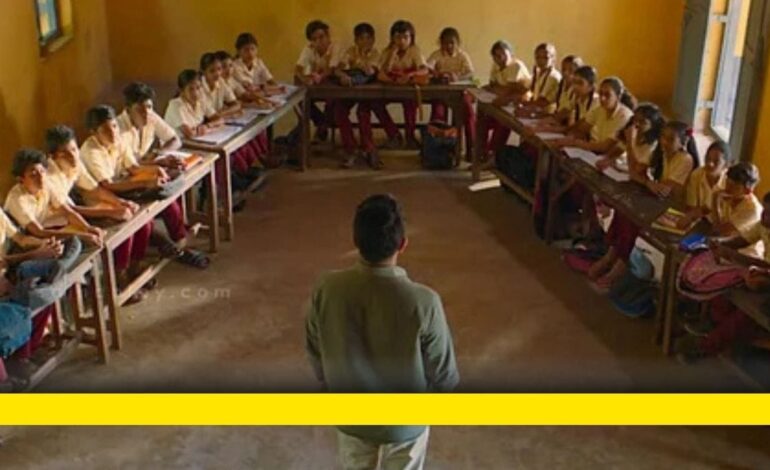
The most fascinating thing is that Sreekuttan changes the traditional classroom seating arrangement. Instead of making the children sit in straight rows, he has them sit in a circle. Now, the teacher sits not at the front, but at the center; an equal among learners.

This simple shift alters more than furniture, it transforms the classroom’s mindset. The child is no longer a passive listener, but an active participant. In this circle, children can see each other, talk to each other, and learn collectively. It symbolizes an equal education system where every voice is heard, and every question matters.
Sreekuttan says, “If we are right, then what is there to fear?” That confidence is what makes a teacher greater than the system.
All these films echo one truth: education is not a one-size-fits-all process. Every child is different, every situation is unique, and that is why every school must become a space of humanity.
Today, government schools wrestle with scarcity, while private ones turn education into a marketplace. In this marketplace, everything has a price — admission, books, activities, even a child’s self-worth.
Education has been reduced to exam preparation. Children’s voices have been lost in the fast race for marks, rankings, coaching, and careers.
In this environment, it is important to return to these films because they remind us that education is not just about results, but about relationships and understanding. We must ask again: is our education system truly listening to children? Are we teaching them that asking questions, making mistakes, and learning in their own style is just as important as writing the correct answers?
If we truly want a generation that thinks about the future, we must free education from fear, competition, and pretense, and connect it with thought, empathy, and communication. Schools must stop churning out toppers and start nurturing children.
Do watch these films. They are not just cinema; they are mirrors. They ask questions and also show a dream.
A dream where every child doesn’t just read, but learns. In their own way, at their own pace, and with complete confidence.
Today, a school is considered successful if children sit quietly, do not ask too many questions, and one or two names appear in the newspaper after the board results. Even the teacher is satisfied, saying, “We completed the syllabus,” as if education is a pipeline, and once the course bucket is filled, the job is done.
Now, if a child talks too much, they are called mischievous. If they think too much, they are labeled confused. If they feel too much, they are seen as weak. Is this education or just a boarding school of old customs?
These films are necessary because they show us a mirror. A mirror that says, “Look, you are not educating children, you are just teaching them to stay silent.” And when the next generation hesitates to express something new, don’t say, “Today’s youth lack revolutionary thinking.”
So ask questions. Don’t be afraid of answers. And most importantly, don’t mistake a child’s silence for good behavior. That quiet child might be more intelligent than you, they just haven’t been given a platform to speak.
There is still time. Let schools become a world of children, not just a factory of toppers. A place where an Ishaan can speak through colors, a tea-seller mother can sip her dreams, a Manoj can smile despite failures, and a Sreekuttan can keep every question alive.
Otherwise, in the future, a child might say, “I studied, Masterji, but please don’t ask what I learned.”
Perhaps that is where real education truly begins.







Article has just nailed it. What else to add to appreciate! Policy makers make our young ones not to ask, think,etc..then only the vote bank will be safe!!