Round Two? Iran-Israel War May Reignite

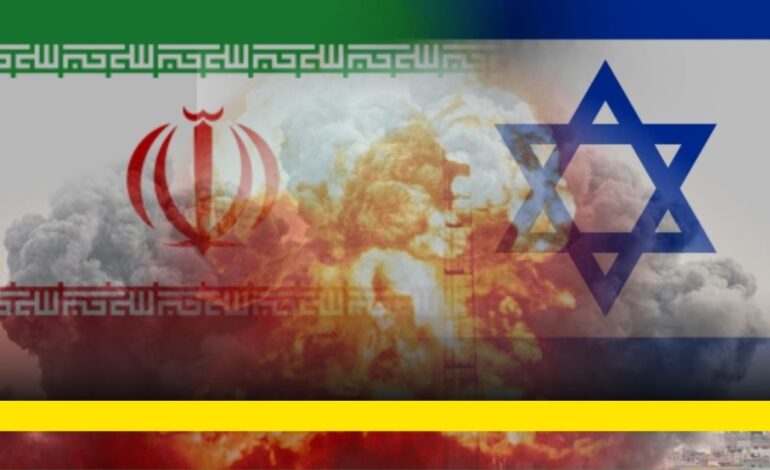
It has been only 47 days since the Iran-Israel war ended. The peace in the Middle East is just 47 days old. But barely a month and a half later, the possibility of a renewed war has once again increased.
Tensions have resurfaced following the 12-day conflict between Iran and Israel in June. The US and Israel are threatening to attack Iran’s nuclear programme, while Tehran has announced its intention to continue uranium enrichment.

Meanwhile, threats and counter-threats are being exchanged. A senior army officer close to Iran’s Supreme Leader, Ali Khamenei, claimed that the US is unable to attack Iran due to its economic and military limitations.
Ali Larijani, Secretary of Iran’s Supreme National Security Council, said in an interview with Lebanon’s Al-Mayadeen channel: “If the US feels that it cannot defeat Iran through war and wants to negotiate for a real solution, then we will respond positively. But if the talks are an excuse to prepare for war, then it is useless for us.”
Larijani’s remarks suggest both the possibility of a diplomatic solution and doubts about America’s true intentions.
France, the United Kingdom, and Germany have warned Iran that if it does not resume nuclear talks and deliver concrete results by the end of August, UN sanctions may be reimposed.
After Israel’s military attacks in June and US bombing of three Iranian nuclear installations on the ninth day, the Trump administration claimed that Iran’s nuclear programme had been dismantled.
However, Iran has consistently maintained that its programme is for civilian use only and that it has no intention of producing a bomb.
In reality, with nuclear talks stalled and military tensions rising, both sides are preparing for war. Iran has vowed to strengthen its defences, while Israel and the US continue to issue threats of military action.
Iranian Foreign Ministry spokesman Esmaeil Baghaei warned at a press conference in Tehran on Monday (August 18) that Israel’s expansionism, if unchecked, could drag the Middle East into “endless wars.”

He sounded the alarm while condemning Israeli Prime Minister Benjamin Netanyahu’s recent claims about realising the so-called “Greater Israel” vision, which he described as including occupied Palestinian territories and parts of neighbouring Arab states.
Baghaei said the “Greater Israel” idea exposed Israel’s expansionist nature. He added that the International Atomic Energy Agency (IAEA) deputy director general’s recent visit to Iran aimed to establish guidelines for Iran-IAEA interactions following Israeli and US attacks on Iran’s nuclear facilities in June. More talks between Iran and the UN nuclear watchdog are scheduled in the coming days.
Meanwhile, the General Staff of the Iranian Armed Forces—the country’s top military body overseeing both the Iranian Army and the Revolutionary Guards (IRGC)—sternly warned the US and Israel against renewed aggression, stressing that any such move would be met with a crushing response stronger than that of June’s 12-day conflict.
The military body released a statement on Saturday (August 16) while commemorating the anniversary of the release of prisoners of war from Iraq. A day later, a senior military adviser to Iran’s Supreme Leader warned that another war with Israel or the US was likely, dismissing the current ceasefire as merely another phase in the conflict.
“We are not in a ceasefire; we are in a stage of war. No protocol, regulation, or agreement has been written between us and the US or Israel,” said IRGC General Yahya Rahim Safavi on Sunday (August 17). “I think another war may happen, and after that, there may be no more wars.”
Safavi’s comments add to a series of combative remarks from military leaders on both sides, with Israel’s army chief vowing readiness for further strikes and Iran’s General Staff warning of a “much stronger response” to any future attacks.
As tensions escalate, Middle East experts warn that an all-out war could break out again by the end of August. There is a catch, however—Israel cannot sustain such a conflict without full US backing, according to Trita Parsi, executive vice president of the Quincy Institute for Responsible Statecraft.
While both Israel and Iran keep their arsenals secret, Parsi said Western intelligence suggests Iran still possesses “1,600 missiles that can reach Israel.” Israel, meanwhile, is reportedly “running low on interceptors,” including Arrow 3 systems.
“The exact levels are unknown, but much indicates that Israel could not have continued the war much longer (unless the US entered it fully),” Parsi told the Express US.

Israel appears to be relying heavily on US support. In Foreign Policy, Parsi wrote that Israel is likely to launch another war with Iran before December—perhaps even as early as late August.
Iran is already bracing for another Israeli attack, Parsi said. During the June conflict, Iran “played the long game,” pacing its missile attacks in anticipation of a prolonged war. In a potential second round, however, Parsi believes Iran would strike decisively from the outset, seeking to shatter any illusion of Israeli military superiority.
“As a result, the coming war will likely be far bloodier than the first,” he wrote, adding that such a scenario would present the US with serious dilemmas if it joined the fight.
According to Parsi, Israel’s war in June was “never solely about Iran’s nuclear programme.” Rather, it aimed at shifting the balance of power in the Middle East.
For more than two decades, Israel has pressed the US to take military action against Iran in order to weaken it and restore a regional balance more favourable to Israel—something it cannot achieve on its own.
“In this context, Israel’s strikes had three main objectives beyond weakening Iran’s nuclear infrastructure: drawing the US into direct conflict with Iran, toppling the Iranian regime, and turning the country into another Syria or Lebanon—nations Israel can bomb at will without US involvement,” Parsi explained.

Only the first of those goals materialised, he noted. The US was drawn into the conflict, but Iran’s regime remained intact, and its nuclear programme was not destroyed.
Overall, the chances of another round of war between Iran and Israel seem slim, as Israel is currently focused on expelling Palestinians from Gaza to annex more territory—an action that has so far faced little serious international condemnation.
Meanwhile, US President Trump is preoccupied with tariff wars and domestic political troubles, and appears reluctant to start another conflict—one that could ultimately prove to be his undoing.
This article was originally published in Punjab News Today and can be read here.