


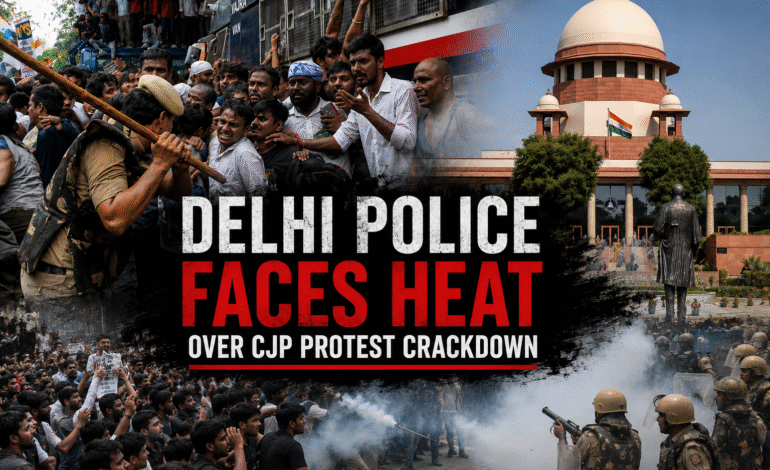
THE DELHI POLICE has denied that excessive force was used during the Cockroach Janta Party (CJP)-led march to demand former Union Minister Dharmendra Pradhan’s resignation. It said its officers used force only after protestors “started resorting to violence”.
 In an affidavit filed before the Supreme Court, the Delhi Police has also claimed that cops in plain clothes were deployed during the July 20 march to Parliament as part of a “crowd-control measure” and to “help anyone being harassed at the protest”.
Unfortunately for the police, the circumstances at the protest site were starkly different from those in the past such protests because of a vital factor.
While large-scale demonstrations in the past had barely a dozen or so cameras, mostly of news photographers, which could capture only a minuscule part of the ‘action’, and that too from behind the police personnel, the protest this time was captured by thousands of mobile cameras, and that too from inside the ‘battleground’. These helped the action to be covered from almost all angles.
Pellet Gun Claims and Criminal Cases
Hundreds of videos and photographs available on the internet depict the police excesses, including sexual harassment of women and chasing and beating students who were either running away or were not involved in any act of violence. It is also a fact that some of the protestors too hit policemen, leading to minor injuries to over 200 of them, which is equally condemnable.
The police have now also come out with the claim that no pellet guns were fired, with Union Minister Kiren Rijiju backing their claims, although there is ample evidence to prove the contrary.
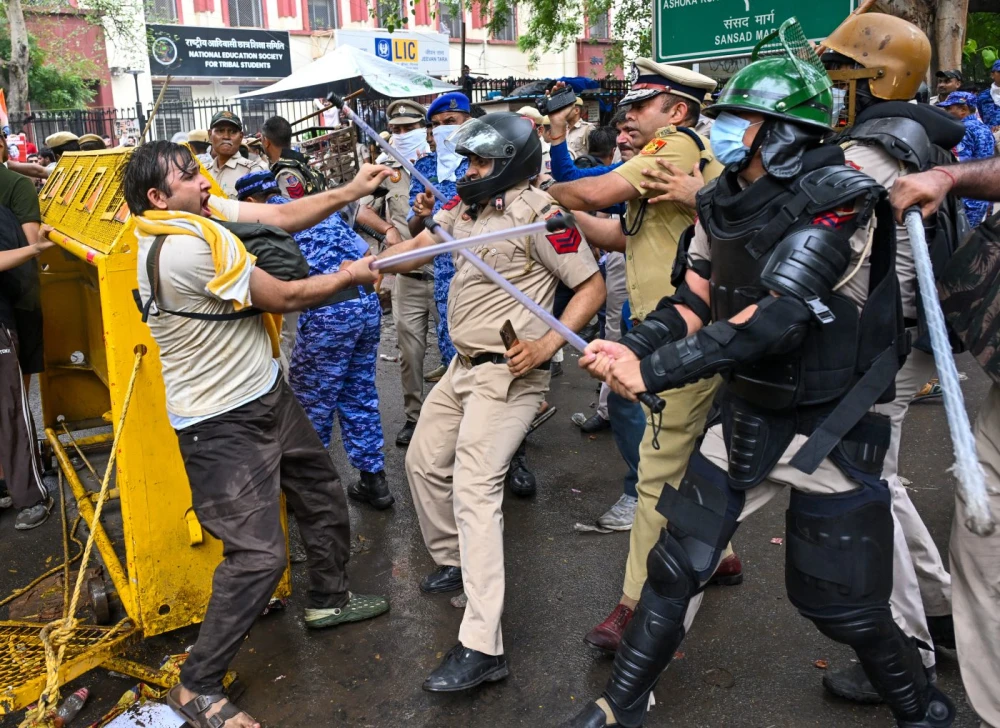
It has also now come out with the plea that students with criminal antecedents had infiltrated the protest site and has urged that FIRs registered against such elements, numbering over 2,500, should not be withdrawn.
Ironically, the day this plea was reported in the newspapers, there was another report which pointed out that the government has informed the Supreme Court, in response to another case, that chief ministers in 14 of the 28 states are currently facing criminal charges.
This includes the West Bengal chief minister, Suvendu Adhikari, who alone faces 29 such cases. Overall, 4,192 criminal cases are pending against MPs and MLAs across the nation, 519 of these pending for the last one decade.
Government and Police Mishandled the Protest
The inept handling of the protest was clearly an error of judgment by the government and the police. The government, as is its wont, didn’t reach out to the restive students even as their numbers grew at the protest site. Its strategy to tire them out failed. The growing unrest was building up frustration which was bound to blow up. Any intelligence agency worth the name should have figured it out.
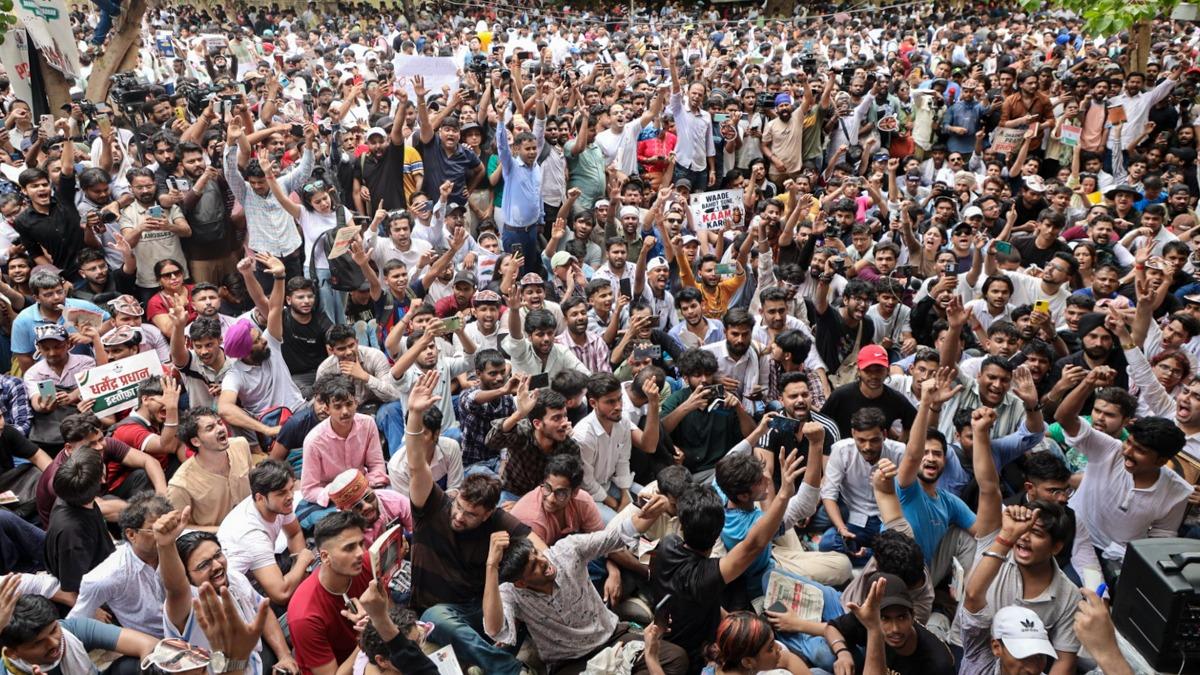
The Supreme Court has done well to constitute an independent committee to look into police excesses and has asked the government to hand over the list of FIRs which involve those with criminal backgrounds.
However, the government has been dilly-dallying on the issue. This has led to a strong reaction from student leaders who claim that the government was backing out of its assurance and have warned of resumption of the agitation.
The government must pay close attention to the developments and must meet its assurances. Also, it must ensure that doxing or trolling of female protestors on the internet is dealt with a firm hand. It must draw lessons and ensure that the youth are not forced to resume their agitation.
The frustration and anger have now seeped down to Gen Alpha, or those born after the year 2010. This is evident from numerous impromptu protests against the lack of basic facilities by school students in various states across the country.
This article was originally published in PTN News and can be read here :
https://www.punjabtodaynews.com/delhi-police-protest-crackdown/




Delhi Police cannot be above accountability, and peaceful dissent cannot be treated as a crime. When the state responds to democratic protest with intimidation and excessive force, it is not protecting democracy—it is weakening it. The real test of power is not how loudly it silences criticism, but how responsibly it answers it. Democracy demands accountability, not fear.