

A Wonderful Film, A Missing Freedom: ‘Bethlehem Kudumba Unit’ and the Lost Art of Loitering

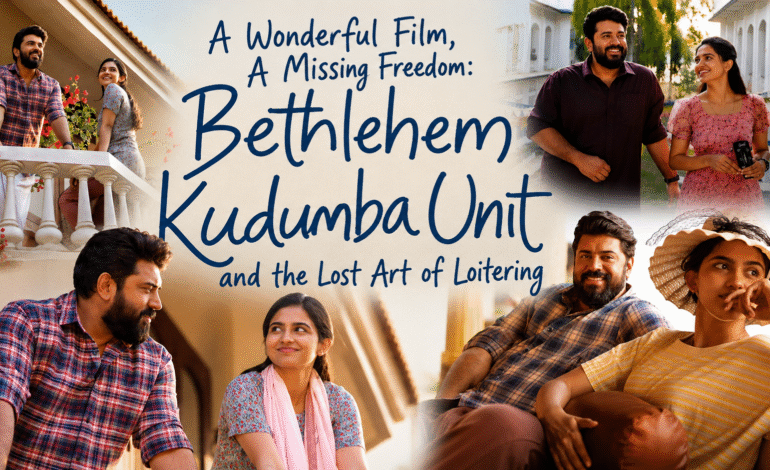
I went to watch Bethlehem Kudumba Unit expecting a romantic comedy and got exactly that. The film is very funny, Lead actor Nivin Pauly is in his elements and his counterpart Mamitha Baiju brings the right sort of energy to the character. But what stayed with me was Karukutty and the peculiar social life of the community around it. The film opens the door to a place where people rarely live in isolation. New arrivals become common knowledge with several unsolicited opinions and everything that a small town relates to. Something that is so familiar and distant at the same time.

The movie’s supporting characters matter precisely because of this. Roshan Shanavas, appearing as Glixon, could easily have remained a comic accessory is allowed his own embarrassments, expectations and place within the neighbourhood. Similarly, Joel, played by Sangeeth Prathap, is treated with care, as are characters who might elsewhere have appeared briefly, performed a function and disappeared. Their aspirations and preoccupations remain distinct, yet they are never entirely separable. They are many individual lives and, at the same time, part of one social organism.

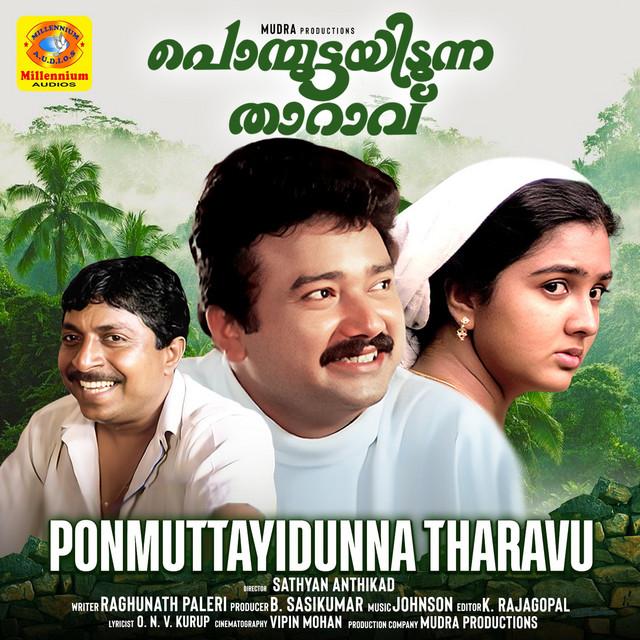
It was amongst these small continuities that Ponmuttayidunna Tharavu returned to me. I am not suggesting imitation or claiming an influence; the similarity is in their experience. Sathyan Anthikad’s cinema has an exploratory quality in the best sense, allowing a story to discover its people and its world as it advances, rather than making every character answer to an already fixed narrative purpose. Bethlehem Kudumba Unit also works in a comparable register; Justin and Ashley’s romance unfolds within Karukutty without overwhelming the world around it.
The Pleasure of Loitering
Bethlehem Kudumba Unit made me miss an openness to discovery that Malayalam cinema once accommodated with ease. Much of the contemporary Malayalam cinema feels increasingly organised around a recognisable theme, event or social proposition, almost with a problem-solving approach to their narrative. Whilst this has produced excellent films, it can also make storytelling overly purposeful, inadvertently losing some of the story in the storytelling. Manjummel Boys is a useful example; take away the Guna caves and the film loses the event that organises almost its entire narrative.

Remove the romantic thread from Bethlehem Kudumba Unit and story still appears capable of sustaining the film. Malayalam cinema once cherished this multi-textured quality, from the fantasy and desire of Padmarajan’s Njan Gandharvan and the landscape of Bharathan’s Thazhvaram to Ranjith’s socially expansive worlds built around otherwise superhuman heroes.

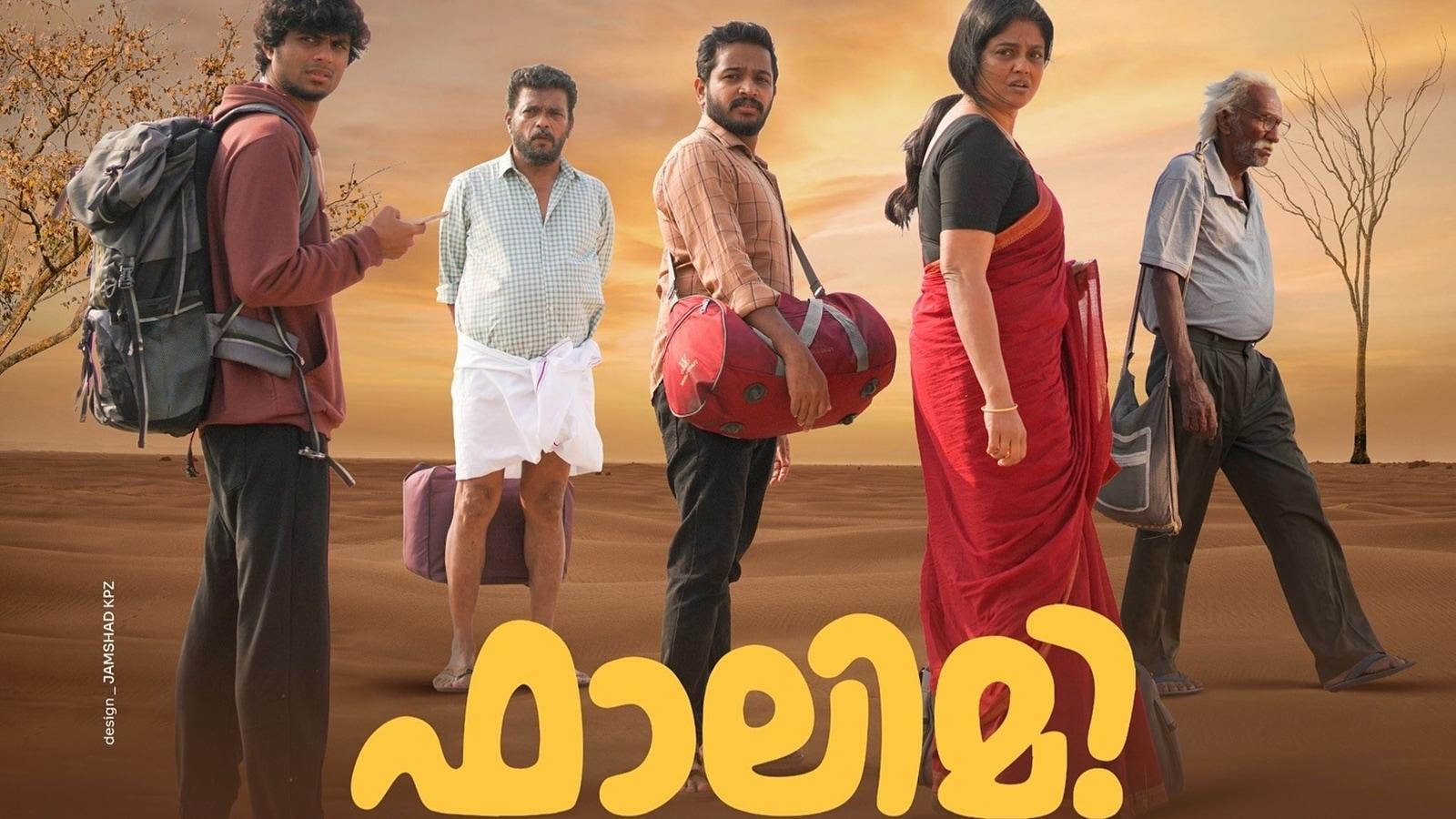
Malayalam cinema, however, has not entirely abandoned this. Falimy and Maheshinte Prathikaaram encouraging recent examples in which people and places complement the premise initially meant to organise them. I think this kind of storytelling demand an expansive command of beyond technical proficiency and a different form of control over narrative and craft to allow characters and meanings to grow beyond their immediate narrative function. Bethlehem Kudumba Unit is appealing for much the same reason, which is also why describing it simply as a romantic-comedy feels inadequate and unjust. Much of its humour depends on a precise understanding of social relations. The familiarity amongst these characters allows the joke to extend beyond the line itself. It is embedded in who says it, who hears it and what everybody already knows. The comedy therefore expands in scope and becomes a language in its own right, fluently understood by the characters and gradually shared with the audience.
There is also a strong ethnographic sensibility here, not as methodology but in its attentiveness to the ordinary and to the meanings produced through their interaction. The film notices who may interfere, who is expected to remain silent, how information travels and how private decisions become collective business. Life in Karukutty therefore becomes legible through behaviour without requiring much explanation. Girish A D’s familiarity with this landscape may partly explain that ease. More significant is his grasp of its social grammar where the sense of community shines through and the genius lies in making something so intricate appear effortless.
Unsettled and Underexplored
My reservations, however minor and perhaps insignificant, begin with the age difference between Justin and Ashley. I get that the film is conscious of it and gives Ashley considerable choice within the relationship. Large age differences were once a norm and their decline in contemporary life is worth welcoming, whilst still recognising individual preferences. None of this diminishes the relationship, but the film romanticises the age difference which would have been better left slightly unsettled.

More concerning is the film’s verbosity; Girish is an observant filmmaker and the best parts of the movie depend precisely on that. Yet the film too often explains in dialogue what it has already shown, diluting some of its cinematic elements. I believe the audience should be allowed to observe, interpret and translate what they see through their own lived experience.
Also, for a film so intricately observant of its social world, it is remarkably reluctant to engage with the political life surrounding it. This is something of a recurring pattern in Girish’s films, where social worlds are observed with extraordinary precision while the politics shaping them often left unaddressed. One could always argue that the politics is already present within the community itself. Nevertheless, Karukutty does not exist outside questions of caste, class, religion, electoral politics or economic pressures. A craft this observant need not become didactic to become political; it simply has to recognise that the stories it captures so well are also shaped by power.
These reservations do little to diminish the film for me. If anything, they arise because Bethlehem Kudumba Unit gives us enough to argue with after the laughter subsides. For me, it is the best Malayalam film I have seen so far this year.










Alok Raj Kochuparampil offers a sharp and deeply thoughtful reading of Bethlehem Kudumba Unit. The film’s real strength lies in its living community—where humour, relationships and everyday life unfold naturally. But the article rightly asks us to look beyond laughter: a community is never separate from caste, class, religion, politics and power. A wonderful film becomes even more meaningful when we are willing to question the world it quietly reflects