The Indian Express pulled off the biggest scoop in Indian journalism in recent memory, setting the stage for October 10. Yet, if September 23, when Ritika Chopra broke the Election Commission’s SIR story, represented Indian journalism at its finest, October 11 exposed its limitations. The contrast was stark: on September 23, reporting broke through; on October 11, much of the legacy media’s editorial leadership and desks, rather than its reporters, failed to rise to the occasion.
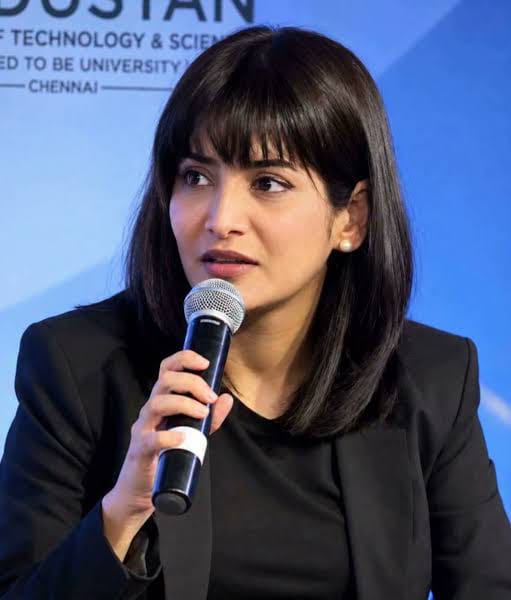
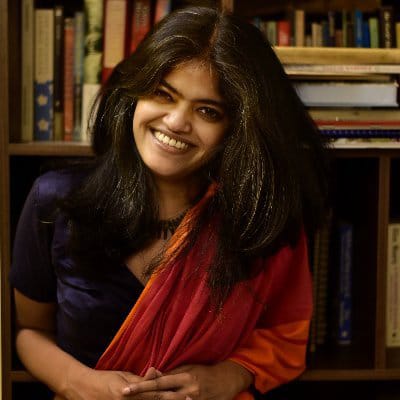
Ritika Chopra
By the morning of October 11, many readers would already have spent hours following the events of the previous day on television and social media. What I needed from newspapers was not a belated account of what had happened, but an explanation of what it meant: the scale of the crackdown, its implications for democracy and the larger picture obscured by the day’s tumult. Too many newspapers offered little beyond stale news dressed up with a big headline and a photograph, or undermined a powerful photograph by adding too many distracting images.
September 23 demonstrated the power of reporting. October 11 raised a more troubling question: when the news is already out, can newsroom leadership give readers journalism that is not redundant?
As a reader, I expected a newspaper to be my guide and companion on the morning of October 11, portraying the big picture and explaining, in crisp prose, the enormity of what had happened on October 10. Among the newspapers I had seen by 7 am on Sunday, I did not find one that gave me what I was looking for. But one newspaper surprised me by taking an unusual stand in its reporting, although I disagree with its conclusion. That is as it should be in a democracy. I cannot expect everyone to agree with me.
One news outlet, however, gave me an overview so comprehensive, so early — by 10.53 pm on Saturday itself — and free of charge that there was no need for me to read any paid newspaper the next morning. I will come to that later.
The Indian Express
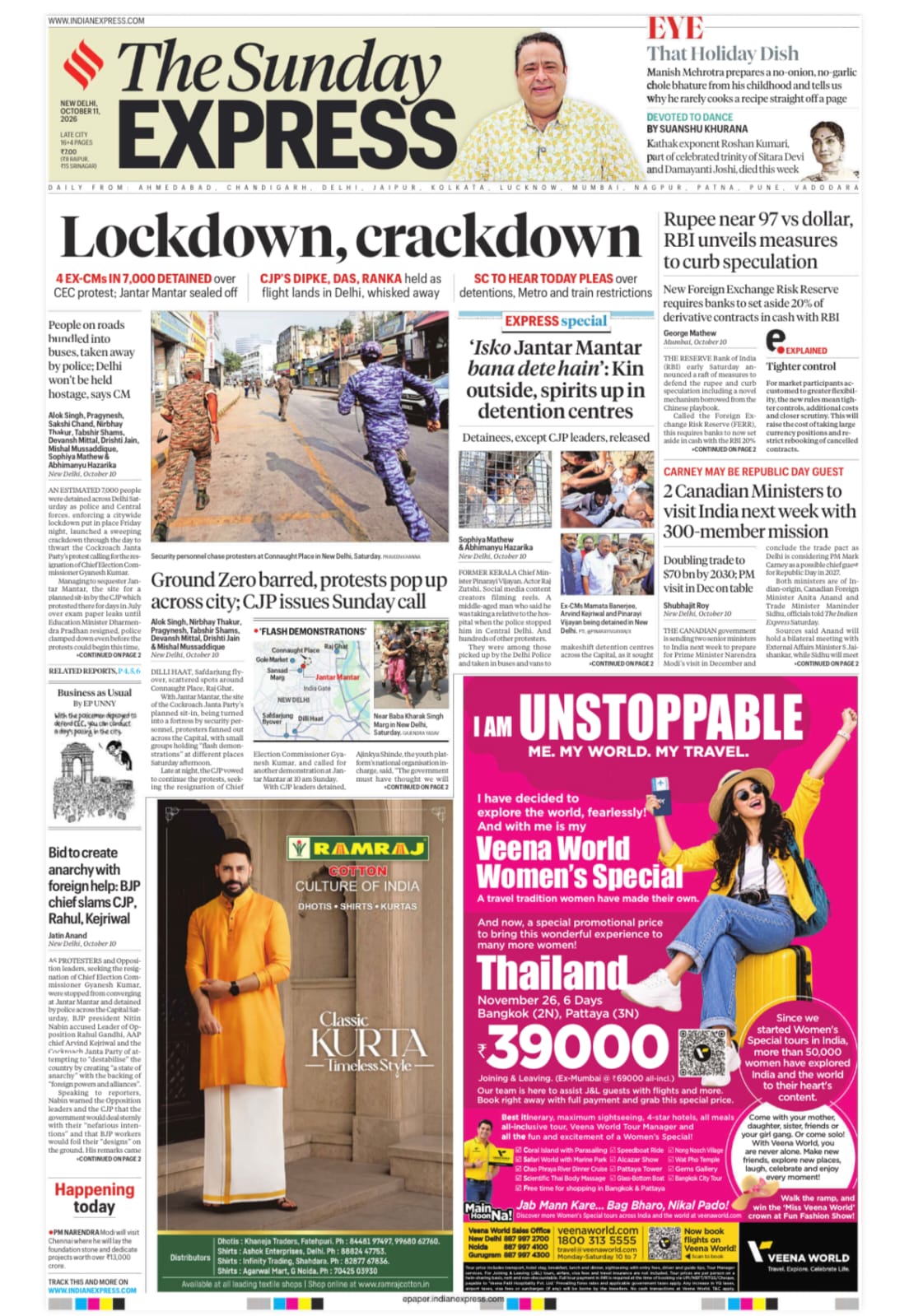
The newspaper’s main report began thus: “AN ESTIMATED 7,000 people were detained across Delhi Saturday as police and Central forces, enforcing a citywide lockdown put in place Friday night, launched a sweeping crackdown through the day to thwart the Cockroach Janta Party’s protest calling for the resignation of Chief Election Commissioner Gyanesh Kumar. ”
“Managing to sequester Jantar Mantar, the site for a planned sit-in by the CJP which protested there for days in July over exam paper leak until Education Minister Dharmendra Pradhan resigned, police clamped down even before the protest could begin this time, CONTINUED ON PAGE 2”
The Sunday edition of The Indian Express, dated October 11,2026
1. The first paragraph tells me nothing I did not already know.
2. The second paragraph ends in the middle of a sentence. On such an important day, this is a callous oversight. The paragraph could easily have been edited so that the sentence ended on the page itself. Alternatively, the sentence could have ended after the word “time”. That would still have made sense. It would have read:
“Managing to sequester Jantar Mantar, the site for a planned sit-in by the CJP, which protested there for days in July over an exam paper leak until Education Minister Dharmendra Pradhan resigned, police clamped down even before the protest could begin this time.”
The first line of the continuation could then have read: “The police made large-scale detentions, shut 45 Metro stations….”
3. I do not know whether the desk was aware that a brightly coloured advertisement at the bottom of the page was drawing attention away from the lead story. Ideally, the newsroom leadership should have negotiated with the business section to see whether the advertisement could have been held back for a day or shifted to another page at a discount. Editors can understandably no longer afford to “put their foot down” and throw out advertisements, but there are several bargaining chips available.
Had such an effort failed, the desk could have launched a countermeasure: if an advertisement wants to steal the news thunder, the desk can hit it hard and hit it high. A narrow horizontal visual running across the page, accompanied by a broader headline, would have neutralised the advertisement’s impact. Or, a closely cropped vertical picture running from the dateline till the ad, with a multi-deck vertical headline running till the ad would have had the same neutralising effect.
4. But there is also evidence of morale-boosting leadership. The Express took care to credit every reporter who toiled through the day, even as journalists themselves were targeted. It was a great gesture and an effective way of expressing solidarity with journalists in the trenches. The lead byline reads: “Alok Singh, Pragynesh, Sakshi Chand, Nirbhay Thakur, Tabshir Shams, Devansh Mittal, Drishti Jain, Mishal Mussaddique, Sophiya Mathew & Abhimanyu Hazarika.”
5. The Express front page featured a telling map and an interesting story on the detention centres. These were things I had not “seen” on Saturday. Should the Express have made the detention-centre story its lead, flagging the statistics from the routine report in a chart and shifting the routine report inside, so that readers who did not know what had happened could read it there? That is the news editor’s call. (Do news editors still have such a say?)
The Hindu
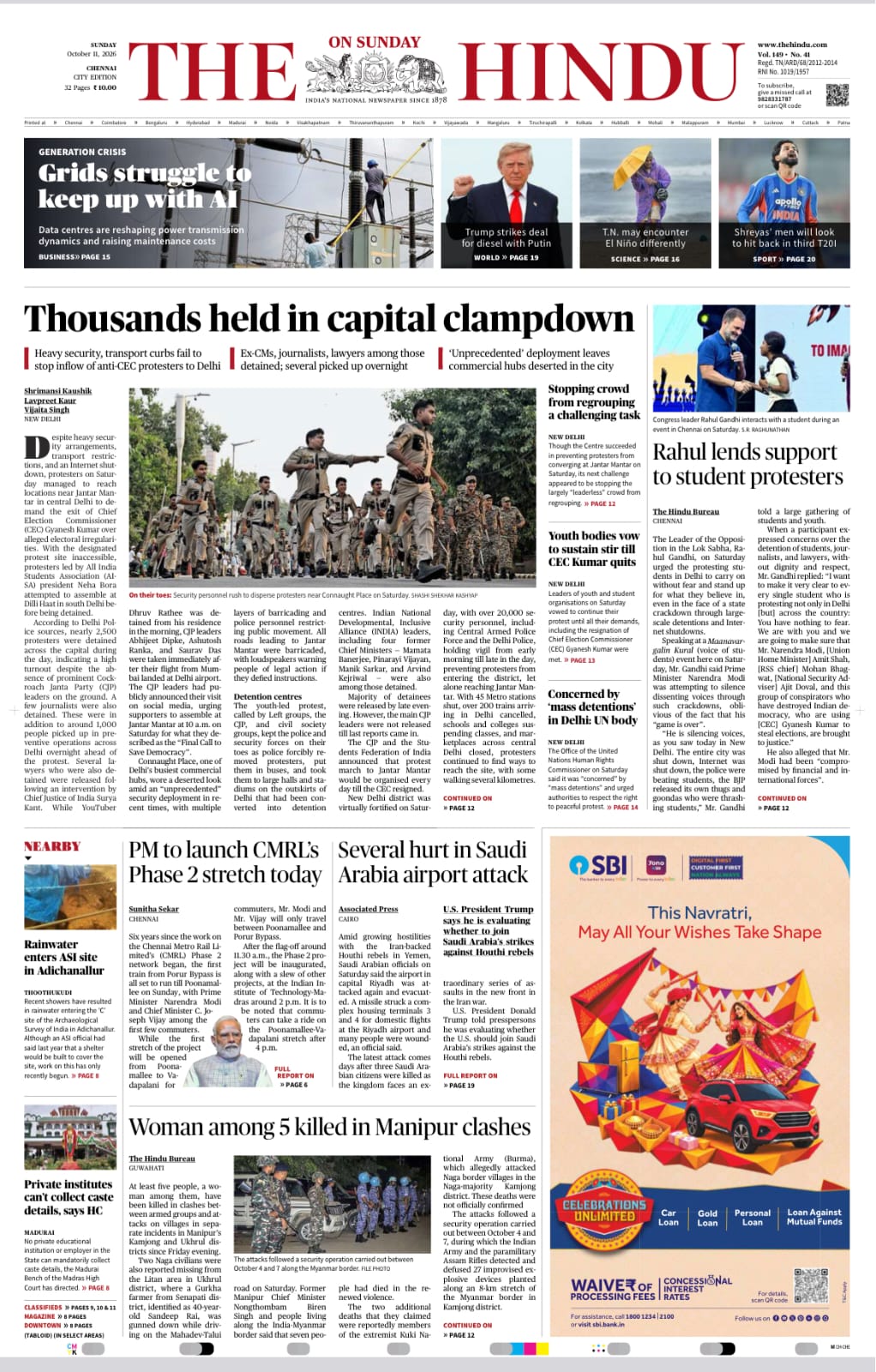
The first paragraph read: “Despite heavy security arrangements, transport restrictions, and an Internet shutdown, protesters on Saturday managed to reach locations near Jantar Mantar in central Delhi to demand the exit of Chief Election Commissioner (CEC) Gyanesh Kumar over alleged electoral irregularities. With the designated protest site inaccessible, protesters led by All India Students Association (AISA) president Neha Bora attempted to assemble at Dilli Haat in south Delhi before being detained. According to Delhi Police sources, nearly 2,500 protesters were detained across the capital during the day, indicating a high turnout despite the absence of prominent Cockroach Janta Party (CJP) leaders on the ground.”
The front page of The Hindu’s Chennai edition dated October 11, 2026
1. Editing would have made the sentence sharper. When you take a stand, it is best to do so upfront and be as brief as possible. One possible version, though not the best, would be:
“Protesters demanding the exit of Chief Election Commissioner Gyanesh Kumar managed to reach locations near Jantar Mantar on Saturday, leapfrogging a security clampdown, transport restrictions and an Internet shutdown.”
2. Even so, the copy does not tell me anything I do not already know. (Of course, it does give me the personal satisfaction of knowing that The Hindu also shares my opinion of how the day unfolded.)
3.The Hindu features an excellent photograph on Page 1 by Shashi Shekhar Kashyap. The desk has done justice to the picture by giving it an apt tagline that faithfully describes it: “On their toes”.
Shashi Shekhar Kashyap
4. On Page 12,The Hindu carries an insightful report by Vijaita Singh, one of the best reporters in India today, titled “Stopping return of ‘leaderless’ crowd a challenge for govt.” Could this have been turned into the lead story on Page 1, incorporating some details from the main report and a chart showing the basic statistics? I think legacy newsrooms will have to focus on “forward-looking” stories, as opposed to stale news, if they want to combat reader fatigue.
Vijaita Singh
The Times Of India
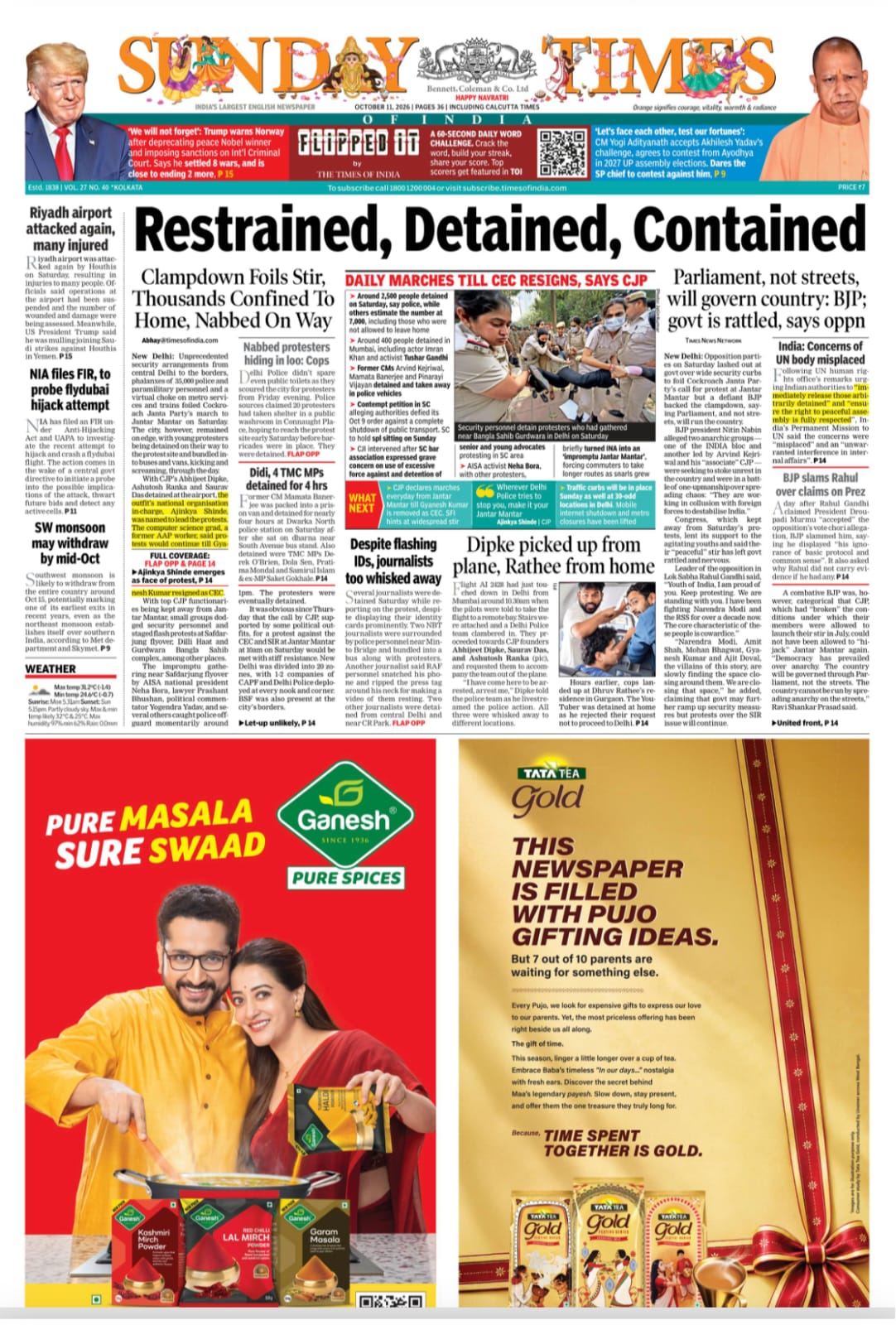
The first paragraph read: “Unprecedented security arrangements from central Delhi to the borders, phalanxes of 35,000 police and paramilitary personnel and a virtual choke on metro services and trains foiled Cockroach Janta Party’s march to Jantar Mantar on Saturday. The city, however, remained on edge, with young protesters being detained on their way to the protest site and bundled into buses and vans, kicking and screaming, through the day.”
The front page of the Sunday edition of Times of India dated October 11, 2026
1.The Times of India, although it had initially tried to play down the impact of the first Jantar Mantar wave, surprised me by taking a stand in its reporting: it said the march had been foiled. The paper, which must have racked its collective brain to come up with the much-maligned “block” headline during the Jantar Mantar NEET protest, went with this headline today:“Restrained, detained, contained”. The headline itself was not restrained at all.
2. I do not agree with the conclusion reached by The Times of India, but the paper did surprise me.
3.The Times of India also carried a strong photograph by Jatin Kumar. But the newspaper’s “thaali” style leaves no room to play up stand-out visual elements. A telling photograph has been destroyed.
Hindustan Times
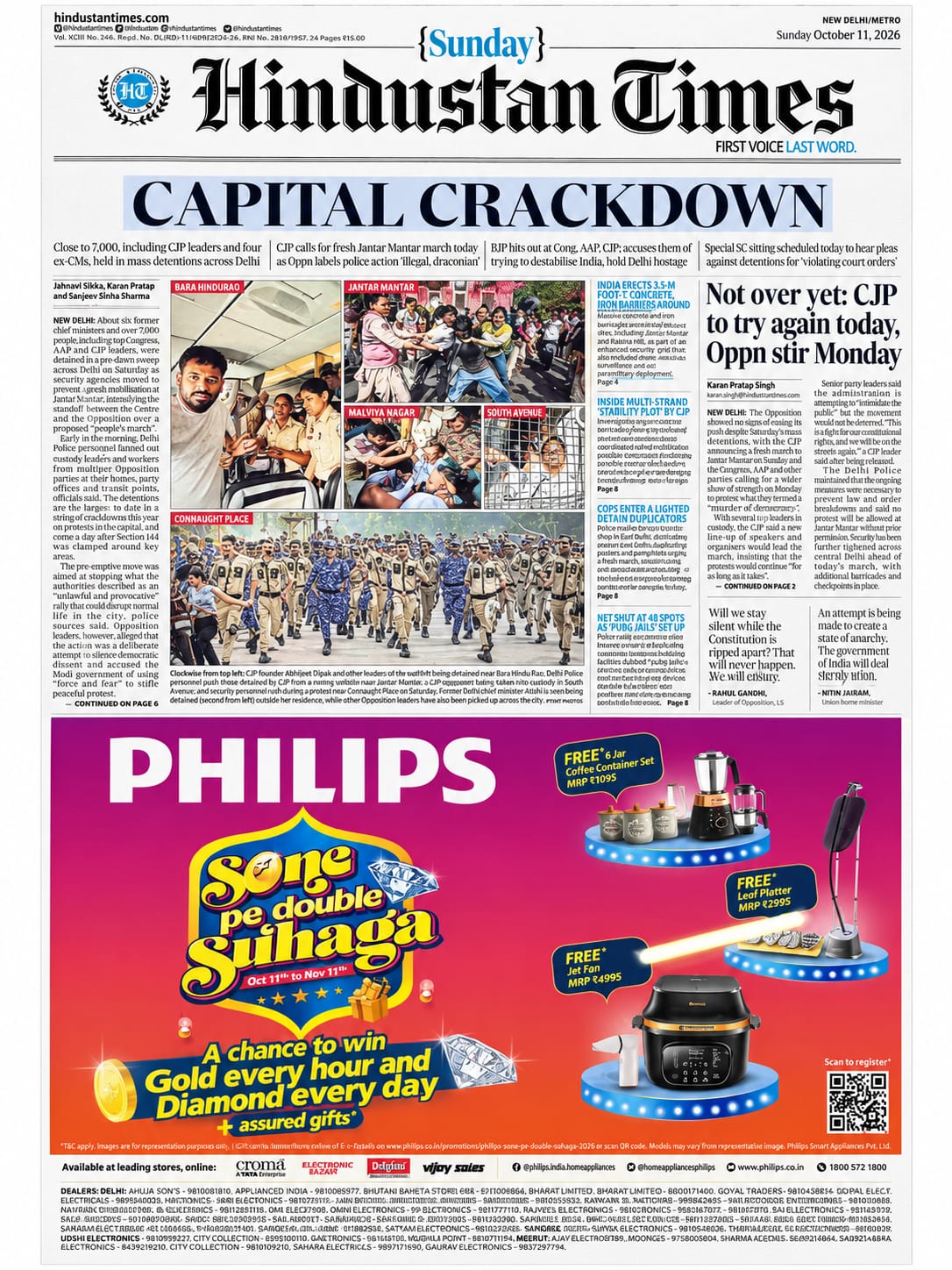
The first paragraph read: “About 41,000 security personnel turned the Capital into a fortress on Saturday to thwart a planned protest demanding the resignation of chief election commissioner Gyanesh Kumar, launching an unprecedented clampdown that saw the detention of 7,000 people and left large chunks of Delhi deserted.”
The front page of Hindustan Times, Sunday edition, dated October 11, 2026
1. After six full-page advertisements, Page 1 appears, and it looks like a damp squib. Multiple pictures on a page whose bottom half is swallowed by a brightly coloured advertisement do not work at all.
Bottom Line
Almost all newspapers treated October 10 as a contest between the police and students. This meant they could offer little on Page 1 beyond what many readers would already have seen on television and social media.
The India Cable
At 10.53 pm on Saturday—a good six hours before the early birds among the newspapers hit the online stands—The India Cable,The Wire‘s newsletter on the Substack platform, landed in my inbox.
The newsletter hit the nail on the head from the word “go”. The headline read: “Violence, Intimidation and terror in Delhi: Modi Govt’s Panic Radiates Through the Capital’s Streets”.
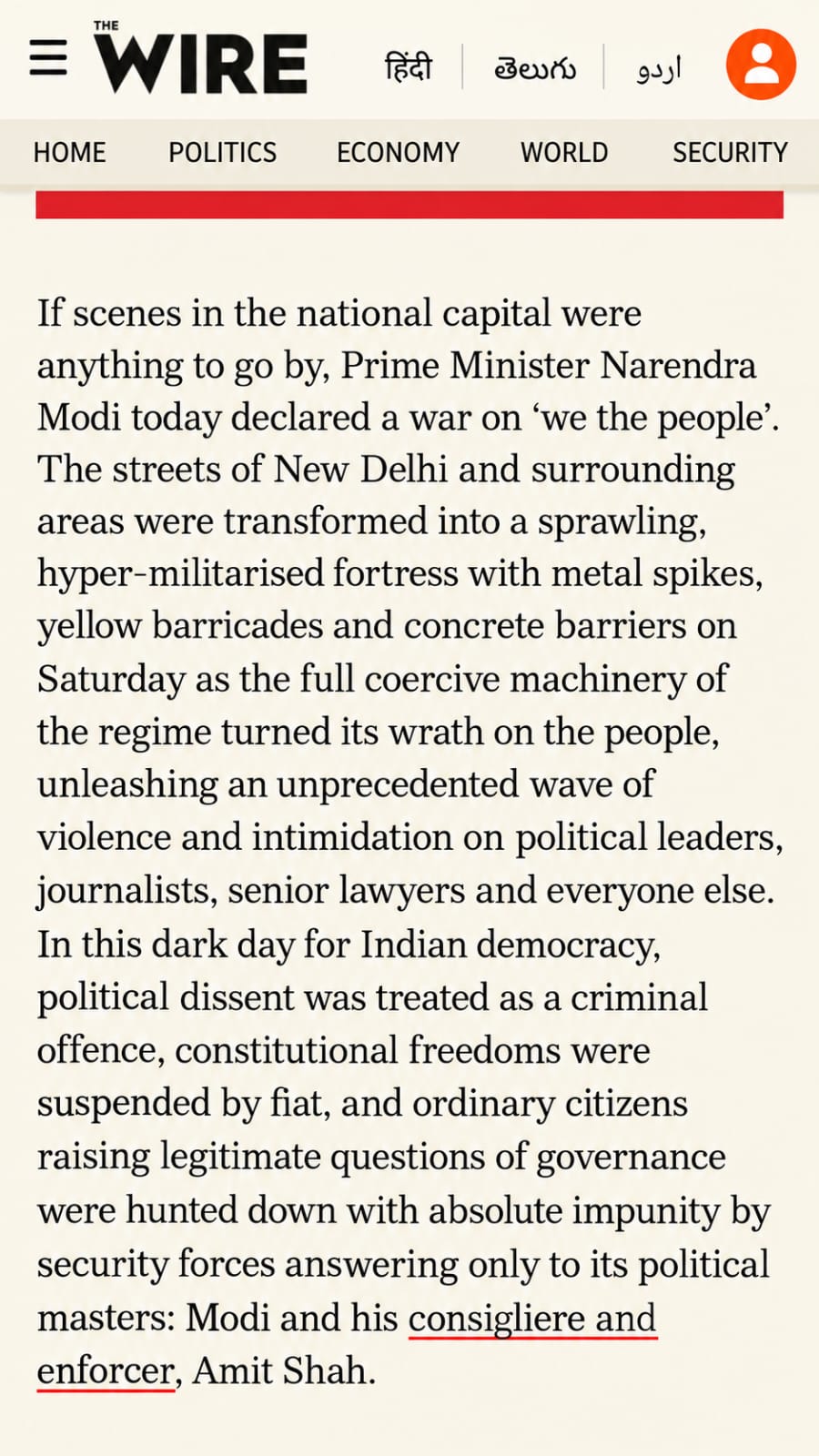
A screengrab from the official website of The Wire
The first paragraph read: “If scenes in the national capital were anything to go by, Prime Minister Narendra Modi today declared a war on ‘we the people’.”
The introduction grabbed me by the jugular. Yes, this was what had happened on October 10. A war had been declared on the people. The hallmark of great commentary is that it tells you something you are vaguely aware of but do not know how to put into words. This is exactly what The India Cable did: it broke the day’s events down and then synthesised the elements into a sledgehammer of a synopsis: Prime Minister Narendra Modi today declared a war on ‘we the people’.
The next sentence read: “The streets of New Delhi and surrounding areas were transformed into a sprawling, hyper-militarised fortress with metal spikes, yellow barricades and concrete barriers on Saturday as the full coercive machinery of the regime turned its wrath on the people, unleashing an unprecedented wave of violence and intimidation on political leaders, journalists, senior lawyers and everyone else.”
Yes, this was exactly what I had been trying to say earlier in the day but had not known how to express.
In the next sentence, the copy shifted into high gear, dovetailing reporting and comment:
“In this dark day for Indian democracy, political dissent was treated as a criminal offence, constitutional freedoms were suspended by fiat, and ordinary citizens raising legitimate questions of governance were hunted down with absolute impunity by security forces answering only to its political masters: Modi and his consigliere and enforcer, Amit Shah.”
Then the floodgates opened with breathless reporting, as the day demanded. The India Cablecontinued: “Reporting by independent media platforms, independent journalists and YouTubers, and independent-minded journalists in corporate media revealed a chilling, unvarnished portrait of a city placed under complete lockdown. Social media timelines overflowed with harrowing footage of baton charges, aggressive manhandling of activists, and the arbitrary dragging of young students who peacefully challenged the ruling dispensation’s narrative. Over 7,000 protesters were detained during the day, PTI reports. Packed state transport buses filled with detained protesters confronting security personnel without nametags turned into mobile symbols of Modi’s paranoia. So disturbing were these scenes to even global audiences that The New York Times ran a Live Blog on the events in New Delhi.”
From The New York Times to the UN: note the seamless structuring, a difficult task when multiple events erupt all around you.
The newsletter continued: “The United Nations Office of the High Commissioner for Human Rights has urged authorities in India to immediately release those it said had been ‘arbitrarily detained’ amid the non-violent protest against the alleged illegality and irregularities in the special intensive revision (SIR) and demanding the resignation of Chief Election Commissioner Gyanesh Kumar Gupta. ‘We are concerned by reports of mass detentions in India of demonstrators, protest leaders, members of civil society organisations, lawyers and journalists, before and during today’s large-scale demonstrations in Delhi,’ the UN human rights office said in its late night press release.”
The India Cable then detailed the arrests and the harassment of the media. After covering those details, it fired on all cylinders again:
“This is no longer a democratic government managing law and order. In the national capital of the world’s largest democracy, citizens demanding accountability at the ballot box were met with the full force of a police state. It is a regime gripped by existential panic, desperately trying to crush a rising generation’s demand for accountability beneath the heavy jackboot of authoritarian state violence. With lawyers, politicians, students and independent journalists recording the raw truth all criminalised as public enemies, Modi’s democratic facade has collapsed entirely, leaving behind only the naked face of terror and tyranny.”
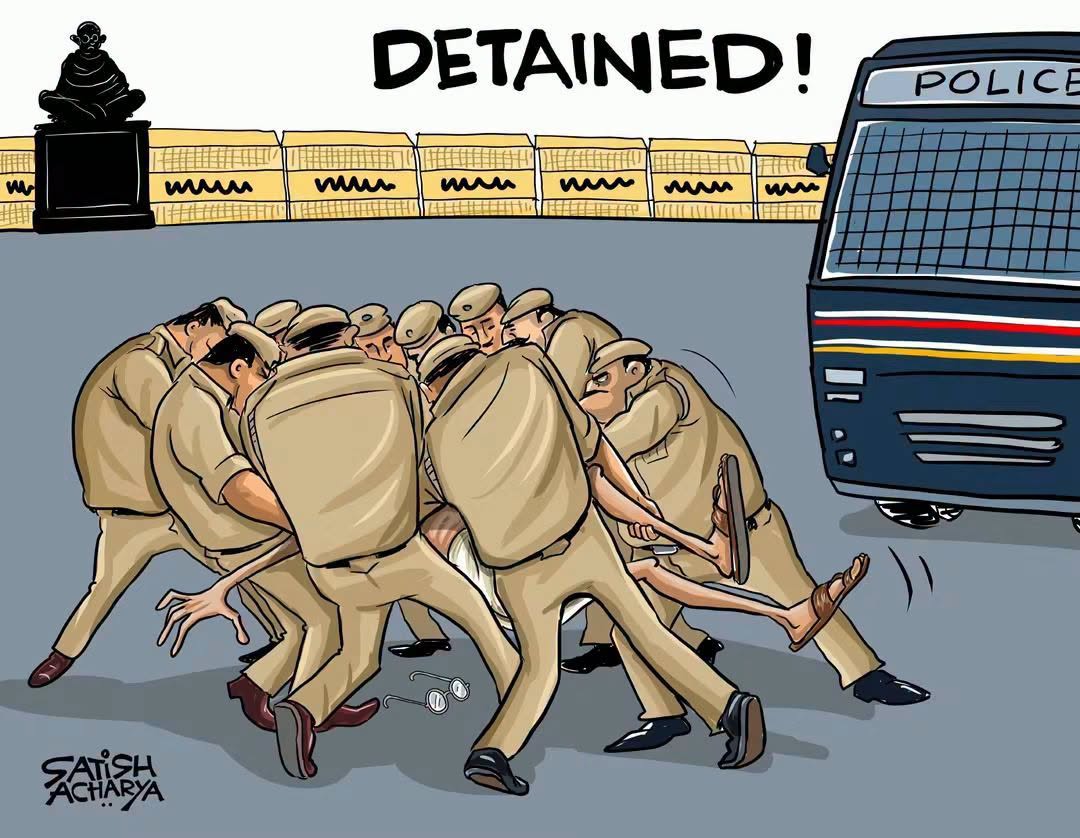
‘The paradox of Peace’- (A cartoon by Satish Acharya)
The newsletter signed off: “As night fell, the public’s message echoing from the barricaded streets of New Delhi was still loud and clear: undefeated, defiant and ready to fight another day.”
The India Cable also carried a telling picture by Jahnavi Sen. The journalist’s hawk eye captured a Freudian slip. The picture featured a bus used by Delhi Police, with a digital board that read “on election duty”. No bus has ever sported a truer message.
Jahnavi Sen- The Managing Editor of The Wire
The India Cable is usually published on weekdays. On Saturday, the India Cable Team—the byline used for this insightful snapshot—worked overtime to serve its readers. And it made the newsletter free, declaring an additional No Paywall Day.
Few newspapers had the social commitment to free up their front pages from advertisements on such an important day. The India Cable did so by making its coverage free. After such reporting, published at 10.53 pm and available free of cost, why should I spend Rs 55 on the six newspapers I had read by 7 am?
Postscript
Since Friday night, nine people have been killed in Manipur. Is there any reason why most newspapers did not ask why even half the security arrangements made to protect the puppetmasters in Delhi had not been made to protect the people in Manipur?
About Author
R Rajagopal
R. Rajagopal is the former Editor of The Telegraph.
The AIDEM is committed to people-oriented journalism, marked by transparency, integrity, pluralistic ethos, and, above all, a commitment to uphold the people’s right to know. Editorial independence is closely linked to financial independence. That is why we come to readers for help.