
Whose Siang? Indigenous Communities Challenge a Mega Dam and the Might of the State


The protests against the proposed Siang Upper Multipurpose Project (SUMP) in Arunachal Pradesh have developed into a wider confrontation over indigenous rights, infrastructure development and democratic dissent. Police action against protesters in Pasighat on 23 October 2026, subsequent arrests and an investigation involving senior journalist Tongam Rina have brought renewed attention to a dispute spanning more than four decades.
At its centre is the proposed 11,200-megawatt hydropower project on the Siang River. The Arunachal Pradesh government and the National Hydroelectric Power Corporation (NHPC) present it as an important energy and strategic initiative. Sections of the indigenous Adi community, however, fear the submergence of ancestral land, displacement and the destruction of livelihoods and cultural traditions.
The immediate confrontation concerns surveys for the project’s pre-feasibility report (PFR). While the government maintains that these do not constitute construction approval, protesters fear they will advance the project before questions of consent, land rights and rehabilitation are resolved. China’s plans for a major upstream hydropower project have added a strategic dimension, raising questions about whether national security considerations are overriding local concerns.
The Project and Its Contested History
SUMP is a proposed storage-based hydropower project on the Siang, which flows from Tibet through Arunachal Pradesh into Assam, where it joins the Dibang and Lohit to form the Brahmaputra. NHPC is preparing its pre-feasibility report, with Parong, Dite Dime and Ugeng-Komkar identified as potential sites. Besides electricity generation, the reservoir is intended to provide water storage and flood moderation.
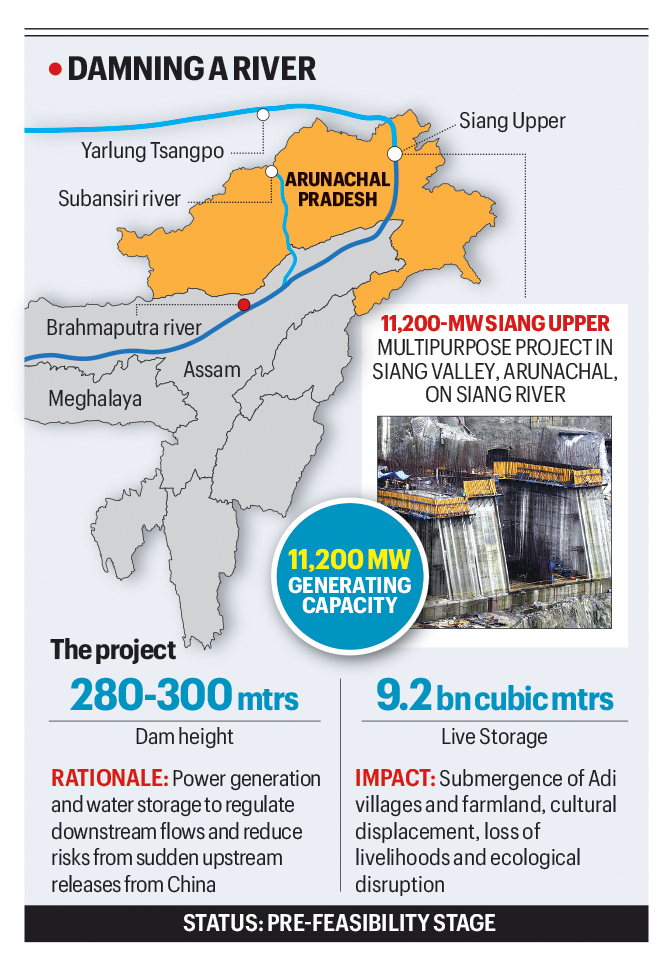 Overview of the proposed 11,200-MW Siang Upper Multipurpose Project in Arunachal Pradesh, detailing its technical scale, strategic rationale, and local impacts.
The project remains at the pre-feasibility stage without construction approval. NHPC says preliminary topographical, geological and geophysical investigations have been undertaken, but resistance from villagers has prevented drilling. The final design, submergence area and number of affected families remain undetermined.
The proposal dates back to 1982, when the Brahmaputra Board suggested reservoirs on the Siang and Subansiri rivers. Then Chief Minister Gegong Apang expressed reservations about large reservoirs, and smaller projects were subsequently pursued.
In 2003, the Centre announced plans to harness Arunachal Pradesh’s estimated 50,000-MW hydropower potential, with around 27,000 MW envisaged from the state. Agreements with private developers multiplied, alongside concerns about transparency, environmental consequences and local participation.
In 2008, the approximately 9,500-MW Siang Upper project was declared a National Project. Divided into 6,000-MW and 3,750-MW stages in 2009, with agreements signed in 2013, it was consolidated following discussions involving Chief Minister Pema Khandu and NITI Aayog on 26 September 2017. The resulting proposal became the 11,200-MW SUMP, with a dam height of approximately 250 metres, according to a Shiv Nadar University study.
Political positions have changed considerably. In August 2010, police raided the residence of anti-dam activist Ojing Tasing, then chairman of the Siang Peoples’ Forum. He subsequently approached Union Environment Minister Jairam Ramesh seeking the cancellation of Siang basin projects. Ramesh acknowledged concerns about making Arunachal Pradesh a pawn in the India-China rivalry.
In 2012, BJP MP Tarun Vijay challenged allegations that China was instigating anti-dam protests. During his February 2014 Pasighat campaign, Narendra Modi acknowledged opposition to large dams and advocated smaller hydropower projects with environmental safeguards. Tasing himself later shifted towards supporting the project.
India’s concerns about Chinese upstream activity had meanwhile grown. A bilateral hydrological information-sharing mechanism was established in 2002, while Chinese projects figured in parliamentary discussions in 2011 and 2013. China’s approval of the Medog project in December 2024 renewed the strategic debate and accelerated efforts to conduct surveys during 2025–26.
The present resistance is thus part of a longstanding dispute over development, land and community participation.
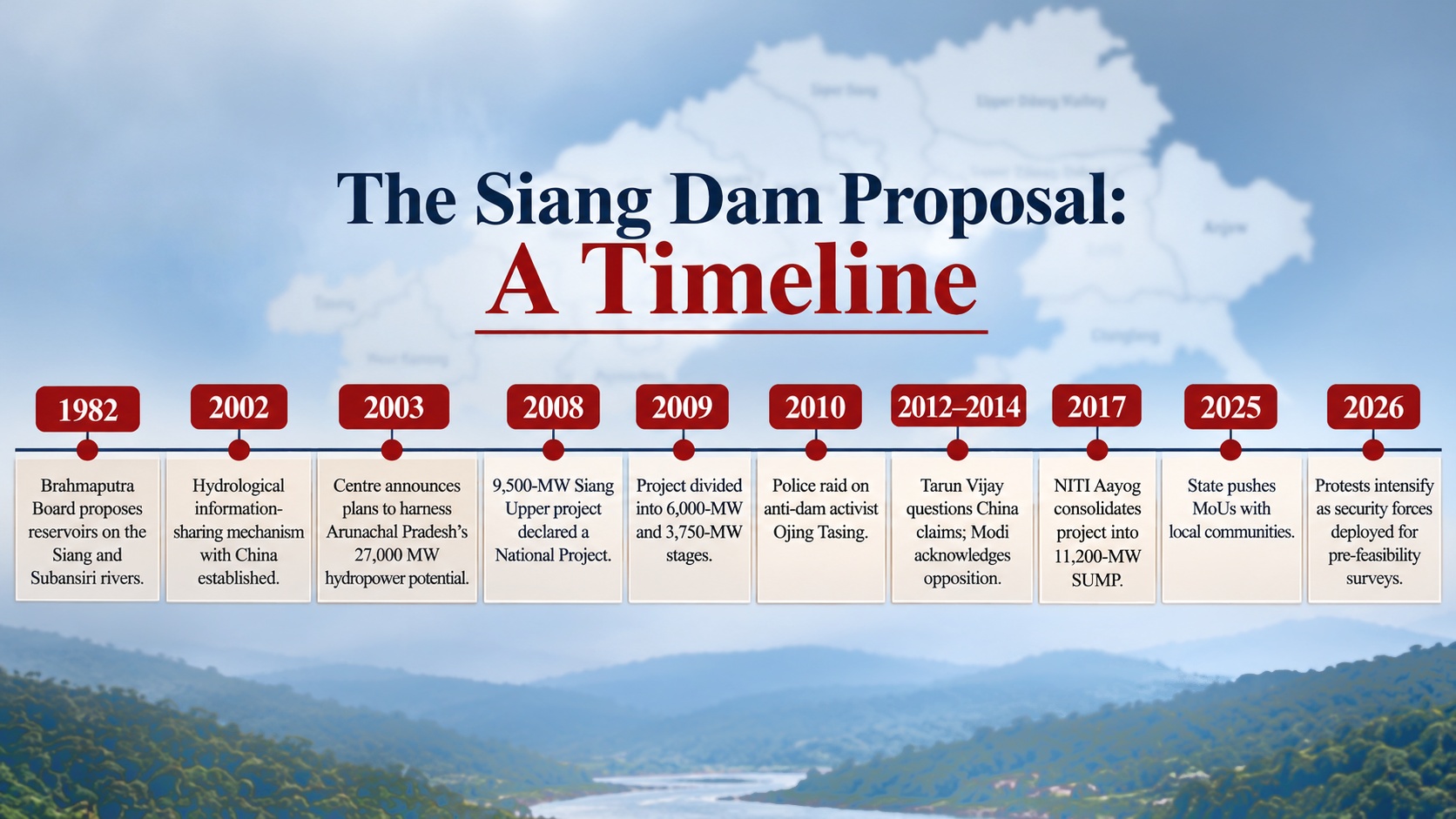 From the Brahmaputra Board’s initial proposal in 1982 to the intensifying protests over SUMP in 2026, the Siang dam project has evolved through decades of political decisions, strategic calculations and indigenous resistance.
Indigenous Resistance, Livelihoods and Consent
For the Adi community, the Siang is inseparable from ancestral settlements, agriculture, customary institutions and spiritual traditions. A March 2026 study by Tadu Rimi of Shiv Nadar University’s Centre of Excellence for Himalayan Studies estimated that 27 villages could be submerged and another 43 directly or indirectly affected. These figures remain provisional, depending on the project’s eventual location and design.
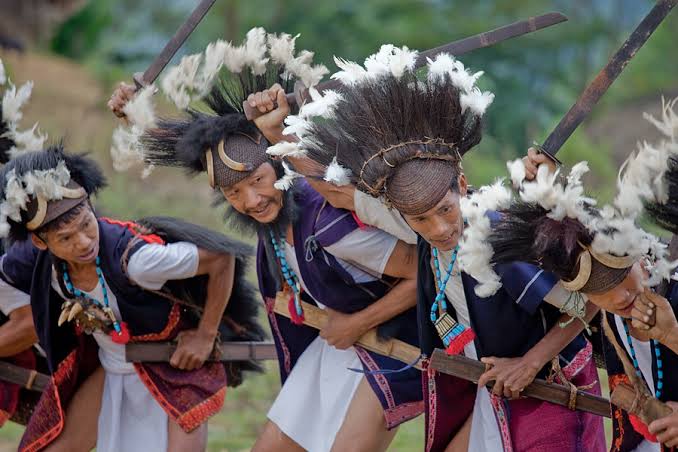 The Adi, is a major tribe of Arunachal Pradesh and they are found within the districts of East Siang, Upper Siang, West Siang and Dibang Valley.
The study describes some of the region’s oldest Adi settlements, sustained by fertile fields, orchards, rice cultivation and local markets.
Resistance has drawn strength from the community’s traditional Kebang councils. These operate at village level through the Dolung Kebang, across villages through the Bango Kebang, and at the wider community level through the Bogum Bokang Kebang.
On 20 August 2025, the Bogum Bokang Kebang assembled at Geku after approximately 25 years. Convened by the Siang Indigenous Farmers’ Forum (SIFF), it brought together hundreds of villagers from four districts, community elders, student organisations, Gaon Buras and former Chief Minister Gegong Apang.
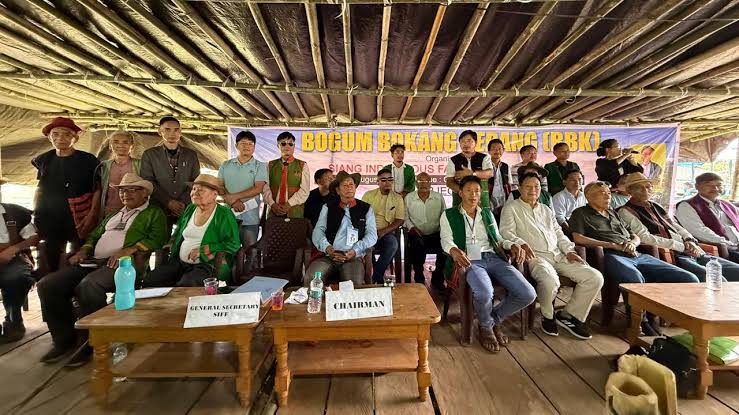 Meeting of the Bogum Bokang Kebang (BBK) and the Siang Indigenous Farmers’ Forum (SIFF) in Geku, Arunachal Pradesh, on 20 August, 2025.
The gathering rejected SUMP and its PFR process, demanded withdrawal of Central Armed Police Forces and expressed conditional support for smaller tributary projects. Participants invoked Ane Siang, or Mother Siang, whose significance in Adi spiritual and cultural life was compared with that of the Ganga and Yamuna in Hindu traditions.
Environmental engineer Katon Moyong, popularly known as Abor Man or Aborman, has emerged as a prominent younger opponent. Associated with SIFF’s youth wing, he conducted an awareness and signature campaign across 56 potentially affected villages in 2025.
Moyong argues that SUMP revives earlier proposals, including the Brahmaputra Flood Control and Lower Siang Hydroelectric Power projects, under another name. He credits Oyar Gao and Ojing Tasing with mobilising resistance in 2011 and refers to a 2023 High Court order that he says halted the Lower Siang project.
He also alleges financial irregularities in earlier hydropower agreements. According to him, 65 companies entered agreements concerning 145 proposed projects between 2003 and 2011, with upfront payments distributed among political leaders and officials during former Chief Minister Dorjee Khandu’s tenure.
The video in which environmental engineer Katon Moyong, popularly known as Abor Man, discusses the Siang Upper Multipurpose Project, the history of hydropower agreements in Arunachal Pradesh and alleged financial irregularities.
Moyong cites figure of ₹1,81,031 crore in different parts of his video and alleges that representatives of different communities benefited. These allegations, including the figures and recipients, require independent documentary verification.
Meanwhile, the government has announced a ₹350-crore livelihood scheme, reportedly offering ₹2.5 lakh to eligible families. This is not a final rehabilitation package. October 2026 reports indicated that residents lacked adequate information about the scheme and disbursement had not begun. NHPC maintains that beneficiaries are eligible families in affected areas, not simply those signing agreements.
The Adi community is not unanimous. Some residents support preliminary studies or have signed agreements, while others oppose the project. These differences reinforce the need for transparent consultation rather than treating individual agreements as proof of collective consent.
Indigenous Land Rights and Legal Safeguards
Arunachal Pradesh’s land-rights framework involves several laws with differing scopes. The Sixth Schedule, providing autonomous councils in specified tribal areas, does not apply to the state. The Eighth Schedule concerns languages, while Article 371H gives the Governor special responsibility for law and order without granting communities an automatic veto over infrastructure projects.
The Forest Rights Act, 2006, recognises eligible forest-dwelling communities’ rights and the Gram Sabha’s role in their verification. Section 4(5) prohibits eviction from forest land until the recognition and verification process is completed.
The Balipara/Tirap/Sadiya Frontier Tract Jhum Land Regulation, 1947, also forms part of the state’s land framework. In September 2025, the Supreme Court’s judgment in State of Arunachal Pradesh v. Mihin Laling addressed its relationship with the 2013 land acquisition law and compensation, including solatium and interest. It was not a ruling on SUMP.
The Environmental Impact Assessment Notification, 2006, permits exemptions from specified public consultation requirements for national defence, security and other strategically designated projects. The Forest (Conservation) Amendment Act, 2023, also provides conditional exemptions for specified strategic linear projects within 100 kilometres of international borders or the Line of Control or Line of Actual Control.
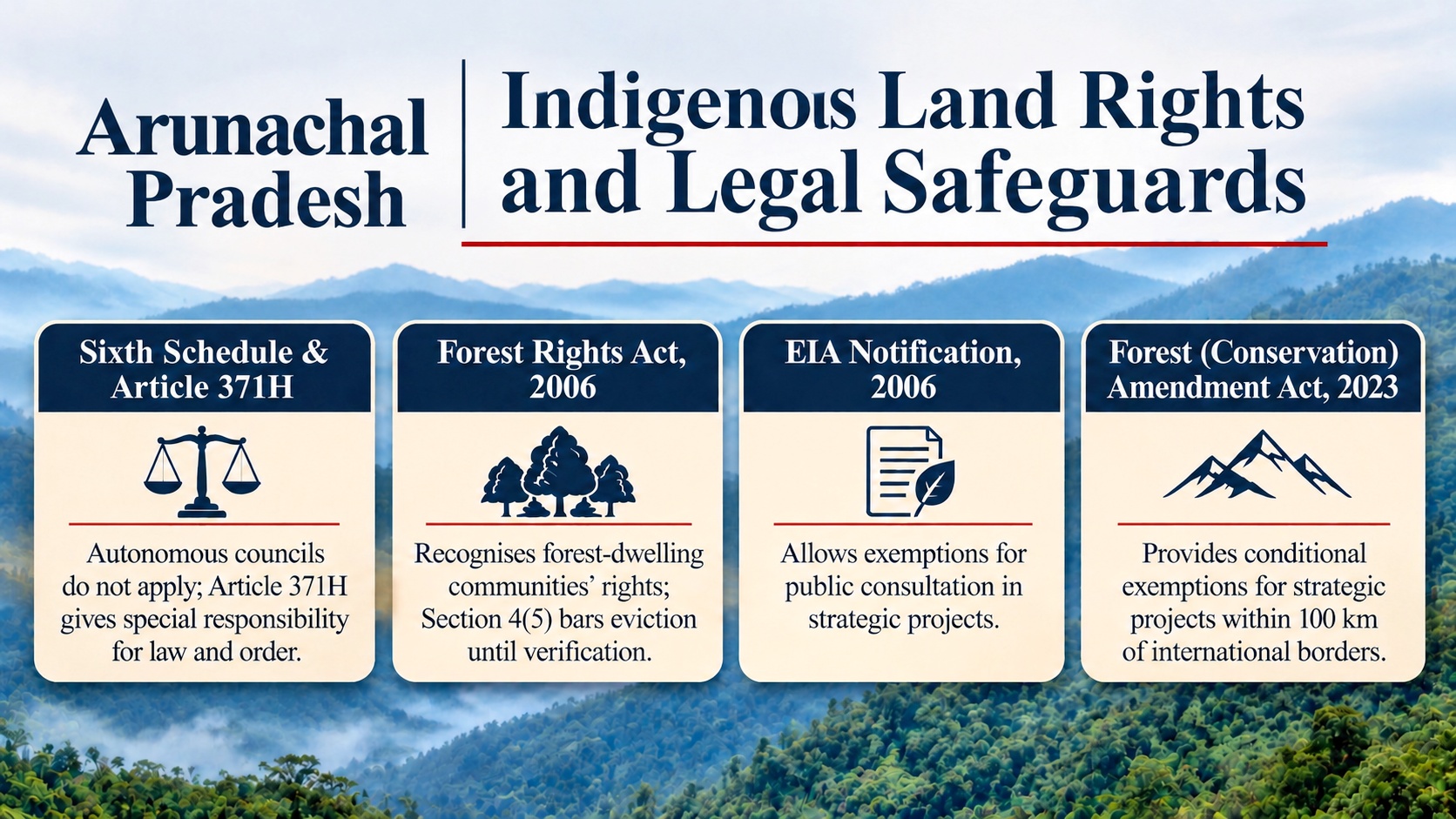 An overview of the constitutional provisions and legal safeguards governing indigenous land rights in Arunachal Pradesh
Neither geographical proximity nor strategic claims automatically establish SUMP’s eligibility for these exemptions. Nor do they eliminate applicable land acquisition obligations or recognised forest rights. No formal invocation of such exemptions can be assumed without the relevant government order.
The central question remains how customary interests, land rights and statutory protections will be recognised if the project advances.
China’s Medog Project and the Strategic Argument
China approved the Medog hydropower project on the Yarlung Tsangpo in December 2024. Reports place its proposed generation capacity at approximately 60,000 MW, compared with SUMP’s 11,200 MW. The river enters Arunachal Pradesh as the Siang before flowing into Assam.
Upstream infrastructure could affect downstream flows, depending on reservoir design and operations. Reported live storage figures are approximately 9.2 billion cubic metres for SUMP and 5.5 billion cubic metres for the Chinese project. But generation capacity and storage are different measurements, and neither figure independently establishes downstream consequences.
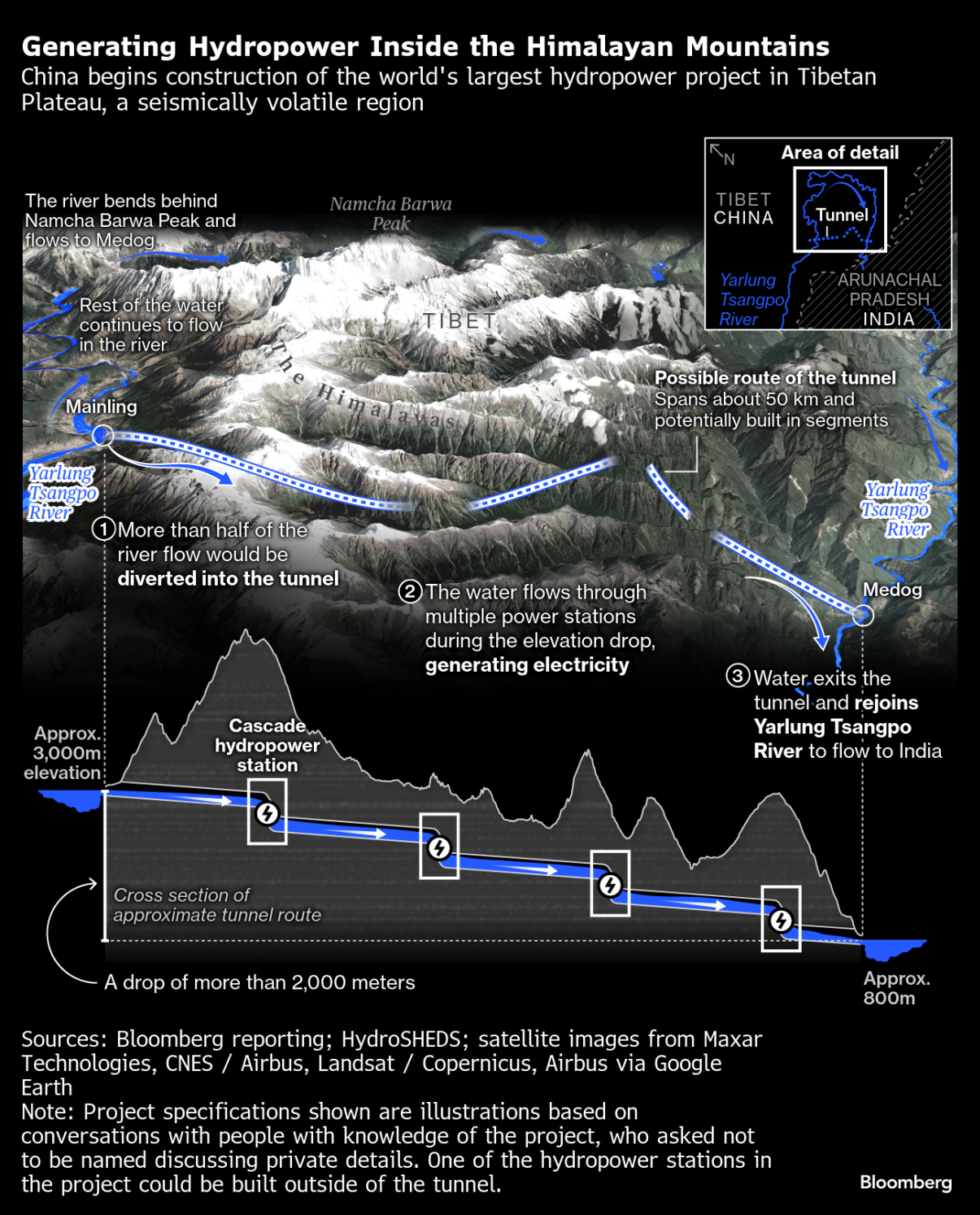 An infographic illustrating China’s proposed cascade stations along the U-bend of the Yarlung Tsangpo.
Assessing these risks requires information about seasonal inflows, reservoir operations, release schedules and emergency procedures. The Brahmaputra also receives substantial water from monsoon rainfall, snow and glacier melt, groundwater and numerous tributaries.
It would therefore be misleading to claim that China could simply stop the river. Equally, the potential consequences of upstream infrastructure cannot be dismissed.
India needs reliable hydrological information, effective data-sharing and independent basin-wide assessments. The strategic question is whether SUMP provides an effective response to actual risks and whether its benefits justify the social and environmental costs. National security considerations cannot substitute for such scrutiny.
Environmental Risks and Downstream Assam
The proposed project lies in the seismically active and ecologically sensitive Eastern Himalayas, where earthquakes, landslides and intense rainfall pose significant challenges. A large reservoir requires detailed assessment of geological stability, sediment movement, biodiversity, forests, fisheries and agricultural land.
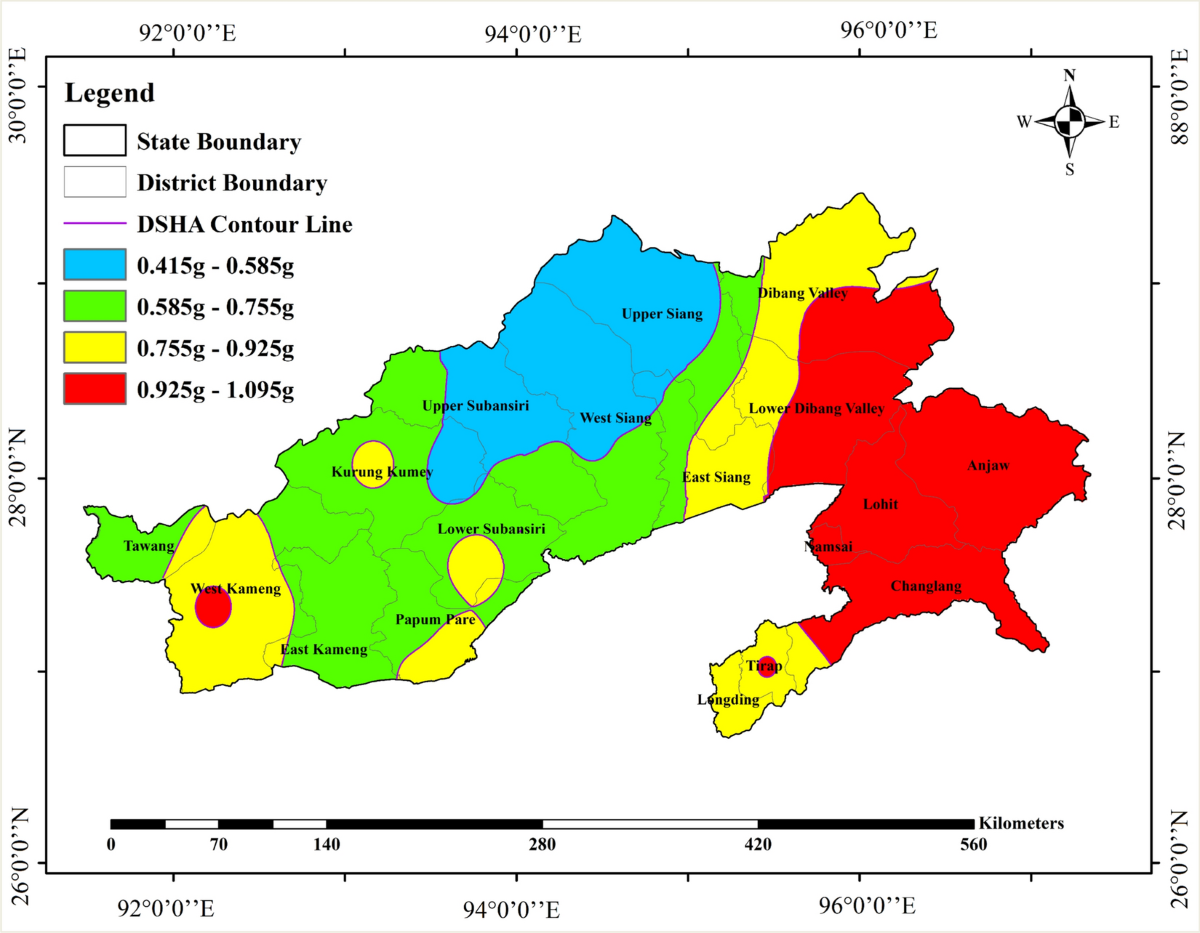 Deterministic Seismic Hazard Assessment (DSHA) map of Arunachal Pradesh showing modelled seismic hazard levels across the Upper Siang region and neighbouring districts
These risks do not make disaster inevitable, but they demand independent examination of dam safety, emergency planning and cumulative impacts from other hydropower projects, roads and transmission infrastructure. Assessing projects separately may obscure their combined effects across the basin.
The consequences could extend into Assam, where the Brahmaputra sustains riverine settlements, wetlands, fisheries, agriculture and navigation.
In September 2026, former Assam Leader of Opposition Debabrata Saikia wrote to President Droupadi Murmu seeking an independent downstream assessment. He called for examination of flood peaks, sediment movement, erosion, wetlands, fisheries and livelihoods, alongside dam-break inundation modelling accounting for extreme rainfall, earthquakes, landslides and emergency releases.
Saikia also questioned whether Assam had been adequately consulted. The government’s flood-moderation claims must therefore be tested against detailed modelling and transparent operating rules, with downstream communities receiving reliable information about reservoir levels and releases.
Public Relations, Online Campaigns and Racism
The controversy has extended to social media, where right-wing content creators have promoted the pro-dam position. In July 2025, NHPC hired Mumbai-based Concept Public Relations under a one-year contract worth ₹8.73 crore, covering community engagement, media outreach, influencers, sponsored digital content and sentiment monitoring.
The contract was extended by three months until 6 November 2026, reportedly increasing its value to approximately ₹10.91 crore.
Among the accounts attracting attention is Instagram’s @creatingchaaos, whose content has included mockery of Arunachal residents’ attachment to ancestral land, portraying their concerns as unreasonable rather than addressing displacement, identity and consent.
Remarks by Instagram creator @creatingchaaos mocking an Arunachali woman’s accent and making disparaging comparisons about her village and its familiarity with dam infrastructure. Such commentary shifts attention away from legitimate concerns over ancestral land, displacement and indigenous consent towards ridicule of the people raising them.
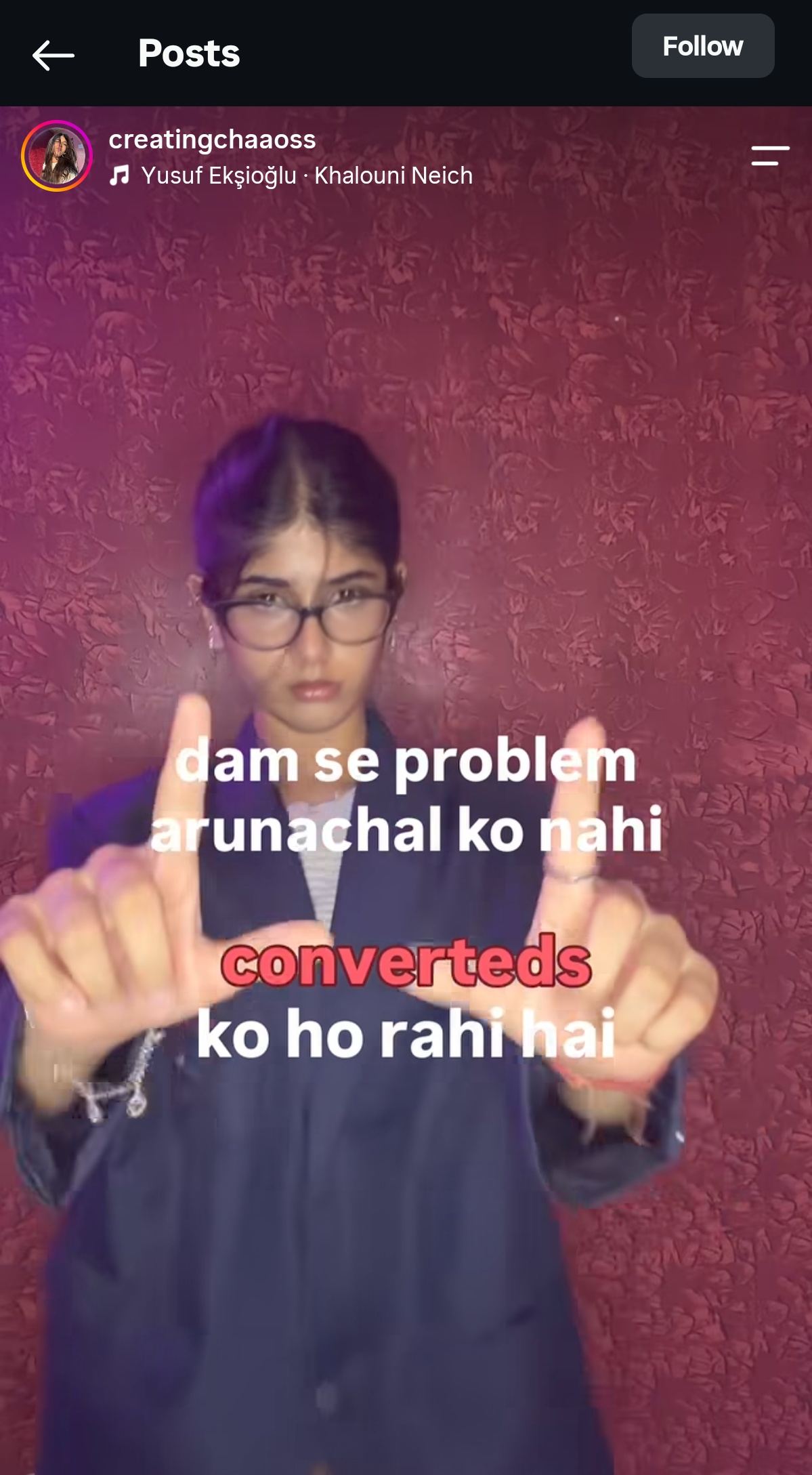 In another post, the same Instagram creator @creatingchaaos attributes opposition to dam construction in Arunachal Pradesh to religious conversion, claiming that the state itself has no objection. Such framing risks reducing a complex debate over indigenous land rights, environmental concerns and consent to a question of religious identity.
The contract does not establish that particular creators received NHPC payments. Nevertheless, its scope raises questions about efforts to influence public opinion. Supporting hydropower is legitimate; ridiculing indigenous communities does not answer their concerns.
Protests, Arrests and Democratic Dissent
Opposition has increasingly encountered a heavy security presence. Villagers have blocked roads and survey machinery, demanding an end to drilling and withdrawal of security forces. Residents report checks affecting everyday movement, while restrictions on gatherings and additional Central Armed Police Forces deployments have heightened tensions.
On 21 September 2026, Chief Minister Pema Khandu said he had instructed the Chief Secretary to act against government employees found instigating opposition to SUMP. He described it as a national project and urged employees to support it, raising questions about the freedom of public servants to express concerns affecting their communities.
The confrontation escalated in Pasighat on 23 October. Police used tear gas amid allegations of stone-throwing, arson and damage to an NHPC office, police vehicles and other property. Police and protesters offered differing accounts.
Later reports cited 26 arrests, including five juveniles, with additional detentions and investigations. The Arunachal Pradesh Unlawful Activities (Prevention) Act was invoked. Violence and property damage require investigation, but cannot justify treating all opponents as offenders.
The investigation also raised press freedom concerns. On 27 October, police sought permission under Section 96 of the Bharatiya Nagarik Suraksha Sanhita to search residences belonging to four people, including senior journalist Tongam Rina, advocate Sunny Tayeng and two activists, and seize potentially relevant clothing and digital material.

Advocate Sunny Teyang (left) and Senior Journalist Tongam Rina (right)
The Arunachal Pradesh Union of Working Journalists and Arunachal Press Club objected to Rina’s inclusion, warning of a chilling effect on independent reporting. The application itself establishes neither guilt nor wrongdoing.
On 31 October, Himkhand and Youth for Change Arunachal Pradesh organised a solidarity demonstration outside Arunachal Bhawan in New Delhi, demanding detainees’ release, withdrawal of security forces and termination of the project process.
Solidarity demonstration outside Arunachal Bhawan, New Delhi, on 31 October, organised by Himkhand and Youth for Change Arunachal Pradesh. Protesters demanded the release of detained individuals, withdrawal of security forces and termination of the proposed project process.
Several demonstrators, including Katon Moyong, were detained. Participants alleged excessive police force and physical and sexual misconduct against some detainees. These serious allegations require impartial investigation. Subsequent reports said the Arunachal Pradesh Congress Committee announced their release following senior leaders’ intervention.
The arrests, security deployment and investigations have strengthened activists’ concerns that a dispute requiring political dialogue is increasingly being handled as a law-and-order problem.
Authorities must investigate violence, but this responsibility does not diminish the right to peaceful protest, independent journalism or meaningful community participation.
Who Decides the Future of the Siang?
The Siang controversy involves competing considerations. The government emphasises energy security, flood management and strategic preparedness against China. The Adi community’s concerns centre on ancestral territory, livelihoods, customary institutions and cultural identity. Downstream Assam faces questions about water regulation and public safety.
These interests need not be irreconcilable, but reconciliation requires credible evidence, transparent decision-making and meaningful consultation.
The government maintains that SUMP will not advance beyond feasibility without further assessments and consultations. Yet continuing resistance demonstrates that assurances alone have failed to establish public confidence.
The October 2026 developments have made the government’s treatment of dissent an equally important part of the controversy. Security measures and investigations cannot replace political engagement with communities whose lives may be fundamentally altered.
The future of the Siang cannot be determined by installed capacity or strategic calculations alone. It depends on whether the government can reconcile national priorities with indigenous rights, environmental safeguards and democratic accountability.
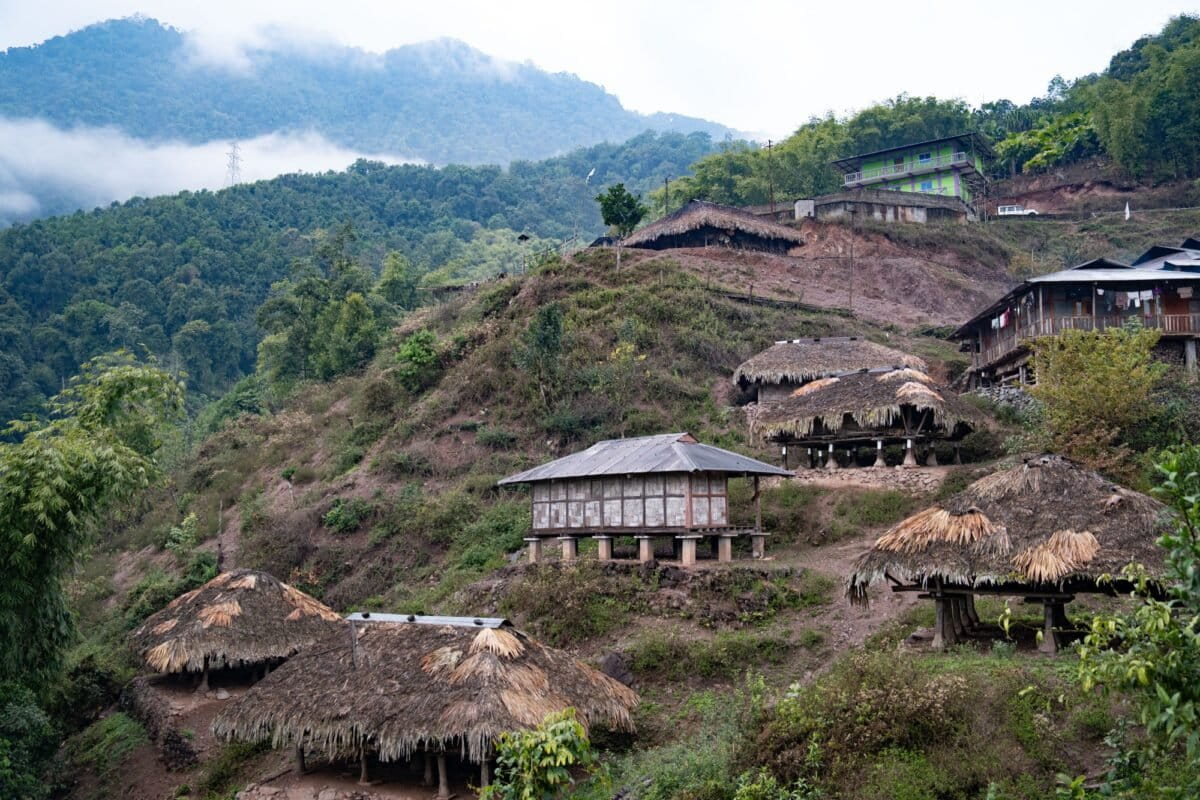 Homes along a slope in Parong village, one of the 27 villages that are likely to be submerged by the Siang Upper Multipurpose Project (SUMP). For the project, it may be land to be submerged. For the people of Parong, it is home.
Ultimately, the handling of this dispute will be judged not only by decisions about the dam, but also by how the state responds to the people who have lived alongside the Siang for generations.