



The Democratic Party’s victory in the November US midterm elections has brought the prospect of greater scrutiny of private equity, an industry whose influence now extends far beyond conventional corporate finance. In late October, Reuters reported that Senate Democrats were preparing to investigate private equity’s impact on healthcare and other essential services. Days later, The Wall Street Journal reported that private-equity firms could face congressional hearings and investigations under a Democratic-controlled Congress. With Democrats preparing to take control of congressional committees in January, the industry’s financial practices and their impact on essential services are likely to attract closer attention.
These developments have special relevance for Keralam, where some of the world’s largest private-equity firms have been acquiring established hospitals and building extensive healthcare networks. Despite its modest economic resources, Keralam achieved remarkable health and human-development outcomes through decades of social reform and public investment. The arrival of global financial capital in healthcare brings institutions developed within this distinctive social environment into the investment strategies of international financial markets. America’s healthcare experience offers a warning about the consequences when the financial interests override the needs of patients and communities.
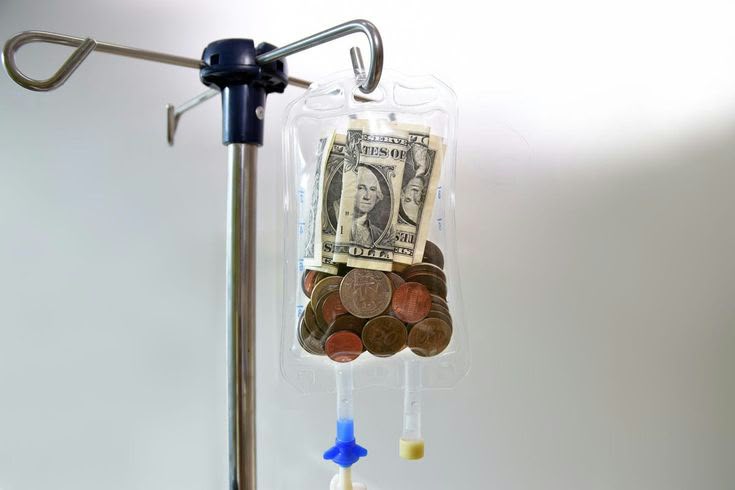
Private equity involves raising capital from institutional investors, pension funds and wealthy individuals to acquire companies, increase their financial value and then sell them at a profit. Unlike conventional stock-market investors, private-equity firms typically acquire substantial or controlling stakes and actively influence management. The industry has become a formidable force in global finance. According to Ocorian’s Global Asset Monitor, published in October 2026, private-equity funds worldwide managed assets estimated at $10.5 trillion as of September 2026. These enormous financial resources have enabled the industry to extend its reach into essential services, including healthcare, housing and infrastructure.
Buying Hospitals: Lessons From America
What differentiates private-equity ownership of hospitals is the focus on increasing corporate valuations and generating returns within a defined investment horizon. Acquisitions, often financed through substantial borrowing, can bring fresh capital, modern technology, professional management and economies of scale. However, profitability can be improved either through greater efficiency and better infrastructure utilisation or through higher treatment charges, reduced staffing and concentration on lucrative specialities. Both may improve financial performance. Still, their consequences for patients can be very different. A more profitable hospital need not mean a better healthcare institution.
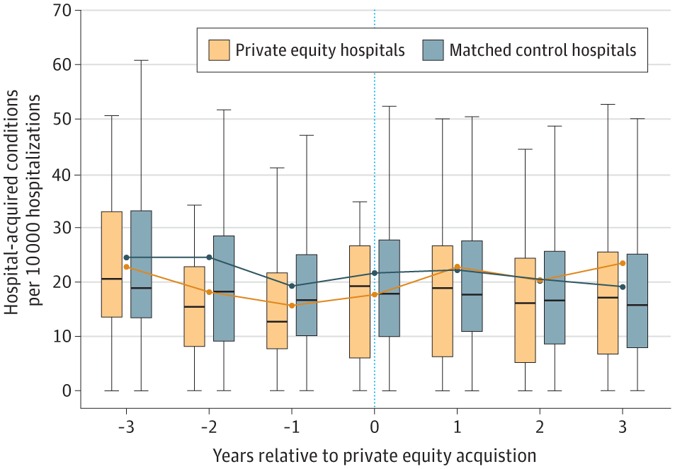
The American experience offers disturbing evidence of how these competing priorities can play out. A December 2023 study published in the Journal of the American Medical Association compared 51 hospitals acquired by private-equity firms with 259 other hospitals. It found a 25.4 per cent relative increase in hospital-acquired adverse conditions among Medicare patients following private-equity acquisition. The researchers identified significant increases in patient falls and bloodstream infections associated with central lines. Although observational, the study provides substantial evidence of an association between private-equity acquisition and deterioration in important measures of patient safety.
The collapse of Steward Health Care in 2024 exposed another dimension of the problem. Once among America’s largest private hospital operators, Steward had expanded under private-equity ownership through acquisitions, substantial borrowing and controversial hospital real-estate transactions. Its bankruptcy threatened essential medical services in several communities. A bipartisan US Senate investigation on the harmful effects of private equity on the US health care system subsequently documented troubling financial practices, including payments to investors even as hospitals struggled financially. These experiences illustrate how investors can realise substantial returns while leaving hospitals, employees and communities exposed to the consequences of financial distress.

These episodes also highlight the distinction between acquiring healthcare assets and expanding healthcare capacity. Purchasing an established hospital transfers ownership of infrastructure, reputation and future earnings accumulated over many years. Such transactions may involve hundreds of millions of dollars without adding a single hospital bed or medical professional. Investors can also earn substantial returns without expanding or improving healthcare services.
America’s exceptionally high medical costs cannot be attributed to private equity alone; they also reflect its fragmented insurance system, administrative complexity and concentrated corporate power. Nevertheless, the experience raises a fundamental question: are financial returns being generated by expanding and improving healthcare, or by extracting greater value from institutions and services that already exist?
Global Capital Discovers Keralam
Keralam’s healthcare infrastructure has traditionally included private institutions operating alongside government facilities. Missionary hospitals, charitable institutions, family-owned establishments and professionally managed private hospitals built their reputations over decades, developing clinical expertise and strong relationships with the communities they served. The scale and character of this ownership pattern is changing, as established hospitals become part of corporate networks backed by international investment funds.
Private-equity acquisitions gathered momentum in late 2023. In October that year, US private-equity giant Blackstone acquired a 72.5 per cent stake in Quality Care India, the operator of CARE Hospitals. Another major US private-equity firm, TPG, retained the remaining 27.5 per cent. Quality Care also agreed to acquire approximately 80 per cent of Thiruvananthapuram-based KIMSHEALTH. The consolidation accelerated with the merger of Quality Care and Aster DM Healthcare in July 2026, creating one of India’s largest hospital networks, with 39 hospitals and more than 10,600 beds across nine states. At the time of the merger, Blackstone held approximately 30.7 per cent and the Aster promoter group 24 per cent, under a joint-control arrangement. What began as acquisitions of established hospital businesses had developed into a nationwide corporate healthcare network.
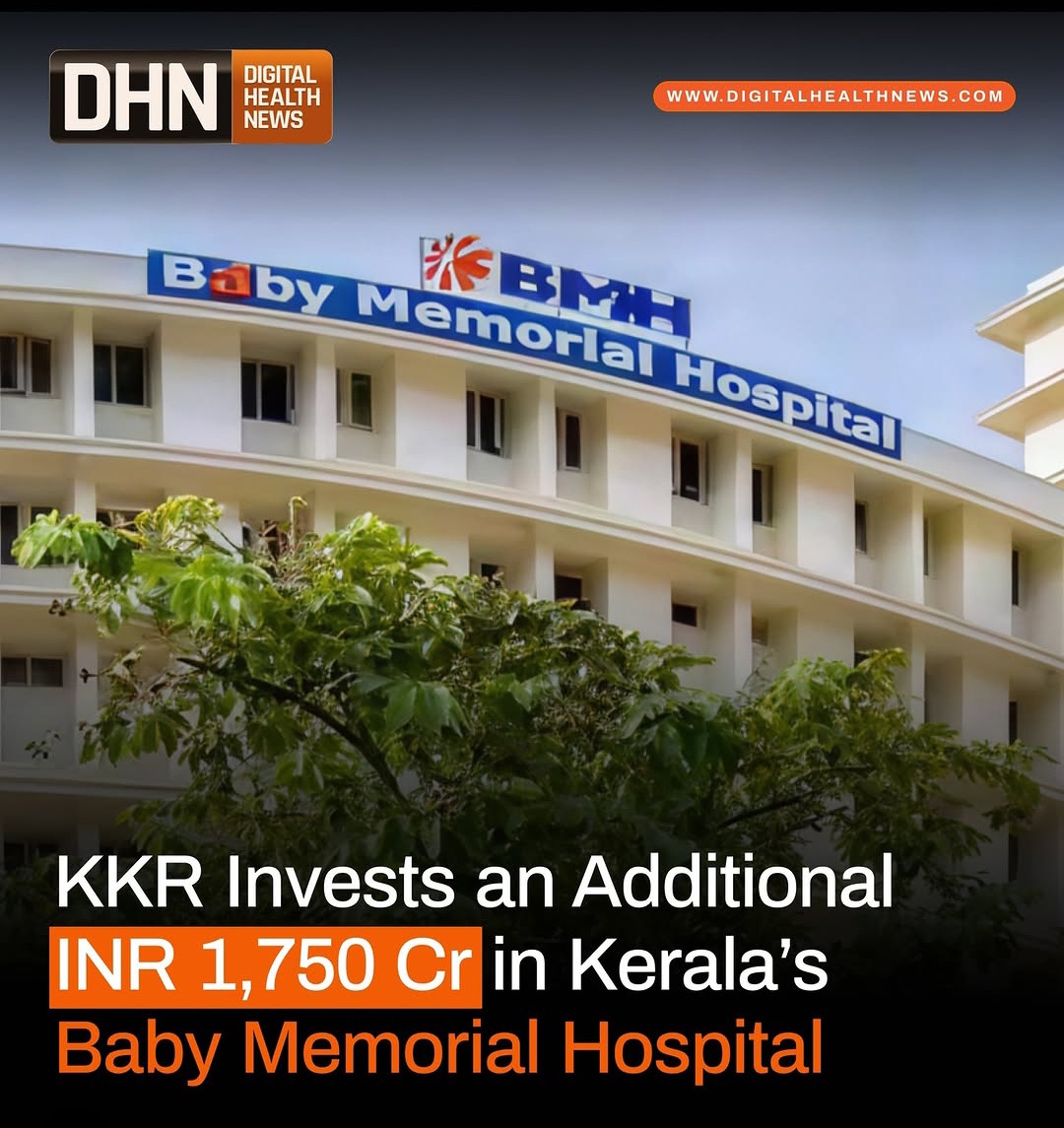
In July 2024, the US private-equity firm KKR pursued a similar strategy through Baby Memorial Hospital, acquiring a controlling stake in the Kozhikode-based institution. Since then, Baby Memorial has acquired several hospitals in Keralam and expanded its presence beyond the state. In March 2026, the Competition Commission of India approved a proposed transaction increasing KKR’s stake in Baby Memorial from 73.08 per cent to approximately 82 per cent, alongside Baby Memorial’s acquisition of 60.52 per cent of Hyderabad-based Star Hospitals’ parent company, Unimed Health Care. A regional hospital had thus become the platform for a much larger healthcare business.
The financial arrangements behind these investments also deserve scrutiny. Private-equity acquisitions often involve complex ownership structures and substantial borrowing. Such arrangements can help hospitals expand and modernise. However, they can also create financial obligations that affect hospital management, investment decisions and the use of resources. It is therefore important to examine how these acquisitions are financed and how investors plan to recover their money.
The Paradox of Keralam’s Success
Keralam achieved its remarkable public-health gains not through commercial expansion or exceptional economic prosperity. They were rooted in decades of social reform and sustained public action, including struggles against class exploitation and caste oppression, the spread of education, improvements in women’s social status and democratic mobilisation. Keralam showed that major improvements in life expectancy, infant survival and general health were possible even without the income levels of industrialised countries. Healthcare increasingly came to be recognised as a social responsibility rather than a commodity available only to those who could afford it.
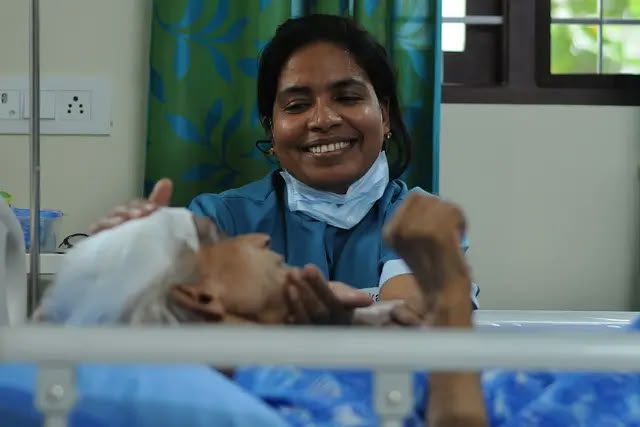
Ironically, these achievements have also helped make Keralam an attractive market for international financial capital. Its ageing population, high life expectancy, extensive hospital network and skilled medical workforce create growing opportunities in specialised treatment, chronic disease care and medical tourism. The healthcare system developed through decades of social progress has thus become an attractive destination for private investment.
But Keralam’s achievements coexist with a serious contradiction. According to the National Health Accounts for 2021–22, households in Keralam paid 59.1 per cent of the state’s total health expenditure out of their own pockets, compared with the national average of 39.4 per cent. Per capita out-of-pocket spending was approximately ₹7,889 in Keralam, against ₹2,600 nationally. These figures expose a major weakness in Keralam’s development model. Despite impressive public-health investment and achievements, many households remain vulnerable to high medical expenses. An ageing population, the growing burden of chronic diseases and rising demand for advanced treatment have made the problem more serious. Public healthcare and insurance schemes remain insufficient to protect many families from heavy medical bills.
State-wise Out-of-Pocket Expenditure (OOPE) as a percentage of State Total Health Expenditure
| S.No
|
State
|
Out-of-Pocket Expenditure % of State Total Health Expenditure | ||
| 2019-20 | 2020-21 | 2021-22 | ||
| 1 | Assam | 34.9 | 33.2 | 27.6 |
| 2 | Andhra Pradesh | 63.6 | 58.8 | 52.0 |
| 3 | Bihar | 54.3 | 50.2 | 41.3 |
| 4 | Chhattisgarh | 36.7 | 33.9 | 29.2 |
| 5 | Gujarat | 40.8 | 40.0 | 35.0 |
| 6 | Haryana | 45.5 | 42.2 | 37.5 |
| 7 | Jammu and Kashmir | 46.6 | 31.8 | 25.9 |
| 8 | Jharkhand | 64.7 | 61.8 | 47.5 |
| 9 | Karnataka | 31.8 | 30.3 | 25.4 |
| 10 | Kerala | 67.9 | 65.7 | 59.1 |
| 11 | Madhya Pradesh | 53.0 | 53.0 | 43.3 |
| 12 | Maharashtra | 44.1 | 42.4 | 38.1 |
| 13 | Odisha | 53.4 | 44.6 | 37.1 |
| 14 | Punjab | 64.7 | 62.3 | 57.2 |
| 15 | Rajasthan | 47.4 | 42.8 | 37.1 |
| 16 | Tamil Nadu | 44.2 | 36.9 | 34.6 |
| 17 | Uttar Pradesh | 71.8 | 70.2 | 63.7 |
| 18 | Uttarakhand | 35.8 | 33.4 | 26.9 |
| 19 | West Bengal | 67.1 | 65.1 | 58.3 |
| 20 | Telangana | 41.6 | 39.8 | 37.6 |
| 21 | Himachal Pradesh | 46.0 | 45.0 | 39.6 |
(Source: National Health Accounts (NHA) Estimates for India)
It is against this background that the growing influence of private equity must be assessed. There is not yet enough evidence to establish whether private-equity acquisitions have increased hospital charges or weakened clinical standards in Keralam. This requires systematic comparisons of treatment costs, staffing and patient outcomes before and after acquisition. Even though corporate consolidation may reduce costs through economies of scale, it can also strengthen market power and weaken competition. Lower operating costs do not necessarily translate into lower charges for patients. In a state where households already bear a substantial share of healthcare expenditure, the consequences for affordability and access deserve attention.
Hospital investors closely track operating margins, bed occupancy, returns on capital and Average Revenue per Occupied Bed (ARPOB). According to a December 2025 Economic Times report, ARPOB across ten leading private hospital chains in India rose by 23 per cent in 2024–25, reaching ₹49,304 per day. This was presented as a sign of improving financial performance. The increase may not always mean higher charges for the same treatment. It may also reflect more complex procedures or changes in the mix of services. So such financial indicators tell us little about affordability, clinical outcomes or access to treatment.
Who Benefits From Consolidation?
As investment funds build regional hospital networks, they gain greater influence over medical services, treatment charges and the allocation of healthcare resources. This process is usually described as consolidation and justified in terms of efficiency, economies of scale and benefits to consumers. But this emphasis on efficiency obscures another important consequence: the growing concentration of economic power in fewer corporate hands.
The implications here for consumer choice are crucial. “Belief in a market economy in which the consumer is sovereign is one of our most pervasive forms of fraud,” wrote economist John Kenneth Galbraith in The Economics of Innocent Fraud. His observation about corporate power is particularly relevant to the healthcare market. Patients cannot choose when they fall ill. Also, often they lack the information needed to assess treatment options and have little bargaining power. As hospital ownership becomes more concentrated, their choices may narrow further.

The American experience provides important lessons for Keralam as private equity expands its presence in healthcare. Keralam’s circumstances are different, but the risks deserve attention before they become entrenched. Essential services such as emergency care, treatment for poorer patients and healthcare in less profitable locations cannot depend solely on commercial calculations. Private investment must serve the public interest. This requires greater transparency in hospital ownership, financing, treatment charges and staffing, along with effective regulation.
Keralam’s public-health achievements are achieved through collective social effort over decades. The growing influence of global financial capital must not undermine that legacy.