

A Prisoner of Conscience: Dr Kafeel Khan on Gorakhpur and His Two Stints in Prison

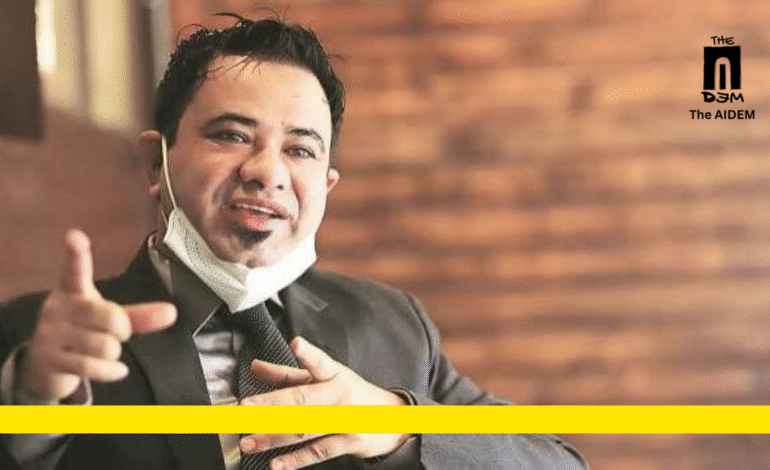
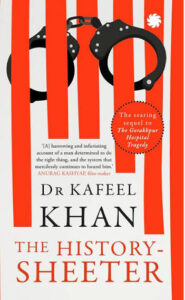
In “The History-Sheeter”, Dr Kafeel Khan turns a label the Uttar Pradesh police gave him into the title of a memoir about prison, dissent and the cost of detention to families. In conversation with Teesta Setalvad, he recounts the abuse he suffered in custody and explains why he wanted to leave a record of what happened.
Khan, a paediatrician, helped secure emergency oxygen cylinders during the 2017 crisis at Gorakhpur’s BRD Medical College hospital and was jailed in the case that followed. In 2020, he was detained under the National Security Act after speaking against the Citizenship (Amendment) Act. The Allahabad High Court quashed that detention. In this conversation – an edited transcript of an audiovisual interview published in Teesta Setalvad’s YouTube channel – Khan returns to the question that has stayed with him since Gorakhpur: who was responsible for the deaths of the children?
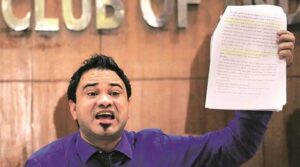
In August 2017, paediatrician Kafeel Khan helped arrange emergency oxygen supplies at Gorakhpur’s BRD Medical College hospital. He was jailed in the case that followed and granted bail in April 2018. Two years later, he was held under the National Security Act after speaking at a protest against the Citizenship (Amendment) Act. The Allahabad High Court quashed that detention in September 2020.
In a conversation about his memoir The History-Sheeter, Khan speaks to Teesta Setalvad about his two stints in prison, the cost to his family and his work in paediatrics after prison.
This interview has been edited for clarity.
From Gorakhpur to Mathura
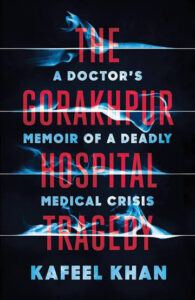
Teesta Setalvad: We first interviewed you in June 2018, after you came out of Gorakhpur jail. We are speaking again on the occasion of your new book, The History-Sheeter, published by Juggernaut. Your earlier book, The Gorakhpur Hospital Tragedy, was published by Pan Macmillan India. I want to begin with a passage from the new book.
In August 2017, when the liquid oxygen supply ran short at BRD Medical College hospital, you and other doctors worked to arrange oxygen cylinders. Sixty-three children and 18 adults were reported to have died in the days around the crisis. You had joined the college only a year earlier. You did what you could to keep patients alive, and you were vilified, threatened and jailed. Your brother Kashif was later shot.
In the book, Kashif recalls the two journeys home from prison. He tells you that when you left Gorakhpur jail after the BRD tragedy, you were free of the tag of a murderer. When you left Mathura jail after the detention order was quashed, you were free of the tag of a terrorist. What do you remember of that moment?
Dr Kafeel Khan: I had never imagined that in the country where I was born and which I had served, I would be labelled a terrorist. I had tried to save lives. I still remember how I felt when they slapped the National Security Act on me. For the first time in my life, I became a robot. There was no reaction. I signed those blank papers. I had never thought that I could be labelled a terrorist.
They invoked the NSA and extended my detention twice. It is a draconian law that ought never to have been on our statute books. The Congress government brought in the National Security Act in 1980, and successive state governments have used it against their own people. Under it, someone can be held for up to 12 months without trial. The Unlawful Activities (Prevention) Act is also used against people, but it works through criminal charges. The NSA is a preventive detention law, and the person detained has very limited means of challenging the case against them.
What the Family Endured
Teesta Setalvad: In Chapter 20, ‘The Family Conclave’, you describe your mother greeting you after your release from Mathura jail. She had stayed strong through the humiliation and, as you recount it, the torture you endured. Then, when she finally saw you, she broke down.
Dr Kafeel Khan: When my father died in 2003, my mother did not cry. People urged her to, but she said, ‘I have to take care of six children.’ Two became doctors, two became engineers, and both my sisters earned PhDs.
When Kashif was shot, she came out of the house looking for him. There was nobody at home, so she walked at least half a kilometre to Ghantaghar, took a rickshaw and went to the hospital. By then he had come out of surgery and was in the intensive care unit. She put two drops of water on his lips and prayed for him. She did not cry. At six in the morning, she told the media, ‘Don’t hit the family.’ That is my mother.
I had never seen her cry. When I came out of Mathura, she held my face in both her hands, almost desperately. She looked at me for a long time, as if to make sure I was really there. She had thought I would never come back. Then she wept the way people weep at a funeral. Deep, shaking sobs that came from somewhere older than language.
The Arrest and the Abuse Khan Describes
Teesta Setalvad: When the protests against the Citizenship (Amendment) Act and the National Register of Citizens began, many of us spoke about the injustice of making religion a criterion for citizenship under the CAA. You spoke at Aligarh Muslim University on 12 December 2019, before the police action at Aligarh and Jamia Millia Islamia on 15 December. You spoke of raising a child to be a human being, beyond the labels of Hindu and Muslim.
In January 2020, a squad picked you up at Mumbai airport. In the book, you describe being taken by train in handcuffs and what happened in a dark room outside the city. The conduct you describe raises questions about police accountability. How do you keep doing your work with such energy after that humiliation? How do you keep bitterness from taking over?
Dr Kafeel Khan: I think of the parents of the children who died. Some of them were outside Gorakhpur jail when I came out. I always carry that image with me. In prison, I realised I had the privilege of coming out and being able to speak, despite the charges the government had brought against me. Many people spend 10 or 20 years behind bars. Some may have been killed without ever being charged or having their stories heard. If God has given me the chance to speak, I should speak.
The chapter is called ‘Men in the Dark Room’. When I wrote it, I called it ‘Drunk Men in the Dark Room’. I remember the smell. I can still smell it. They were all drunk. They would scream, ‘You are a doctor,’ and beat me. I remember the blows from the rod, like hammering, until I lost consciousness. I don’t know when they stopped. I remember coming to in a jeep or another building. There were three or four men in an isolated room with a few pieces of furniture. I don’t know who they were. They were different from the people who took me from Mumbai airport.
The hatred behind that kind of beating makes the pain worse because it comes with humiliation. I felt it was religious hatred, given free rein by too much power and too little accountability. When this conduct goes unchecked and no one is punished, torture becomes normalised. How can we call ourselves a Viksit Bharat when this kind of institutional bias persists?
Think about what happened at Jantar Mantar on 20 July and how people reacted when they saw it. Think, too, about Jamia on 15 December 2019, when a young man lost an eye in the library. I brought up that history when speaking to students who suffered in July. When impunity is allowed to grow unchecked, then you don’t know who the next victim is going to be. It never stops on its own. You can get shot, too.
The Hospital and a Return to Paediatrics
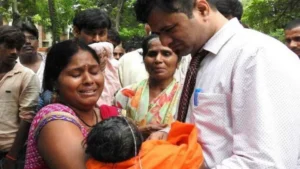
Teesta Setalvad: What is the situation at BRD Medical College hospital now?
Dr Kafeel Khan: It’s a lot better. In the same year as the tragedy, Chief Minister Yogi Adityanath allocated ₹7 crore. The liquid oxygen supplier was owed ₹68 lakh and had sent reminders to the authorities saying he would be unable to continue deliveries unless he was paid. In my view, the interruption in supply was one of the causes of the tragedy.
A lot of money has since gone into healthcare in Gorakhpur. There is a 1,500-bed children’s hospital, and an All India Institute of Medical Sciences has opened in the city. I think about what that incident did to my life, and I can also see that things have improved at the hospital and for public health in Gorakhpur.
Teesta Setalvad: Are you still in touch with your colleagues?
Dr Kafeel Khan: Yes. They have been promoted and are doing well.
Teesta Setalvad: What kind of work are you doing now?
Dr Kafeel Khan: When they dismissed me, I was a lecturer. I went on to become an assistant professor, then an associate professor, and now I’m a professor of paediatrics at a medical college in southern India. I’m still writing. One thing Yogi gave me during those roughly 500 days in prison was time to think. I wrote about the Gorakhpur hospital tragedy, and I’ve been working on the Manipal Manual of Clinical Paediatrics since 2013. We recently launched the fifth edition.
I’m also working on Project MAA, an AI-based voice chatbot built around my book MAA. It covers questions from pregnancy through adolescence. You can use it on WhatsApp and have a conversation in real time, without downloading a separate app or going to a website.
Teesta Setalvad: Through prison and what you describe as targeting by the state, you’ve held on to your work in paediatrics with children, parents and mothers. You and your wife, Shaista, have both worked on Project MAA. When we talk about people who go to prison in cases like yours, we often overlook what their families go through. In the book, you write about your mother and devote a whole chapter to Shaista, ‘My Wife, My Life, My Strength’.
Dr Kafeel Khan: We married in 2015. I was jailed in 2017 and then I went to prison again. I think many people in her position would have left. My wife stayed with me. I am outside because of my family.
The Right to Ask Questions
Teesta Setalvad: Your wife, your mother, your brothers and your legal team all helped fight those battles. The filmmaker Anurag Kashyap describes the memoir in his endorsement as the harrowing story of a man determined to do the right thing and a system that keeps hounding him. Why do those in power see someone like you as dangerous?
Dr Kafeel Khan: They hate questions. Anybody can ask them. Why is this road so bad? Why are people dying in floods? Why is there unemployment? Why are prices rising? Why are there so many rapes? What about women’s safety? Why is there corruption? Those are the questions they hate.
Some people think Yogi has something personal against me. I think what he objects to is that I ask questions. The High Court, in granting me bail, found no material establishing medical negligence on my part. My question remains. If 63 children died, who was responsible for those deaths?
When I ask about the CAA and the NRC, I ask why Hindus from Nepal or Bhutan and Tamils from Sri Lanka were left out. In my view, the CAA carried forward an unfinished agenda of the Rashtriya Swayamsevak Sangh dating back to Partition. The law excludes Muslims from the three countries it names (Afghanistan, Bangladesh and Pakistan) from its fast-track route to citizenship. It also leaves out atheists and people such as Shias and Ahmadis from Pakistan who may face persecution. I think it is an extremely discriminatory law, and many petitions challenging it have been filed in the Supreme Court. Now they have come up with the Special Intensive Revision of the electoral rolls, haven’t they?
The Importance of Keeping a Record
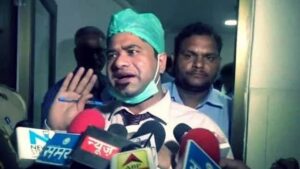
Teesta Setalvad: During your first stint in Gorakhpur jail, your bail application was yet to be heard when a letter you wrote reached the media. I think that letter shook up the system. A hearing followed, and Justice Yashwant Varma of the Allahabad High Court granted you bail. These are documents we need to revisit. When you last came to our office, you brought the attendance sheet and other papers showing what happened on the night of 10 August 2017. You had helped save lives, yet you were vilified for what happened that night.
What would you say to other doctors and professionals, to people who have suffered police torture and to young Muslim students still in jail waiting for bail? How do they keep hope alive?
Dr Kafeel Khan: There should always be hope. The one message I give everyone is this. Please document it. Most people have phones now. In the BRD case, some of the mainstream media gave me all sorts of titles. They made me a superintendent, a vice-principal, a principal.
Teesta Setalvad: You had joined the college only a year before. Those offices were wrongly attributed to you, and the records are there.
Dr Kafeel Khan: I had joined only a year earlier. We produced photographs in court that were taken on 11 August, showing the cylinders I had obtained and the gauge reading zero. Those records helped me get out. When you are in trouble, try to take pictures. Try to write. Try to remember, and then write again. There will be tyranny, persecution, torture and brutality. But someday you will be triumphant if you are true.
I wrote The Gorakhpur Hospital Tragedy for the record, for history. Fifty years from now, I won’t be here and Yogi won’t be here. But India will still be here. Fifty or a hundred years from now, people will be able to read how people lived and how they were treated in this country.
I wrote a letter to my children because I thought that once the book came out, I might not be able to see them again. I tell them five things. First, don’t cry. I tell them that crying is a sign of weakness and that some people who offer a shoulder may take advantage. Second, don’t compare yourself with anyone else. If you want to compare, compare yourself with who you were and see how you can do better. Third, don’t complain about what others have done to you. Do something better yourself. Fourth, don’t cheat or lie. And finally, don’t fight. Only love. You can read the history of wars, but it is mohabbat, love, that will give you peace.
Prison and the Pandemic
Teesta Setalvad: The book has 25 chapters. Which one have you gone back to most often?
Dr Kafeel Khan: I kept reading the chapter about the family. It made me realise how much a family pays for what happens to someone in prison.
Teesta Setalvad: The sections on prison during the pandemic are also sensitively written. From March 2020 and well into 2021, many people in prison struggled to get their bail applications heard because the courts’ regular work was disrupted. The justice system needs to reckon with what it meant for people to remain in custody while their applications went unheard. Your first memoir was The Gorakhpur Hospital Tragedy: A Doctor’s Memoir of a Deadly Medical Crisis. This one takes its title from a label the police gave you.
Dr Kafeel Khan: That was the tag the Uttar Pradesh police gave me. They called me a ‘history-sheeter’. They said they would keep me under watch for the rest of my life. I told them, ‘Give me two police officers to accompany me all the time. At least that will spare me the false cases you keep bringing against me.’
Teesta Setalvad: My favourite chapter is ‘Tsunami That Spared No One’. During the second wave, in April and May 2021, even people accustomed to buying their way into private healthcare struggled to find beds, oxygen and medicines. I remember friends in Delhi telling me they had never expected to look to a Shiv Sena chief minister for an example of how to govern. In my view, Mumbai was better governed under Uddhav Thackeray during that wave. Maharashtra, Kerala and West Bengal fared better in their response than Delhi and Uttar Pradesh.
Then there were those terrible images from Uttar Pradesh, of bodies in the Ganga between Kanpur and Varanasi. The book records that public tragedy alongside what happened to you, a young doctor barely a year into your appointment at a government hospital. Thank you.
Ends
Watch the full interview in audiovisual format here.






Dr Kafeel Khan’s story raises deeply troubling questions about justice, accountability and the freedom to dissent in a democracy. A doctor who tried to save lives in Gorakhpur ended up facing imprisonment, while the question of responsibility for the deaths of children remains. No democracy can afford to silence those who ask uncomfortable questions. The truth must be documented, justice must be accountable, and speaking up must never become a crime.