

Lana Nusseibeh’s Candidature: A Historic Opportunity and a Test of the UN’s Political Will

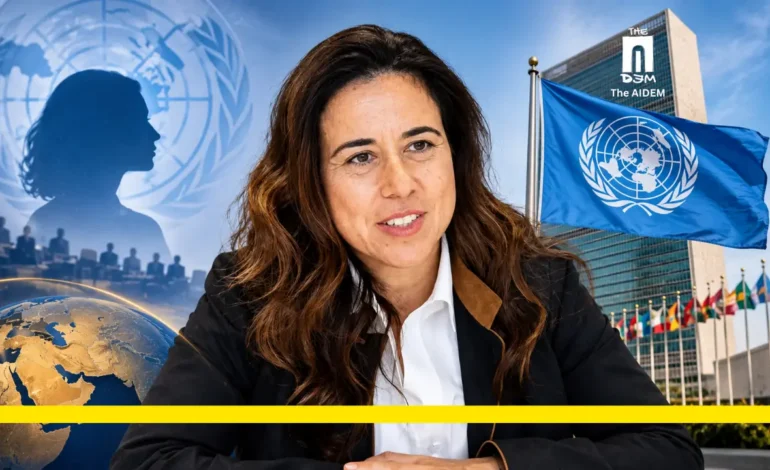
Lana Nusseibeh’s candidature places two unfinished questions before the United Nations: whether a woman can finally lead the organisation and whether West Asia will secure its top post for the first time. The Emirati diplomat brings substantial institutional experience and a reform agenda grounded in practical diplomacy.
Emirati diplomat Lana Nusseibeh’s bid to become United Nations Secretary-General has brought two long-unanswered questions into sharp focus: whether a woman can lead the organisation for the first time and whether a candidate from West Asia can end the region’s historical absence from the office. But the contest is not simply a test of representation. It is also a test of whether the next Secretary-General can command trust across a divided Security Council and whether that trust can withstand scrutiny of a candidate’s national record.
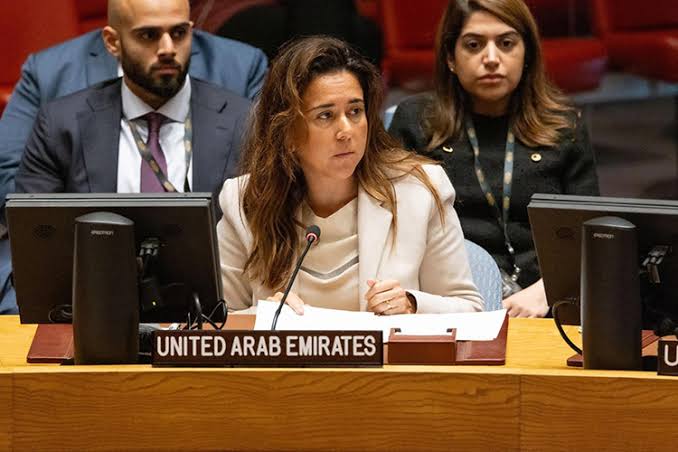
The United Arab Emirates nominated Nusseibeh in October 2026, making her a late entrant to a race already marked by deadlock. She served as the UAE’s Permanent Representative to the UN from 2013 to 2024, led its delegation during the country’s 2022–23 Security Council term and twice presided over the Council. She has also served as a Vice-President of the General Assembly and chaired the Executive Board of UN Women. That experience gives her a detailed understanding of the institution’s procedures and the complex diplomacy that shapes its decisions.
Her pitch is for a more practical and preventive UN: one that intervenes earlier, makes mediation more effective and focuses on tangible results. She has advocated quiet diplomacy and proposed establishing a mediation board during her first year in office. Her supporters point to her work on humanitarian access to Gaza, including negotiations surrounding Security Council Resolution 2720, which established a mechanism to facilitate aid deliveries. In her campaign statements, she has also argued that the organisation must become more responsive to the needs of the people it serves.
The Arithmetic of Power
The campaign’s immediate obstacle is the arithmetic of power within the Security Council. In the ninth Security Council straw poll, held on November 20, Nusseibeh received seven “encourage” votes, six “discourage” votes and two “no opinion” votes. The colour-coded ballot showed that three of the five permanent members had voted to discourage her candidature. The Council has 15 members; a candidate ultimately needs at least nine votes and must avoid a veto by any permanent member. The straw poll is an informal exercise rather than a final decision, but it indicates where a candidate may encounter opposition. Nusseibeh’s tally has remained unchanged across several rounds, while Costa Rica’s Rebeca Grynspan led the latest poll with 10 “encourage” votes, although she, too, faced opposition from two permanent members.
The process explains why broad-based popularity alone is insufficient. Under Article 97 of the UN Charter, the General Assembly appoints the Secretary-General on the recommendation of the Security Council. In practise, any of the five permanent members – the United States, China, Russia, the United Kingdom and France – can block a candidate. The Council’s private negotiations, therefore, carry greater weight than public campaigning, even as the wider UN membership and civil society have become increasingly engaged in the selection process.
Breaking the Barriers of Region and Gender
Nusseibeh’s candidature has also revived the debate over regional representation. Previous Secretaries-General have come from Africa, Europe, Latin America and the Asia-Pacific region, but none has come from West Asia. The UN has no formal rule governing regional rotation, and its regional groupings do not always correspond neatly to geographical divisions. Yet, informal expectations carry considerable political weight. An Emirati Secretary-General would mark a regional first; it would also be the first time a Gulf state’s national occupied the office. These would be significant milestones, but neither could substitute for confidence in the candidate’s independence.
The gender question is equally consequential. No woman has ever served as Secretary-General, and the 2026 field includes several women, among them Grynspan and Nusseibeh. This is significant because the choice is not simply between electing a woman and perpetuating the existing order. Nor should the selection process be treated as a contest in which a woman’s candidature, by itself, settles questions of competence, accountability or political acceptability. A historic first would be meaningful, but the real test is whether member states will support a woman capable of leading the institution and whether they will subject her to the same standards of scrutiny as any other contender.
India and the Politics of Representation
India’s position is relevant but should not be overstated. New Delhi has not publicly endorsed any candidate in the race. Its influence is more likely to be exercised through its role in the General Assembly, its relationships across the Global South and its dialogue with major powers than through a publicly declared preference. India’s stated interests include having a UN chief capable of bridging divisions between powerful states and developing countries, alongside its commitment to a more representative international order. This creates room for India to support gender equality and broader regional representation as principles without implying that it has endorsed Nusseibeh or any other candidate.
Sudan, Yemen and the Question of Impartiality
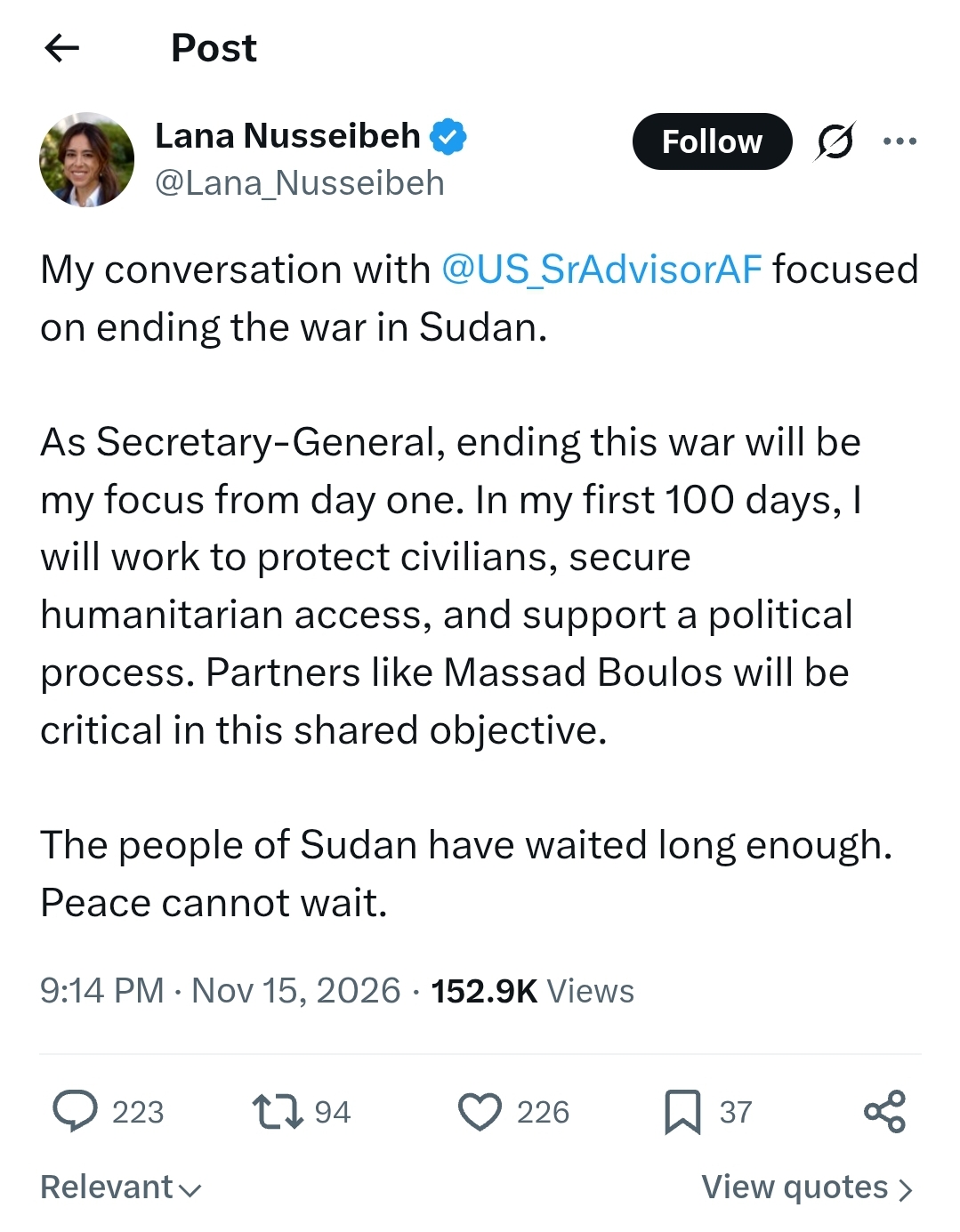
The controversy that most directly challenges Nusseibeh’s promise of impartiality concerns Sudan. Human Rights Watch has criticised her past public defence of UAE policy and her rejection of allegations that the UAE supported Sudan’s Rapid Support Forces. The UAE denies backing either side in Sudan’s war. The disagreement is not a peripheral campaign controversy: it concerns whether a Secretary-General who previously represented her government could credibly oversee UN investigations or engage with a state implicated in alleged abuses. Nusseibeh has said that she has taken leave from her government post and, when questioned about the UAE’s conduct, has referred such questions to the government.
Her record on Yemen raises a related concern. The UAE played a prominent role in the Saudi-led coalition’s military intervention, including air operations and support for local forces. Human Rights Watch has documented unlawful coalition airstrikes and criticised Nusseibeh’s defence of the UAE’s conduct and her opposition to international scrutiny. These episodes can be understood within the framework of a broader Emirati strategy to expand regional influence and shape security outcomes, rather than merely as isolated interventions. But that strategic context should not obscure the central question confronting a candidate for the UN’s highest office: whether she would defend the institution’s investigative independence when its findings implicate her own country.
That question is particularly acute because the UN Secretary-General is not merely a mediator between governments. The office also carries the responsibility of speaking publicly about threats to peace and supporting the organisation’s work on human rights and humanitarian crises. Nusseibeh has promised to act if UN investigators identify a foreign power fuelling the conflict in Sudan. Critics argue that her past responses to findings concerning the UAE make it difficult to accept that promise at face value. Both the UAE’s denials and the criticisms of its conduct should be reported clearly; the decisive issue is whether a future Secretary-General would follow the evidence wherever it leads.
A Test Beyond Symbolism
The contest, therefore, does not pit representation against either competence or accountability; rather, it asks whether the UN can pursue all three simultaneously. Nusseibeh brings substantial institutional experience and a programme centred on mediation and practical outcomes. Her candidature could make history on two fronts: gender and regional representation. Yet, the latest poll indicates that she remains some distance from securing a viable consensus within the Security Council, while the questions surrounding Sudan and Yemen strike at the heart of her promise to act independently.
If she cannot persuade the permanent members currently opposed to her candidature, symbolism alone will not carry her to the post. If she succeeds, she will still need to demonstrate that national allegiance will not constrain the exercise of her office. The larger test, however, is for the United Nations itself: can its members choose a leader who broadens representation without lowering the standards of impartiality, and can the great powers agree on someone prepared to challenge them, too?






Lana Nusseibeh’s candidature brings a historic opportunity for both gender equality and regional representation at the United Nations. But making history must go beyond symbolism. The real test is whether the next UN Secretary-General can act independently, defend human rights and hold even powerful nations accountable. The concerns surrounding the UAE’s role in Sudan and Yemen must not be ignored. The UN needs leadership guided by justice, impartiality and accountability, not national interests or geopolitical pressure.