

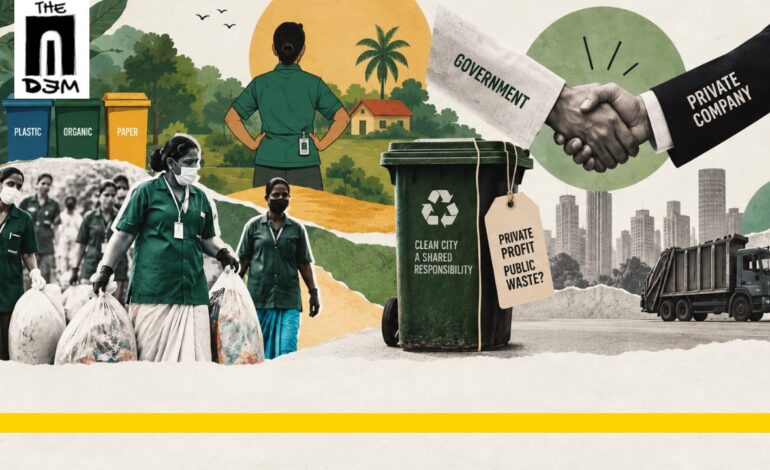
The UDF government at the state level, as expected of a coalition out of power for a decade, has announced the direction of a new solid waste management policy for the state. This is, however, not unexpected for those who view social change through the prism of political economy, for at least two reasons: SWM is currently a labour-intensive sector, and scope is now being opened up for greater private involvement, given that decentralised waste management, with the involvement of the women of the Haritha Karma Sena (HKS) in the state over the last six years or so, has made significant inroads, turning waste management into an increasingly profitable sector through greater investment.
Of course, this immediate shift in state-level policy is partly based on changes in solid waste management policy at the national level (SWM Policy, 2026). The change in direction of the policy by the new dispensation in Kerala is evident from the fact that, within 100 days, a new team of experts under Anil Akkara and former CKCL chairman Kabeer Haroon will produce a document on a new plastic recycling policy.
This effort must be considered part of a larger plan to open up the waste management sector to private players — mostly contractors who currently buy the NBDW collected and segregated by the HKS but do not necessarily have recycling facilities — without paying adequate attention to the merits of the present system, which is based on the HKS’s monthly NBDW collection from houses and institutions for a nominal user fee, and instead using the goodwill they have generated for private gain.
It is good that the government’s attention is being directed towards SWM for fresh calibration, as any state needs constant attention from experts and the public alike on this matter, as well as a serious re-evaluation of strategies adopted hitherto in SWM approaches and implementation, taking into account changes in waste generation, standards of living, etc. This change, however, must not lead the new dispensation to bring in new private players solely in plastic waste management by removing the segregation of plastic waste from HKS duties. That may perhaps help the dispensation secure monetary benefits, but the long-term vision for a clean Keralam must be upheld irrespective of the interests of various political dispensations and private players.
It must therefore be said at the outset that there are possible slippery slopes, and we should be cautious about them while conceiving new policies on such a grand scale and in such haste. If such a plan is to be tested, it should only be implemented in local bodies where the existing plastic waste management system is problematic — for example, in municipal corporations like Ernakulam or Kozhikode, where the percentage of collection and segregation falls below the required level.
A general shift across Keralam could topple the entire waste management system into a profit-making battleground for private players who could go to any lengths in their competition for the market and undermine the health and environmental safeguards essential for a civilised society. The following analysis, urging a cautionary approach to plastic waste policy, is based on the author’s extensive work experience in livelihood development in decentralised SWM in the state.
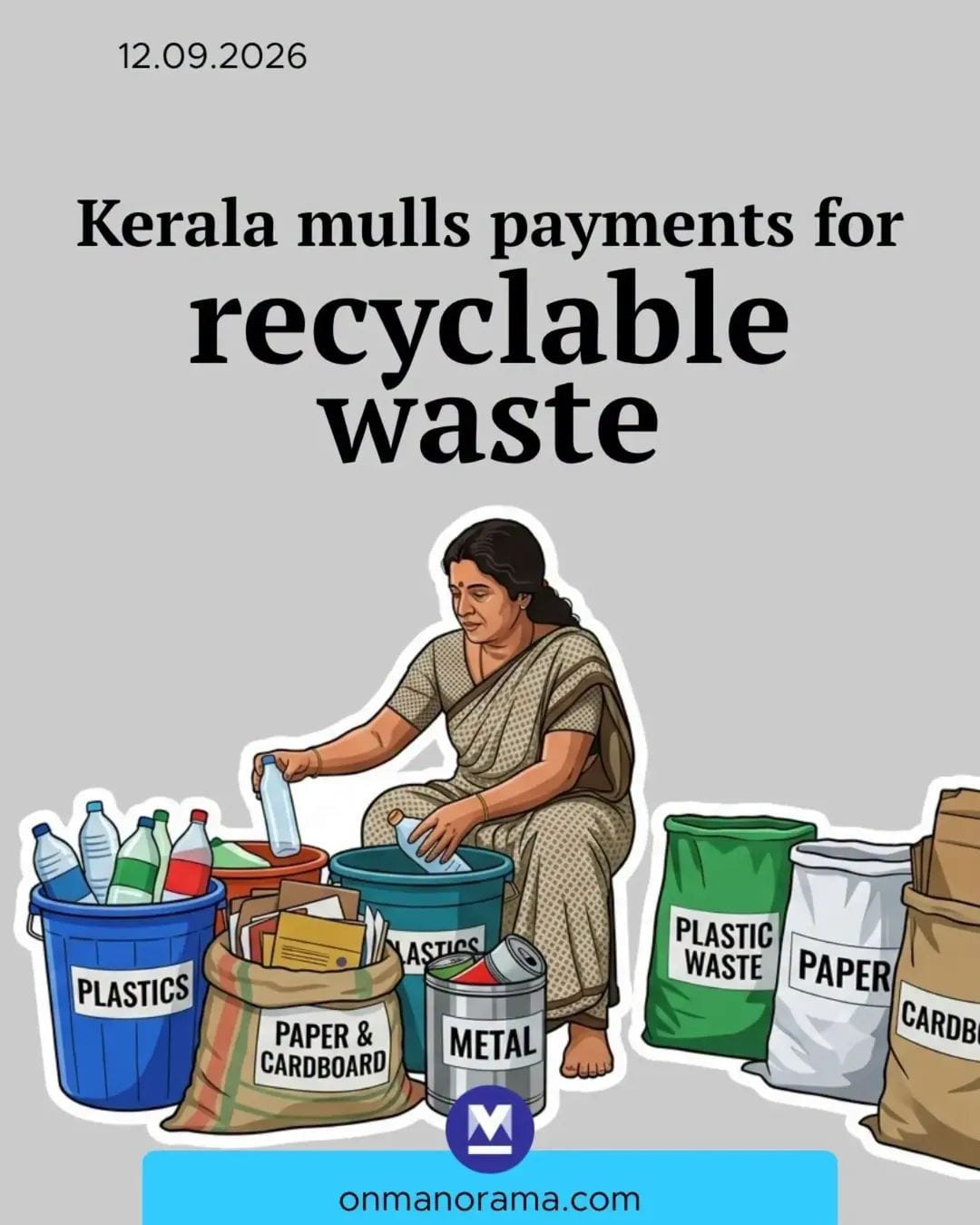
The Manorama report of 12 September 2026, titled “Keralam to Pay Residents for Recylables Under New Waste Management Policy,” suggests that Keralam is planning to introduce a system under which households will be paid for segregating and handing over recyclable dry waste, as part of a proposed overhaul of the state’s waste management strategy. The report does not indicate anything about the strategies needed to implement this, even though it carries possible implications for the current decentralised waste management system — itself an improvement over what was available to the state before 2020 — which runs on user fees and the sale of plastics collected from households and shops by the HKS (Haritha Karma Sena).
The fact is that the responsibility for payments to households for plastics could gradually be shifted to private players, giving them greater freedom for careless practices detrimental to health and the environment in the state, especially in cities, where the pursuit of private profit tends to concentrate.
Let me explain. At present, HKS women visit households and shops monthly and collect non-biodegradable waste, mainly plastic covers, and also collect paper, scrap, cloth, bags, etc., a few times a year. They receive around ₹10,000 as monthly remuneration on average in smaller municipalities, and ₹20,000 or more in larger municipalities, depending on the number of houses they visit and the quantity of recyclables they collect. The user fee they collect is usually around ₹50 from households and ₹100 from institutions and shops. The recyclables they collect are sold, after initial segregation at municipal facilities (MCFs, or Material Collection Facilities; or RRFs, Resource Recovery Facilities), to recycling businesses and local scrap dealers, and this adds around 30 per cent to the total income distributed among the HKS.
Now, if plastic is to be collected by paying households directly, how will the HKS sustain their consortium in every ULB (Urban Local Body) — the very system that currently keeps the state markedly cleaner than neighbours like Tamil Nadu and Karnataka, where plastic lies around on roads and in water bodies, even though the public there could just as easily sell plastic to scrap dealers, as suggested by the new dispensation?
The point is that simply returning the plastic to the market by paying the household itself is not enough. In fact, the responsibility-sharing achieved through dedicated HKS workers — who take the waste to a mechanised segregation unit for processing before it becomes an input for industrial use (instead of allowing companies to take what they need and discard the inerts or residuals anywhere) — is what makes a systematic solid waste management plan possible.
So, if the presence of HKS is displaced by a new system that looks attractive to the public at first — since individual households and shops would get money for the plastic they hand over instead of paying user fees — it will gradually become a financial burden on the municipality, and a health and environmental problem for the public. The private players brought in to share the financial burden at that point would find ways around the responsibilities inherent in waste management, as happened at Brahmapuram and in many other places in the state and beyond. Private interest, given how difficult the monitoring of solid waste management is for the limited number of government employees in each ULB, could not be properly accounted for in the absence of HKS.
At Brahmapuram, the centralised, capital-intensive handling — away from ground-level, decentralised accountability — by private players is precisely what allowed waste to pile up unmanaged for years before the crisis became visible; the same structural drift is what this policy risks repeating.
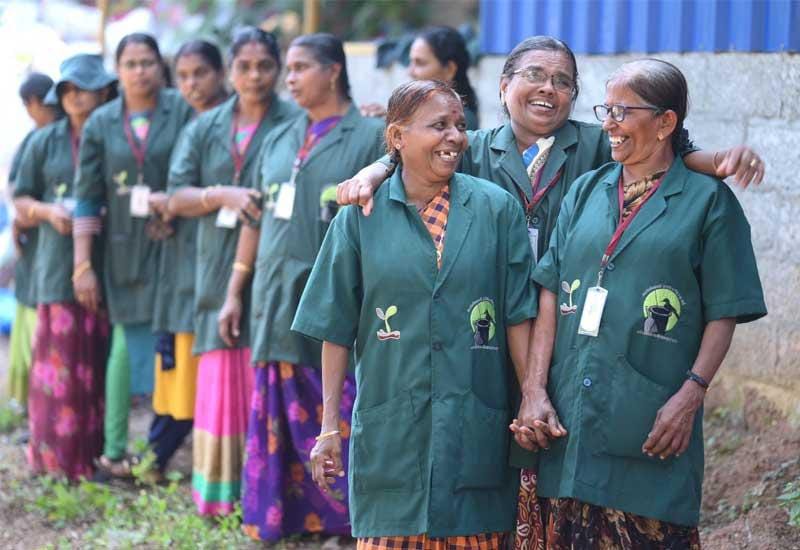
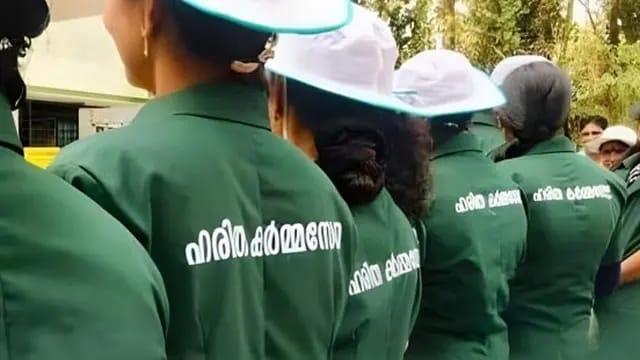
The significance of HKS in a densely populated state like Keralam cannot be undermined simply because a household may receive a few hundred rupees a year for recyclables under the upcoming proposal. The HKS, if planned well, has the potential to serve as the “green warriors of waste management” in every self-government body in the state. Such “warriors” are expected to address most of the immediate issues related to non-biodegradable waste management in each ward (and have already undergone considerable orientation in solid waste management through various agencies, including the World Bank and AIIB).
In certain ULBs, even bio-waste — which is generated in proportionately higher quantities per day — has been managed to a great degree by the HKS. Of course, we lack regional landfills that require advanced technology and monitoring, but this could be addressed by the state in a coordinated fashion across departments.
The currently proposed plan could break the decentralised waste management system by creating the impression among individuals that they will get money for the non-biodegradable dry waste they hold onto each month. But if that impression is used to wipe out the presence of HKS, waste management could easily become a transactional matter between the public and private parties, or between households and various companies. We know that plastic waste management based on direct payment has limited scope for the overall success of waste management, since private players, focused on financial returns on investment, often give less weight to social and environmental safeguards than to immediate monetary benefit.
This will, in time, damage society’s overall health and environment. That is to say, treatment facilities springing up in the midst of populous cities, and unmonitored inert waste being thrown into water bodies (companies from Keralam have already been booked in neighbouring states for such instances), are likely to occur more frequently in Keralam.
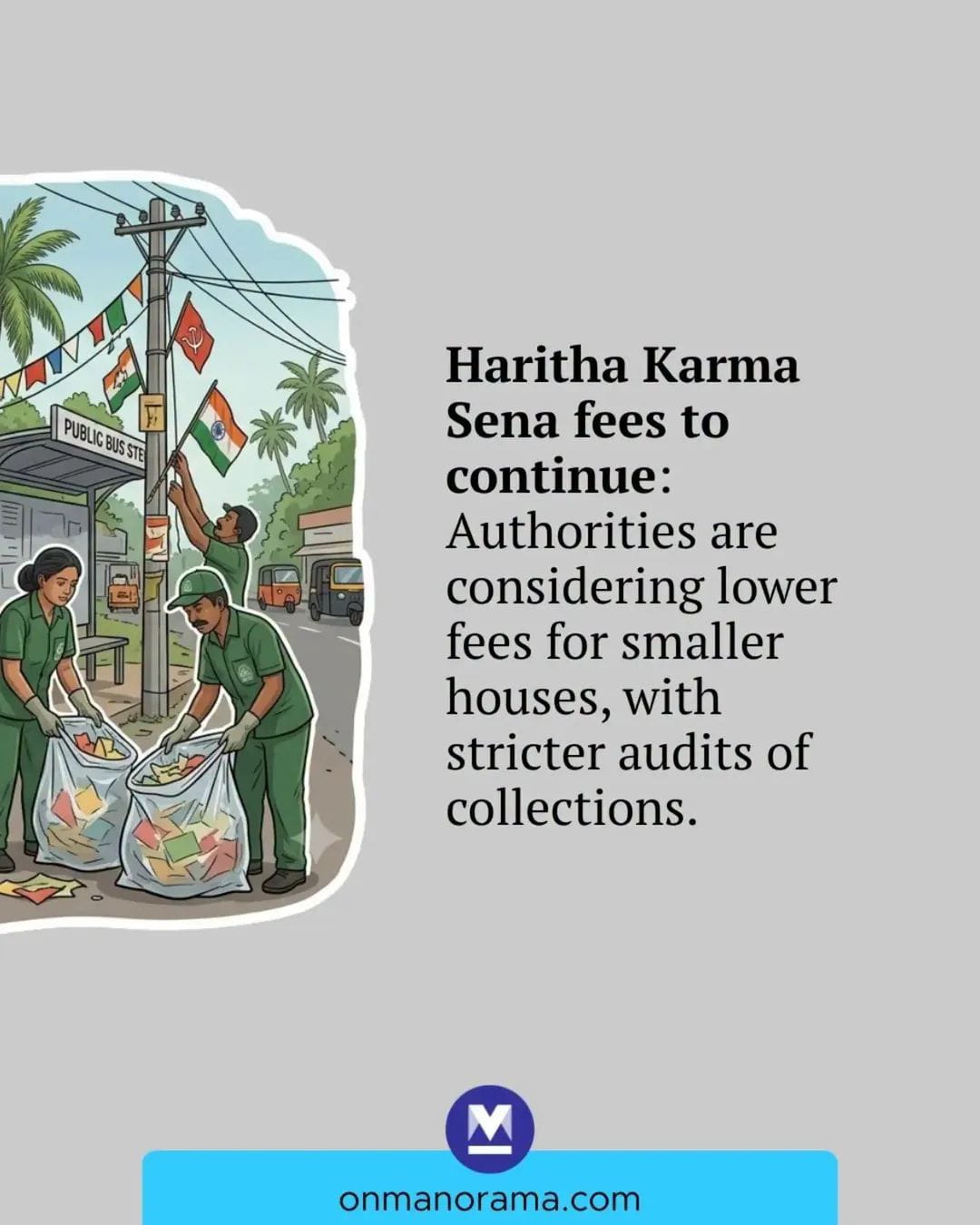
The report also states that authorities are considering restructuring HKS user fees based on family size. This, combined with the above proposal to pay individuals, has the potential to create a financial burden on local self-governments, given that the average household size in Keralam is small. Any effort to reduce the ₹50 household fee will largely end up undermining the decentralised waste management system based on the HKS collection of NBDW, while adding little of substance to each family’s income.
It will mostly render HKS workers jobless and gradually push them out of work, since the state government cannot fund HKS independently of the income from their work — income that comes from the user fee, which is now being reduced based on family size, and from earnings from scrap and recyclables, which are being separated out due to the new policy of paying for plastic waste collected.
So the proposed plastic waste management policy could lead to the collapse of the social labour of about 37,000 poor women who sustain around 100,000 lower-income individuals in society, for the benefit of a few private players who may end up employing contract workers from outside Keralam to manage the NBDW they are paid to collect with the support of ULBs.
We must acknowledge that the proposed plan could find takers within the government hierarchy, since health officials and other engineers working under decentralised SWM have had to work harder within the HKS system — managing HKS consortiums alongside the social and environmental safeguards that HKS reminds them to ensure as they visit households and shops almost every day in some part of a ULB. These officials also need to ensure the functioning and well-being of HKS at MCFs and RRFs. A system that separates HKS from SWM would shift the burden of this work from government officials onto private players instead.
It is worth remembering that the consequences of failures in the present SWM system in a ULB — poor health outcomes and pollution — cannot be measured in money, and fines imposed afterwards would not be a mitigating factor. The report says that the fine imposed for leftover hoardings and plastic boards left by organisations or individuals is ₹5,000, to be levied by ULB secretaries. This struck this writer as a joke, since I doubt how it would be determined who is to be booked for such leftover boards.
The Indian Express report from the same day, titled “On Cards: Policies for Waste Management Overhaul in Keralam,” states that the “Plastic Recycling Policy aims to bring all major stakeholders in the plastic sector — producers, importers, manufacturers, and recyclers — onto a single platform,” hinting at the gradual and probable elimination of the HKS component from Keralam’s waste management picture. The absence of any mention of HKS in this chain of waste management units raises many unanswered questions about the intentions behind the alignment of private profit with political interest.
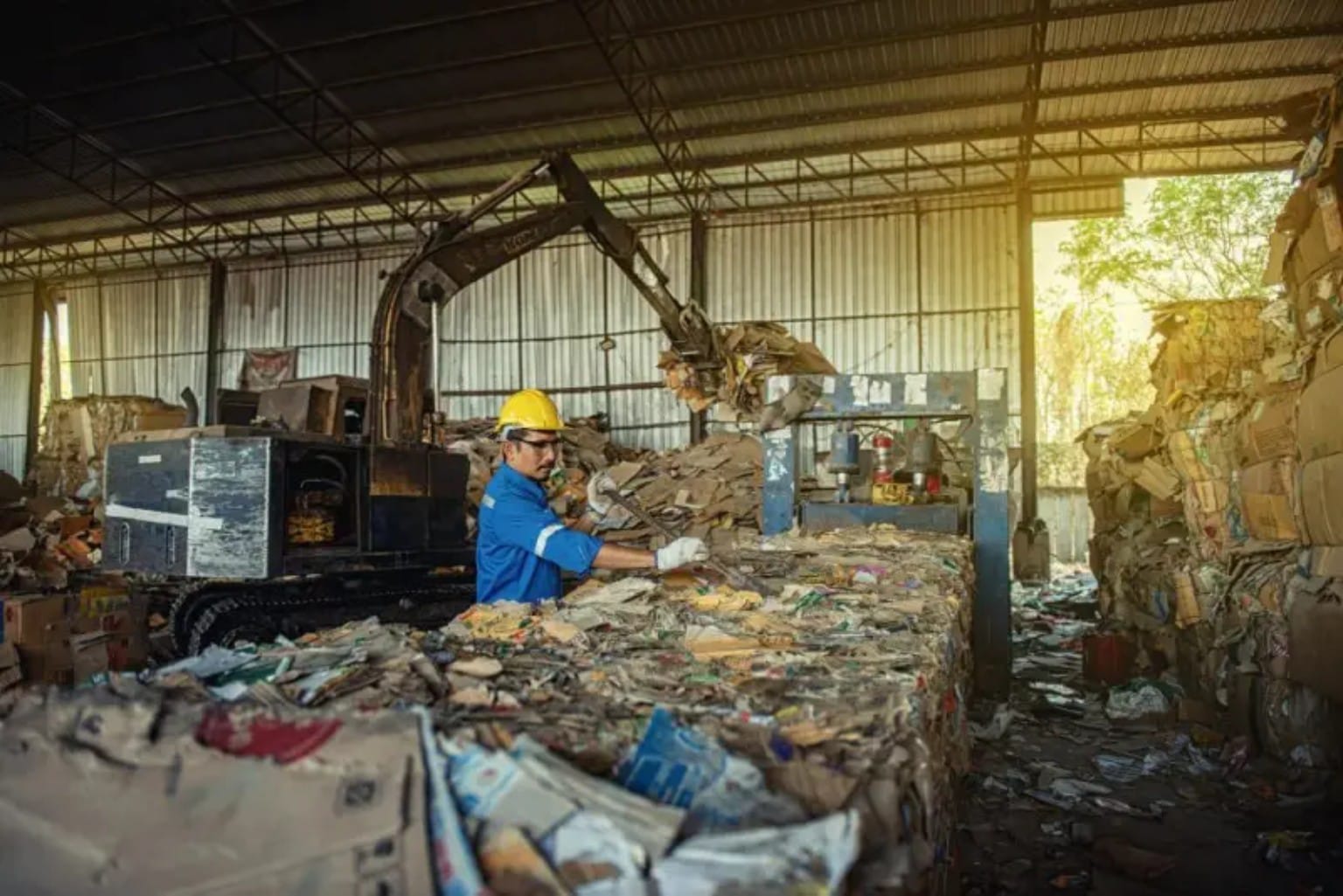
The idea — which is spurious, particularly because it does not mention the HKS, who currently collect recyclables — is, according to the report, to bring everyone involved in plastic production and recycling into a coordinated system, with EPR implementation and compliance mechanisms as important components. One should remember, however, that compliance and EPR commitments by private players generally exist on paper and are rarely practised.
The report states that the action plan comprises two components: (a) a Plastic Recycling Policy aimed at bringing all major stakeholders in the plastic sector onto a single platform, and (b) new solid waste management rules proposing a regional waste management system serving multiple local bodies.
While regional facilities for sanitary, medical, construction, and digital waste are urgently needed, conceptualising plastic waste management around a centralised format based on the players mentioned above — rather than within each ULB, based on the HKS’s routine collection and segregation — has the potential to be capital-intensive for private players in a way that could help sideline HKS workers, and could ultimately break up the much-venerated decentralised waste management model that exists at present in Keralam.
The development of regional facilities for inert waste and scientific landfilling can proceed alongside the present decentralised system, as the HKS can then send their residual waste to such facilities without having to make excessive capital investment in heavy vehicles or pay higher rental rates for transportation.
The decentralised waste management system, which involves two HKS members per ward collecting recyclables and plastic waste, has advantages over private-dominated waste management in terms of health and environmental outcomes, even while ensuring a rate per kilogram to households and shops.
The present system also sustains poor families in each ULB and gives officials at the ULB level the capacity to work towards the long-term objective of ecological sustainability — one that could ensure better tourism prospects, health outcomes, and overall well-being. A change that gradually erodes the presence of HKS in ULBs will have unimaginable consequences for Keralam’s society, ecology, and economy in the long run.
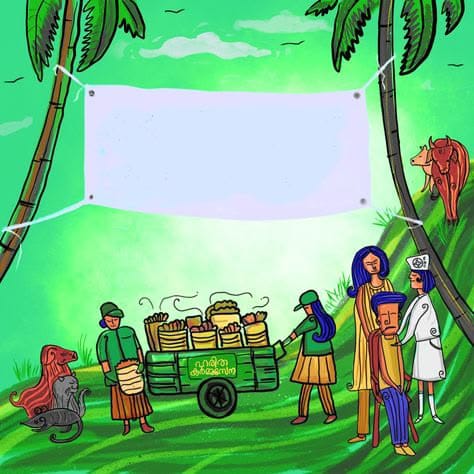
Rather than introducing a parallel payment system alongside the user-fee mechanism that risks displacing HKS altogether, the state would do better to strengthen the existing model: retain the user-fee structure that funds HKS operations, and if a buyback incentive for recyclables is politically necessary, route it through HKS itself rather than around it.
This would keep private players at the processing level of plastic waste management, rather than allowing them to intrude into the routine monthly NBDW collection carried out by HKS. Let the government respond to the national policy shift and public appetite for incentives without dismantling the decentralised infrastructure and human resource base that has taken years to build, and that neighbouring states in our country still lack. Careless implementation of the proposed SWM plan has the potential to serve rent-seekers — private players, corrupt officials, and politicians — rather than the health and ecological needs of Keralam society.







This is a timely and important caution against changing Kerala’s waste-management system without fully understanding what already works on the ground. The Haritha Karma Sena has built a decentralised system that combines environmental responsibility with livelihoods for thousands of women. Any new plastic-waste policy must strengthen this foundation, not weaken it in the name of private participation or short-term financial incentives. Kerala needs a waste-management model driven by public health, ecological sustainability and social responsibility—not one where profit gradually takes precedence over people and the environment. Sunilkumar Karintha’s analysis raises questions that policymakers simply cannot afford to ignore.