

A Tale of Two Coaches

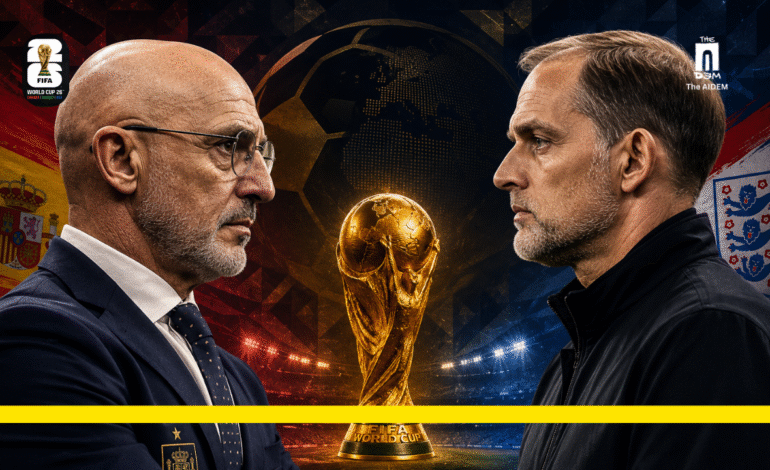
Before the World Cup began, our curtain – raiser series – primarily based on the Substack series authored by Colonel (Retd )Jaipal Santhanam – assigned one variable that conventional ranking systems often ignored. Alongside squad strength, tournament psychology and tactical flexibility, we attempted to measure something far more difficult to quantify: the quality of the coach.
The reason was simple. At the highest level of international football, talent is abundant. France, Spain, England and Argentina all possess players capable of deciding matches. As the tournament progresses, the differences between squads become progressively smaller. By the semifinals, every surviving nation is tactically organized, physically prepared and psychologically resilient. It is here that coaching begins to matter most—not because coaches play the game, but because they increasingly shape the conditions under which the game is played.
The two semifinals became an almost perfect demonstration of this proposition. Both were decided not merely by moments of individual brilliance, but by contrasting philosophies of managing space, risk and momentum.
Spain’s Luis de la Fuente approached the match against France with characteristic boldness. Rather than allowing France’s extraordinary pace in transition to dictate Spain’s defensive positioning, he inverted the problem altogether. Instead of retreating deeper to accommodate Mbappé and his runners, Spain pushed higher. Unai Simón became, in effect, an eleventh outfield player.

This was not goalkeeping in the traditional sense. It was positional architecture.
By operating fifteen or twenty metres outside the conventional goalkeeping zone whenever Spain had possession, Simón compressed the effective playing area. France’s preferred attacking pattern—winning possession and immediately releasing Mbappé into open grass—simply ceased to exist. On several occasions Simón sprinted from his line to intercept through balls before French forwards could even reach them. His interventions rarely appeared spectacular because they prevented danger before it became visible. That is perhaps the highest compliment one can pay a goalkeeper.
The consequence was profound. France, one of the tournament’s most explosive attacking sides, found themselves repeatedly receiving the ball with too little space to accelerate. Mbappé was not marked out of the game so much as deprived of the environment in which he is most dangerous. Spain had not merely defended better. They had altered the geometry of the football field itself.
Once France’s transitions disappeared, Spain could impose their own rhythm. Possession became territorial control rather than sterile circulation. Pedro Porro and Mikel Oyarzabal eventually supplied the goals, but the tactical victory had been secured long before the ball crossed the line. Spain did not simply beat France 2–0. They controlled where football itself could be played.

If De la Fuente’s victory came through the active conquest of space, Thomas Tuchel’s defeat against Argentina arose from surrendering it.
For an hour England largely justified our pre-match assessment. They matched Argentina physically, disrupted Messi’s movement through layered zonal marking involving Declan Rice and Elliot Anderson, and carried enough attacking threat to deserve their lead. At halftime our model still regarded the contest as almost perfectly balanced, with Argentina holding only the slightest advantage through tournament psychology and crisis resilience.
Then came the decisive intervention.
Protecting a one-goal advantage, Tuchel progressively transformed England into a defensive shell. Reece James gave way to Dan Burn. Midfield numbers diminished. Eventually England resembled a back five, at moments almost a back six. On paper the logic appeared impeccable. Defend the penalty area. Remove space behind the defence. Force Argentina into hopeful crosses.
Yet football possesses a paradox that every great coach eventually learns.

Space abandoned willingly rarely remains empty.
By retreating ever deeper, England did not merely strengthen their defence. They relinquished the midfield. Possession increasingly belonged to Argentina. One sequence after another saw England clear the ball only to face another wave of blue-and-white attacks seconds later. Reports suggested England’s possession after the fifty-fifth minute fell to extraordinarily low levels. Whether the precise figure was twelve percent or somewhat higher matters less than what everyone watching could see. England had ceased playing football. They had begun surviving it.
There is a profound difference between defending and inviting attack. The first seeks to control danger. The second merely postpones it.
Argentina, perhaps more than any nation in world football, understand this distinction. Scaloni resisted panic. He trusted that repeated territorial pressure would eventually produce one decisive mistake. It did. The equaliser arrived in the eighty-fifth minute. The winner followed in stoppage time. Argentina had not overwhelmed England through superior talent alone. They had been handed control of the game’s geography.
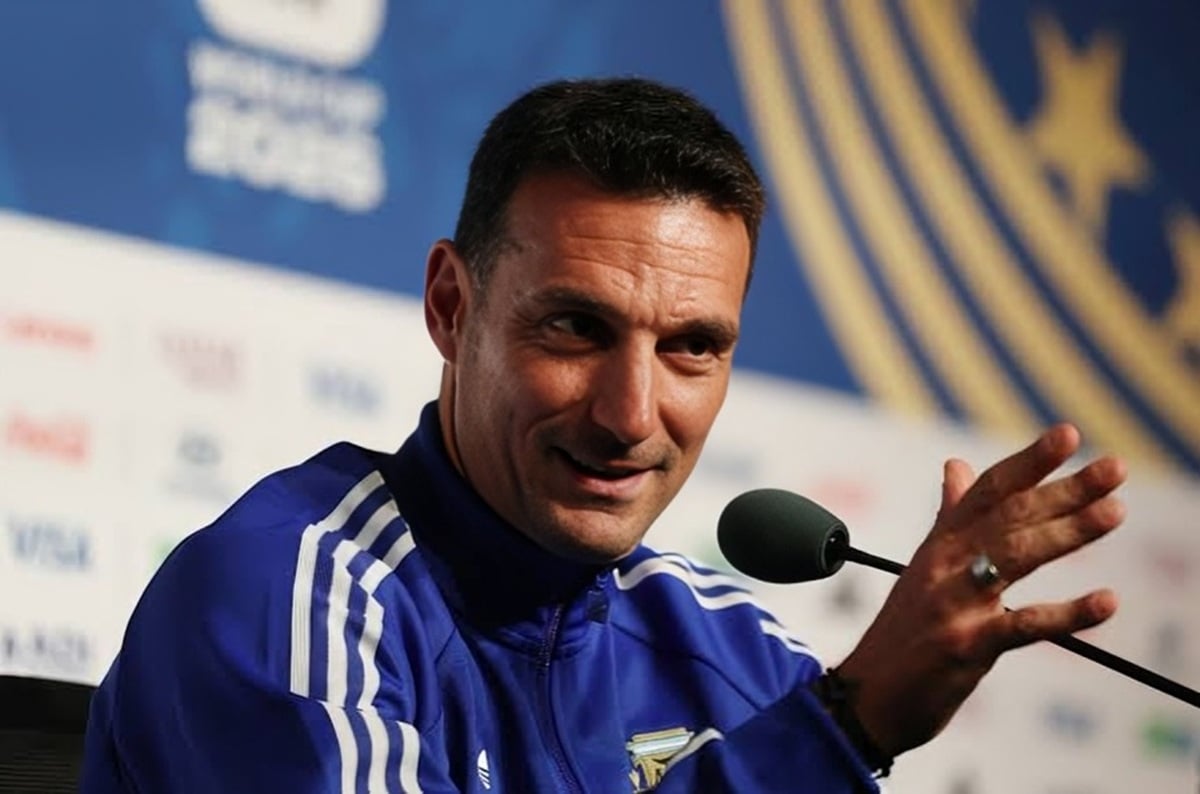
Looking back, the contrast between the two semifinals is striking. De la Fuente expanded his team’s influence by making his goalkeeper an additional defender and compressing the pitch. Tuchel contracted his team’s influence by withdrawing deeper and allowing Argentina to occupy ever larger areas of it. One coach sought to own space. The other sought merely to deny it.
Football has always been described as a game of time and space. These semifinals suggested something even subtler. Elite coaching is not simply about formations or substitutions. It is about deciding who controls the dimensions of uncertainty.
This returns us to the framework with which we began the tournament. When we assigned coaching scores before a ball had been kicked, we argued that elite coaches would ultimately distinguish themselves not through motivational speeches or tactical diagrams, but through their capacity to shape matches under the greatest pressure. The semifinals vindicated that intuition. De la Fuente manipulated uncertainty until France suffocated. Scaloni trusted uncertainty until England broke. Tuchel, seeking certainty through caution, inadvertently enlarged uncertainty until it consumed his team.
Perhaps that is the enduring lesson of these World Cup semifinals. Great coaches do not merely react to the game. They redefine the game that everyone else is forced to play.
It is also a fitting bridge back to our earlier essay, “The Coach as Nation Builder.” Rahim, Menotti, Cruyff, Guardiola, Bielsa, De la Fuente, Scaloni—they all share one characteristic. They do not simply coach eleven players. They reshape the conditions under which football is played. That, ultimately, is the highest form of coaching.








A compelling reminder that great coaching is not just about tactics, but about values, vision, and the ability to inspire. A thoughtful comparison that goes beyond the scoreboard to reveal what true leadership in sport really means.**