

Before Europe Named It: Women and the Many Enlightenments of India

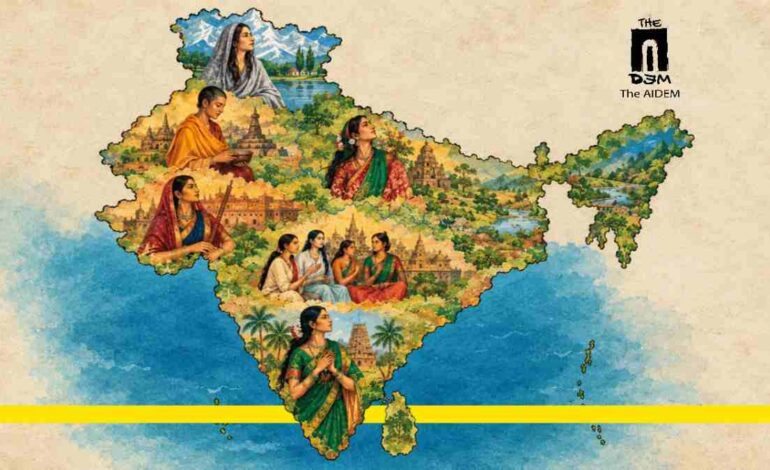
What does it mean to be enlightened? And who gets to decide where and when enlightenment began?
The familiar answer is that Enlightenment was a European event, an eighteenth-century dawn of reason, liberty and the individual, brought about by a canon of European men. The rest of the world appears in this story as a latecomer, a student of ideas that arrived to it through the empire. This is the “West and the rest” model, and it still frames how we speak of reason and freedom today.
I want to ask a different question. What happens when we look for enlightenment in non-European and trans Atlantic Western contexts, or in societies with longer civilisational histories? What happens when we engage with enlightenment thought in the non-canonical sources, often marginalised philosophies? What happens to the ideas of enlightenment when we locate it in the intellectual lives and practises of women who never wrote philosophical treatises in the recognised canonical languages and genres of philosophy? What did enlightenment mean for them, in their own vernaculars, in their own modes, mediums, and their own times?
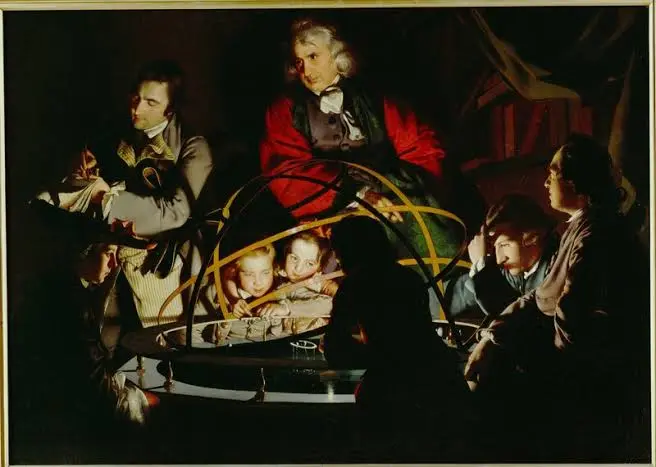
Turning to Indian women thinkers, the first thing one notices is that there was never just one enlightenment, in the way hegemonic Eurocentric and male-centric history has informed us. Societies with long civilisational histories experienced waves of it. The ideas and politics associated with the European moment in the form of critique of priestly authority, suspicion of puritanical religion, faith in human reason, and the claim of the individual to dignity and liberty. These ideas recur across Indian history, centuries before Europe’s own. Wherever religion hardened into orthodoxy and priestly control, rebellion followed. In India, challenges to Brahmanical dominance over Hinduism gave rise to Buddhism and Jainism, and later to Sikhism. Each developed its own indigenous vocabulary and politics. Each long predates the European canon.
Women were part of these rebellions from the beginning, sometimes as part of these rebellions and sometimes outside, creating their distinct tradition of critique, rebellion and dissent. The dissenting women are often described as mystics or saints, and their work is subsumed under the ‘Bhakti tradition’ invoking the idiom of “devotion.” The Bhakti tradition did focus on devotion, as a significant one, but that label often obscures the radicalness in their doings and interventions. They were asking what it means to be human, and what it means to be denied the worth of being human. Their questions concerned agency, individuality, selfhood, dignity, and many others. They asked these questions out of their lived experiences and embodiments, and the answers were costly.
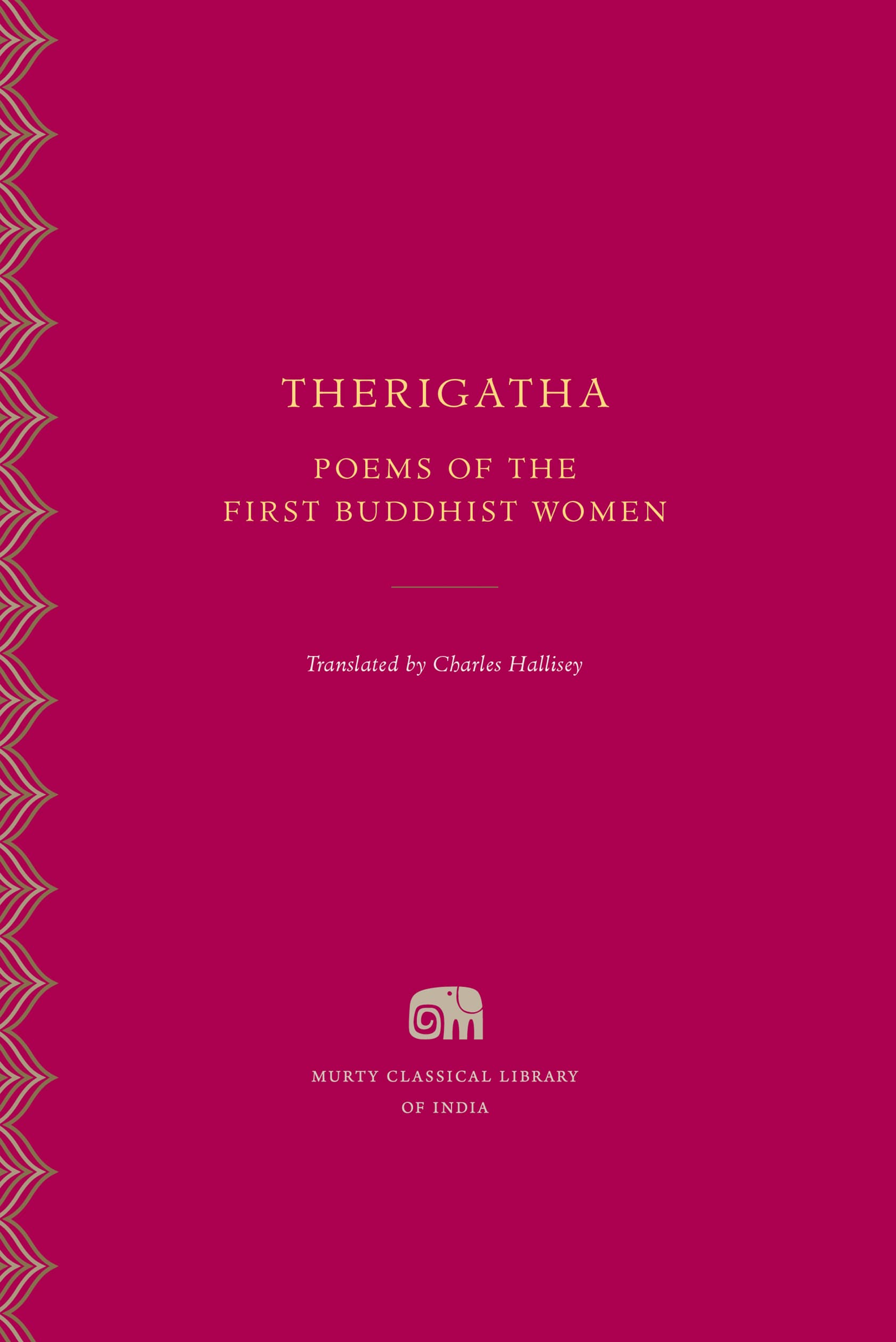
Consider the Therigatha, the verses of Buddhist nuns, transmitted orally and later written down in Pali between roughly the third and sixth centuries. These women reflect on the world they left behind: the kitchen, the mortar & pestle, the burdens of domesticity, the expectation that a woman must be beautiful and obedient, referring to them as ‘the depravities that ooze out of this world.’ Their joining of the Sangha (monastic order) was a verdict on a patriarchal world. Note also the choice of language. Sanskrit was the high language of the elite priestly class, as Latin was for Europe’s elite, and the caste system kept it from most people. Pali belonged to the commoners. To write in it was a political act.
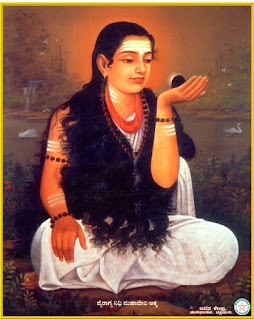
The pattern repeats across the subcontinent. In the south, Andal wrote rebellious poems, invoking the sanctity of desire, questioning the frames and institutions of religion that discriminated against women in their spiritual attainments. Karaikkal Ammaiyar composed in Tamil, not Sanskrit. In the Veerashaiva tradition, which defied Brahmanical orthodoxy, a significant number of the saint-philosophers were women. Among them was Akka Mahadevi, who rose to become a teacher of the sect. She walked naked, covered only by her long hair, and asked her critics what distinction remained between her body and theirs, since devotion belonged equally to both. Scholars have noted that this tradition even opens a space for people who did not identify as either man or woman.
In central India, the Varkari tradition was voluminised by Muktabai, Janabai, Bahinabai and Soyrabai, whose abhangs, composed in everyday Marathi, are still sung during the annual pilgrimage. Bahinabai also wrote an autobiography, a rare and radical act. In the west, Mirabai is the one name Western scholars know, but she was not alone. Through the works in the lines of feminist recovery, a large number of saint-philosophers have been found, whose poems, sayings, and writings in Braj, Khari Boli, and Rajasthani have been translated. And in Kashmir, Lalleshwari dismantled the priestly institution outright and thus their mediated presence in attainments: if God made me, why should I need anyone to reach him? Who wrote the scriptures, and who decoded them for us?
These women wrote in different languages, in different regions, often without knowing one another. Yet their arguments are strikingly similar, and that similarity is what makes this a tradition with a genealogy, stretching from the early centuries to the eighteenth century and still alive in practise today.
Their themes will be familiar to anyone who has read feminist philosophy. They wrote about the tyranny of the kitchen, the violence of marriage, the unequal obligations laid upon women. Some left their marriages. Others stayed and tried to reconcile marriage with a spiritual life. Many denounced the institution altogether. They did not use the word “patriarchy,” but its meaning is ever present in their renditions. They wrote about human worth, about humiliation and dignity, about the demand that women look a certain way. They claimed unmediated access to the divine, in an age when every priest was a man. They also wrote about the body. They wrote of menstruation and bleeding, of a body that society called filthy and of the same body as a source of knowledge. When a priest barred a menstruating woman from the temple, they answered that this is the source of life, and asked how it could be denied. Here is an argument about embodied, experiential knowledge, which we usually attribute to contemporary intersectional feminism.
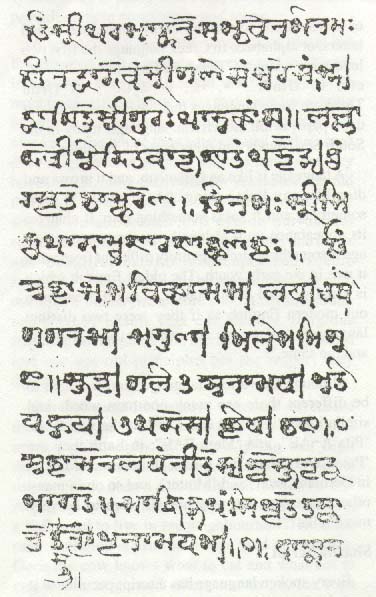
Their methods were as varied as their themes. They spoke through vachanas (sayings), vaks (poems), abhangs (songs) and verses, and through the lives they lived, their rebellions and philosophies. Their style was confessional, dialogical, satirical, polemical, testimonial. They argued with God, with priests, with society and fellow philosophers. They taught their followers, and they sang together as a collective.
Why does this matter? We are told that feminist thought in India arrived with colonial modernity, that women learned of their subjugation from Mill, Wollstonecraft, De Beauvoir. These Western feminist philosophers were foundational in explaining the unequal Women’s condition and cannot be diminished. But to say that Indian women discovered ideas of liberty, equality and emancipation only through them is to erase a rich indigenous lineage. By being denied equality, these women knew exactly what it meant. They knew what a life of agency and choice would be.
The women of the Therigatha, of the Bhakti and Varkari traditions, and of Kashmir and the south were neither derivative of European modernity nor reducible to religious devotion. They practised vernacular rebellions, intellectual and existential. They contested inherited authority, claimed the self as a source of knowledge, and reimagined freedom.
If we take them seriously, we must rethink where enlightenment came from, and who we credit with it. Societies with long histories have much to teach us about the human condition, and we have barely begun to listen.
Above article is an abridged version of her presentation at the International Workshops on “Developing the Notion of Global Feminist Enlightenments,” organised by the Centre for Interdisciplinary Research on Women in the History of Philosophy, University of Copenhagen, Denmark (5th and 6th Oct 2026)
The workshop is part of the larger Project on the Towards Global Feminist Enlightenments Project, funded by the HUM Global Grant, UCPH.






India’s women were never waiting for Europe to discover enlightenment. From Gargi and Maitreyi to Bhakti poets and women philosophers, India’s intellectual traditions have long challenged rigid hierarchies and expanded the boundaries of knowledge. Yet these contributions are too often sidelined by patriarchal history. True enlightenment means reclaiming women’s voices, recognising their intellectual legacy, and challenging every system that denies them equal space in society. India’s many enlightenments deserve to be remembered, celebrated, and carried forward.