
Jamia Students’ Union Protest: Hunger Strike Met with Crackdown

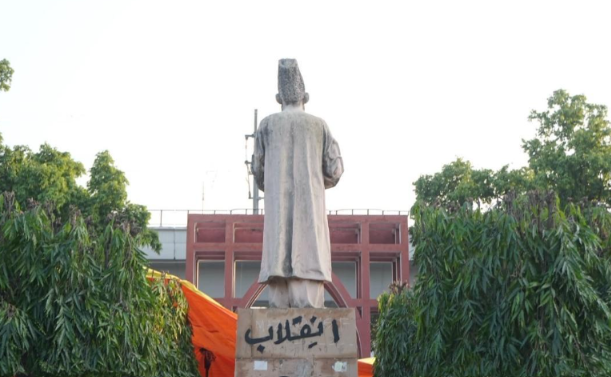
While the Aligarh Muslim University welcomed the dawn of 17th October with the university campus illuminated to celebrate the 209th birth anniversary of its founder Sir Syed Ahmad Khan, commemorated as Sir Syed Day and a newly gained victory of its almost month long struggle to reinstate the University Student Union, students protesting with the same demands at Jamia Millia Islamia were met with violence and assault by the university administration during the same hour.
The sixth day of the hunger strike marked an escalation in the Jamia administration’s response to students demanding the restoration of the Jamia Millia Islamia Students’ Union (JMISU). The early-morning crackdown was followed by students attempting to reclaim their protest site, police intervention and detentions, and disciplinary action against protesters. What began as a demand for student representation developed into a wider confrontation over the right to dissent on campus.
A Demand Nearly Two Decades Old
On October 12, five students, Ebin Basil, Mohd Jasim Khan, Rehan Haider, Rehan Pawar and Faizan Ali Khan began an indefinite hunger strike demanding the restoration of JMISU, which has remained defunct since 2006.
The agitation drew inspiration from student movements at Aligarh Muslim University (AMU) and Maulana Azad National Urdu University. AMU’s recent victory in its struggle to restore student-union elections renewed the momentum for the same demand at Jamia.
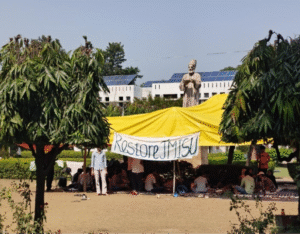
The protesters initially assembled at Gate No. 18 before shifting to Gate No. 7, near Gulistan-i-Ghalib Garden. They argue that departmental subject associations could not substitute for a university-wide elected body capable of representing students across faculties and centres.
Their demands extend beyond elections to concerns involving hostels, classrooms, libraries, drinking water, washrooms and other campus facilities. The administration maintained that subject associations provided channels for student representation, while the protesters insist that the absence of a central union deprives them of a collective voice in university governance.
October 17: The Crackdown
At approximately 5:30 am on October 17, as student witnesses report, around fifty university security personnel, some without badges, arrived at the protest site and violently assaulted and dragged students from the campus. They dismantled the protest site, removed mattresses and tarpaulins, switched off the campus lights and manhandled protesters. Several protesters were injured and one of the hunger strikers, Jasim Khan was hospitalised after his health deteriorated
The administration subsequently initiated disciplinary action against the protesters. Ebin Basil, a third year law student was rusticated for one year, while Jasim Khan and Rehan Haider were suspended and banned from the campus.
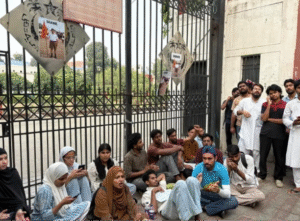
Later on October 17, students mobilised to reclaim the protest site and challenge the removal of the hunger strikers. They attempted to enter the campus through Gate No. 7, leading to a confrontation amid a heightened police presence. Several protesters were detained during the confrontation. One of the detainees, Nausheen, General Secretary of Fraternity Movement reported, she along with other female students were assaulted and forcefully dragged by female police personnel before being pushed into a local traveller. She describes the detentions as illegal claiming that the vehicle used was unauthorised and that the detention of women after 6 p.m. was impermissible.
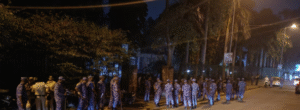
The reclamation of the protest site has become the centre of a collective demand that had remained unresolved for nearly two decades. By the night of October 17, the university campus was surrounded by Delhi Police personnel and paramilitary forces, including the Rapid Action Force (RAF), with six to seven police buses stationed outside the campus. Students who remained inside the campus late into the night reported that university security guards had withdrawn from the gates and that the campus lights had been switched off. They alleged that the absence of security personnel constituted a serious security lapse, with guards returning only the following morning.
Saffronisation and the Restriction of Muslim Leadership
The prolonged absence of student-union elections at Jamia cannot be separated from wider concerns about the saffronisation of university campuses in India. As a minority institution established to advance the educational aspirations of Muslims, Jamia has the potential to cultivate future Muslim leaders, intellectuals and political representatives.
Student unions provide spaces where leadership develops through collective organising, political engagement and democratic participation. Restricting student politics at Jamia therefore does more than silence immediate grievances, it restricts an institutional avenue through which Muslim leadership can emerge and gain experience in democratic representation.
In this context, the absence of an elected union has implications beyond campus administration. It limits students ability to organise collectively, challenge authority and develop representative structures. For an institution whose history is tied to the educational advancement of a minority community, the restriction of student democracy raises broader questions about political participation and the cultivation of future leadership.
The protest continues
As the hunger strike entered its eighth day on October 19, the university issued a notice late on October 18 announcing the formation of a high-level committee comprising deans and professors to engage in dialogue with students. The response came amid mounting demands for accountability over the alleged assault, the withdrawal of disciplinary action against protesters, an end to restrictions on the ongoing protest and an independent inquiry into the events of October 17.
The central demand, however, remains the restoration of the Jamia Millia Islamia Students’ Union (JMISU), which has been defunct since 2006. While the proposed committee signals the administration’s willingness to initiate dialogue, its effectiveness will depend on whether it addresses the protesters’ demands and leads to concrete action.
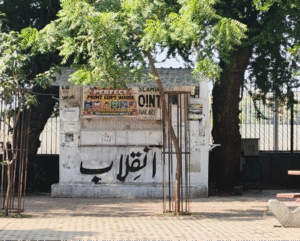
The question confronting Jamia’s administration is not merely when student-union elections will be held, but what space students are permitted to occupy within their own university. As the protest continues, the demand for an elected Students’ Union remains a demand for democratic participation, institutional accountability and the right of students to collectively represent themselves.