


Operation Toofan, launched in Keralam to combat drug mafias and narcotics trafficking networks, has achieved considerable success. The initiative has succeeded, to a significant extent, in curbing the activities of drug syndicates and bringing those involved in such crimes within the reach of the law.
However, for the benefits of this success to endure, merely apprehending offenders and sending them to prison will not suffice. Our prisons must become genuine correctional institutions, capable of preventing the recurrence of crime, bringing about psychological change among prisoners and facilitating their reintegration into mainstream society. Without such a fundamental transformation, the gains achieved through initiatives such as Operation Toofan may prove temporary.

The time has come for a serious examination of whether Keralam’s prisons truly deserve to be described as correctional and rehabilitation centres. It is necessary to investigate whether individuals imprisoned for relatively minor offences emerge after serving their sentences only to become involved in more serious crimes. We must also examine whether interactions between convicted prisoners and those held on remand create new criminal connections and opportunities for further offences. Such an examination must address overcrowding, staff shortages, inadequate training, and deficiencies in mental healthcare and rehabilitation facilities. The real success of the campaign against substance abuse cannot be measured merely by the number of arrests. It must also be judged by how many people can be rescued from a life of crime and helped towards a new beginning. Recognising this, the government must intervene urgently to bring about comprehensive reforms in the prison system.
At Viyyur – one of the major prisons dating back to the British era, there are currently over a thousand inmates, despite the facility being designed to accommodate only about five hundred. Poojappura Central Jail, which has a capacity for 727 inmates, currently houses more than 1,500. Thavanur Central Jail, designed for 568 people, holds 736. Across all 13 district jails, the number of inmates exceeds their designated capacity. Kannur is the only location where the ratio of inmates to available facilities remains balanced.
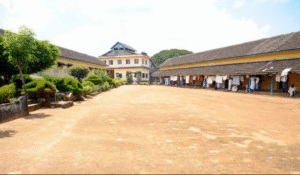
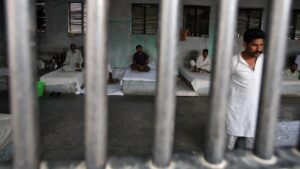
Keralam’s prisons today accommodate more than 10,000 inmates in facilities designed for approximately 7,000. The circumstances confronting prison staff are equally troubling. The staffing ratio is approximately one officer for every six inmates, but the demands of operating across three shifts place considerable pressure on the available personnel. The situation is extremely serious. Officers on duty are frequently required to discharge several different responsibilities simultaneously, adding to an already difficult working environment.
There are also significant shortcomings in the training provided to prison officials. In departments like the Police, Fire Force, and the Forest Department, both new recruits and existing personnel receive structured, systematic training. In contrast, those appointed to prisons do not receive the necessary initial training to work effectively among hardened criminals. This leads to mental stress and various difficulties for the staff.
Among the families of those serving sentences, there are often children and relatives who excel in their studies or other fields. Experiences from prison visits suggest that if special consideration is given to inmates who suffer from mental distress, it could help foster a sense of compassion within them, particularly those anxious about the future of their families. Consequently, steps could be taken to introduce vocational training and industrial initiatives within the prisons, utilizing modern facilities.
According to information obtained from prisons under the Right to Information (RTI) Act, more than half of the inmates are serving sentences for drug-related offences. Furthermore, the number of individuals apprehended in drug-related cases has risen sharply following the launch of ‘Operation Toofan’. In this context, for the government’s efforts to yield results, urgent intervention is essential to rehabilitate these individuals through a fundamental psychological transformation. To cite one example: although various sub-jails were upgraded to ‘special sub-jails’ or ‘district jails’ in 2013, there has been no corresponding increase in staff strength.
A significant proportion of those entering the prison system exhibit mental health issues and symptoms of withdrawal from substance abuse. While the services of psychologists and psychiatrists are currently available to those facing such challenges, they are not provided to the extent required. The reality is that, despite the reports of the Justice Mulla Commission and the Dr. Alexander Jacob Commission, which explicitly addressed the needs of the Prison Department and its staff, such recommendations have not received adequate attention.

Beyond addressing the current limitations of prisons as correctional facilities, special focus must be placed on fostering human values and character traits, such as kindness, benevolence, compassion, and empathy, among the inmates.
“I still want to die,” he said, his head bowed. He spoke with an air of indifference, as if these were the words of someone who had already died many times before. This man, currently an inmate at the Thavanur Central Jail, has attempted suicide twice. Having committed a serious crime and now serving a prison sentence, he has been deeply wounded by the rejection of his own family. More painful than any physical hardship has been the emotional trauma inflicted upon him, by his own mother, wife and children. Even though there may be various reasons why someone commits a crime, he repeatedly remarked during our conversation that the family which ought to have been a source of support and an anchor to keep one moving forward had failed him. It is precisely because this final refuge has turned its back on him that he has decided to end his life and has attempted to do so.
As part of a government-initiated ‘Psychosocial Cognitive Therapy’ program for prison inmates, the ‘Ila Foundation’ has been conducting various activities within the jail aimed at mental and physical rejuvenation. The ‘Ila Foundation’, a segment of the ‘Psychological Cognitive Therapy’ for inmates, has been conducting various activities aimed at mental and physical rejuvenation. It was in this context that we began speaking with this man, who had attempted suicide twice. When he insisted, “I will try to die again,” I felt compelled to ask him, “We need your life, would you be willing to give it to us?”
“Why do you need my life?” “Couldn’t you just let me end it all since no one wants me anyway?”
He said this with deep emotion. Two teardrops fell from his red, weary eyes and scattered.
I said to him again, “You are needed.”
He lifted his head and looked at us. There are many people lying helpless, unable to tend to their own basic needs. Many suffer from severe, festering wounds, wounds that need to be healed. Yet, there is no one to touch them with genuine care or provide them with the necessary attention. You are capable of doing this. One could see a flicker of hope beginning to sprout on the face of that man, who had until then remained so still.
“The day you are released from prison, we will be waiting for you outside.”
I smiled.
And so did he!
Most of those who end up in our prisons due to criminal acts must surely wonder how they will survive once they are released. It is also worth reflecting on how society will treat them upon their return. No matter how grave a crime someone may have committed, every human being is born in a state of absolute purity. If this is the reality, then there is no doubt that a chance for redemption exists. Love, compassion, kindness, and empathy are inherent, positive qualities within every human being. Conditions must be consciously created to nurture and foster these traits. Studies indicate that if this occurs from a very young age, there is a greater likelihood of an individual growing into a person of refined character.
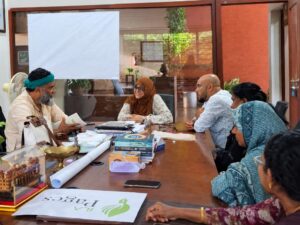
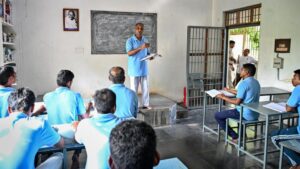
The Central Jail in Thavanur is the first new central prison to be established in Kerala since the formation of the Keralam State government. The Ila Foundation implemented numerous initiatives there, focused on ‘psychosocial-cognitive therapy’ for the inmates. These included theatre camps, film screenings, musical programmes, individual and group counselling sessions, and various agricultural activities. Among these, the ‘Palliative Care Patient Meet’ proved to be the most beneficial, visibly fostering a sense of transformation and repentance among the prisoners.
A particularly inspiring moment was the interaction with Khadeeja, a sixty-year-old woman living with a colostomy bag following multiple cancer-related surgeries. She had much to ask the individuals within the prison walls.
“Why do you squander your lives, forgetting the blessings you have been granted?”
As the prisoners listened to Khadeeja, who spoke in her own candid, natural style, and heard her emotionally charged account of her own life experiences, many were moved to tears. It was a poignant sight to see them bow their heads and wipe away their tears with the hems of their garments. Witnessing these early signs of an internal cleansing, a washing away of their past, filled us with a profound sense of fulfilment. Shabari Girish, a young man who once led a prosperous family life while working as a daily wage labourer, became bedridden after falling from a three-story building and sustaining a spinal injury. Though confined to a wheelchair, he managed to start a small business. The inmates listened with rapt attention as Shabari explained how he has been able to provide a good education for his two children and build a modest home where they now live comfortably.

Hamsathu, who has been battling cancer for nearly eighteen years, moving forward all the while with unwavering courage, shared his life story in a way that deeply touched the hearts of the prisoners.
The accounts shared by about ten individuals, people who continue to live with hope even while enduring life-threatening illnesses and physical suffering, were truly moving, bringing tears to the eyes of everyone present. Welfare Officer Vipin remarked that such moments of absolute, profound silence were unprecedented within the prison walls.
From the perspective of the Jail Superintendent, various initiatives such as agricultural activities and programmes designed to nurture the artistic talents and skills of the inmates, have had a transformative impact on their lives.
It has been observed that after their release from prison, many individuals visit the ‘Ila Foundation’ in Kuttippuram. They express an interest in volunteering, seek advice regarding their children’s education, and look for guidance to find the right path for their future lives. The government must prioritize interventions that create an environment capable of stimulating the positive impulses inherent even in those considered ‘bad’ or ‘wrongdoers.’
Prison staff must be provided with mandatory training to help them maintain their own mental equilibrium. Only through this can a reform in the mindset be fostered among the inmates. Furthermore, continuous therapy and counselling services must be made available for those experiencing mental stress.
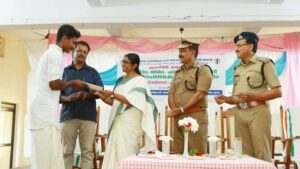
Staff shortages and other infrastructural inadequacies are likely to hinder our goal of transforming prisons into ‘correctional homes.’ Change is essential. Consultations and implementation strategies to bring about this change must be undertaken urgently. Both short-term and long-term plans need to be devised and executed. It is hoped that the Honourable Home Minister, Ramesh Chennithala, along with a team comprising Police Chief Rawada Azad Chandrasekhar, Prison Official Sreejith (IPS), and P. Vijayan (IPS) – who is in charge of Law and Order, will be able to work towards a future where crime rates decline from current levels. It is also hoped that Keralam will develop correctional facilities that serve as a model for the rest of the world.
If our civil society, voluntary organisations, and cultural collectives deeply internalize the understanding that prisons are the responsibility not only of the government but of society at large, it will become possible to spearhead significant positive changes.
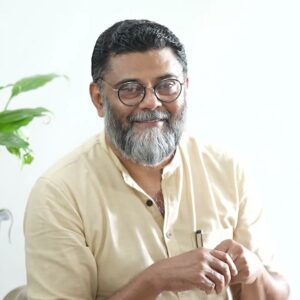









Prisons must be places of transformation, not merely punishment. Kerala’s Operation Toofan will achieve lasting success only if the government addresses overcrowding, staff shortages, mental health support and meaningful rehabilitation. Every prisoner deserves an opportunity to rebuild their life through education, vocational training, counselling and social acceptance. The real measure of a justice system is not how many people it locks up, but how many it helps return to society as responsible citizens. Punishment without rehabilitation cannot break the cycle of crime. Prison reform is not an act of sympathy; it is a necessity for a safer and more humane society.