


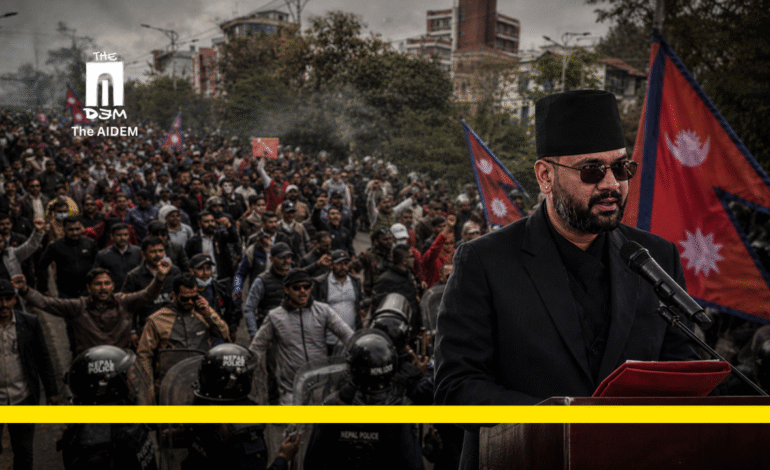
Ten months after toppling one government, Nepal’s Gen Z is confronting the one it built. A brutal eviction drive, a driver’s self-immolation and a widening crackdown on dissent are testing whether Balen Shah’s “new politics” differs from the old.
Nepal is witnessing an uncomfortable rerun. Less than a year after a youth uprising burned down Singha Durbar and forced KP Sharma Oli from office, the generation that engineered that upheaval is back on the streets – this time against the very leader it helped install.
Prime Minister Balendra Shah, the rapper-engineer-turned-mayor who rode Gen Z’s fury to a landslide victory in March 2026, is now facing the first sustained public revolt of his premiership. The trigger is not corruption or a social media ban, but bulldozers.
Why The Protests Are Happening
Since late April, the government’s eviction campaign against squatter and informal settlements along the Bagmati and other riverbanks in Kathmandu Valley has flattened the homes of more than 2,600 families – an estimated 15,000 people.
Framed as a drive to reclaim encroached public land, the operation initially enjoyed broad support: even the RSP’s election manifesto had promised a scientific separation of “genuine” landless families from opportunistic encroachers using satellite mapping and biometric verification.
What has provoked outrage is not the principle of clearing riverbanks but the sequence – eviction first, rehabilitation later, if at all. Roughly 325 families were moved into temporary holding centres, several of which then flooded, most visibly at Kirtipur.
Earlier this month the government ordered residents to vacate even these shelters, though many said they had nowhere else to go. Anger crested when a driver, Ganesh Nepali, set himself on fire after a dispute with municipal police, an act protesters have turned into a symbol of state indifference toward the poor.
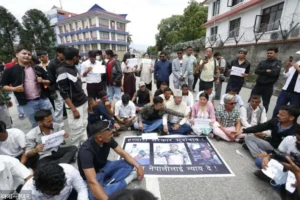
The Joint National Squatters Front has since organised marches under banners reading “End atrocities against the poor,” while young activists who once cheered Shah’s ascent now accuse his administration of treating the landless as an inconvenience rather than a constitutional obligation – a betrayal, they say, of the accountability and inclusion Gen Z fought for in September 2025.
The Government’s Response
Balen Shah’s administration has largely defended the evictions as overdue land management, insisting a distinction is being maintained between genuine landless families and encroachers occupying public or private land for profit.
But its handling of the fallout has drawn sharper criticism than the policy itself. Police have detained several Gen Z activists – including Majid Ansari, Sarisma Thapa and Nelson Ghatani – after they visited the Kirtipur holding centre to document conditions following flooding; Ansari, a legal practitioner, was allegedly assaulted at the gate. Activist Durga Prasai was separately detained at Tribhuvan International Airport for planning to speak to journalists, with police citing “sensitive security zone” rules.
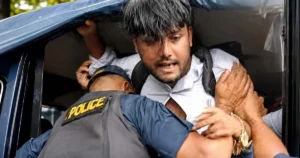
Nepal Police spokesperson Abi Narayan Kafle has maintained that action is taken only against those who “obstruct police work, incite unrest or threaten public security,” and that lawful protest is respected.
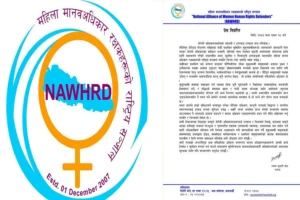
Rights groups see it differently: the National Alliance of Women Human Rights Defenders has condemned what it calls “inhumane treatment” and “unlawful detention,” while the Kathmandu Post has documented a broader pattern of police treating peaceful dissent as a security threat.
The National Human Rights Commission has twice intervened, directing authorities not to evict squatters from holding centres without alternative arrangements and citing Nepal’s own 2018 squatter-housing law, the constitutional right to adequate housing under Article 37, and international covenants Nepal has ratified.
The Supreme Court, too, has issued a show-cause order against the eviction drive. One minister has offered a rare personal apology to the squatters, calling the situation “difficult to watch” — an admission that sits uneasily alongside the government’s continued insistence that its overall approach is lawful.
The Opposition’s Response
For parties routed in March’s election, the crisis has offered an opening to reframe themselves as defenders of the very constituency that rejected them. CPN-UML’s Niraj Acharya has argued that a public mandate is not “a license for arbitrary rule,” calling on the government to adopt a “rehabilitation before relocation” policy and halt the use of force against citizens.
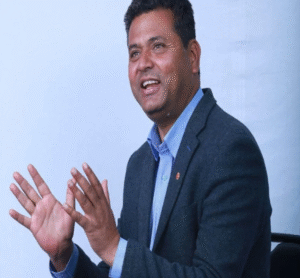
Janata Samajwadi Party’s Mahato went further, describing the government’s first hundred days as carrying “the smell of old authoritarianism,” pointing to bulldozed settlements, taxation of education and healthcare, and Ganesh Nepali’s self-immolation as evidence of institutional callousness.
Nepali Congress leaders, including Gagan Kumar Thapa and Bhishma Raj Angdembe, have demanded the unconditional release of detained activists and warned that continued heavy-handedness risks further unrest.
There is an obvious irony here: many of these same parties oversaw decades of unmanaged squatter settlements and were themselves targets of Gen Z’s 2025 fury. Their newfound solidarity with the landless reads as much as opportunism as principle – but the criticism resonates because it echoes what independent rights bodies and Gen Z activists are separately documenting.
What Should Be The Solution
The core failure here is sequencing, not intent. Nepal’s constitution, its 2018 squatter-rights law and multiple Supreme Court rulings all establish the same principle the NHRC keeps repeating: alternative housing and livelihood support should precede relocation, not follow it as an afterthought. A credible path forward requires the government to pause further evictions until verified rehabilitation sites – not flood-prone stadiums or holding centres – are ready, and to complete the promised scientific identification of genuine landless families through the Land Related Problems Resolution Commission rather than through discretionary bulldozer operations.
Equally urgent is de-escalating the treatment of dissent itself: releasing detained activists, investigating alleged police assault, and distinguishing genuine security threats from journalists, lawyers and rights monitors doing their jobs would cost the government little and would defuse the narrative that it is repeating Oli-era tactics.
Above all, Shah’s government needs to recognise that Gen Z’s original demand was never simply a change of faces in Singha Durbar – it was a demand for institutions that treat citizens, especially the poorest, with due process. Failing that test risks converting Nepal’s youngest-ever government into a case study in how quickly a movement’s own leaders can inherit the habits they once rose up against.









A thoughtful and timely analysis. The article captures how youth-led movements face their greatest test after achieving political change: translating hope into accountable governance. It reminds us that replacing leaders is only the beginning—protecting democratic values, social justice, and citizens’ rights requires constant public vigilance. Nepal’s unfolding story offers important lessons for the entire region. Well written.