

North Delhi’s Roshanara Park brings into focus a question of public policy that has accompanied the capital’s growth since Independence. As successive governments developed new residential colonies, particularly in the south, access to public green space remained uneven across the city. In the densely built neighbourhoods around Subzi Mandi, the garden laid out by Roshanara Begum is one of the few large public spaces where residents can walk, rest or play.
The revival of the park’s lake shows what municipal investment can do for an older neighbourhood. But the condition of Roshanara Begum’s tomb and the upkeep of the grounds point to a continuing responsibility. How Delhi protects and maintains Roshanara Park is as much a question of who gets access to public amenities as it is of how the city cares for its Mughal heritage.
The planning choices behind that divide are worth examining. In a new colony, planners can set aside land for parks and playgrounds while roads and housing are still on the drawing board. In an older district, where homes, shops and roads already occupy most of the available ground, creating a park of comparable size is far harder. That makes the upkeep of existing gardens a question of how public investment is distributed. A poorly maintained park imposes a greater cost on residents who have few other places to go.
There is also a question of how governments define heritage conservation. Roshanara Begum’s tomb is the most visible link to the garden’s Mughal origins, but the park’s public value also lies in activities that seldom feature in an account of a historic monument. Children need grounds where they can play, older residents need paths and places to sit, and the lake needs regular care. Those everyday needs belong in the decisions about how the garden is funded and managed.
A Mughal Garden in a Crowded Neighbourhood
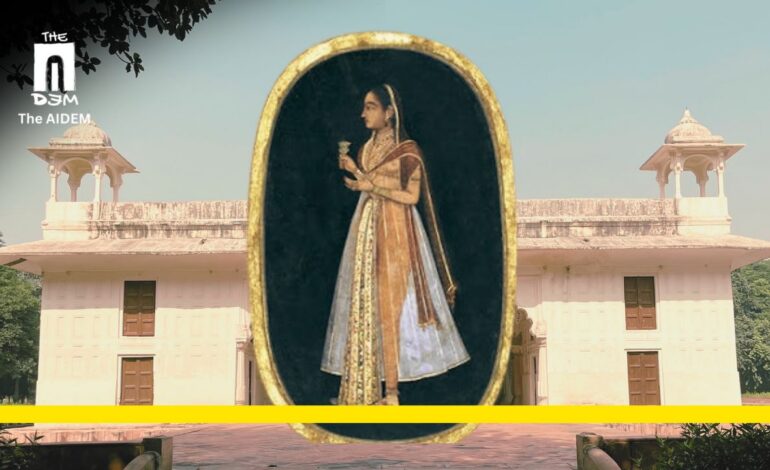
Tucked away near the bustling Subzi Mandi in Shakti Nagar, Roshanara Park covers approximately 57 acres. Inside, the traffic and commerce of the surrounding neighbourhood give way to broad stretches of green. Towards the middle of the garden stands the tomb of Roshanara Begum, the second daughter of Shah Jahan. She is often known as the ‘ostracized Mughal Princess’ in history. Roshanara Begum supported her brother Aurangzeb during the Mughal War Of Succession. Later, she was exiled by Aurangzeb himself due to her growing tendency towards corruption, bribery and concupiscence. She was allegedly banished into the very own park she now rests.
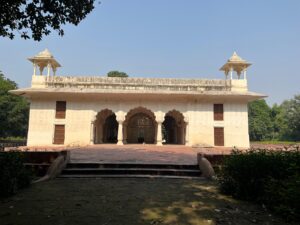
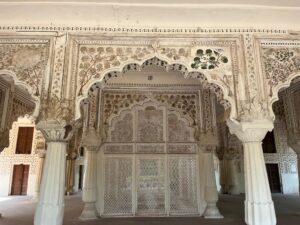
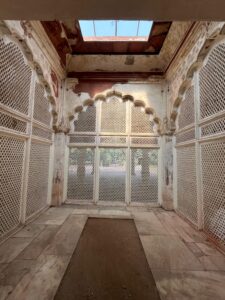
The tomb lies within an open-air baradari, where the marble latticework retains its fine detail even as the painted designs on the pillars show signs of deterioration. A man-made tank surrounds the tomb, and vegetation grows thick along the enclosing walls during the rains. On my visit, a lone security guard watched over the structure, with wandering dogs for company.
A Lake Reclaimed
The four-acre lake in the middle of the park came back into use after the Municipal Corporation of Delhi cleared weeds and cleaned the lake bed under the aegis of the National Green Tribunal. Treated water from a nearby decentralised sewage treatment plant is channelled into the lake, while constructed channels collect rainwater. Teals and shovelers can be seen wading in groups across the green water.
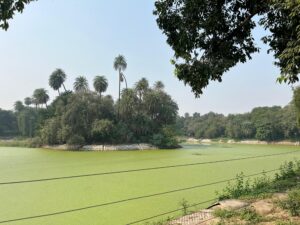
The lake provides a habitat for waterbirds, although patches of algal growth remain visible. Its condition shows how much the value of a restoration project depends on the maintenance that follows.
Cricket on the Lawns
As the day wears on, children and adults turn the open grounds into cricket pitches and playing fields. Other patches of grass are quiet enough for an afternoon nap. In the adjoining nursery, bamboo seats and machaans, or raised platforms, give visitors places to sit among the plants.
Cricket also connects the garden to a chapter of modern Indian history. At the nearby Roshanara Club, the Board of Control for Cricket in India took shape in 1928. A short walk away, on the public lawns, the game is part of the everyday life of the neighbourhood.
The Geography of Public Space
Lajpat Nagar, Hauz Khas and Greater Kailash were among the residential colonies that took shape in the decades after Independence. The Kamla Nehru Ridge near Delhi University’s North Campus is a significant green space, but public gardens on the scale of Roshanara Park are rare in this part of the city.
For a family near Subzi Mandi, a usable neighbourhood park means an afternoon outdoors without a trip across Delhi. Overgrown vegetation and limited supervision can restrict which parts of the grounds people feel comfortable using, while the fading paint on the baradari shows the cost of deferred conservation. At Roshanara Park, maintaining a place for daily recreation and conserving a historic garden are part of the same job.
I would count Roshanara Park among Delhi’s most underrated gardens. On an ordinary afternoon, there are children at the crease, visitors resting in the shade and waterbirds on the lake. The test of the city’s commitment to Roshanara Begum’s garden is whether the people who live around it can count on finding it well cared for year after year.
The Delhi Government has launched a campaign attracting private companies, businesses and local communities to revive historical monuments in Delhi. Seventy five of Delhi’s monuments were adopted by these private companies and NGOs for their development. However, a large number of lesser-known historical monuments remain neglected. As Delhi prepares itself to host a 108-day biennale with the Purana Qila as the main centre, it should also focus on assimilating all of its architectural marvels and turning them into cultural canvases.