

Sarah Josepha Hale

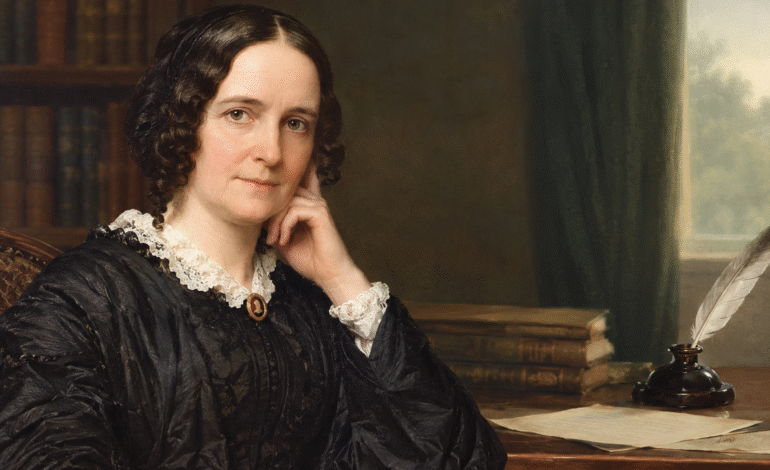
What connects a childhood rhyme, women’s education and America’s Thanksgiving tradition? Sarah Josepha Hale, a writer and editor who shaped nineteenth-century public life through journalism.
In this edition of Fearless Women Journalists, K A Beena explores how Hale popularised “Mary Had a Little Lamb,” championed women’s education and campaigned for Thanksgiving to become a national observance, leaving a complex legacy shaped by both her contributions and her opposition to some aspects of the women’s rights movement.

“Mary had a little lamb,
White as milk foam.”
These lines, which still dance on the tongues of children around the world, tell the story of a little lamb and a girl.
The woman who wrote that poem is the heroine of another fascinating story. She is Sarah Josepha Buell Hale, who earned her place in history through writing and journalism.
Sarah Josepha Buell was born on October 24, 1788, in Newport, New Hampshire. At a time when opportunities for girls to attend school were limited, she had no access to formal education. Instead, she studied at home and lit her own path forward. Her brother, Horatio Buell, shared with her what he had learned at Dartmouth College in subjects such as Latin, philosophy, science and literature. This laid the foundation for Sarah’s future life in journalism and literature.
In 1813, Sarah married David Hale, a lawyer. Her husband encouraged her writing and reading. Together, they would organise literary reading gatherings in their home.
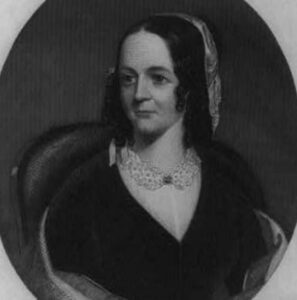
They had five children.
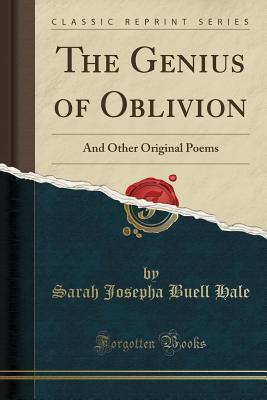
In 1822, David Hale died of pneumonia. Sarah turned to writing to find solace in her grief. In 1823, her first collection of poems, The Genius of Oblivion, was published.
Her novel Northwood: A Tale of New England, published in 1827, brought her recognition in American literary circles. It was among the early American novels written by a woman. The novel critically portrayed the slavery that existed at the time. Sarah also offered glimpses of the social conflicts that would later lead to the Civil War.
She entered journalism in 1828 as the editor of the Boston-based Ladies’ Magazine. Sarah Hale was among the early women editors of a prominent American women’s magazine.
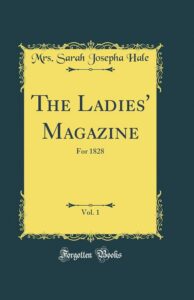
Under Sarah’s leadership, Ladies’ Magazine sought to help women move forward. It discussed a wide range of subjects, including literature, education, family values and morality. Both as a journalist and in her personal life, Sarah’s activities were rooted in humanitarian values and patriotism. She wrote much of the content of Ladies’ Magazine herself.
John Neal, a prominent critic of the time and a thinker who supported women’s rights, praised Sarah’s editorial work in The Yankee:
“One cannot help hoping that a time will come when women editors will be as common as men editors. Let women prove their abilities. Let the distressing necessity of having to marry for food come to an end.”
Sarah was actively associated with the Boston Ladies’ Peace Society. In 1833, she also played an important role in establishing the Seamen’s Aid Society. Although she promoted women’s education, she did not support organised feminist thought or movements. She also opposed granting women the right to vote.
In 1837, Sarah Hale joined the celebrated women’s magazine Godey’s Lady’s Book, published by Louis A. Godey in Philadelphia, as its editor. Following the merger of Ladies’ Magazine with Godey’s Lady’s Book, she served as the magazine’s editor for approximately forty years.
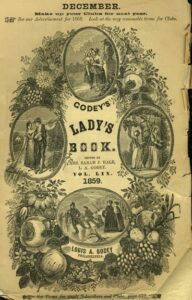
She helped it grow into one of America’s most influential women’s magazines, with 150,000 subscribers. During this period, Godey’s Lady’s Book became a platform that shaped women’s thoughts and perspectives.
Sarah’s editorials opened the way for women’s education and intellectual freedom. Godey’s Lady’s Book published works by numerous writers, including Edgar Allan Poe, Nathaniel Hawthorne, Ralph Waldo Emerson and Harriet Beecher Stowe. The magazine’s enormous circulation made Sarah Josepha Hale one of the most influential women of the nineteenth century.
In 1860, Baltimore Female College honoured Sarah with a medal for her work in promoting women’s education.
“Mary Had a Little Lamb,” which we all sang as children, was one of the poems Sarah Josepha Hale wrote for children. It appeared in her collection Poems for Our Children, published in 1830.

Mary had a little lamb,
A plump and pretty little lamb,
White as the foam of milk,
Soft and smooth as cotton.
It skipped and leapt along,
White as a foaming wave.
With a tiny bell around its neck,
It jingled as it went.
It walked along with Mary,
And ate its meals with her.
It slept beside dear Mary,
And rose whenever she did.
One day, into the school,
The lamb went along with Mary.
Step by step, it entered,
And laughter burst out everywhere.
Some unruly children
Put the poor thing outside.
They pushed the school door shut
And fastened it with a bolt.
When the school day ended,
And the children came walking out,
The moment it saw Mary,
The little lamb ran to her!
There are differing accounts of the poem’s origins. One commonly accepted story concerns an incident in the life of Mary Sawyer, a girl who lived in Sterling, Massachusetts.
Mary Sawyer later recalled her efforts to save a little lamb abandoned by its mother. After she nursed it back to health, the lamb began following her wherever she went. One day, it followed Mary to school.
However, a later claim attributed the poem’s opening lines to John Roulstone, said to have been Mary’s schoolmate. Thus, although a connection between Mary Sawyer’s experience and Sarah Josepha Hale’s poem is generally accepted, the precise origins of the poem remain disputed.
Published under Sarah Josepha Hale’s name in 1830, the poem has been cherished by generations of children around the world.
Alongside its worldwide fame, the poem also acquired historical significance. In 1877, Thomas Alva Edison used lines from “Mary Had a Little Lamb” in his early sound-recording experiments with his newly invented phonograph.
In this way, Hale’s lines also secured an enduring place in the history of recorded sound.
She wrote repeatedly about the necessity of higher education for women. She believed that educated women would become good mothers and be capable of transforming society.
Sarah’s efforts helped pave the way for women’s higher education. She strongly supported the establishment of institutions for women’s higher education, such as Vassar College. She also demonstrated her abilities across various literary forms, including poetry, short stories, plays and novels.
Her monumental volume Woman’s Record: Sketches of Distinguished Women, published in 1853, is considered one of her notable achievements. Revised editions followed. Recording the lives of more than a thousand women from different periods and countries, the book documented women’s historical contributions to literature and social life.
For years, Sarah Hale wrote to American presidents and governors, urging them to make Thanksgiving a national celebration. She continued to write that such an observance would unite the country.
On September 28, 1863, she wrote to President Abraham Lincoln with the same request. A few days later, on October 3, Lincoln issued a proclamation calling for Thanksgiving to be observed throughout the country on the last Thursday of November.
Sarah Josepha Hale is known as the “Mother of Thanksgiving.”
She remained active in journalism and writing until the age of eighty-nine. Having retired from Godey’s Lady’s Book in 1877, Sarah died in Philadelphia on April 30, 1879, at the age of ninety. This remarkable woman, who made journalism an instrument of social transformation, rests in Laurel Hill Cemetery in Pennsylvania.
The Sarah Josepha Hale Award, a literary award established in her honour, has been presented to many distinguished writers, including Robert Frost (1956), Ogden Nash (1964), Elizabeth Yates (1970), Arthur Miller (1990) and Julia Alvarez (2017).
Renowned as a social critic, journalist and writer, Sarah Josepha Hale holds an enduring place in history for inspiring women with the confidence that they could change the world through journalism and writing, for fostering an understanding of education as the foundation of society, and for her influence in shaping America’s literary and cultural life.






Her legacy is a reminder that real progress demands courage, persistence and the determination to challenge social barriers. Empowering women is not a favour granted by society; it is a fundamental step towards building a more equal and just world.