


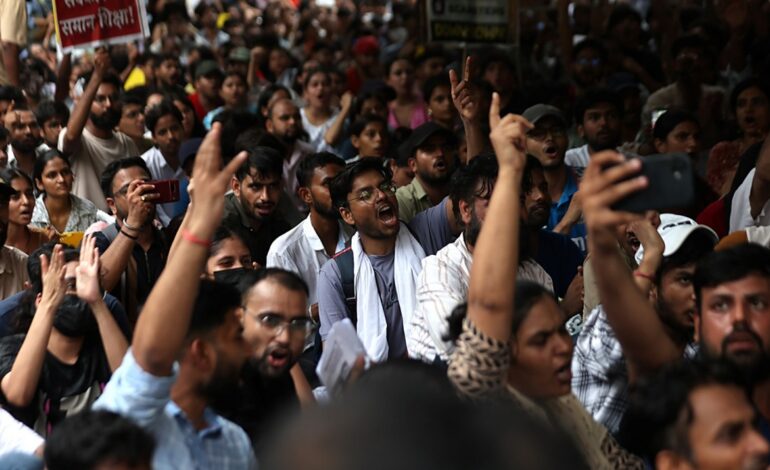
As protesters march towards Parliament today, the significance of the moment lies not merely in the destination but in the journey that brought them here. For days, Jantar Mantar has remained alive long after darkness fell. Under streetlights and the glow of mobile phones, students transformed the nights into spaces of organisation, discussion and collective resolve. The march unfolding today is the outcome of that sustained mobilisation, forged through sleepless nights rather than a single day’s anger.
From Anxiety to Collective Action
What began as outrage over the continuing controversies surrounding public examinations has evolved into something larger.
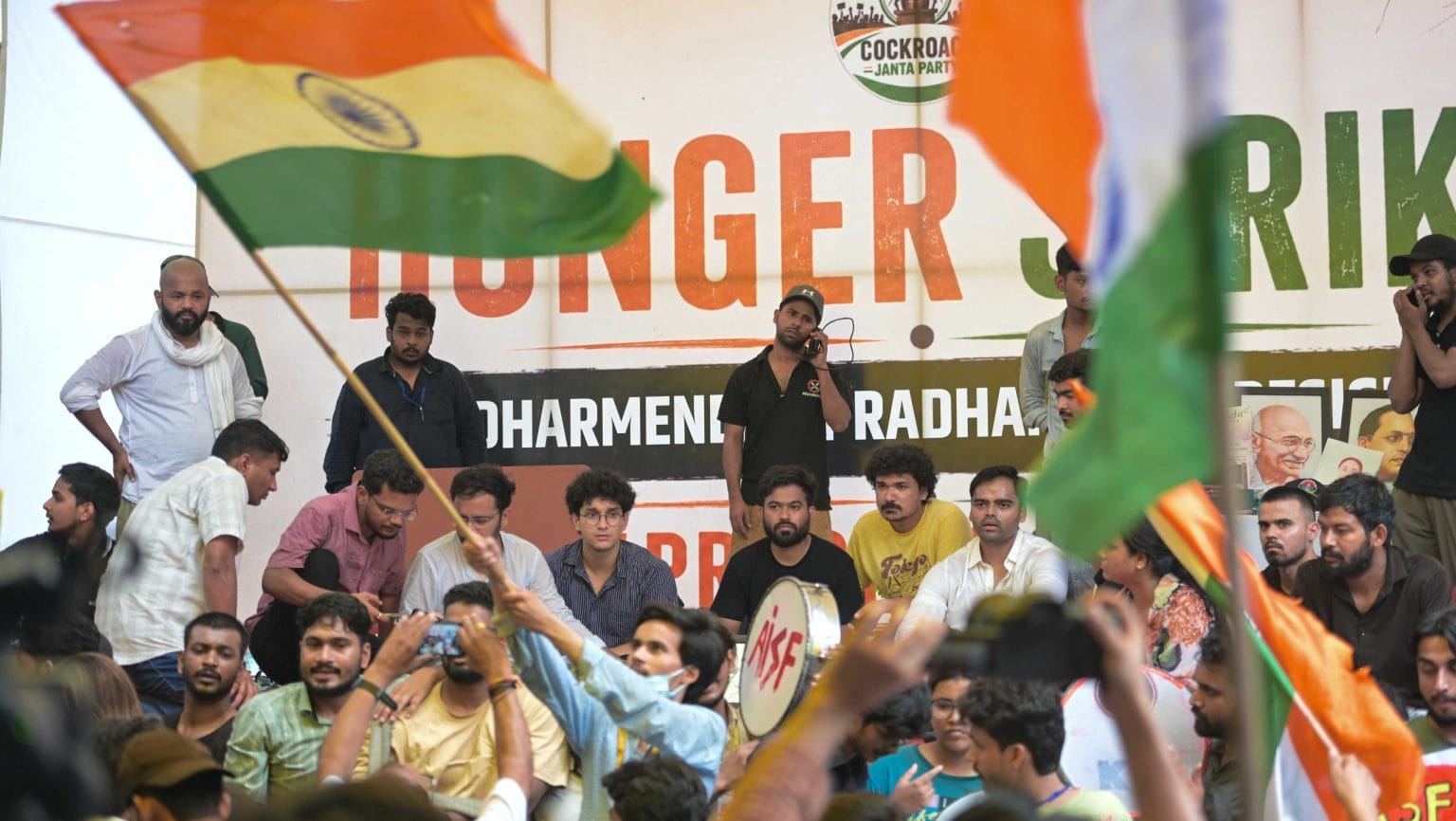
Students are no longer responding to isolated incidents; they are questioning the credibility, transparency and accountability of institutions that shape their futures.
The protests reflect a widening distrust that has turned personal anxiety into collective political action.
The Politics of Staying Awake
The decision to remain at Jantar Mantar through the night has carried its own political meaning. It has rejected the familiar rhythm in which protests disperse at dusk and resume the following morning. Instead, students have demonstrated that the uncertainty surrounding their education and employment cannot be switched off at night. Their uninterrupted presence has become a form of democratic persistence, sustaining public attention and building momentum for today’s march to Parliament.

A Movement Taking Shape
The mobilisation also points to an important shift in contemporary democratic action. Physical occupation of public space is now reinforced by continuous digital communication, allowing the movement to organise, document and expand in real time. Each night at Jantar Mantar has strengthened networks of solidarity, making today’s march not an isolated event but the visible expression of an organising process that has unfolded over several days.
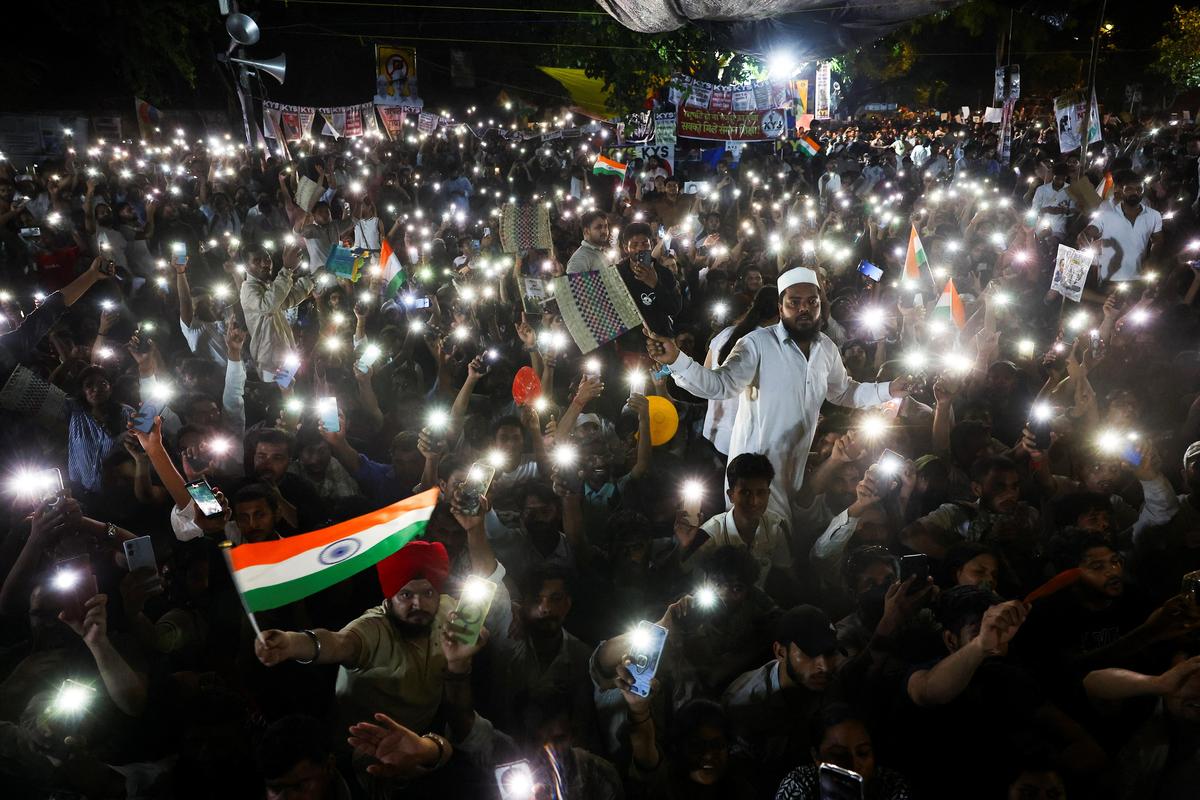
As the protesters approach Parliament, they carry with them more than slogans. They carry the accumulated energy of nights spent refusing to disperse, insisting that questions about the future of education deserve more than temporary attention. Whatever the immediate political response, today’s march stands as evidence that sustained civic engagement—not momentary outrage—remains one of the most powerful expressions of democratic participation.










**A moving reminder that democracy is sustained not only inside Parliament but also by citizens who refuse to give up outside its gates. Powerful, humane, and deeply relevant.**