

Sold as E20, Testing at 31.2%: Karnataka Puts Fuel Accountability Under Scrutiny

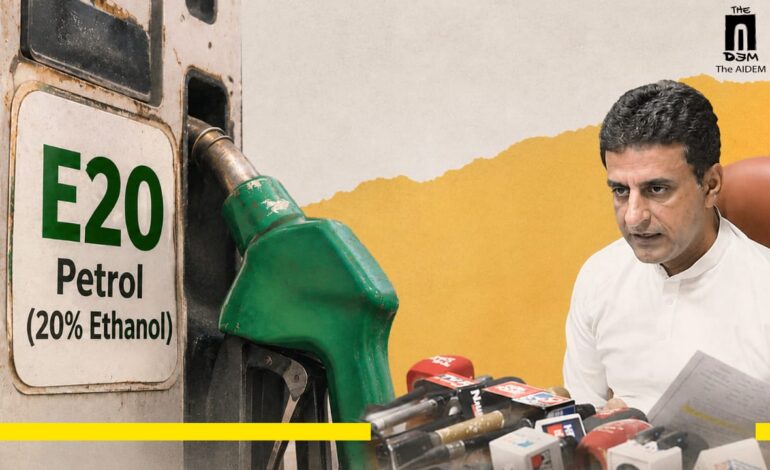
Petrol sold as E20 contained as much as 31.2 per cent ethanol, according to laboratory findings released by the Karnataka government on November 6. The allegation raises a serious question of consumer protection: whether motorists are receiving the fuel they are told they are buying, and who bears responsibility if the blend exceeds the specified standard.
Food, Civil Supplies, Consumer Affairs and Legal Metrology Minister Rizwan Arshad sought action against suppliers found violating blending norms and compensation for affected vehicle owners. Indian Oil Corporation, Bharat Petroleum and Hindustan Petroleum have rejected the findings, questioning the sampling and testing procedures. The dispute now requires a public, verifiable examination of the evidence.
Karnataka collected 63 samples from seven districts: Bengaluru, Kolar, Chikkaballapura, Bengaluru Rural, Ramanagara, Mangaluru and Tumakuru. According to the state’s account, 14 samples underwent laboratory testing, with 11 recording ethanol content above 20 per cent. These findings concern the samples tested; they do not establish the extent of any excess blending across the wider fuel supply network.
The state reported the highest reading, 31.2 per cent, in an Indian Oil sample, followed by 30.5 per cent in an HPCL sample. Other readings included 27 per cent for HPCL, 26.5 per cent for BPCL Speed, 26.1 per cent for Nayara and 25.5 per cent for Shell.
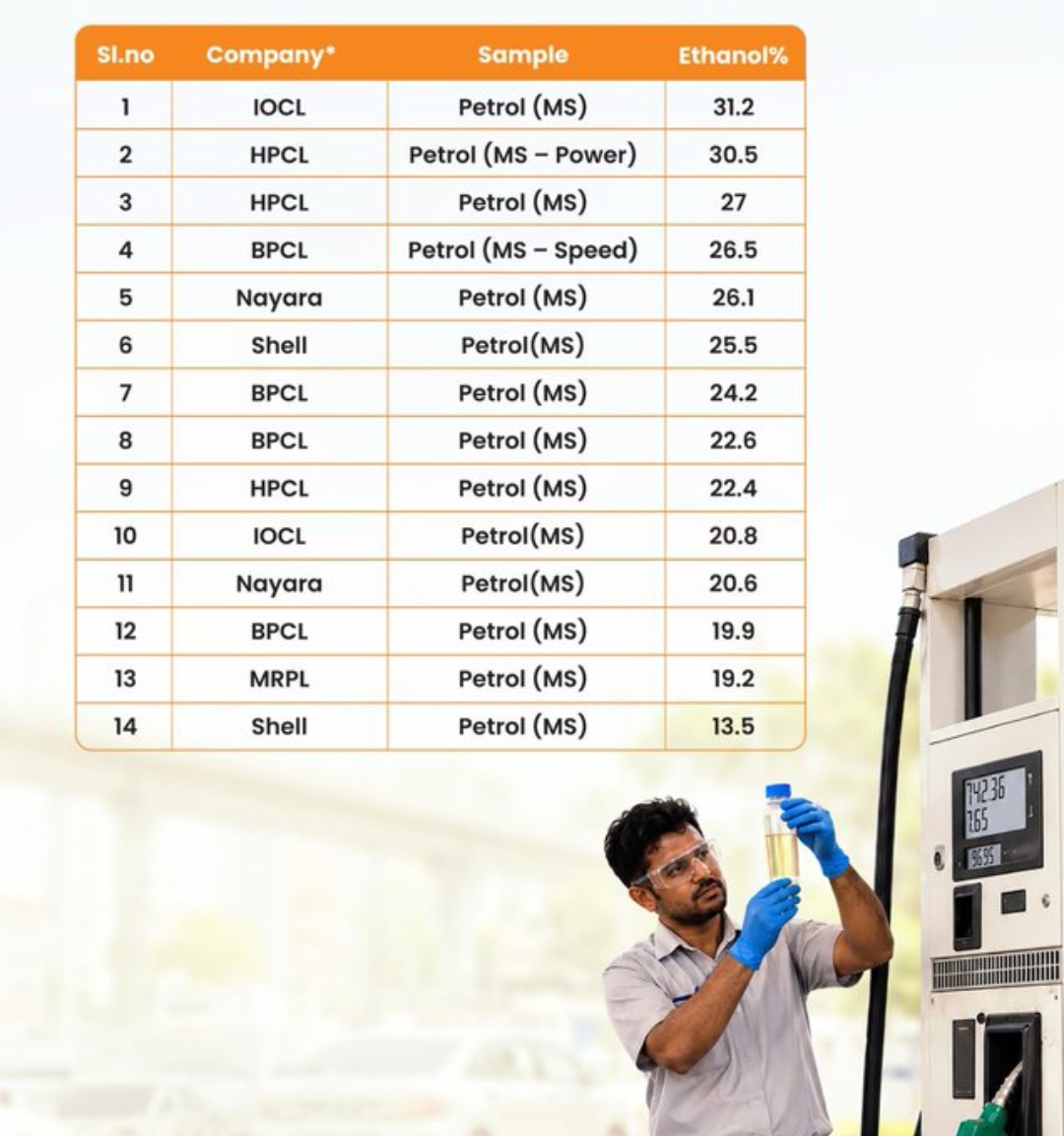
If confirmed through the prescribed testing process, these higher readings would represent substantial departures from the E20 specification. They would require an explanation of how the fuel passed through blending, distribution and retail quality checks.
The government said the testing followed complaints about falling mileage and recurring repairs. It alleged that initial reports from the in-house laboratories of Indian Oil and BPCL did not disclose ethanol content, prompting testing at Bengaluru’s Shriram Research Institute using gas chromatography. The state also raised concerns about vehicle compatibility, warranty protection and the suitability of dispensing equipment. These claims require supporting technical evidence alongside the fuel test results.
The oil companies’ response identifies issues that must be resolved before the reported concentrations can be treated as conclusive. In their joint statement, Indian Oil, BPCL and HPCL said their E20 fuel complied with the Bureau of Indian Standards specification, which permits ethanol content between 19 and 21 per cent. A reading marginally above 20 per cent therefore does not, by itself, establish a violation.
The companies said they had not received counterpart samples, complete outlet details or the laboratory documentation needed to verify Karnataka’s findings. They also questioned whether the certificates adequately identified the prescribed testing method and sought joint sampling and retesting. Those objections deserve examination, just as the state’s results deserve scrutiny.
The immediate requirement is straightforward: Karnataka should publish the complete reports and sampling records, and the companies should cooperate in independently verifiable testing. The Centre should ensure that the process produces findings consumers can examine, with responsibility fixed wherever a breach is established.
Karnataka has also estimated an annual consumer burden of approximately ₹1.01 lakh crore, comprising ₹62,000 crore from mileage losses and ₹39,000 crore in repairs. These figures are projections, not an independently established assessment of damage caused by excess ethanol blending. The companies have challenged their evidentiary basis, including the repair-cost calculation. (theweek.in)
Compensation policy nevertheless needs a clear answer. The state has proposed an “E20 spoilage fund”, with vehicle damage certified by authorised service centres and claims settled within a defined period. It has also demanded disclosure of ethanol percentages at petrol stations and a choice of suitable fuel blends.
Motorists should have a practical way to establish whether fuel caused damage, determine who is liable and obtain compensation. Leaving individual vehicle owners to negotiate separately with dealers, manufacturers and oil companies would make accountability difficult even where a valid claim exists.
Karnataka has sought explanations from Union Ministers Nitin Gadkari and Hardeep Singh Puri. That demand should lead to disclosure of the evidence, credible retesting and enforceable remedies. Consumers pay for a specified product at the pump; ensuring that they receive it is a basic obligation of suppliers and regulators.










Selling petrol as E20 while laboratory tests reportedly detect ethanol levels as high as 31.2% raises serious questions about consumer safety, corporate accountability and regulatory failure. Oil companies cannot simply dismiss these findings, nor can the government stop at making allegations. Consumers deserve transparent, independent testing, clear fuel-quality disclosures and proper compensation for proven losses. When citizens pay for a promised standard, accountability is not optional. Public trust cannot be sacrificed at the fuel pump.