

The Curious Case of Zuckerberg and the Fall of the American Dream: Is Meta Dying, or in an Existential Funk?

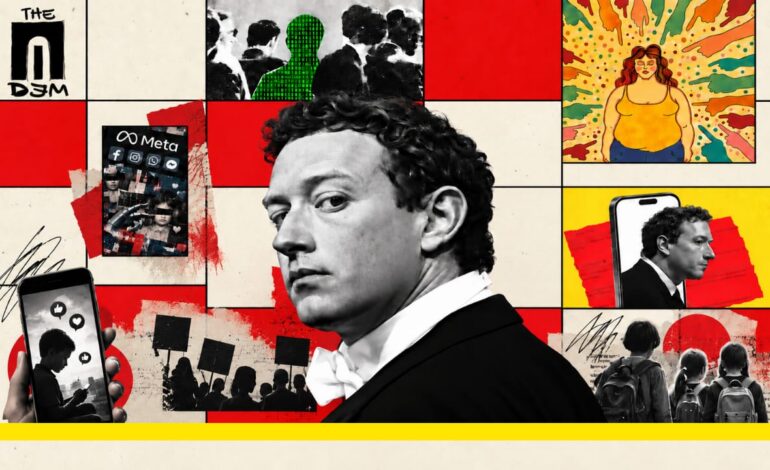
“He had come a long way to this blue lawn, and his dream must have seemed so close that he could hardly fail to grasp it.” — The Great Gatsby by F. Scott Fitzgerald.
An uncanny parallel exists between the fictional, hopeless romantic Jay Gatsby and the slightly emotionally stunted tech mogul Mark Zuckerberg. Both came from humble backgrounds; one made his way to the top through bootlegging and the other through a sober, albeit fast-paced, college networking project from his Harvard dorm room. The undisputed poster boys of the so-called “American Dream”. Gatsby has woken up from his reverie only to find himself shuffled off this mortal coil into the unknown; and as far as Mark goes, he is very much living the American Dream, or is he nearing the end of his premium subscription to it? Are there occasional nightmares hijacking and breeding on his blissful vision? Wouldn’t that be an encroachment upon his privacy?

It’s quite a paradox to club Zuckerberg and privacy in one sentence. Guess this time Mark forgot to get his personal documents checked, a course of action he and his company, Meta, have themselves been violating these days. It’s eerie that the 21st century gave Zuckerberg his biggest break, making him the youngest self-made billionaire, and that the same century is now shaking the foundations of his ivory throne. Are we on a ride to witness the tech giant’s colossal fall?
Is Meta Dying? The BBC Breakdown
A recent episode of the BBC’s The Global Story, titled “Is Meta dying?”, raises a question that is more complicated than the fate of Facebook itself. Meta might be losing some of the cultural dominance Facebook once enjoyed. Still, the more important question is what happens to a company whose influence has already extended far beyond a single social-media platform. The discussion features Reuters journalist Jeff Horwitz, who is particularly significant in light of the Facebook Files — a trove of internal documents reported on by The Wall Street Journal, based on documents leaked by whistleblower Frances Haugen, that revealed appalling details about what Meta knew about the detrimental effects its platforms have on their users — and the upcoming 2026 film The Social Reckoning, which draws on Horwitz’s investigative reporting on the Facebook Files. The files shift the debate from controversial content to a deeper question about the platform’s architecture and how far its moral compass has corroded.
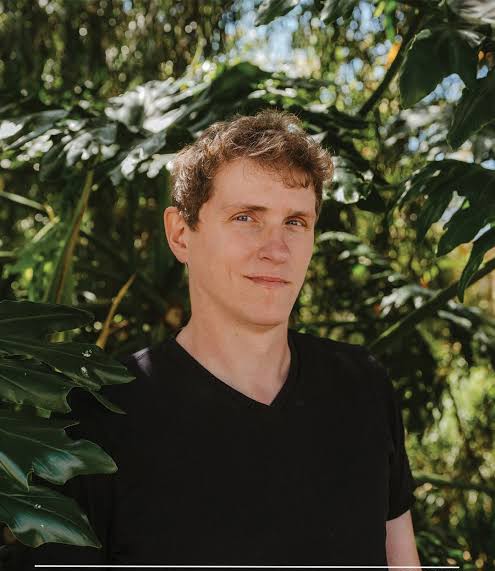
The conversation between Tristan Redman, the host of The Global Story, and Jeff Horwitz highlights Meta’s troubling intentions. The company has known about the harmful effects of its flawed design for a long time but still chose to “go with what the algorithm demands”. Instead of implementing policies to counter the dangerous technology that harms young people’s lives and to dismantle the perilous tech worms gorging on youngsters’ lives, Meta has continued on its current path. Horwitz, through his conversation, highlights how various strands of internal research pointed to the treacherous after-effects Facebook and Instagram have on their users, especially among the young, who often get worked up seeing size-zero models and borderline anorexic lifestyle influencers, creating in them an unnecessary need to compare themselves with others and strive to meet unrealistic beauty and lifestyle goals.
The Facebook Files (2021) indicate that the issue revolves around attention. Meta’s platforms compete not just for users, but also for their time, reactions and behavioural data. A system can analyse every scroll, like, share and pause to predict what will keep a person engaged. This constant pursuit of attention on Meta’s platforms doesn’t just influence what people think; its algorithms help determine what content becomes visible enough to be considered and discussed. This nurtures an attention-seeking generation eager to bolster its sense of superiority. According to The Wall Street Journal, Meta’s own studies showed that teenagers blamed Instagram for increased levels of anxiety and depression.
Take a look at the undeniable findings from The Wall Street Journal, presented below.
- A 2019 internal presentation reportedly acknowledged that Instagram was worsening body-image concerns for one in three teenage girls.
- A 2020 study found that 32% of teenage girls surveyed said Instagram made them feel worse when they were already struggling with concerns about their bodies.
- The research further indicated that 13% of UK teenagers and 6% of US users surveyed linked suicidal thoughts to their experiences on Instagram.
- Over several years, Instagram carried out focus groups, online surveys and diary-based studies to examine how its platform affected users.
- In 2021, the company undertook a large-scale study involving tens of thousands of people, combining users’ self-reported experiences with Instagram’s own data on their time spent on the platform and the content they viewed. (BBC)
Zuckerberg and the Chinks in His Armour
“To photograph is to appropriate the thing photographed.” — Susan Sontag (On Photography, 1977)
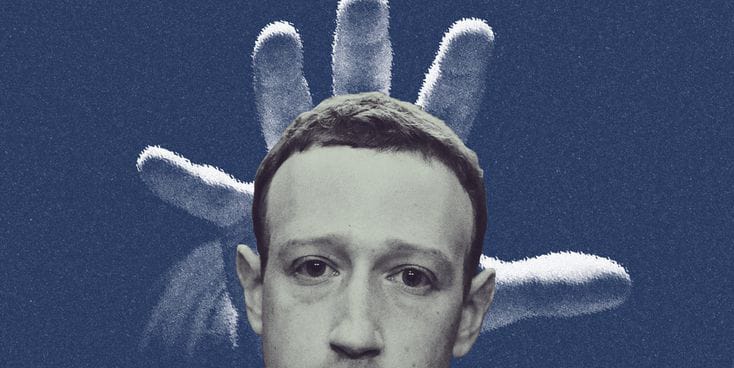
The final nail in the coffin for the whiz kid, his company Meta and its platforms such as Instagram and WhatsApp, as well as the “on the road to being uncool” Facebook, is that the parent company, Meta, permitted its AI chatbots to engage in “romantic” and “sensual” conversations with children. According to journalist Jeff Horwitz, an internal Meta policy document allowed chatbots to engage in provocative behaviour towards minors. The document, titled “GenAI: Content Risk Standards”, is more than 200 pages long and lays out the boundaries for chatbot behaviour as Meta develops and trains its generative AI systems. What is more shocking is that the company’s legal, public policy and engineering teams, including its chief ethicist, approved the guidelines.
But the standards come with a caveat: they do not necessarily represent what Meta considers “ideal or even preferable” AI behaviour. Yet, the rules have nevertheless allowed Meta’s chatbots to engage in provocative and potentially problematic interactions.
Adding fuel to the fire, in September 2026, an investigation by the Tech Transparency Project exposed a disturbing blind spot in Meta’s digital ecosystem: more than 350 AI-generated advertisements containing child sexual abuse material were identified across Facebook, Instagram and Threads. Researchers found that some of the images had been generated using photographs of real children, transforming otherwise ordinary pictures into sexually explicit material without the subjects’ consent. The advertisements promoted so-called “nudification” applications that could digitally alter images, and some reportedly remained on Meta’s platforms even after being flagged. What makes the findings particularly troubling is not simply the technology being abused, but the ease with which such exploitation could reportedly be advertised and circulated within platforms used by millions of children and families.
This disturbing recontextualisation of children’s photographic images, transforming happy memories into grotesque versions, breaches the politics surrounding identity and body-image representation.
The Good, The Bad and The Ugly
In Mythologies, Roland Barthes argued that modern societies transform historical events and cultural objects into myths. A myth does not necessarily mean an old wives’ tale; rather, it takes something historically specific and makes it seem natural, inevitable and almost timeless. This is precisely what happened with Zuckerberg and Facebook. A website created by a Harvard student became the talk of the town, turning his life upside down for good. His business became nothing short of a revolution that changed the course of the early 21st century. Fast forward to today Mark Zuckerberg is still a genius, still filthy rich, and has become even more of a cultural phenomenon, but not everything is as fairytale-like as it was in his early days.
Zuckerberg’s cultural image has transformed significantly, evolving from an outsider to an established institution in his own right. Initially, he was viewed as the saviour of Silicon Valley, the awkward, nerdy knight in shining armour, someone capable of challenging established institutions, disrupting industries and creating entirely new perspectives. The movie The Social Network (2010) captures this flattery: directed by David Fincher and written by Aaron Sorkin, it stars Jesse Eisenberg as Mark Zuckerberg and Andrew Garfield as co-founder Eduardo Saverin.
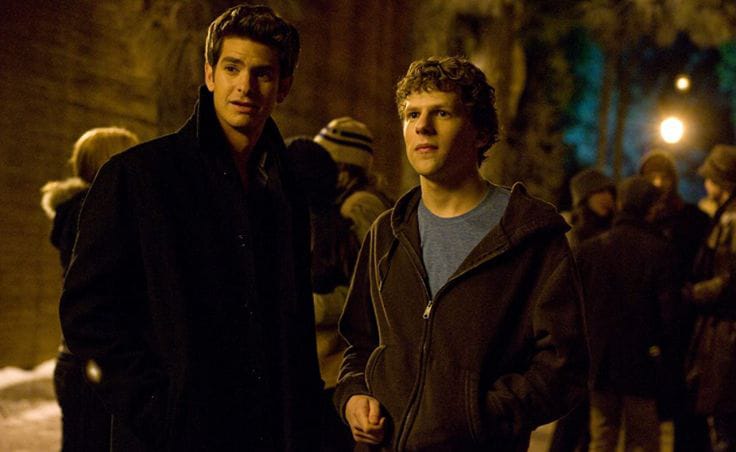
The movie’s narrative structure is very sympathetic to Mark Zuckerberg, played by Jesse Eisenberg. It invites the audience to root for him, presenting a visual story that unfolds theatrically. We are encouraged to give the socially awkward, intellectual loner a chance. Eisenberg portrays Zuckerberg as a classic tragic hero: the perfect underdog who, despite his struggles, can create a new, prosperous life for himself.
Sixteen years later, the trope of the hardworking underdog-turned-billionaire has bent disastrously into that of an insensitive, villainous, robotic tech magnate through the movie The Social Reckoning, an upcoming 2026 American film scheduled to be released on October 9. Written, co-produced and directed by Aaron Sorkin, and a sequel to The Social Network (2010), it dramatises the 2021 Facebook leak by whistleblower Frances Haugen (played by Mikey Madison) and Jeff Horwitz (played by Jeremy Allen White). The film stars Mikey Madison, Jeremy Allen White, Jeremy Strong, Bill Burr, Betty Gilpin and Billy Magnussen.

If the Facebook Files exposed the internal anxieties of Meta through leaked corporate documents, Sarah Wynn-Williams’s memoir Careless People offers a different kind of access: the perspective of someone who was once part of the machinery itself. A former Facebook executive who worked in global public policy, Wynn-Williams presents the company not simply as a technology business but as an institution whose extraordinary power gradually became difficult to separate from the personalities, ambitions and internal culture of those who controlled it.
The narrative shift is further substantiated when she mercilessly depicts Zuckerberg as a “Tech-bro Henry VIII, a thin-skinned, angry child whose courtiers let him win at the board game Settlers of Catan during flights on his private jet”. Meta is not a monarchy, of course. It has a board, shareholders, executives and formal governance structures. Yet the comparison captures something about the concentration of influence that can develop around a founder who retains enormous voting power and has remained central to the company’s strategic direction for more than two decades.
The Last Dance?
Meta being in the business of bootlegging addictive content to its users is not nearing its deathbed anytime soon; sure, its cultural capital in terms of its platform Facebook is in a wreck. But Meta being Meta would definitely come up with newer crooked ways to tie its audience in the limbo loop of fixation. Even after losing a landmark legal battle over allegations that its platforms were engineered to foster addictive patterns of use, Meta shows little sign of abandoning its pursuit of deeper user engagement.
The company’s Chief Financial Officer, Susan Li, recently told investors that it is deploying artificial intelligence to encourage users to spend more time watching videos and engaging with content. The strategy reflects a familiar logic at Meta: when attention becomes the currency, every technological innovation can become another mechanism for capturing it. Whether these AI-driven experiments succeed, however, remains uncertain. Given Meta’s long history of ambitious and sometimes costly initiatives that failed to live up to expectations, some of its latest ideas may eventually join the company’s growing catalogue of abandoned experiments.

Perhaps Zuckerberg’s greatest achievement is also his greatest problem. He built a company so large that escaping its consequences is impossible. The relentless quest towards the American Dream gave him Facebook. Facebook gave him Meta, and Meta ultimately gave him AI. And the very AI that he helped formulate is now putting him on the spot, demanding answers to uncomfortable questions.
What should technology be allowed to do to human beings simply because it can?
And perhaps that is why The Great Gatsby remains such an appropriate companion text for the Zuckerberg story. Gatsby looked across the water at a green light, believing that the future was always just one more step away. Zuckerberg has spent his lifetime building that future.

Now he has to confront what kind of future he has actually built — and whether the people living in it still want to stay.
Watch BBC’s The Global Story- Is Meta Dying? Podcast here





This is a sharp and unsettling look at what happens when technological power grows faster than its sense of responsibility. Zuckerberg’s journey from the symbol of the American Dream to the face of an increasingly controversial tech empire exposes a deeper crisis—not simply whether Meta is dying, but whether the digital future it is building is worth living in. When attention, data and algorithms become the real currency, the biggest question is no longer what technology can do, but what it should be allowed to do to society. A thought-provoking piece that goes far beyond Zuckerberg and puts the entire tech-power model under scrutiny.