

The Great AI Buildout: A Race for Capital, Energy and Control

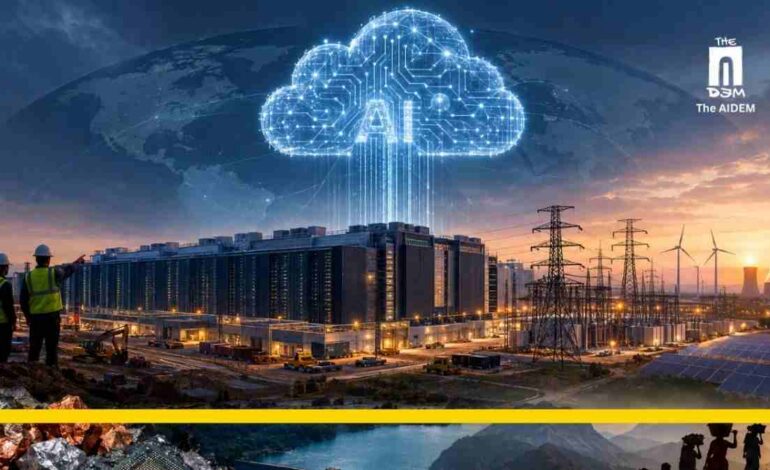
Generative AI is like magic. With a few prompts, much like incantations, we can conjure up instant text, images and videos from thin air. However, this lightweight experience conceals a massive physical reality. A vast material infrastructure built from minerals, microchips, data centres, energy, water and human labour lies behind the magical facade. This is not a new phenomenon. For decades, the physical foundation of information technology – compute, storage, and networking – remained hidden behind an abstract world of software, algorithms, and the “cloud”. This separation was an essential aspect of the tech industry’s highly successful financial model: asset-light software that carries the promise of spectacular returns on the top and capital-intensive hardware as the unglamorous but essential engine room of the business at the bottom.
Even though it is essentially software, AI wrecks this division. It operates with a far heavier cost structure than conventional software. It consumes immense computing power and energy throughout its lifecycle: first to train models on vast computing clusters, again every time a response is produced, and continually to refine and update the system. Every generated text, image, and video has a direct material price. As a result, the race for market leadership has evolved from a battle of algorithms into one of the most investment-heavy industrial expansions in the history of technology. The magic of generative AI now rests on a vast physical architecture whose economic footprint can no longer be disguised. This is one of the key characteristics of the current AI boom that distinguishes it from the previous phase of digital capitalism.
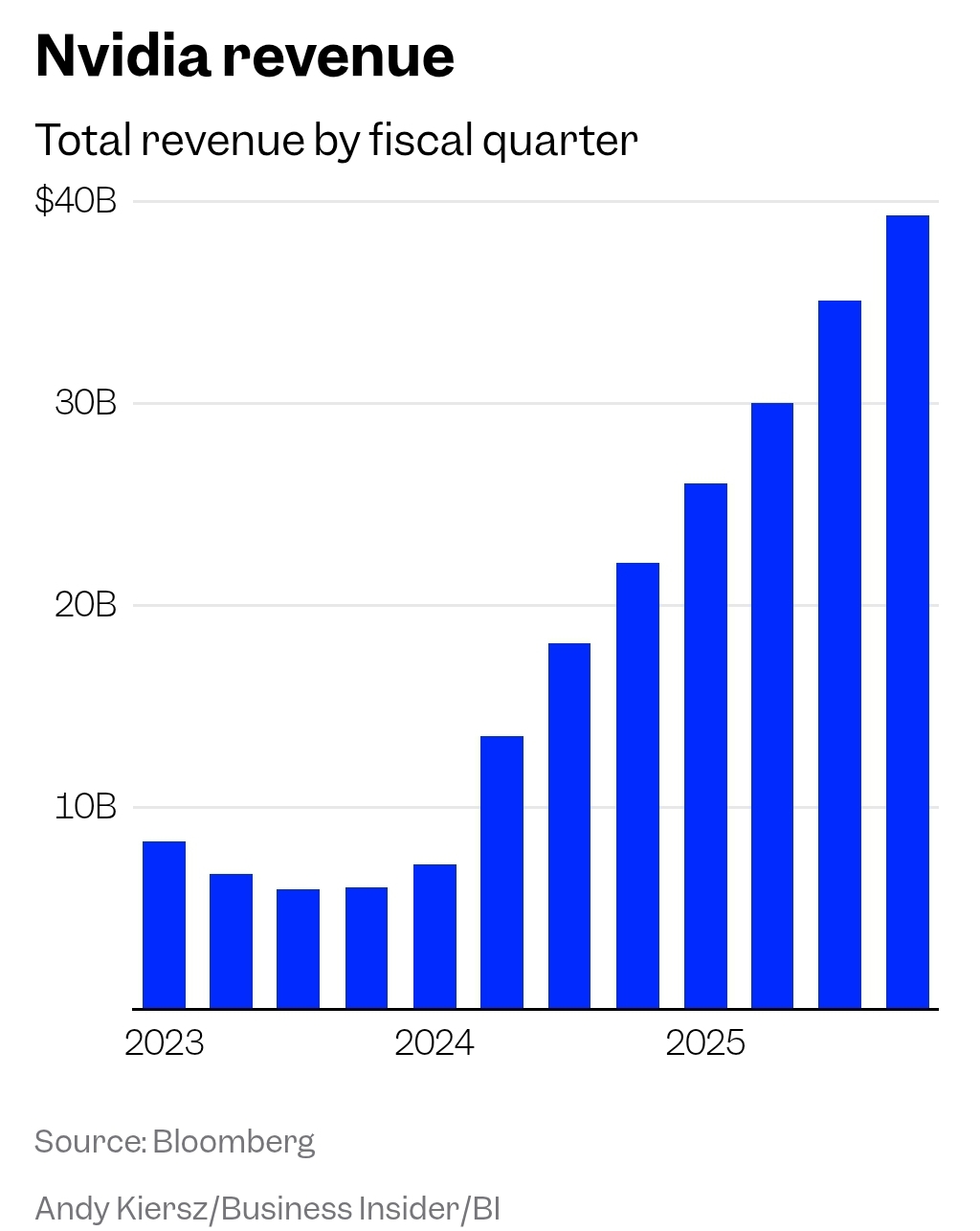
Here lies a central paradox of the AI boom: a technology celebrated as the triumph of the virtual is rapidly turning Big Tech into heavy industry. Tech giants and nation-states are pouring billions into physical infrastructure years ahead of proven commercial returns. Chipmaker Nvidia’s rise to become one of the world’s most valuable companies is perhaps the most striking expression of this infrastructure boom. It was little known outside the technology and gaming worlds only a few years ago.
The bet is that soaring AI use and its emergence as a powerful productive force and instrument of control will eventually justify this staggering outlay. That may well happen. But whether it can generate returns commensurate with the investment remains uncertain. Globally, meanwhile, AI increasingly resembles a traditional extractive industry: wealth, intellectual property and control are concentrated in a few corporate hubs, while its material and environmental costs are displaced elsewhere.
The Capex Imperative
The scale of the investment is difficult to grasp. In 2022, before the generative AI race began in earnest, Amazon, Microsoft, Alphabet and Meta spent a combined $146 billion on capital investment. By 2025, their combined spending reached roughly $356 billion. Their announced plans initially pointed towards roughly $650 billion in 2026, with subsequent revisions pushing estimates still higher. The International Energy Agency (IEA) says the combined investment of five leading technology companies now exceeds worldwide capital expenditure on oil and gas production.
Even these figures do not reveal the full magnitude of the wager. Reported capital expenditure captures only what is spent today, not spending already committed for future years. By some estimates, the world’s tech giants have already tied up nearly $1.5 trillion in long-term spending commitments to fuel the AI race. The sheer scale of these obligations is staggering. Alphabet reports $811 billion in purchase commitments and other contractual obligations, related to technical infrastructure, inventory, energy and content contracts. Meta reports roughly $349 billion in non-cancellable contractual commitments and another $279 billion in leases that have not yet commenced, while Oracle has approximately $260 billion in future lease commitments.
Computing capacity is no longer a routine business input that can simply be purchased when needed. It has become a strategic resource to be secured years in advance. Microsoft’s gross property and equipment rose from $134 billion in June 2022 to nearly $432 billion four years later. Companies valued for their asset-light economics are becoming owners of buildings, servers, networks and power infrastructure. The balance sheets of software empires are beginning to resemble those of industrial conglomerates.
Even so, the resemblance hides an important difference. A conventional factory or power station can remain productive for decades. But an advanced AI processor may lose much of its economic value within a few years. In its FY26 second quarter earnings call, Microsoft said that roughly two-thirds of its capital spending had gone towards short-lived assets, principally CPUs and GPUs. This makes the AI business look like a fusion of the extreme financing demands of heavy industry with the rapid obsolescence cycle of consumer electronics.
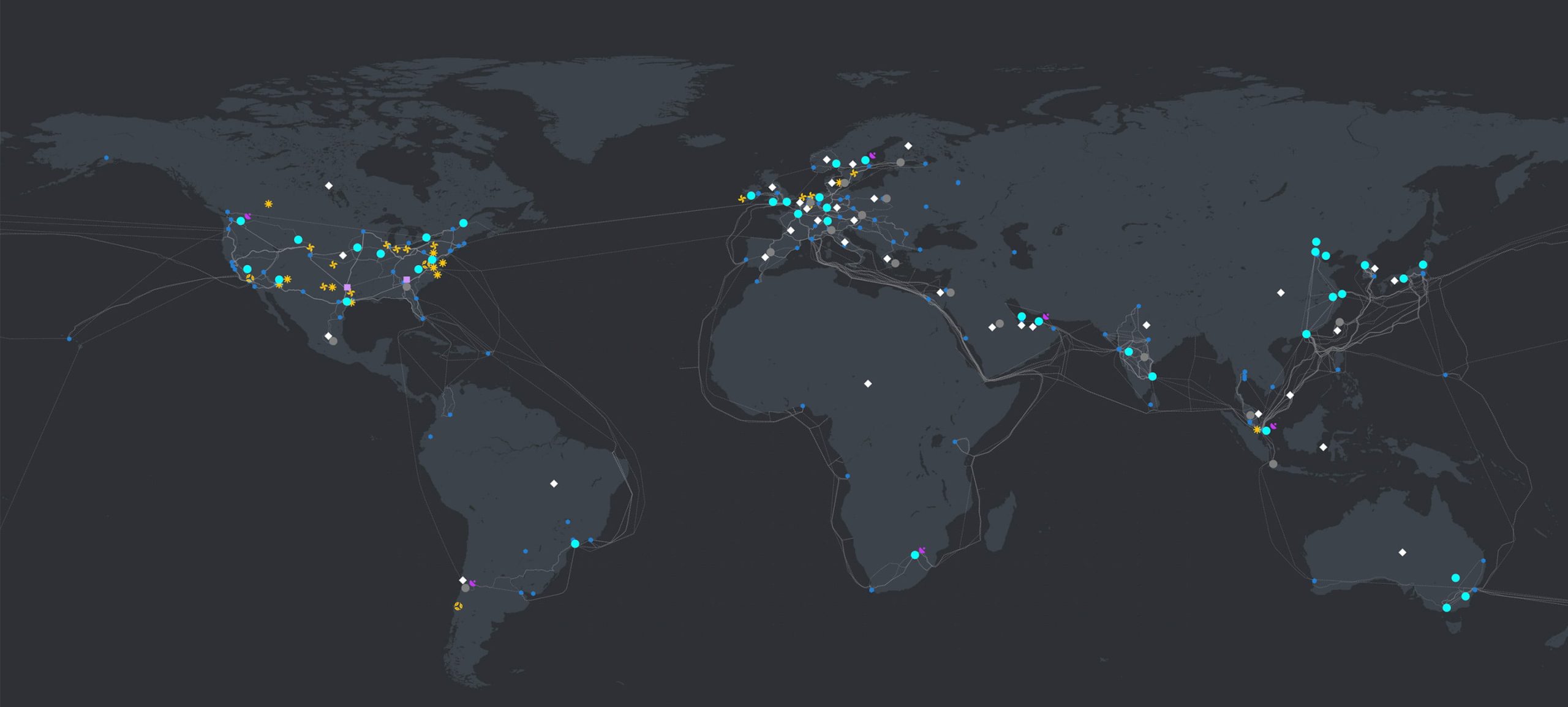
The boom spreads far beyond Silicon Valley. Every order for GPUs creates demand for TSMC fabrication, high-bandwidth memory, optical networks, liquid-cooling systems, transformers, and new generating capacity. As the supply chain stretches, the infrastructure race is going global. Spurred by sovereign ambition and the hunt for cheap resources, states and conglomerates are pouring billions into securing their slice of global compute. China leads this state-directed drive and is considering a $295 billion programme to connect domestic computing hubs powered by homegrown silicon while its tech giants spend over $70 billion on infrastructure this year alone. Across the Atlantic, European leaders, seeking to loosen the grip of American cloud giants, have launched the €200 billion InvestAI initiative.
Emerging economies and energy barons are following suit. They want to convert natural resources directly into computing power. In India, the Adani Group has pledged $100 billion for renewable-powered AI facilities, and in the Middle East, Abu Dhabi is channelling oil revenues into a massive five-gigawatt campus. In Southeast Asia, Johor in Malaysia has emerged as a regional magnet, absorbing data centres priced out of land-starved Singapore.
Electricity Becomes the Bottleneck
Advanced chips defined the first phase of the generative AI boom. Electricity is defining the next. “There is no AI without energy – specifically electricity,” warned Fatih Birol, executive director of the IEA, at a global summit last year. In a recent report titled “Key Questions on Energy and AI”, the agency estimated that global data centre electricity consumption reached about 485 TWh in 2025 and could almost double to 950 TWh by 2030.

Data centres would still account for only around 3 per cent of global electricity use, but this figure conceals the immediate and real strain. Demand is rising very quickly and is concentrated in a small number of places. At the same time, it takes time to build power infrastructure. New transmission lines commonly take four to eight years to build, while delivery times for transformers, cables and gas turbines have lengthened sharply. According to the IEA, grid constraints could delay about one-fifth of planned data centre projects.
A single AI campus can draw as much power as an electricity-intensive factory, suddenly imposing an enormous load on a particular substation, transmission network and regional market. AI is also changing the character of electricity demand. The power density of AI servers increased elevenfold between 2020 and 2025, and it could rise another fourfold by 2027, says IEA. Training and running AI models can create rapid fluctuations unless loads are actively managed. So, data centres require active load management, exceptionally reliable supply and, in many cases, batteries and spare generating capacity.
Technological efficiency gains have done little to ease this pressure. Instead, cheaper computation simply encourages more of it. This is a digital manifestation of the rebound effect. More efficient chips may reduce the power required for each task, but those savings are quickly swallowed up as developers build larger models and AI adoption expands.
Although wind and solar capacity can be built faster than traditional power plants, their output varies with weather and time of day. Batteries can cover short interruptions. But they continue to be expensive for covering prolonged supply gaps at hyperscale demand levels. Nuclear power offers low-carbon continuity, though it takes a long time to construct and remains controversial. Fossil fuels remain the most readily available fallback. The emerging system is not a clean substitution of one energy source for another. It is a hybrid expansion of renewables, batteries, nuclear contracts and fossil-fuel generation.
Grid delays are also pushing companies to build private microgrids and on-site power plants. While this may speed up data centre construction, it creates a two-tier energy system. This allows large corporations to bypass some of the constraints of the public grid by securing dedicated power supplies, even though the grid must still be expanded and upgraded to meet growing electricity demand. As a result, households and other users may bear a disproportionate burden of the cost.
Simply put, the race for AI is turning into a struggle over the allocation of one of modern society’s most essential resources.
The New Map of Extraction
Writers such as Kate Crawford and Karen Hao have described AI as an extractive and imperial system, one built not only from algorithms but also from appropriated data, minerals, energy, water and globally distributed labour. Also, predictably, the AI economy’s substantial carbon footprint exacerbates the already difficult task of reducing global emissions. The search for cheap electricity, abundant land, and accommodating governments is rapidly redrawing the physical map of computing. Google’s €13 billion bet on Finland, anchored by a two-decade nuclear power deal, illustrates how energy availability now dictates data centre strategy.

Across global markets, data centres have transformed into a major infrastructure asset class. They draw financiers like pension funds and private credit into a fierce contest for natural resources as much as microchips. Its material and environmental costs—mineral extraction, pressure on water supplies, heavy power usage, and carbon emissions—are frequently exported to regions with weaker bargaining power or fewer regulatory protections. Far from dissolving patterns of unequal exchange, the AI economy is reproducing them in digital form.
Compounding the danger is state competition in the name of technological sovereignty. The risk is that the overcapitalised global economy will be fragmented into rival national blocs even as it remains deeply dependent on shared global resources.
The extractive geography AI boom creates its own discontents too. From Santiago and Uruguay to Ireland, the Netherlands and Virginia, residents have mobilised against data centres over their consumption of water and electricity, the transfer of infrastructure costs to the public, noise and pollution, generous tax concessions, limited permanent employment and secretive approval processes.
These campaigns have achieved some tangible results: projects have been cancelled or delayed, permits challenged, cooling systems redesigned and temporary moratoriums imposed. However, such victories often redirect projects elsewhere rather than restrain the industry. Their deeper significance lies in raising a fundamental question: who has the right to control and benefit from local resources?
The Overbuild Trap
Every new data centre breaking ground represents an audacious bet that AI adoption will grow exponentially to cover staggering costs. Recently, The Economist noted that, to break even on its physical buildout, the industry needs to increase its annual revenues from $150 billion to roughly $2.5 trillion by the end of the decade. If demand falters, the tech sector will face a classic overbuild. Even more unsettling is the fact that AI does not need to fail for the investment to fail. Algorithmic breakthroughs could sharply reduce computing needs, cutthroat competition could crush margins, and enterprise customers may refuse to pay premium prices.
China’s emergence as a major player makes this risk impossible to ignore. US export controls, designed to restrict Beijing’s access to advanced processors, have forced Chinese tech firms to squeeze more performance from the hardware available to them. Companies such as DeepSeek, Alibaba and Moonshot have demonstrated the potential to build high-quality models at substantially lower costs than many Western counterparts. This does not mean China is pulling back on infrastructure; it is pursuing extreme efficiency and massive capacity simultaneously. If this competition allows top-tier AI to run on fewer chips and at lower prices, Western hyperscalers could face a brutal double squeeze: reduced demand for raw compute and falling prices for AI services.
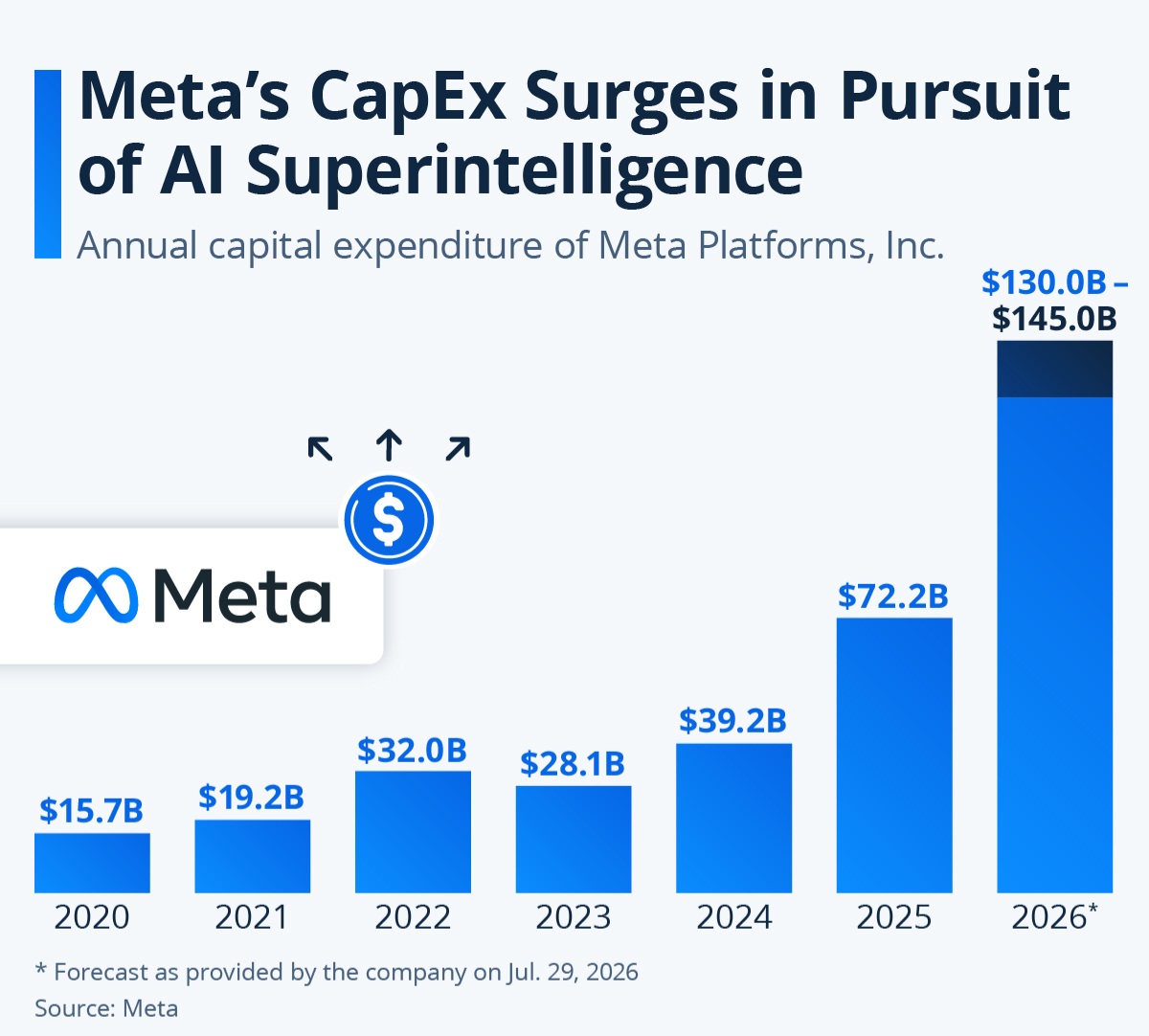
Still, retreat is not an easy option for the hyperscalers, unless, of course, they all agree to slow the pace under some pretext. Mark Zuckerberg described the gamble with remarkable candour: “If we end up misspending a couple of hundred billion dollars, I think that that is going to be very unfortunate.” But, he immediately added, “The risk is higher on the other side.” If Meta builds too slowly and superintelligence arrives sooner than expected, he argued, the company could find itself hopelessly out of position. None of the hyperscalers can afford to freeze capital outlays while rivals keep laying concrete. To pause is to risk forfeiting market share, talent and technological dominance. For each company, continuing to build appears safer than falling behind. Collectively, however, that logic propels the industry towards excess capacity and poor returns.
This dynamic echoes a broader contradiction in capitalism identified by Karl Marx long ago. Competition compels each company to accumulate ever greater quantities of fixed capital in pursuit of technological advantage. But once its rivals do the same, that advantage diminishes, while the growing stock of fixed capital must compete for uncertain profits. It means that even if it achieves spectacular success, the value of a part of the capital accumulated in anticipation of that transformation may be destroyed.
In their 1966 work Monopoly Capital, Marxist economists Paul Baran and Paul Sweezy argued that mature monopoly capitalism generates more economic surplus than it can profitably absorb through productive investment. This creates an inherent tendency toward stagnation. It can be temporarily counteracted through various mechanisms of surplus absorption, including advertising, militarism, government spending and, at certain historical moments, transformative technological innovation. In the 21st century, AI has become just such a stimulus, capable of organising an entire investment cycle around itself and temporarily counteracting the economy’s underlying tendency toward stagnation. The current AI build-out absorbs surplus by opening vast new outlets for accumulated capital in physical infrastructure: chips, data centres, energy systems, fibre networks and industrial real estate. But surplus absorption does not guarantee profitable returns. The same investment boom that postpones stagnation may eventually result in renewed overaccumulation in the form of massive productive capacity unable to earn the returns expected of it.
The danger becomes systemic because the investment boom extends far beyond Big Tech’s balance sheets. AI infrastructure is increasingly financed through debt markets, special-purpose vehicles and private-credit funds, spreading exposure across the global financial system. Circular investments add another layer of vulnerability: technology companies fund AI firms that, in turn, spend heavily on their investors’ products and services. If expected demand and revenues fail to materialise, these interdependencies could amplify the losses.
Big Tech’s enormous profits and cash flows may provide a buffer against an immediate collapse. The real concern is who would be impacted by a prolonged overbuild and the crash, if and when that happens. The AI rush is drawing on credit markets, power grids and public infrastructure, while prospective gains remain concentrated among technology giants. The risks, by contrast, extend to creditors, utilities, consumers and the state. Private accumulation and socialised losses are thus being built into the physical and financial architecture of the AI boom.
A collapse of the AI boom could reverberate far beyond speculative markets. Gita Gopinath—a Harvard professor and former chief economist for the IMF—estimates that such a correction could erase $20 trillion in US household wealth—around 70% of GDP. It will sharply reduce consumption and transmit the shock through the global economy.
The Reckoning in the Clouds
Commentators have compared the AI build-out with the nineteenth-century railway mania and the fibre-optic boom at the turn of this century. Both destroyed fortunes even as the networks they created reshaped the world. AI may likewise transform society, even as a crisis of overaccumulation devalorise a significant portion of the capital invested in building its industrial base.
Furthermore, the geography of this investment boom is being shaped by a pragmatic calculus of cheap power, abundant water, physical space, advanced silicon, public subsidies and accommodating regulators. The result is not only a new map of winners but also what environmental-justice campaigners describe as “sacrifice zones”. By challenging data centres’ insatiable resource demands and meagre local benefits, communities are turning a seemingly technical question into a democratic struggle over the allocation of scarce resources such as electricity, land and water.
These two contradictions reveal the fragile financial and social foundations beneath AI’s technological promise. The real question, then, is not simply whether AI will fulfil that promise, but who controls the industrial order being constructed beneath it and who bears its immense costs?
Because, if the “cloud” bursts, the reckoning will not be light.










This is a powerful look beneath the “magic” of AI. The real AI race is no longer just about algorithms—it is about capital, chips, electricity, water, land and control. As Big Tech builds an enormous physical infrastructure to secure technological dominance, the crucial question is who benefits from this expansion and who ultimately pays its economic, environmental and social costs. Ajith Balakrishnan rightly exposes the uncomfortable reality behind the cloud: when private profits depend on public resources, the risks cannot remain private.