

The Sacred Cow and the Empty Market: How Beef Ban Politics is Hurting India’s Farmers

The political campaign to ban beef slaughter in India is described by its supporters as the protection of a sacred animal. What it actually protects is no one’s interests—least of all those of the Hindu farmers who raise the cattle, depend on dairy income for their survival, and have no way to dispose of animals that have stopped producing milk. The ban is a gift to ideology and a catastrophe for agriculture.
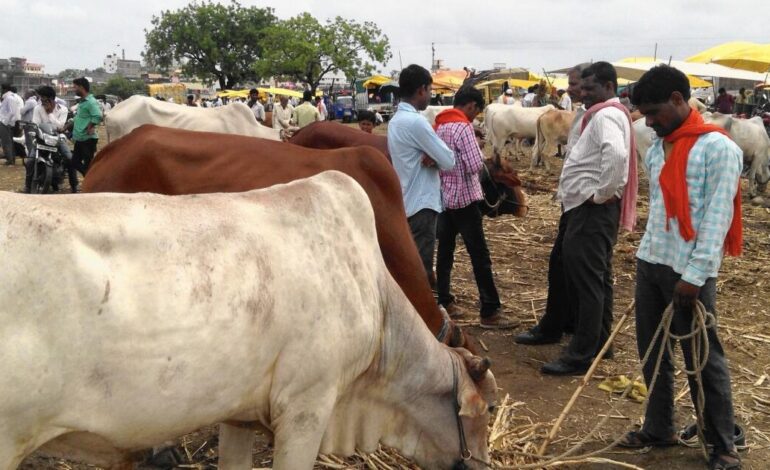
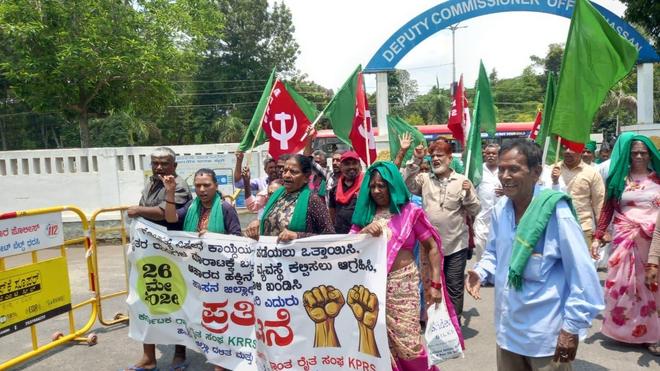
On Tuesday, the twenty-fifth of May, 2026, farmers arrived at the cattle market in Hassan district, Karnataka, having paid to truck their animals in from surrounding villages. They arrived expecting to sell. The traders did not come. The farmers found themselves standing in an empty market with cattle they could not sell and, in many cases, without the money to truck the animals back home. Some sat down in protest in the market lanes. Others made phone calls. None of it helped.
The animals stood in the heat and the farmers sat beside them, and the market that is supposed to connect one to the other had simply stopped functioning.
The same week, in West Bengal, Muslim communities preparing for Bakrid announced that they would not be slaughtering cattle for the festival. The decision—whether voluntary, in deference to political pressure, or the result of intimidation—did not matter much to the Hindu farmers who had brought cattle to market expecting to sell to the traders who supply that demand. The traders did not appear. The farmers went home without the income they had counted on.
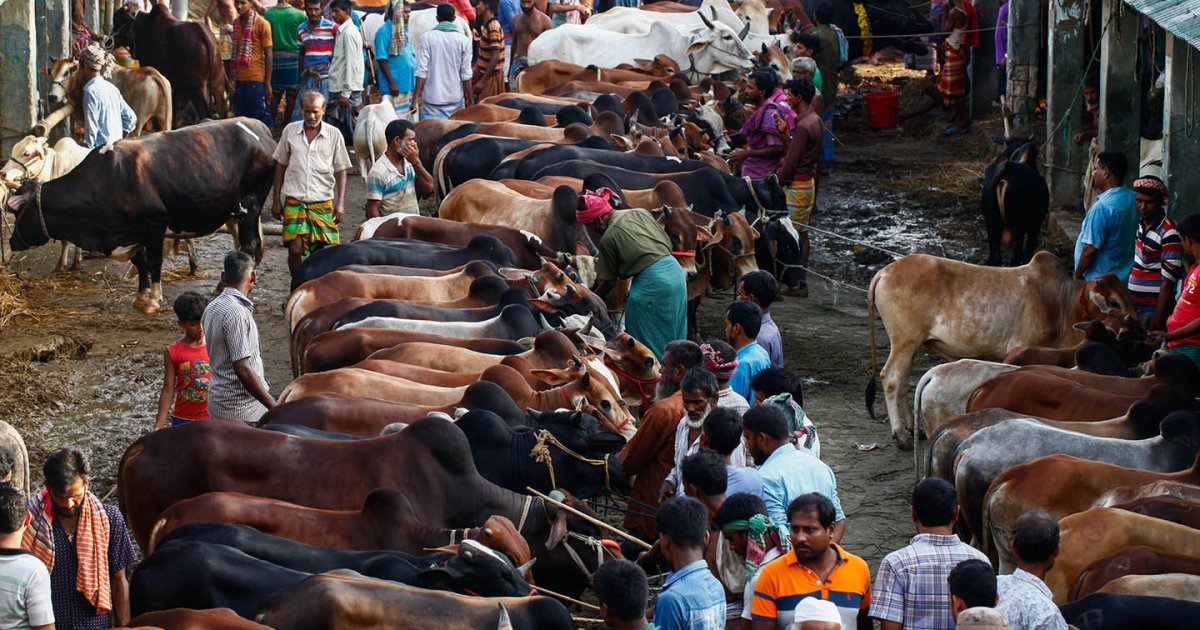
These are not isolated incidents. They are symptoms of a structural crisis that has been building for years across the Hindi belt and is now spreading, with the particular slowness of economic damage, into southern India.
The crisis has a political cause—the campaign to restrict, prohibit, or effectively eliminate the slaughter of cows in India—and an economic logic that its architects appear not to have considered, or to have considered and set aside as less important than the political signal. The people who bear the cost of this logic are, in the great irony of Indian political economy, the Hindu farmers whose religious sentiment the policy claims to honour.
The people who bear the cost of the ban are, in the great irony of Indian political economy, the Hindu farmers whose religious sentiment it claims to honour.
The White Revolution and What it Required
To understand why the slaughter of spent cattle is not a peripheral concern but a load-bearing pillar of India’s dairy economy, it is necessary to understand how that economy was built.
In 1970, the Indian government asked Verghese Kurien—the man who had built Amul into one of the country’s most successful cooperative enterprises—to extend the model nationally. Kurien, working with the resources generated by selling European surplus butter oil, designed what became known as Operation Flood: a program that established milk producer cooperatives in twenty-two states, connected rural dairy farmers to urban consumers through a unified cold chain, and paid farmers prices that made investment in productive animals worthwhile.
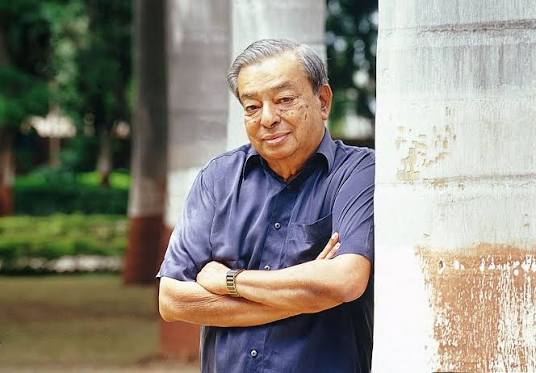
The program is credited with transforming India from a milk-deficient nation into the world’s largest milk producer—a status it holds today.
The mechanism by which Operation Flood achieved this transformation is important.
When farmers receive a reliable and remunerative price for their milk—not the arbitrary price set by a local trader who can take it or leave it, but a transparent, stable price backed by a cooperative with genuine market power—they have an incentive to invest in animals that produce more milk.
The average Indian cow produced roughly two litres of milk per day in 1970. Today, the national average is approximately eight litres. The improvement is a direct consequence of fifty years of investment in better animals, better feed, and better veterinary care, made possible by the economic security that reliable cooperative pricing provides.
In parallel, the cattle population has grown from two hundred and thirty million in 1971 to approximately three hundred million today. This growth is not coincidental. It reflects the expanding dairy sector and the viability of keeping more animals when there is a functioning market for their output.
But there is a term to this viability. A cow or buffalo produces milk after calving, at declining rates as she ages, until she is no longer economically productive. At that point—after seven to ten years of useful life—she continues to eat, to require veterinary attention, to occupy space, and to produce nothing that can be sold. The farmer who keeps her is not practicing husbandry. He is running a sanctuary at his own expense, which is to say at the expense of his family’s income and food security.
The traditional resolution of this problem—in India as in every cattle-rearing society in human history—is slaughter. The spent animal is sold to a slaughterhouse, the farmer receives a payment that offsets some of the costs of the animal’s productive years, and the animal enters the meat and leather supply chains that represent, for India, a significant and growing share of agricultural export income.
India is currently the world’s second-largest exporter of beef and the second-largest exporter of leather goods. These industries exist because the dairy sector exists, and the dairy sector generates spent animals that must go somewhere.
What the cattle slaughter restrictions do, in economic terms, is eliminate the exit valve. The farmer who cannot sell his spent cow is not, as a result, a better Hindu. He is a poorer farmer, facing the prospect of feeding an unproductive animal for years until it dies naturally, while simultaneously being unable to invest those resources in the new productive animal that would sustain his dairy income. If enough farmers face this prospect, enough of them will exit the dairy sector entirely. The cooperative that depends on their milk will find its supply contracting. The daily income that dairy provides—unique among agricultural activities for its weekly cash flow, which smooths the feast-and-famine cycle of crop farming—will disappear for the households that lose it.
The Complete Animal
Modern cattle economics does not waste the animal. This is not a euphemism or an apology; it is a description of how a mature industry functions. The beef export market handles the meat. The leather industry—in which India holds the second-largest global share—processes the hides into goods with considerably more value than the raw material. The bones, horns, and hooves supply the gelatin industry, which in turn supplies pharmaceutical manufacturing. The fat is rendered for multiple industrial uses. A functioning slaughter chain converts what would otherwise be a large dead animal into a set of revenue streams that, taken together, support a significant portion of India’s agricultural export earnings.
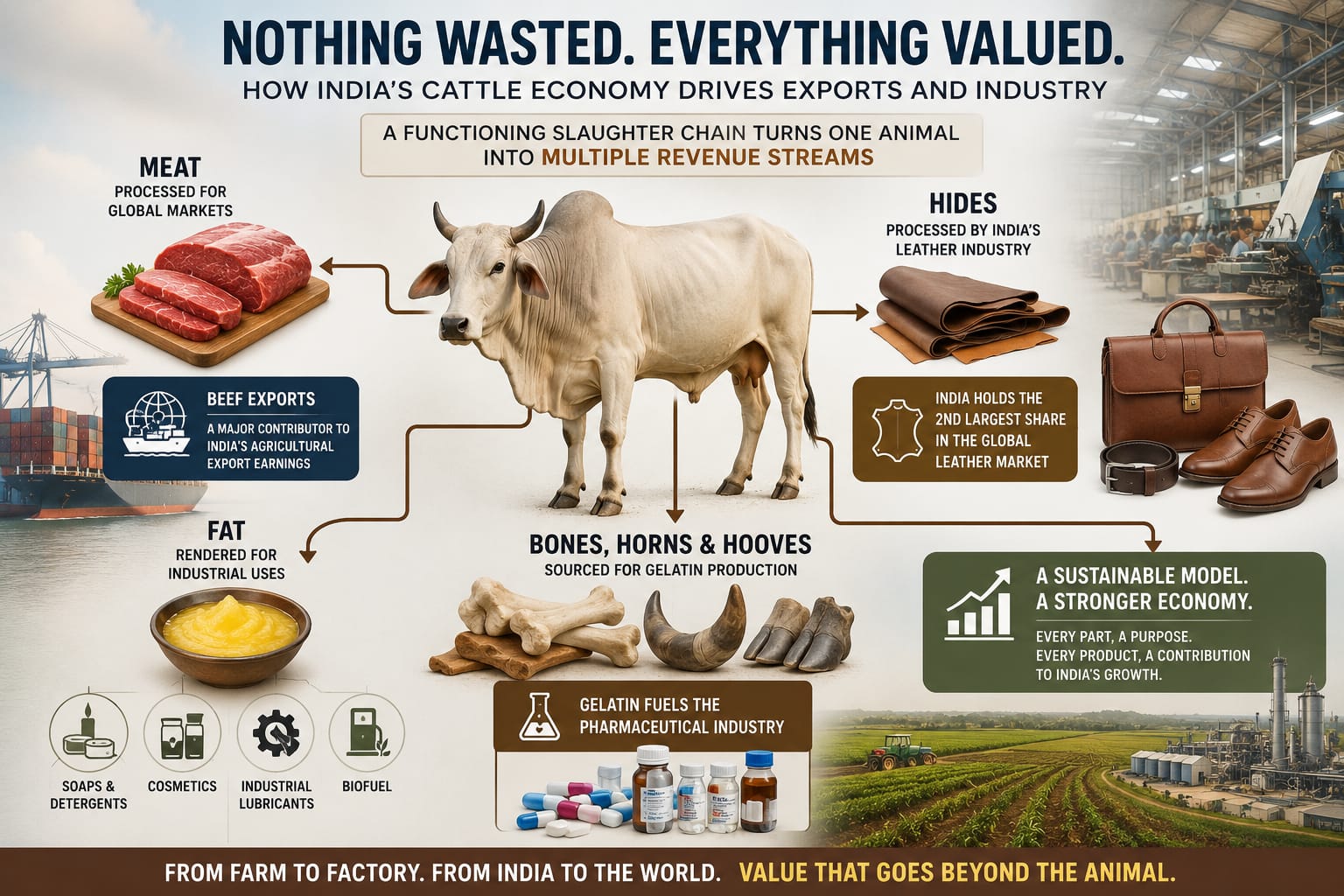
The political argument against beef slaughter tends to ignore this complete picture, preferring instead to focus on the animal as a religious symbol and on the slaughter as an act of desecration. This is a powerful argument in a society where the cow occupies a specific place in the Hindu religious imagination. It is also an argument that takes no interest in the economic consequences of the policy it promotes, and those consequences fall on people who are not consulted when the policy is made.
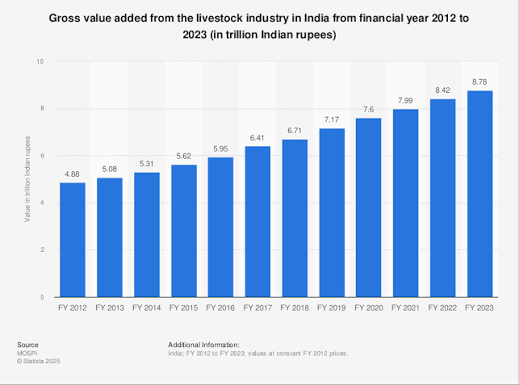
Fifty per cent of India’s population—roughly seven hundred million people, twice the proportion at independence—remains dependent on agriculture. The persistence of agricultural poverty, and the failure of the formal economy to absorb the surplus rural labor that economic development theory predicted would migrate to industry and services, is the central unresolved problem of Indian political economy. Against this backdrop, any policy that damages a sector—dairy—that provides daily cash income to small farmers, employs women in cooperative management roles, and contributes approximately five per cent of the total economy is not an ideological luxury. It is an economic injury inflicted on the people who can least absorb it.
A cow or buffalo continues to eat, to require veterinary care, and to produce nothing that can be sold for eight to ten years after her productive life ends. The farmer who cannot sell her is not a better Hindu. He is a poorer farmer.
Who Actually Eats Beef
The politics of cattle slaughter in India depend partly on a claim that is factually dubious but ideologically useful: that beef consumption is a Muslim practice, and that the cattle trade is therefore a transaction between Muslim traders and Muslim consumers that Hindu farmers merely supply. This framing allows the ban to be presented as a Hindu self-defense measure—an assertion of the majority community’s values against a minority’s dietary habits.
The framing does not survive contact with the census data or with the geography of Indian food culture. In Kerala, beef is consumed across communities—by Christians, by Hindus, and by Muslims—and accounts for a significant share of the protein available to working-class households. In Goa, beef consumption is widespread and unremarkable. In the northeastern states—Meghalaya, Mizoram, Nagaland—cattle are raised and eaten by communities with no connection to Islam. The market in Hassan, Karnataka, where the farmers sat with their unsold animals on the twenty-fifth of May, is in a region where beef consumption among Hindus is neither unusual nor shameful.
The historical record adds a further complication. The claim that Hindus have always abstained from beef, and that beef eating is therefore an alien imposition on Indian culture, is contradicted by the textual evidence of ancient Indian literature—the same literature that the defenders of cow protection invoke as the foundation of Hindu civilization. The archaeological and literary record suggests that cattle were consumed in ancient India across communities and castes, and that the movement toward abstinence developed gradually over several centuries, driven by a complex of religious, economic, and social factors. The absolute prohibition is historically recent. The attempt to project it backward as an eternal and universal Hindu practice requires either ignorance of the historical record or a willingness to ignore it.
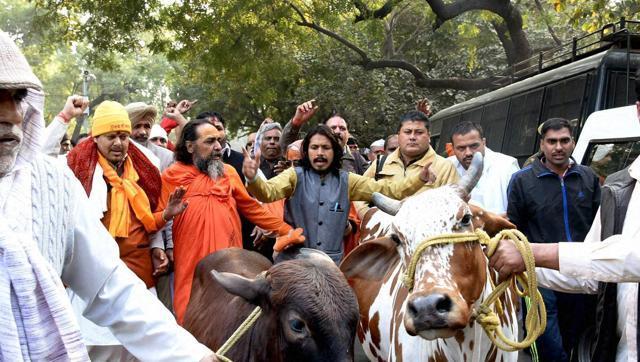
None of this, of course, matters to the people whose conviction that the cow is sacred admits no qualification from economics or history. Conviction of this kind is not susceptible to argument, and it would be foolish to attempt the argument here. What can be argued—and what the events in Hassan and West Bengal in May 2026 make urgently apparent—is that the policy consequences of conviction, when they are imposed on people who do not share it, require a different kind of accounting.
Sawing the Branch
Indian farming has been under structural pressure for more than fifty years. The terms of trade between agriculture and the rest of the economy have moved consistently against farmers: the inputs they buy have become more expensive, the prices they receive for their output have grown more slowly, and the public investment in irrigation, rural roads, and agricultural research that could have offset these pressures has been consistently under-funded. The Delhi farmers’ protest that began in 2019 and lasted more than a year was one expression of this accumulated distress; the fact that it mobilized hundreds of thousands of farmers from across the political spectrum, is an indication of how deep the anger runs.
Against this background, dairy farming has represented something unusual in Indian agriculture: a sector that provides daily income rather than the seasonally lumpy returns of crop farming, that has benefited from the cooperative model that Kurien built, and that has demonstrably improved the living standards of millions of small rural households. The white revolution is one of the genuine achievements of post-independence India. It was built on the complete cattle economy: milk from productive animals, meat and leather from spent ones, a market that gave farmers a reason to invest and a mechanism to recover some of their investment when the animal’s productive life ended.
The cattle slaughter ban, wherever it is effectively enforced, amputates the second half of this economy.
The political movement that promotes it is largely urban, largely composed of people who have no direct relationship with cattle farming, and largely indifferent to the consequences for the farmers whose religious values it claims to vindicate. The Tamil proverb captures it precisely: the pain out of the wound of the ox is of no concern to the crow which tends poke the same wound.
The people who are most vocal about the sacred status of the cow are, in the main, the people who are least affected by what happens when the cow can no longer produce milk and cannot be sold.
The farmers sitting in the Hassan market on the twenty-fifth of May did not need a lecture about theology or ideology. They needed traders. They needed a functioning market. They needed the economic system that the dairy cooperative had given their parents and grandparents to keep working the way it had worked for fifty years. What they were experiencing—the empty market, the animals they could not sell, the money they did not have to truck the animals home—was not a religious controversy. It was the downstream consequence of a policy made by people who will not personally bear its cost.
That policy—dressed in the language of cultural pride and civilizational identity—is, in its actual effect, a subsidy extracted from India’s poorest farmers and paid to an ideology. The people paying it are, overwhelmingly, Hindu. The branch being sawed is the one on which they are sitting.
The cattle market incident in Hassan, Karnataka, occurred on May 25, 2026. The dairy statistics cited draw on NDDB (National Dairy Development Board) published data. India’s status as the world’s second-largest beef and leather exporter is based on APEDA (Agricultural and Processed Food Products Export Development Authority) export figures.
This article was originally published in Tamil and is translated into English by the author himself with assistance from AI.










A thought-provoking article that highlights the often-overlooked economic realities faced by farmers. Whatever one’s views on cattle politics, policies should consider the livelihoods of rural communities and be guided by evidence, compassion, and fairness
An insightful read
“आहार निद्रा भय मैथुनं च…” — food, sleep, fear, and reproduction are common to both humans and animals. What makes humans unique is Dharma. Without Dharma, man is no different from an animal.
Some justify eating cattle by arguing that every part of the animal is useful and contributes to the economy. By that logic, the human body is even more valuable. The heart, liver, kidneys, blood, hair, skin, and even nails have economic value. Human flesh may even be highly nourishing.
Yet no civilized society considers human beings as food.
Why?
Because Dharma places moral limits on desire. Dharma teaches that not everything useful, profitable, or consumable should be consumed. That is the difference between living by instinct and living by Dharma.