

Violence Against Women: The Patriarchal Inheritance India Has Failed to Confront

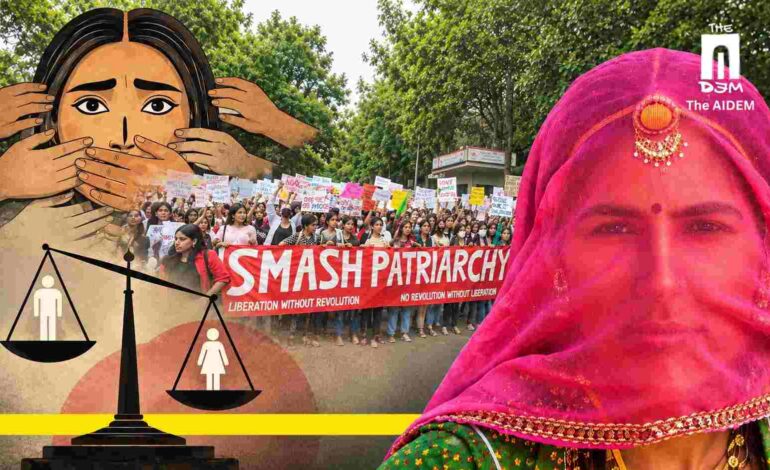
The brutal chainsaw attack on a schoolgirl by a 21-year-old man at a Zilla Parishad high school in Raptadu, Andhra Pradesh, on 31 October 2026, has renewed public outrage over violence against women and girls. Another girl was also injured in the attack. In the aftermath of such atrocities, public discussion often turns to familiar explanations: graphic violence in contemporary cinema, the pervasive culture of internet reels or the supposed moral decline of young people.
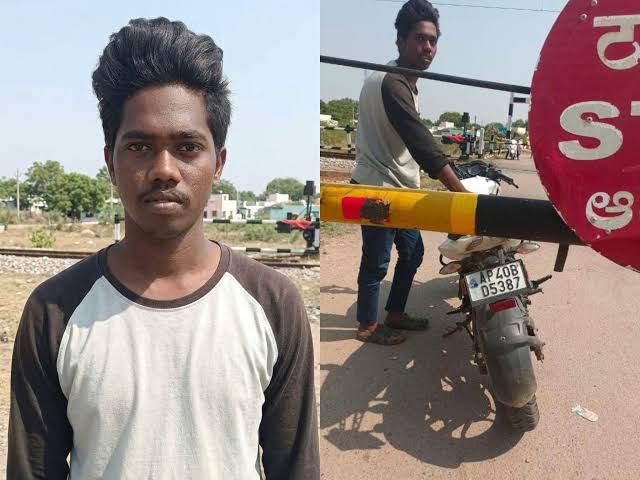 Hemanth (also known as Dummu), a 21-year-old man from Andhra Pradesh accused of attacking two Class 10 girls with a chainsaw inside a school classroom.
These responses may express understandable distress, but they offer an inadequate explanation of the crisis. Treating such attacks as isolated aberrations caused by modern media consumption obscures a more uncomfortable reality: violence against women draws legitimacy from deeply entrenched structures of male authority, caste hierarchy and cultural tradition. Understanding that inheritance is essential to challenging its continuing influence.
Mythology and gender hierarchies
Any examination of contemporary misogyny must engage critically with the narratives through which societies have justified unequal power. Across centuries, some literary and religious traditions have rationalised, and sometimes glorified, violence against women deemed to have crossed prescribed boundaries of conduct.
In the Ramayana, Lakshmana’s mutilation of Soorpanakha—the cutting off of her nose and ears—occurs within a narrative that presents her as a threatening figure. The episode invites scrutiny of how physical violence against a woman can acquire moral legitimacy when she is represented as transgressive or dangerous. This does not mean that every retelling carries an identical message, but it makes the cultural reception of such episodes an important subject of examination.
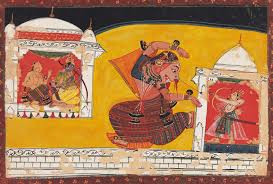 A 17th-century Malwa folio miniature portraying a bleeding Surpanakha recoiling from Lakshmana, visually contrasting the punished “unruly” woman with the idealized Sita seated beside Rama as they look out from their hut. (Source: from the images at the National Museum, New Delhi)
Similarly, the story of the sage Jamadagni ordering his son Parasurama to behead his mother, Renuka, for a perceived lapse in chastity presents an extreme assertion of patriarchal authority. Her life becomes subject to a male judgement about her inner thoughts, exposing the violence implicit in an uncompromising demand for female purity.
Some regional versions of the Renuka–Yellamma story also involve the beheading of an oppressed-caste woman and the subsequent interchange of the women’s heads during their restoration to life. These variants bring caste into the narrative, inviting questions about whose bodies are treated as expendable and how religious storytelling represents unequal social status.
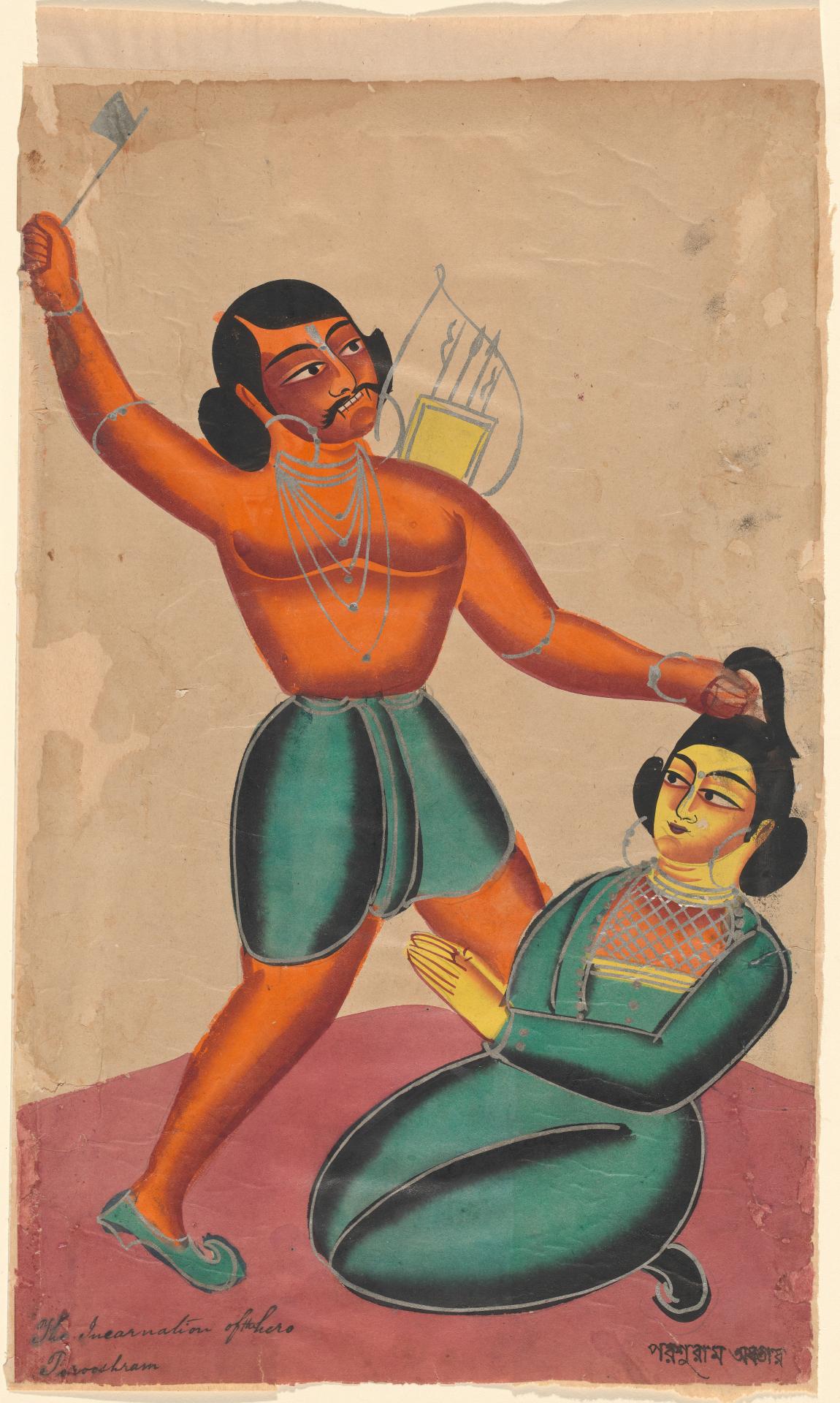 A late 19th-century Kalighat painting depicting Parashurama, the sixth avatar of Vishnu, slaying his mother Renuka for her momentary lapse in mental chastity. The composition visually reinforces patriarchal authority: the stark contrast between Parashurama’s upright, axe-wielding stance and Renuka’s submissive posture illustrates how classical narratives codify filial duty over maternal bonds. (Source : from the images at the National Gallery of Victoria, Melbourne).
Madri’s self-immolation following Pandu’s death in the Mahabharata similarly raises questions about the association of wifely devotion with self-sacrifice. Such narratives require careful interpretation rather than treatment as straightforward records of social practice. Nevertheless, their celebration can reinforce an unequal moral expectation: that a woman’s highest virtue lies in surrendering her life, desires or autonomy to her husband.
Codified oppression and the cost of resistance
Patriarchal authority also found expression in prescriptive texts dealing with governance and social conduct. The Arthashastra, for instance, prescribes the mutilation of women’s noses and ears in certain circumstances involving adultery. Its punishments also vary according to caste, revealing how gender and social hierarchy could intersect within a punitive order.
Prescriptive texts do not establish how consistently particular punishments were enforced. Nor can a direct line of causation simply be drawn from an epic episode to a legal provision. They do, however, show that bodily violence could be articulated as a legitimate instrument for regulating women’s conduct.
Inscriptional evidence also records the commemoration of women dying alongside their husbands. The Eran inscription in present-day Madhya Pradesh, dated to 510 CE, is widely cited as an early inscriptional record of sati. A later inscription concerning the Kalachuri ruler Gangeyadeva records that he attained religious liberation at Prayag together with a hundred wives. The precise circumstances require careful interpretation, but the language of commemoration deserves scrutiny for the values it elevates.
 The Eran Pillar Inscription of 510 CE (Madhya Pradesh). Left: The Gupta-era memorial pillar (chhaya-stambha) standing at the ancient site of Eran. Right: A close-up of the relief carving believed to depict the chieftain Goparaja and his wife, whose self-immolation on his funeral pyre is recorded in the Sanskrit inscription below—marking the earliest known epigraphic evidence of Sati in India.
Accounts of resistance must be approached with equal attention to evidence. Kerala’s oral tradition remembers Nangeli, an Ezhava woman in early nineteenth-century Travancore, as having cut off her breasts in protest against mulakkaram, commonly translated as “breast tax”. The specific episode lacks conclusive contemporary documentation, and historians dispute whether the levy concerned breast covering or was a caste-based personal tax on women. These qualifications should accompany any account of her protest, without diminishing the importance of examining caste oppression and women’s resistance.
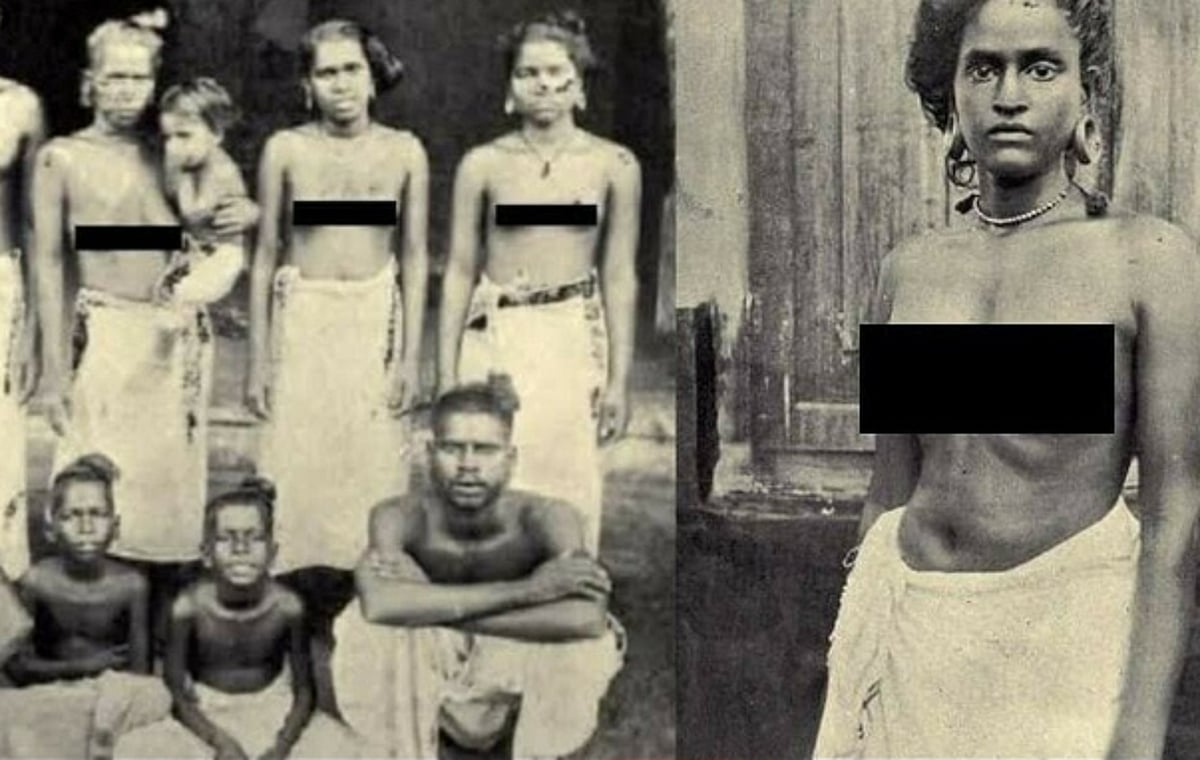 Archival ethnographic photographs from early 20th-century South India showing members of the Paraiyar community (left, 1909) and an Ezhava woman in Cochin (right, c. 1909–1912). Such historical records reflect the rigid sumptuary laws and caste-based sartorial restrictions that policed marginalized women’s bodies in pre-modern Kerala.
The history of devadasi institutions likewise requires attention to differences across regions and periods. Women associated with temples occupied varied artistic, ritual and economic positions; their experiences cannot be reduced to a single, unchanging condition. Yet caste-based dedication and sexual exploitation became entrenched features of some forms of the institution, exposing oppressed-caste women to particularly severe inequalities.
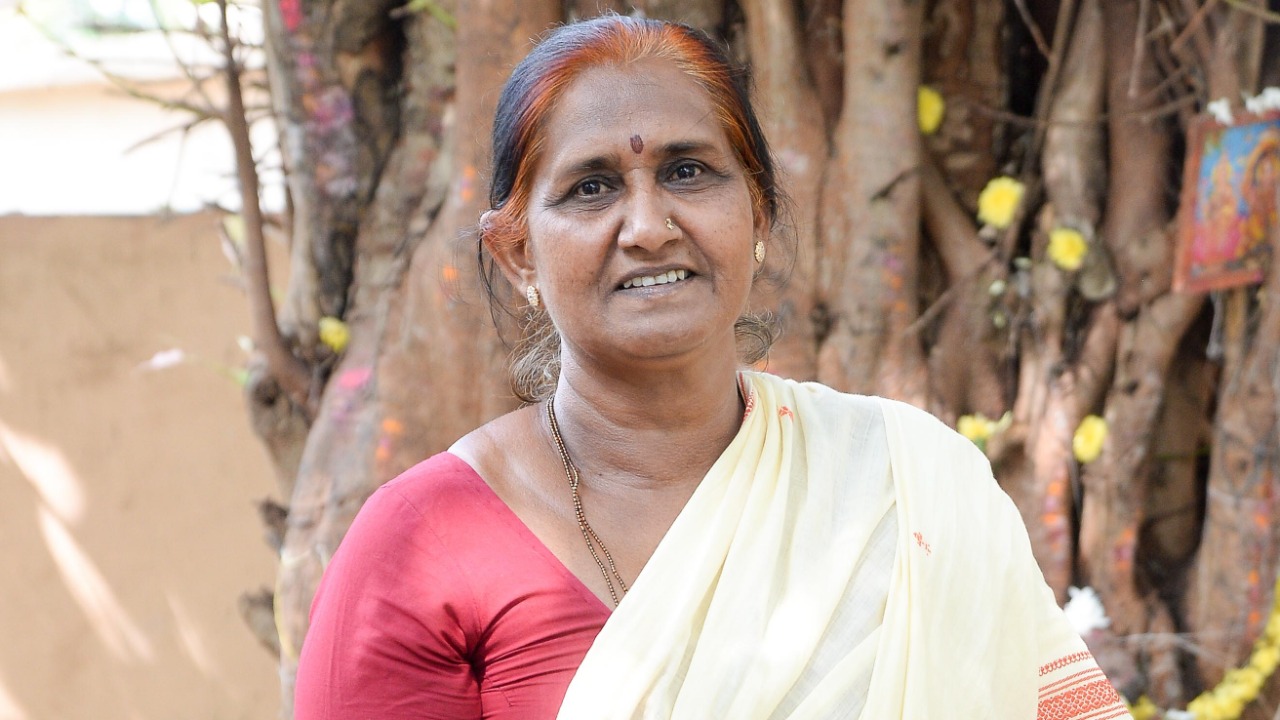 Com. T. V. Renukamma, a Dalit survivor of the Devadasi system who was forced into the custom as a teenager, now leads the Karnataka Rajya Devadasi Mahileyara Vimochana Sangha, campaigning tirelessly for the social dignity, land rights, and state rehabilitation of thousands of marginalized women.
The republic’s unfinished promise
Independent India established constitutional guarantees of equality, but these have not dismantled the social relations that sustain violence against women. Legal rights coexist with persistent discrimination, unequal access to justice and institutions that too often fail those seeking protection.
Accusations of witchcraft remain one means of targeting vulnerable women. Such allegations can provide cover for dispossession, personal retaliation and the enforcement of local hierarchies. The cases cited in accounts of witch-hunting across Jharkhand, Bihar and Assam reveal how superstition can become an instrument of coercion, with devastating consequences for women who lack social and economic protection.
The death of Roop Kanwar on her husband’s funeral pyre at Deorala, Rajasthan, in 1987, and the subsequent glorification of the incident exposed the continuing power of practices that subordinate women’s lives to ideals of marital devotion. The existence of a democratic republic had plainly not extinguished their social legitimacy.
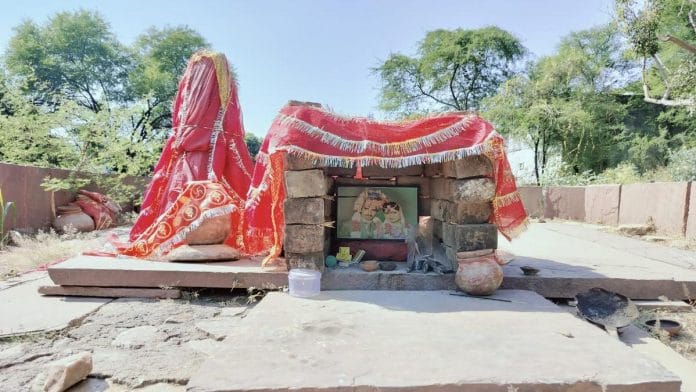 A shrine dedicated to Roop Kanwar perpetuating the glorification of her sacrifice in Deorala, Rajasthan. Decades after her death on her husband’s funeral pyre in 1987, demands for a larger temple at the site reflect the continuing veneration of sati.
Violence also operates as a means of enforcing caste authority. The 1992 gang rape of Bhanwari Devi, a social worker from Rajasthan’s Kumhar community who had challenged a child marriage, exemplified the dangers faced by women confronting entrenched power. Her experience exposed the intersection of caste, gender and institutional failure.
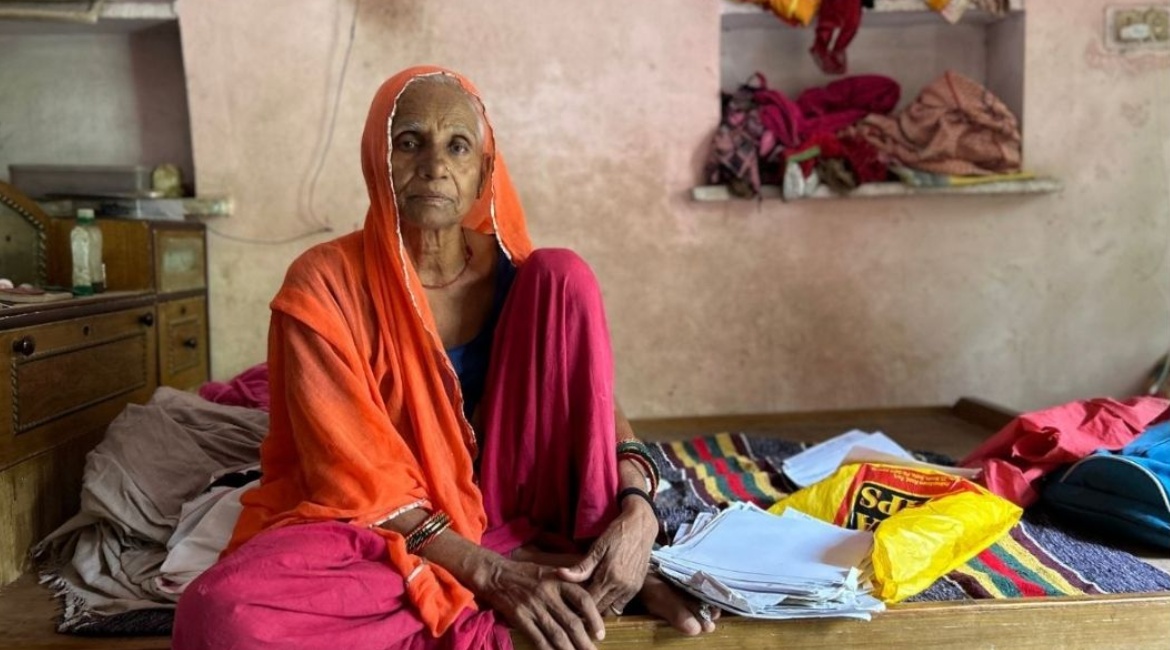 Bhanwari Devi, who was gang-raped in 1992 after intervening to stop the marriage of a nine-month-old girl to a one-year-old boy in Rajasthan. The marriage nevertheless took place the following day.
In other contexts, violence expresses a man’s claimed entitlement to a woman’s affection or obedience. Swapnika’s death following the 2008 acid attack in Warangal underscored the potentially lethal consequences of that entitlement. Contemporary cinema can reinforce and profit from such attitudes when it romanticises stalking, coercion or possessiveness, but those attitudes have roots extending well beyond the screen.
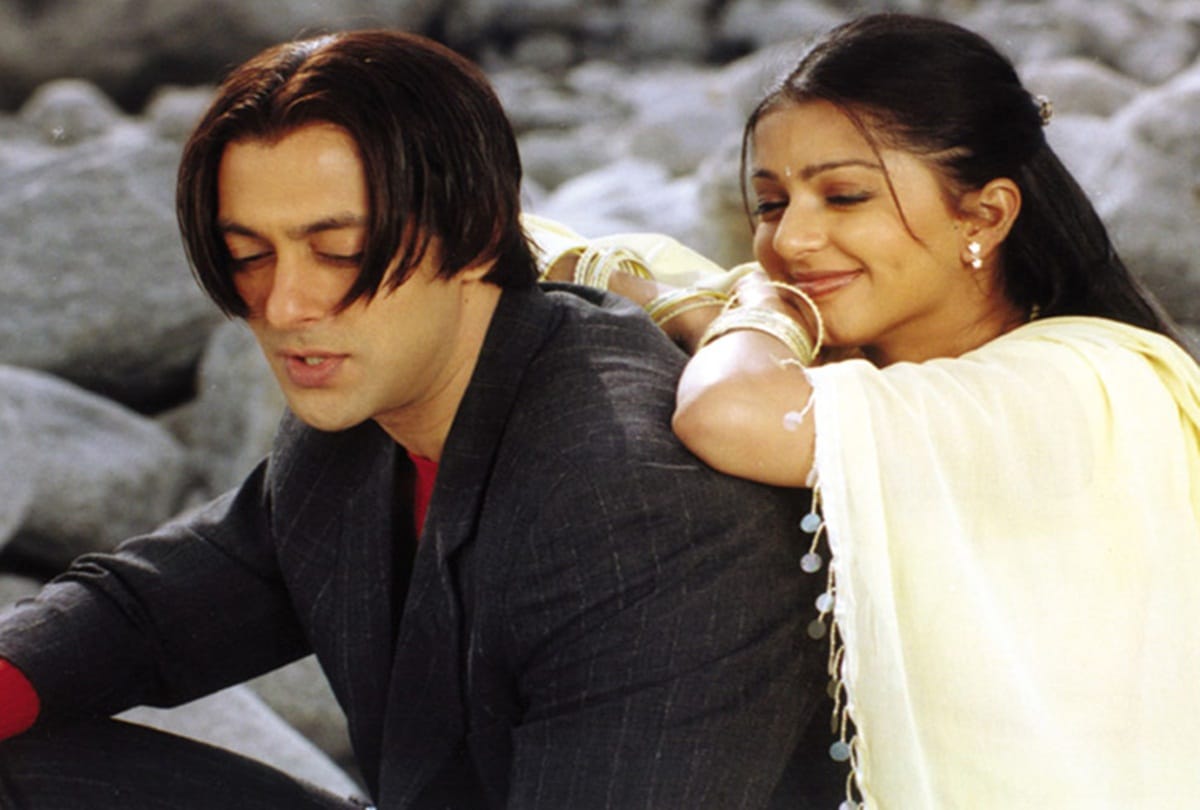
In Tere Naam (2003), the heroine eventually falls in love with the very man whose persistent pursuit she initially resists, reinforcing the cinematic trope that relentless pursuit can win a woman’s heart.
The limits of punitive responses
The political response to the Raptadu attack illustrates the limits of a framework centred on displays of force. Andhra Pradesh Education Minister Nara Lokesh promised firm action against those responsible. Police subsequently shot and wounded the accused while attempting to arrest him, stating that they had acted in self-defence after he attacked personnel with a knife.
That account must be subject to proper scrutiny. A police shooting cannot, simply by occurring, demonstrate that justice has been delivered or that women are safer. Political rhetoric that equates protection with overwhelming force risks displacing attention from prevention, institutional accountability and the judicial process.
 Police personnel haul away injured Rapthadu attack accused M. Hemanth after shooting him in the legs after he tried to escape — a spectacle of instant retaliation that substitutes due process without delivering real justice to the survivor.
Prompt investigation and effective prosecution are essential. But treating violence against women solely as a law-and-order problem leaves its social foundations largely untouched. Punishment after an attack cannot substitute for sustained efforts to challenge the beliefs and power relations that make such violence possible.
Building a culture of equality
Meaningful change requires sustained action by the state, educational institutions, communities and families. Within the home, it begins with questioning everyday assumptions of male superiority: who makes decisions, whose freedom is restricted, whose labour is taken for granted and whose anger is excused.
An NDTV report from 2017 highlights how NCERT textbooks for Classes 2–5 reinforced gender stereotypes, depicting fathers as heads of families, mothers as homemakers and teachers predominantly as women, despite men constituting around 60% of India’s schoolteachers.
Schools and colleges must play a central role. Curricula should equip students to examine historical and religious narratives critically, including the ways in which these have justified inequalities of gender and caste. Education about consent, bodily autonomy and equal citizenship should form part of ordinary learning, supported by teachers capable of addressing these questions with care and clarity.
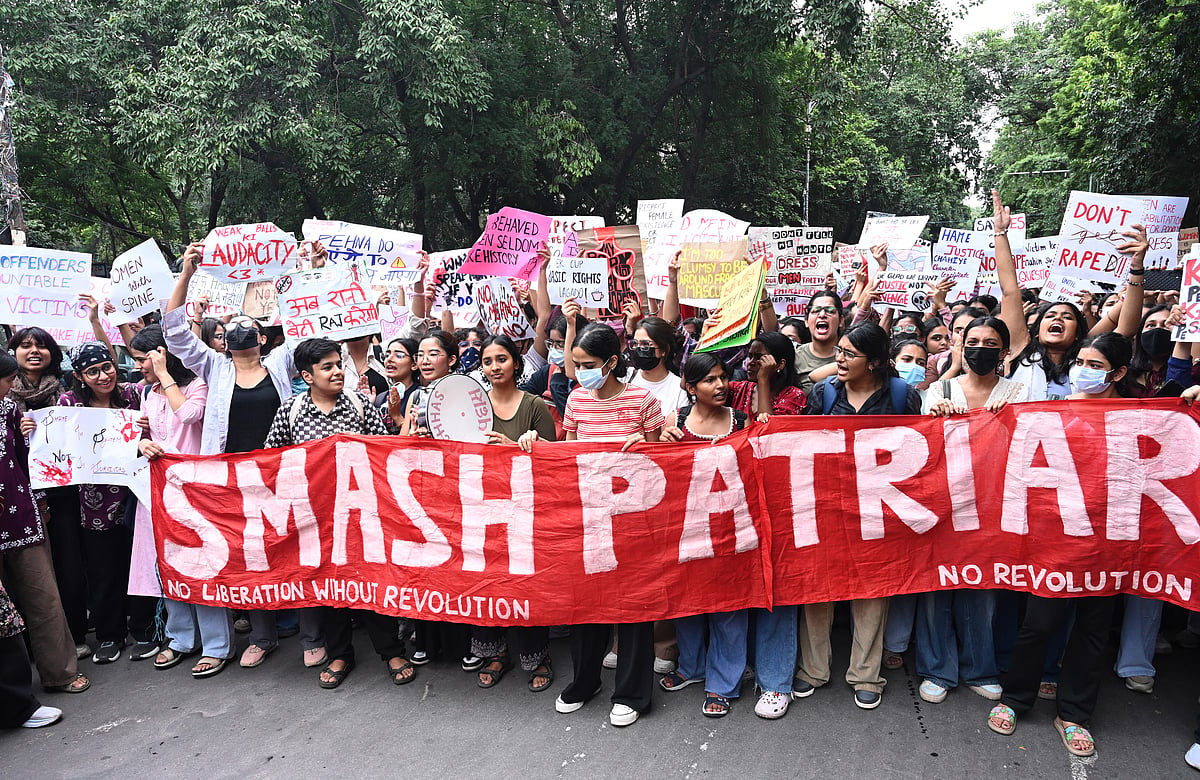 Women students hold placards during the ‘Hum Azad Hain’ Solidarity March from Miranda House to the Faculty of Arts in New Delhi, on September 28, 2026, asserting their right to freedom, safety and equality. Their protest reflects the continuing struggle to realise the constitutional promise of gender equality.
Such education must be accompanied by practical measures: safer schools, accessible complaint mechanisms, responsive policing, support for survivors and accountability when institutions ignore threats or harassment. Cultural reform and institutional responsibility must advance together.
India’s diverse traditions also contain resources for imagining more equal relationships. Local goddess traditions, including the worship of the grama devatha, may offer ways of questioning exclusively male representations of authority. They should, however, be examined critically rather than assumed to guarantee respect for women.
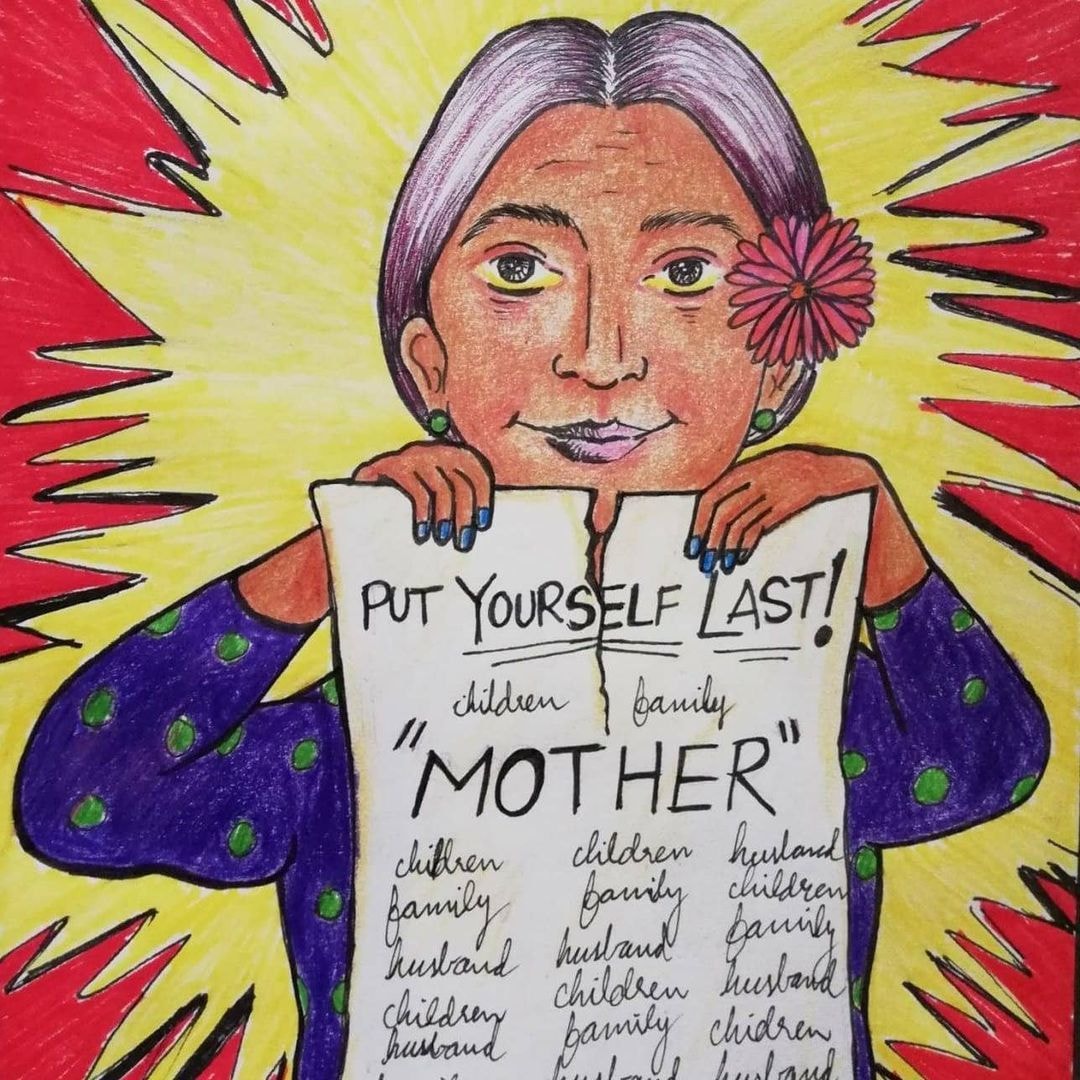 An illustration challenging the expectation that women must put themselves last, placing the needs of their children, husbands and families above their own identities, aspirations and autonomy. (Illustration by: Misha Farhana).
Women’s equality cannot rest on their identification with motherhood, sacrifice or the capacity to generate life. It rests on their standing as autonomous persons, entitled to dignity, freedom and security. Challenging inherited justifications for violence requires that principle to guide both the stories society celebrates and the institutions through which it governs.









Violence against women is not merely a law-and-order problem; it is deeply rooted in the patriarchal mindset that Indian society has tolerated and normalised for generations. Laws and punishments alone cannot bring change unless we confront the social traditions, caste hierarchies and notions of male entitlement that perpetuate inequality. Women are not born to obey, sacrifice or seek permission for their freedom. Their dignity, autonomy and safety are constitutional rights, not privileges. The real battle is against patriarchy itself, and India can no longer afford to look away.