

Where is the Child Protection Audit Report in Manipur’s Recovery Story?

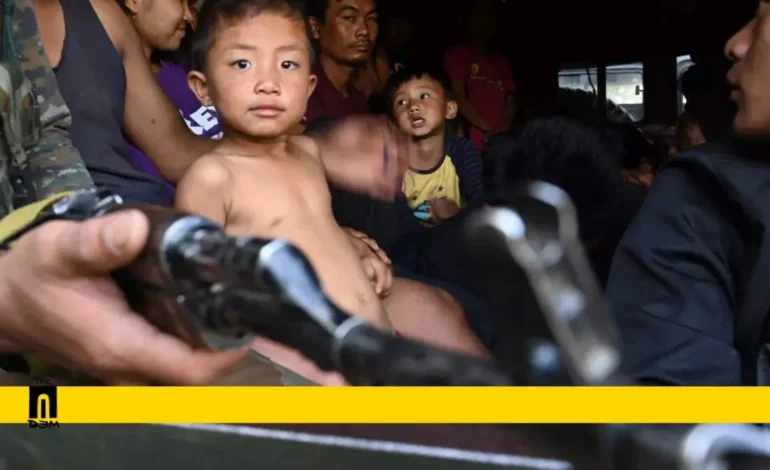
Three years after the violence, the government can account for relief camps, security gains and expenditure. But can it account for every conflict-affected child?
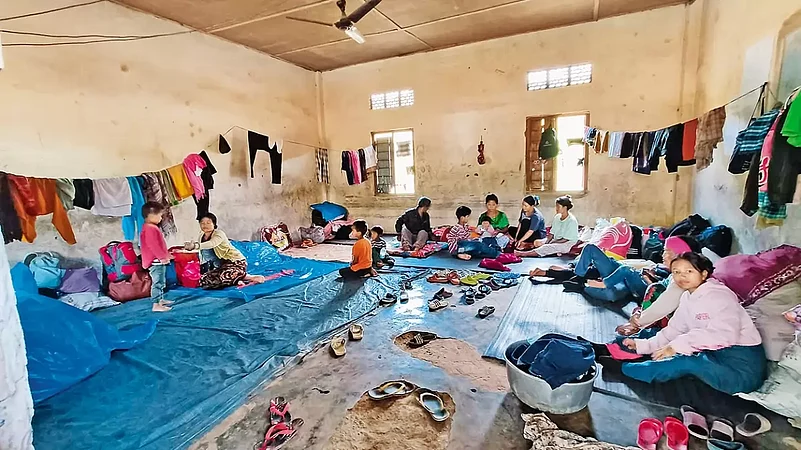
Three years after ethnic violence engulfed Manipur, the State has produced an extensive administrative record of the conflict. Official statements have counted the dead, the displaced, the relief camps established, the compensation disbursed and the weapons recovered. Parliament has been informed that the Union government sanctioned more than ₹400 crore for relief and rehabilitation, while successive briefings have tracked security operations and the gradual return of displaced families. By these measures, the state’s response has been meticulously documented.
Yet one question has remained almost entirely absent from public discourse:
Can the government account for every child affected by the conflict?
This is not a question about missing children, nor is it an allegation that children disappeared from state care. There is no public evidence to support such a claim. It is a question of accountability: whether India’s child protection framework functioned as Parliament intended during one of the country’s longest episodes of internal displacement, and whether this can be demonstrated through publicly verifiable records.

The demand for accountability has increasingly become one of the defining features of India’s public discourse. The nationwide protests seeking Union Education Minister Dharmendra Pradhan’s resignation over alleged irregularities in the NEET examination were, at their core, about more than an entrance test. They reflected a broader expectation that public institutions and those who lead them must answer for systemic failures, even where individual culpability remains contested. The government defended its handling of the controversy and rejected calls for the minister’s resignation while promising reforms to restore confidence in the examination process. The episode reinforced an important democratic principle: accountability cannot rest on assurances alone. It must be demonstrated through transparency, documentation and public scrutiny.
The same principle applies to Manipur.
When governments respond to conflict, they are expected to do more than restore law and order. They are expected to demonstrate that the institutions entrusted with protecting the most vulnerable continued to function even under extraordinary circumstances. This expectation is especially important where children are concerned.
Conflict affects children differently from adults. Adults lose homes and livelihoods; children lose continuity. Schooling is interrupted. Families are separated. Healthcare becomes uncertain. Friendships and support systems disappear overnight. A child may move from a village to a relief camp, from there to a relative’s home, later to a Child Care Institution (CCI), and eventually back into family care. Every transition creates another point of vulnerability—to trafficking, exploitation, interrupted education, child labour and psychosocial distress. Every transition should also leave behind a documented trail.
This expectation is not merely humanitarian but also statutory.
The Juvenile Justice (Care and Protection of Children) Act, 2015 requires every child who comes under state protection to have a documented legal journey. Child Welfare Committees (CWCs) must assess each child’s circumstances. Individual Care Plans (ICPs) must be prepared. Child Care Institutions are required to maintain admission and discharge records. Restoration orders must be recorded when children are reunited with their families, followed by periodic reviews and follow-up. The law is designed around one central principle: children affected by crises should never become administratively invisible.
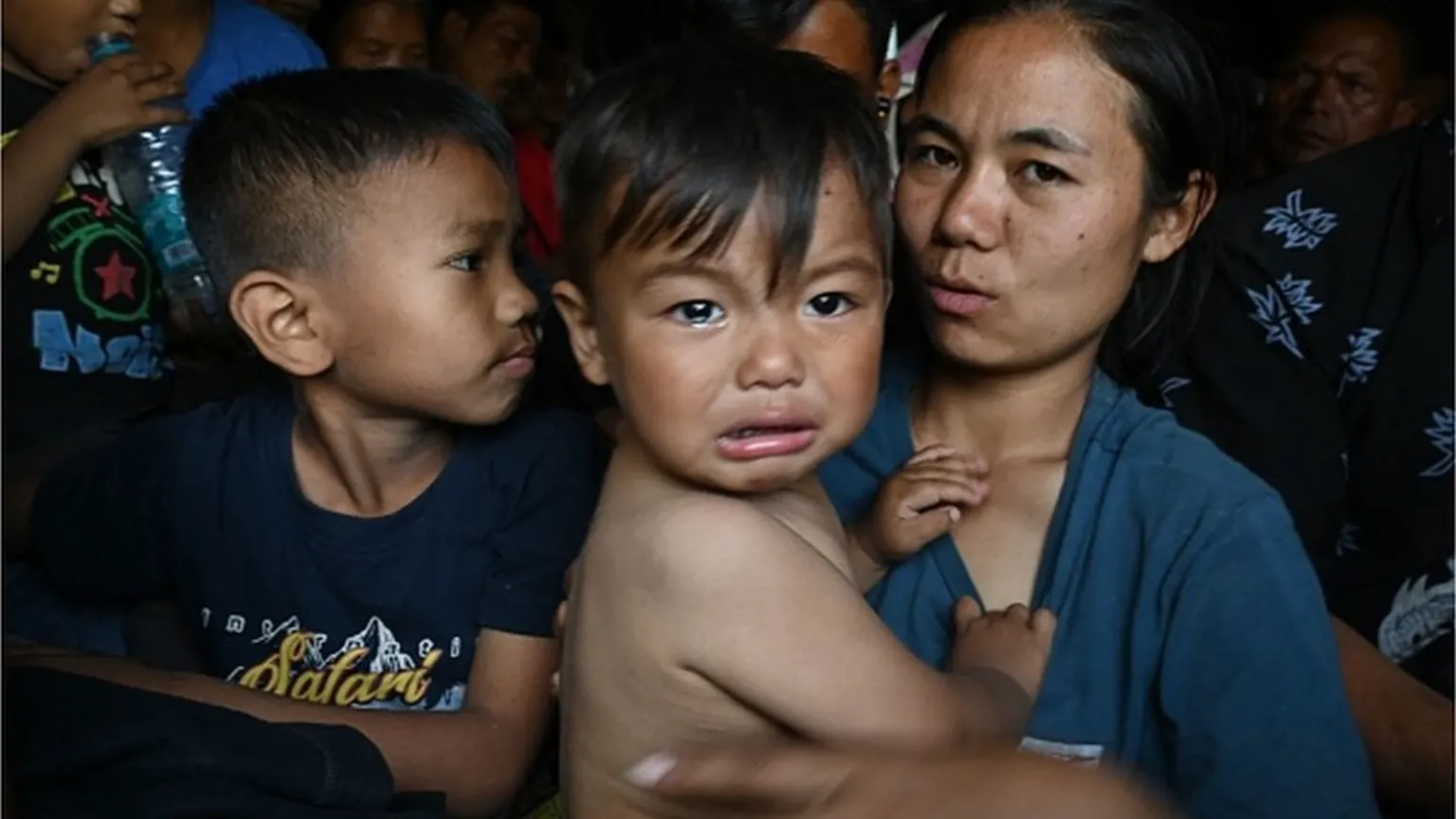
India has also established an institutional architecture to make this possible. District Child Protection Units (DCPUs) maintain case records. Child Welfare Committees (CWCs) authorise care and restoration. The Social Welfare Department oversees Child Care Institutions. Schools maintain enrolment records. District administrations manage relief camps. Police investigate missing children and trafficking. The National Commission for Protection of Child Rights (NCPCR), established under the Commissions for Protection of Child Rights Act, is empowered to inspect child-care institutions, examine safeguards available to children affected by communal violence and monitor the implementation of child protection laws.
Collectively, these institutions should be capable of answering a straightforward question:
What was the chain of care for every conflict-affected child in Manipur?
Not simply where a child is today, but where that child has been since May 2023. Were they displaced? Were they separated from parents or guardians? Did they enter institutional care? Were they placed with relatives? Were they reunited with family? Have they returned to school? Are they receiving psychosocial support? Do child protection authorities continue to monitor their welfare?
Yet no consolidated public record currently answers these questions.
This absence is striking because almost every other dimension of the conflict has been quantified. Casualties have been reported. Displacement has been tracked. Security deployments have been documented. Buffer zones have been mapped. Financial assistance has been announced. The administrative machinery has generated extensive information on law and order. It has generated comparatively little that is publicly accessible on children.
International evidence underscores why this matters. According to UNICEF, children constitute roughly 30 per cent of the global population but account for approximately 41 per cent of those internally displaced by conflict and violence. By the end of 2024, nearly 29.4 million children worldwide were internally displaced because of armed conflict. Humanitarian agencies increasingly prioritise child-level case management over household-level statistics because vulnerability is experienced by individual children, not by families in the abstract.
This global experience raises an obvious question for Manipur.
If India’s child protection architecture functioned as intended—and there is no reason to presume otherwise—shouldn’t the state already possess a reconciled, child-wise record of every conflict-affected child who came under its protection?
If such a record exists, placing it in the public domain would strengthen confidence in public institutions. It would demonstrate that despite unprecedented strain, the state’s child protection framework remained intact. It would reassure families that documentation matched reality and that no child slipped beyond institutional oversight.
If such a record cannot presently be produced, the concern extends beyond administration. It points to a failure of institutional coordination. Child protection depends on multiple agencies sharing information across departments and over time. Fragmented records may satisfy individual offices, but they do not necessarily establish continuity of care.
Nor should this debate be reduced to missing-child statistics. Police records capture only children reported missing. Child protection is considerably broader. A child who quietly leaves a relief camp, drops out of school, moves between districts or enters informal kinship care may never become the subject of an FIR. Yet every such child remains within the responsibility of the state’s child protection system. The absence of a missing-person complaint is not evidence that monitoring has taken place. Only documented case management can establish this.
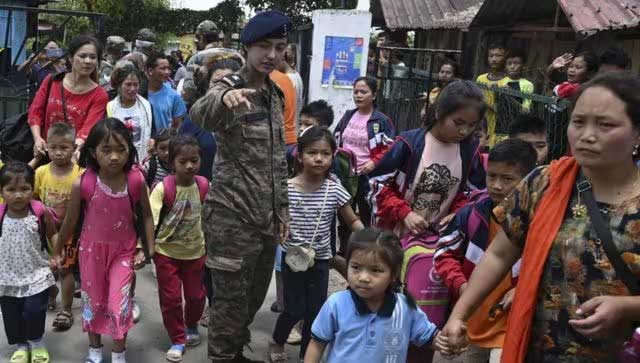
Three years after the violence, Manipur’s recovery continues to be measured largely through the language of security. While those indicators matter, recovery must also be measured by whether the state can demonstrate, child by child, that no one slipped through the cracks into the networks of child trafficking or illegal organ trafficking.
The question is whether the government is prepared to demonstrate—with the same administrative rigour it has applied to relief, rehabilitation and security—that every conflict-affected child remained visible throughout the crisis. If recovery is to mean more than restored order, it must also mean that every child entrusted to the state’s protection can be accounted for.








A powerful and necessary piece. Recovery cannot be measured by infrastructure alone—children’s safety, dignity, and accountability must remain at the heart of any rebuilding process. Thank you for bringing attention to this critical issue.