

Donald Trump, the Buffalo, Escaped the Chop. Here’s How.

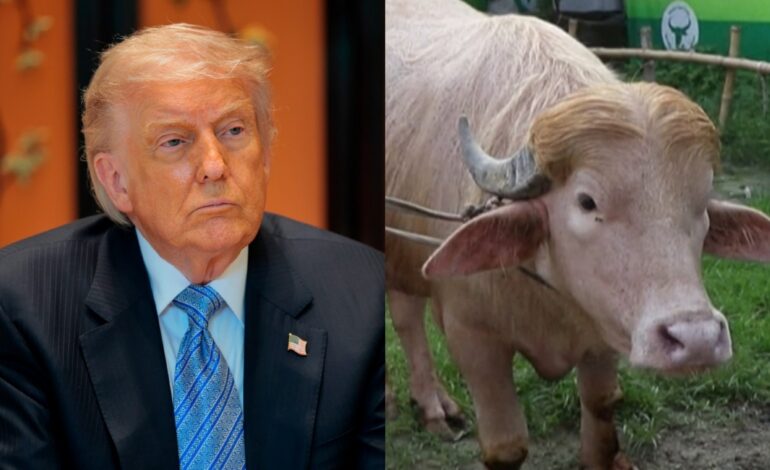
What began as a routine livestock transaction ahead of Eid al-Adha in Bangladesh quickly evolved into something far more revealing about the modern information ecosystem: a case study in how visibility, not intrinsic value, increasingly determines outcomes.
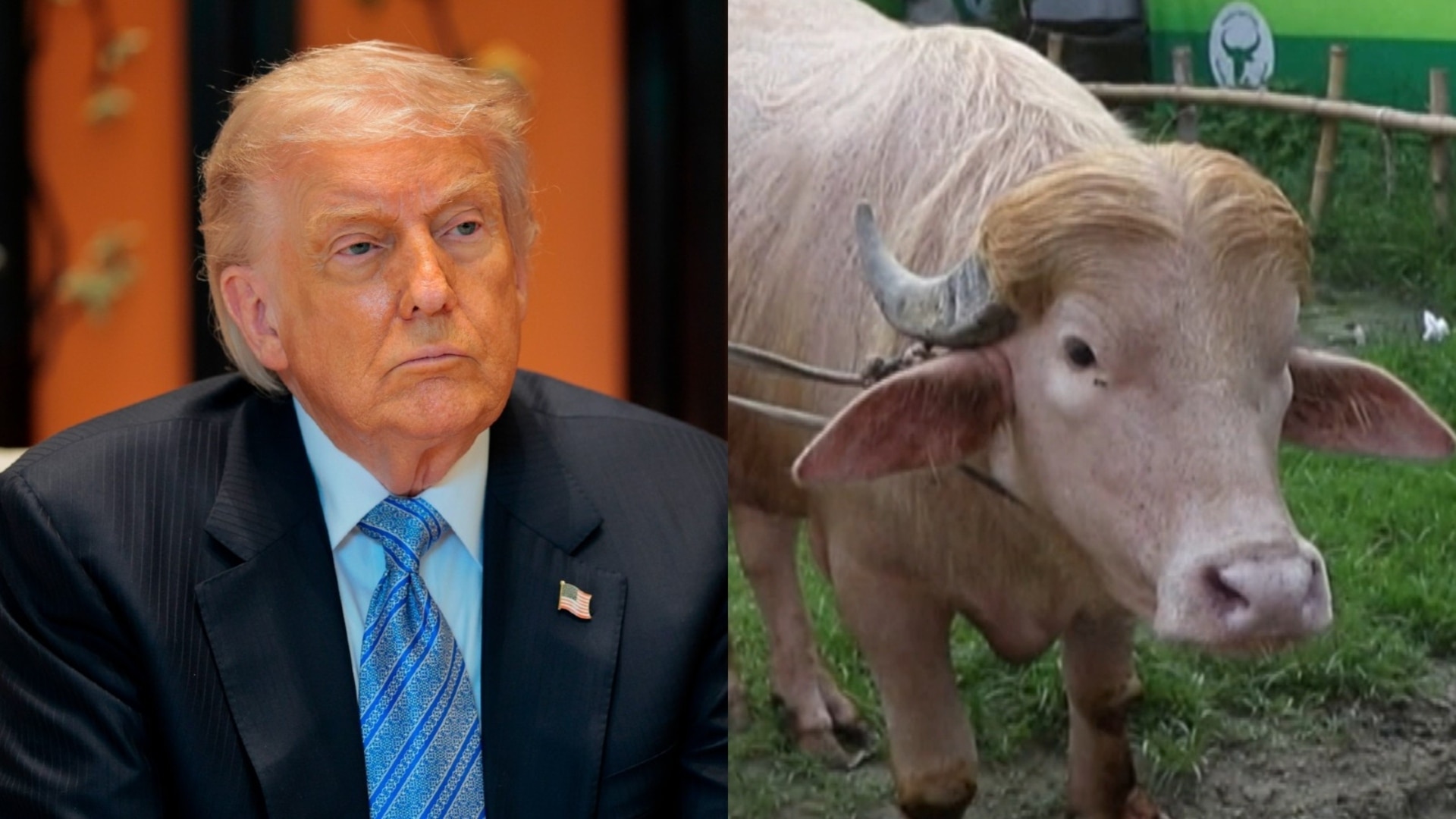
A rare albino buffalo near Dhaka, nicknamed “Donald Trump” due to its distinctive blond tuft, was originally sold for ritual sacrifice ahead of Eid al-Adha. But once videos of the animal began circulating on social media, its trajectory changed dramatically.
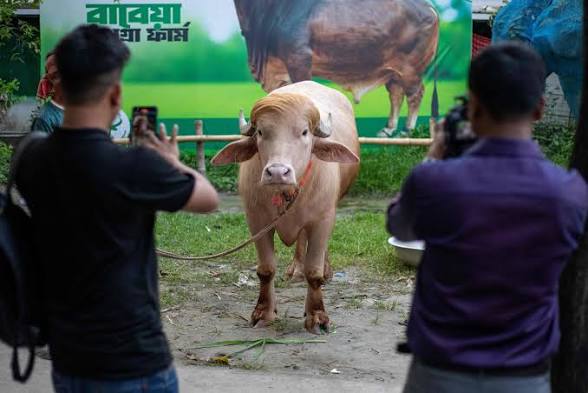
What was once an ordinary entry in a seasonal livestock market became a viral object of fascination. The scale of attention escalated rapidly, eventually drawing official scrutiny and intervention. The buyer was refunded, and the animal was transferred to state care.
The buffalo did not survive because the rules changed. It survived because the optics changed.
When Visibility Becomes Value
The defining feature of this story is not the animal itself, but the mechanism that preclassified it.
In pre-digital systems, value was largely determined by utility, tradition, or ritual function. In the contemporary attention economy, value is increasingly produced through visibility. Once the buffalo became widely shared, photographed, and emotionally engaged with, it transitioned from a commodity to a spectacle.
This shift is not symbolic; it is operational. Visibility triggers perception shifts, perception triggers public sentiment, and sentiment increasingly informs institutional response. In this sequence, virality functions as an informal governance layer.
The buffalo’s survival was therefore less an exception to tradition than a demonstration of how attention can override default trajectories.
The Optics of Influence and Attention
The nickname “Donald Trump” played a critical role in accelerating this transformation. By anchoring the animal to a globally recognisable political figure, Donald Trump, the story became instantly legible beyond its local context.
This is the core logic of modern virality: compression through familiarity. Complex, localised events only scale when they can be mapped onto pre-existing global reference points. The buffalo was no longer “just” livestock; it became meme-compatible content, algorithmically optimised for circulation across platforms.
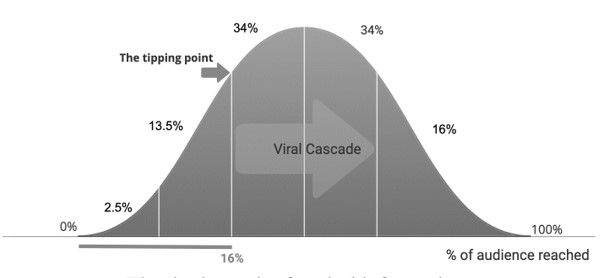
At that point, influence is no longer tied to authority. It is tied to transmissibility. Authorities reportedly cited security concerns tied to the unusually large public reaction as part of the justification for intervention, though whether this was the sole factor remains unclear.. However, the reasoning reflects a broader shift in governance: institutions increasingly respond not only to events themselves, but also to the intensity of their circulation.
In the digital era, attention behaves like pressure. Once it accumulates beyond a threshold, it demands containment, redirection, or resolution. The buffalo became less a livestock case and more a live media event with unpredictable crowd dynamics.
Governance, in this sense, is no longer just about managing physical realities. It is about managing visibility spikes. Yet, there is also a structural tension embedded in the outcome.
The Unequal Economy of Being Seen in the Modern Era
Thousands of animals continue to be processed during Eid each year, as part of a longstanding religious and cultural practice tied to devotion, sacrifice, and distribution. Yet the albino buffalo escaped this outcome not because of a shift in ethical consensus, but because it stood out within a saturated visual field.
It was not representative. It was exceptional. And exceptionality is precisely what algorithms amplify.
This creates an uncomfortable asymmetry: what is seen is protected; what remains unseen continues unchanged. Visibility becomes a form of insulation, but one that is only selectively distributed.
Ultimately, the buffalo’s story is less about religion, policy, or even animal welfare, and more about the mechanics of modern perception.
In a networked world, fate is increasingly mediated by optics. The buffalo survived not because it redefined the system, but because the system briefly reorganised itself around what it saw.
#WATCH | Dhaka, Bangladesh | A viral albino buffalo nicknamed ‘Donald Trump’, which relocated to the national zoo after being rescued from being sacrificed on Eid al-Adha, draws record visitors at the zoo. pic.twitter.com/6FptWxl1I4
— ANI (@ANI) May 29, 2026
It is a quiet but significant illustration of how influence now operates: not through force, not through law, but through circulation.
And in that sense, the real subject of the story is not the buffalo at all – it is the attention that saved it, and the new hierarchy it quietly reveals.









Ah, I see what you’re getting at! That sounds like a headline from some political or business coverage. Usually, it’s a kind of shorthand for a big figure dodging a big risk or scandal—like Trump staying politically afloat despite controversies. If you want to dig into a specific article or event behind that headline, I’m happy to help you break it down!
A quick write up on effective communication and building narratives that is being practised by oligarchy world over. Compliments.