
The Twilight of Dictatorship and the Meaning of Revolution

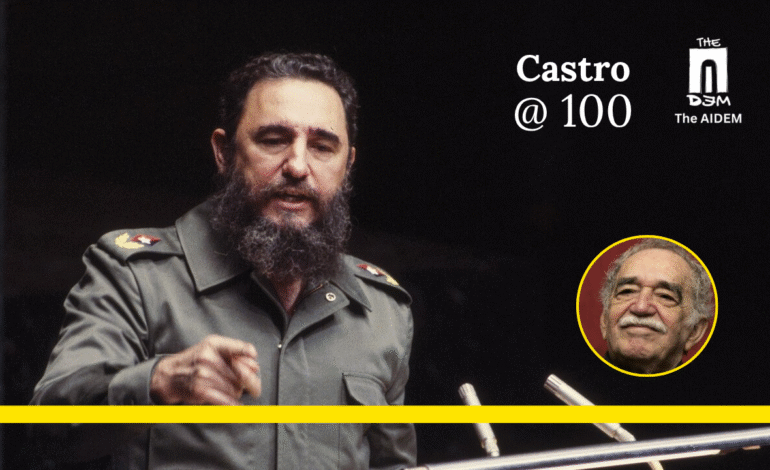
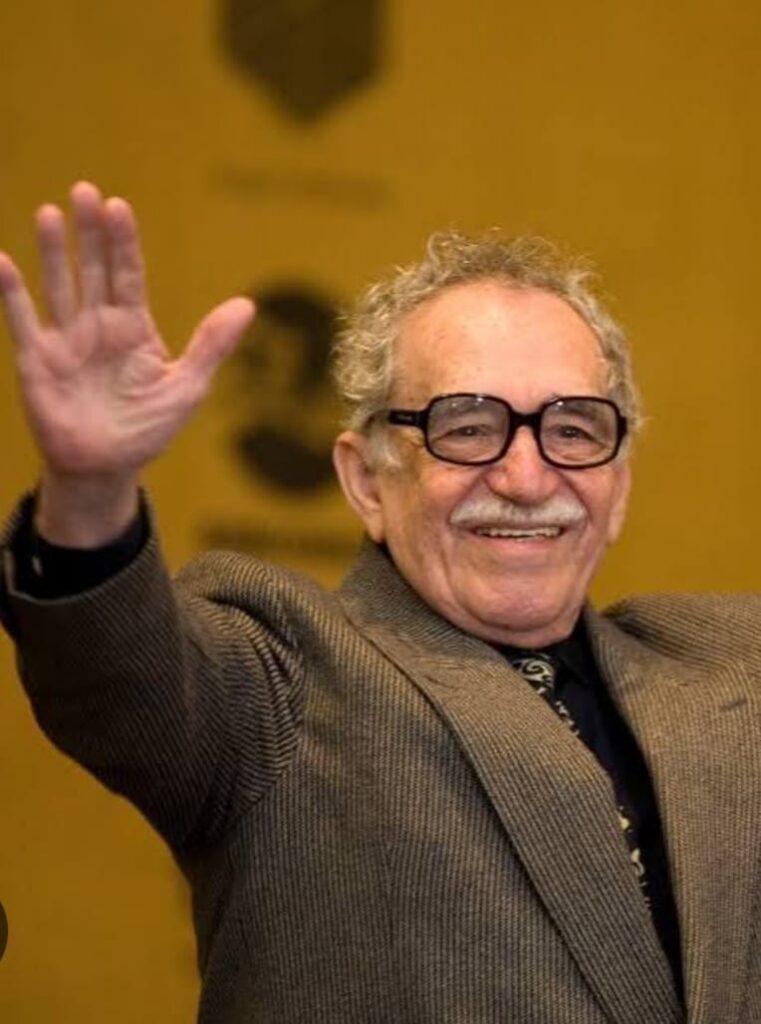
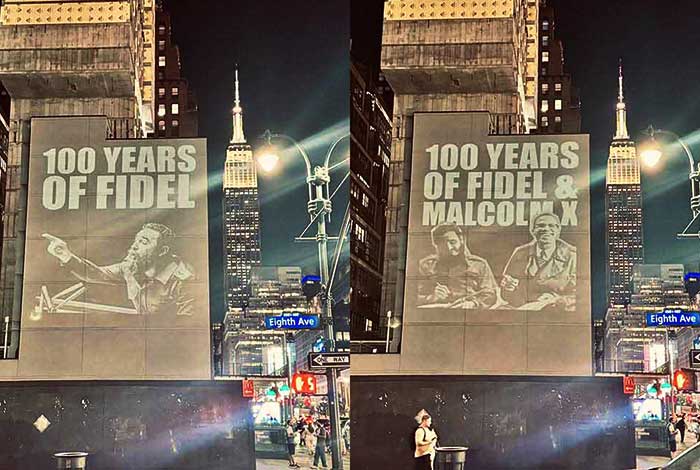
On the centenary of Fidel Castro, a rereading of The Autumn of the Patriarch by Gabriel García Márquez, his close friend and confidant.
“A revolution is not a bed of roses. A revolution is a struggle between the future and the past.” — Fidel Castro
It hardly needs to be said that the history of Latin America is steeped in blood and tears. On one side stood the colonial rule of imperial powers; on the other, dictators who fed upon the blood and suffering of their own people. Together, they completed a grim political landscape. Twentieth-century Latin American literature responded to these realities with extraordinary force, giving rise to a remarkable body of works that came to be known as the dictator novels.
Miguel Ángel Asturias’s The President was published in 1946. Nearly three decades later came I, the Supreme by Augusto Roa Bastos. These works must also be understood against the backdrop of a Latin America undergoing profound and often turbulent political transformations. It was in a similar historical moment that Eduardo Galeano’s monumental study Open Veins of Latin America emerged. Gabriel García Márquez’s The Autumn of the Patriarch, published in 1975, belongs to this same tradition. Márquez sought, with extraordinary literary force, to expose the terror of absolute power and to lay bare the psychological world of dictators.
Friendship and Self-Examination
Now, as the centenary of Fidel Castro invites reflection, a rereading of Márquez’s novel can summon not merely memories of another era but also a distinctive political relevance. One reason for this lies in the profound friendship that endured for decades between Castro and Márquez.
On one side stood Fidel Castro, the revolutionary who helped liberate Cuba from the rule of the American-backed dictator Fulgencio Batista and from the shadow of imperial domination. On the other stood Márquez, Castro’s close friend and confidant, who, through his fiction, portrayed a dictator imprisoned within the citadel of power, gradually consuming and destroying himself from within.
Taking these two contrasting realities as a point of departure, this essay attempts to examine Márquez’s novel alongside the complex trajectory of Castro’s life in power. The Autumn of the Patriarch was also a work for which the world had been waiting with great anticipation following Márquez’s celebrated One Hundred Years of Solitude. Rather than portraying any one particular dictator, Márquez largely turns his attention to the broader condition of dictatorship that had convulsed Latin America as a whole, and to the psychology that sustains such absolute power.
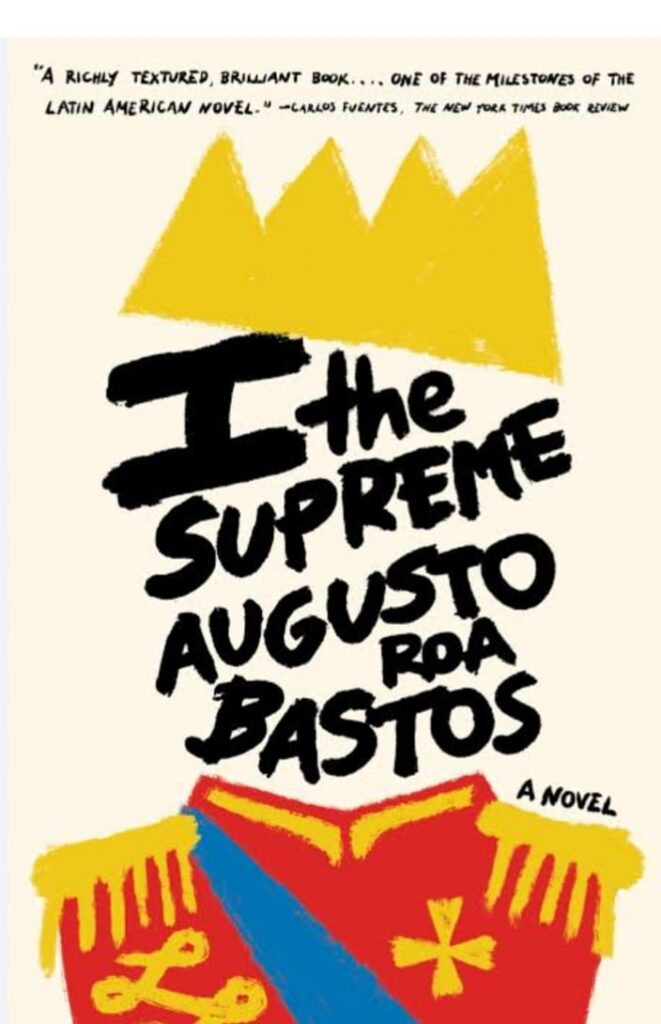
“The dictator is the only mythical figure that Latin America has produced; his stature is monumental and his solitude total.”
Magical Realism as a State of Mind
Unlike conventional novels, Márquez wrote this book in extraordinarily long sentences, with remarkably little punctuation. At times, an entire chapter unfolds within the span of only one or two sentences. The present and the past, the characters’ thoughts and their spoken words, continually merge into one another. This narrative technique draws the reader directly into the dictator’s delirious mental state—his hallucinations, disorientation and fractured perception of reality.
Despite standing at the very pinnacle of power, the General is utterly alone. He becomes increasingly isolated from both his people and his own followers. Haunted by an unnamed fear, he wanders through the palace at night, securing its doors with iron locks, as though seeking protection from an enemy that may exist as much within his own mind as outside it.
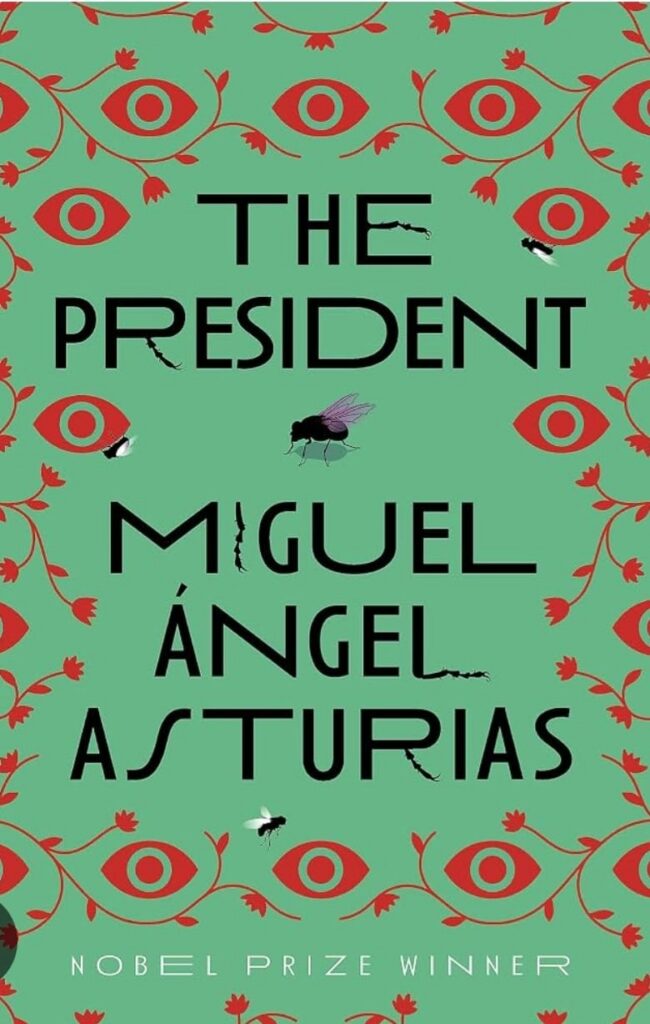
“Over the weekend the vultures got into the presidential palace by pecking through the screens on the balcony windows…”
The opening passages of the novel contain all the signs of the General’s profound and pathological insecurity. Rather than presenting a leader who has won the hearts of his people through revolution, the novelist depicts the terrifying condition of a dictator who has become so estranged from his people that he ultimately lives and dies in isolation, almost like a hunted animal.
Rule and Resistance: Awakening and Decline
In the history of Latin America, any discussion of dictatorship inevitably brings Fidel Castro’s rule into consideration. Castro came to power in 1959 after overthrowing Batista’s brutal dictatorship through the Cuban Revolution. His rule and political influence have been assessed critically by historians and observers, even while acknowledging the scale of his achievements.
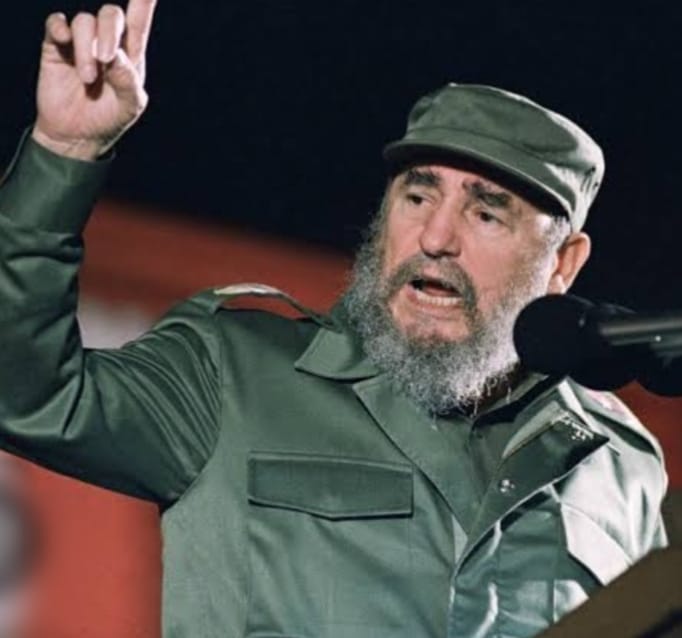
Cuba’s advances in social equality, poverty alleviation, mass literacy, and free, sophisticated healthcare became, in several respects, models for the wider world. At the same time, Castro remained uncompromising in his opposition to imperialism. For decades, he led Cuba from just ninety miles off the coast of the United States, enduring American economic sanctions and repeated attempts at destabilisation. It is worth recalling that the essence of Castro’s famous 269-minute speech at the United Nations General Assembly in 1960 was a powerful critique of American imperialism.
Castro’s international influence was strengthened further by Cuba’s military support for Angola in its struggle against the apartheid regime in South Africa, as well as by Cuba’s deployment of doctors and medical personnel to countries facing humanitarian crises around the world.
Yet critics have also identified elements of Castro’s rule that evoke, in certain respects, Márquez’s fictional General. The most persistent criticisms concerned Cuba’s one-party system and the denial of political freedoms. For nearly half a century, political power remained concentrated in the hands of a single leader and a single party. The imprisonment and suppression of opposition politicians, dissident journalists and political critics cast a shadow over Castro’s historical legacy. Restrictions on press freedom and the existence of political prisoners were widely regarded as human-rights violations, contributing to a more contentious international image of Castro.
Cuba’s waves of emigration and prolonged economic crises also placed enormous pressure on the regime. Political restrictions and economic isolation drove millions of Cubans to leave the country, many risking their lives in search of a different future.
There are, therefore, inevitable points of intersection between Márquez’s General, Batista and Castro—though in very different proportions and historical circumstances. Foreign support and brutal repression define Márquez’s General; Castro, by contrast, emerged from a popular revolution and subsequently established a highly centralised, one-party state. While the General sells the country’s vast resources, almost like an ocean, to foreign powers—particularly the United States—Castro spent much of his political life resisting precisely such imperial intervention.
Márquez’s General is consumed by an insatiable hunger for power, indifferent to the welfare of his people. Castro, in contrast, presided over significant advances in healthcare and education that became defining achievements of the Cuban Revolution. The General lives in fear of his own people, hiding within the palace; Castro, by contrast, was known for directly engaging with and addressing the Cuban public.
Yet there remains an important contradiction. Castro, too, increasingly came to embody aspects of authoritarian rule precisely because dissent and criticism were never fully tolerated under his government. It is in this tension—between revolutionary legitimacy and the concentration of power—that the comparison with Márquez’s General becomes most revealing.
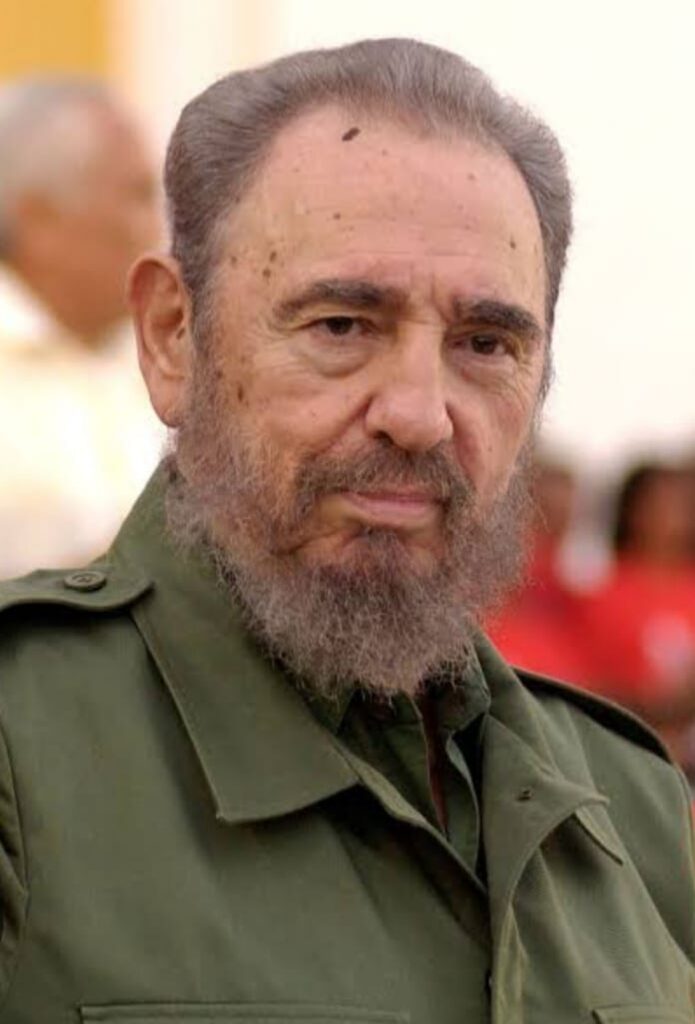
In the novel, the General’s end is ultimately one of complete anonymity: he is reduced to a decaying physical corpse, stripped of the power and identity that once defined him. Fidel Castro, by contrast, remains a profoundly complex historical figure; admired and respected across much of the world, yet equally criticised for the authoritarian tendencies that characterised his rule.
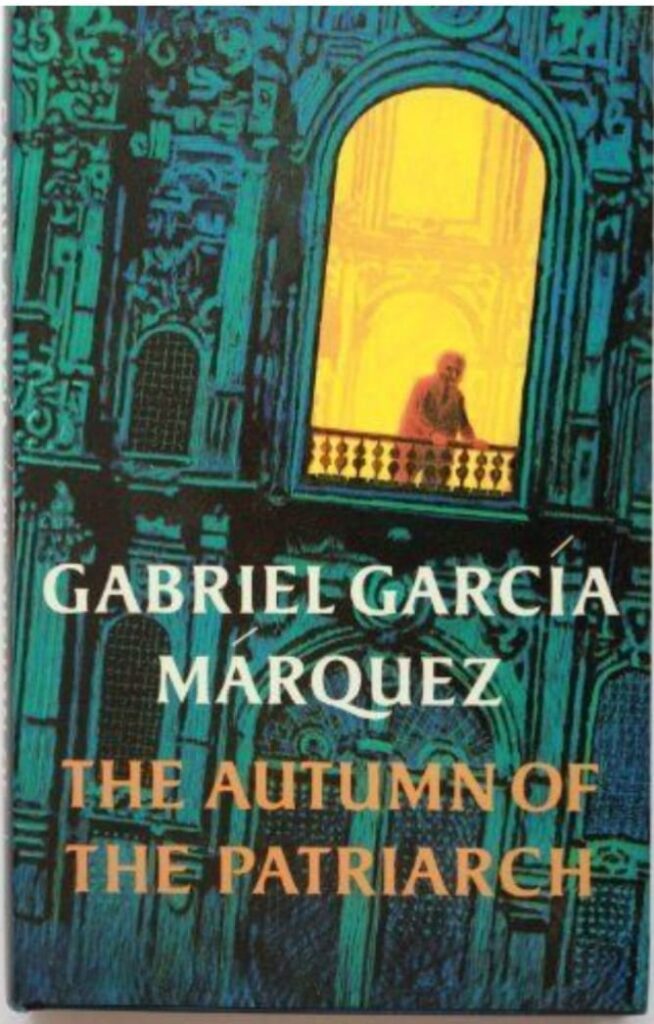
“They carried off the Caribbean in numbered automatic dredges… and left us with this huge plain of harsh lunar dust.”
In one sense, this is an extraordinary instance of magical realism. Yet beneath the absurdity lies a deeply political metaphor: a symbolic representation of the manner in which the natural resources of Third World countries have historically been appropriated and exploited by powerful capitalist nations. It is at this point that the relevance of Castro becomes particularly striking.
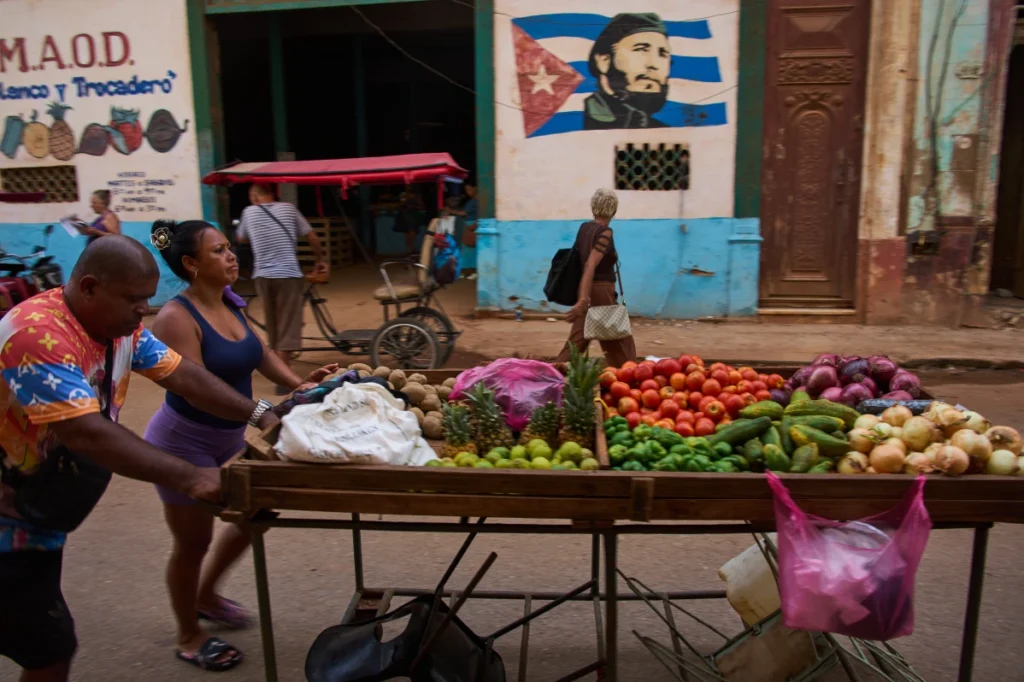
At a time when American corporations were buying up Latin American countries and their resources, Castro could proclaim that Cuba’s land, resources and seas belonged to its people. Yet the democratic rights of those very people were progressively curtailed in the name of defending that sovereignty. That remains one of the darkest chapters of Castro’s rule.
A Literary Testimony
As the title of the novel suggests, what we witness is ultimately the autumn—the decline and fall—of a patriarch, a figure of absolute domination. However firmly a dictatorship may establish itself at a particular moment in history, its power carries within it the seeds of its own destruction. It either collapses under its own weight or is eventually cast out by the people. Márquez writes:
“…and he knew without any doubt that he was going to die without anyone to mourn for him, without anyone to say thank you for the long years of his service…”
The General’s fate dying in fear of his own people, unable even to trust his own shadow, having known neither love nor genuine friendship becomes a warning to dictators everywhere. At the same time, the centenary of Fidel Castro reminds us of another, far more complicated truth: however great a revolutionary a person may be, if prolonged rule comes at the cost of democracy and freedom, history may ultimately remember that person both as a revolutionary and as an authoritarian.
Castro once famously declared:
“Condemn me, it does not matter. History will absolve me.”
The words carry within them Castro’s faith that history would ultimately forgive him and vindicate his actions. Yet whether history has indeed absolved Castro, or instead placed him on trial as an authoritarian ruler, remains an unresolved and deeply contested question.
Gabriel García Márquez’s The Autumn of the Patriarch is, in this sense, a literary testimony to the manner in which the abuse of power can transform a human being into something monstrous.
Reading the novel on the occasion of Fidel Castro’s centenary (August 13, 2026) makes its message to rulers particularly clear: even when undertaken in the name of liberating a people, the path of authoritarianism and repression can never deliver lasting freedom, either to individuals or to societies.
O. V. Vijayan conveyed much the same truth through the figure of Prajapati in Dharmapuranam: the dictator is not a creature confined to one particular time or place; the possibility of the dictator exists everywhere and at all times. The distance between Márquez’s General and Vijayan’s Prajapati, therefore, is not particularly great.
At the same time, it must be acknowledged as a historical fact that we do not encounter in Fidel Castro the same degree of brutality associated with communist dictators such as Mao Zedong, Joseph Stalin, Pol Pot or Kim Il-sung. Equally relevant in assessing Castro is the question of how far the accounts presented by the media particularly the American media can be regarded as wholly reliable.
It is against this complicated backdrop that Castro may, comparatively speaking, come to be described as a “good dictator.” Yet Márquez’s portrayal of the tragic downfall of his fictional patriarch, alongside the positive and negative realities Fidel Castro left behind in history, ultimately points towards one fundamental truth:
Power must always belong to the people even if defining who the people have itself become increasingly complex and elusive and never to a single individual or a dictator.



This is a powerful and deeply relevant reflection on dictatorship, revolution and the corruption of power. Reghunathan Parali’s comparison of García Márquez’s fictional dictator with Fidel Castro reminds us of a timeless truth: a revolution may begin in the name of the people, but power must never become the property of one person or one party. Democracy, dissent and freedom are the real tests of any revolution.
Thanks for the feedback.
-reghunathan parali
Hello Sri Reghu,
Ultimately Castro’s memory will be that of a benevolent Dictatorship; Yes it’s true that arresting and keeping in Jail, political prisoners and the other various similar activities which are the hall marks of an authoritarian government, was being practiced in CUBA , somehow I don’t remember personal enrichment as part of Castro’s legacy. You can correct me on this. When I read that Castro himself has read the AUTUMN OF THE PARTRIACH, I smiled inwardly. As you have rightly pointed out, when compared to the communist dictators such as Mao Zedong, Joseph Stalin, Pol Pot or Kim Il-sung,Barbarianism was never part of Castro Rule. Similarly ROMANIA’s last leader Ceaușescu, who had to face a firing squad, was known for his extremely opulent lifestyle. So CASTRO remains an unparalleled leader, who stood up to Western imperialism. Was he a product of his times ? Absolutely ! If Castro was never there, a replica would have to be born ! Ultimately Castro is an extremely complex person who cannot be seen through a single prism. If you have read till here, Sri Reghu, you would have felt that I am talking of the person Fidel Castro and not the book AUTUMN OF THE PARTRIACH. MY apologies ! Because I have not read THE AUTUMN OF THE PARTRIACH myself, this is the best I can do. Castro similarly was influenced by Ernest Hemingway’s novels—particularly For Whom the Bell Tolls—which Castro himself had mentioned led to his own thoughts on guerrilla warfare. I don’t think in our lifetime would another Fidel Castro or Márquez or Hemingway be born. One can surmise that all 3 were products of their times
Happy that you shared your views and observations. Thank you.