

The Century Old School Beneath the Mysuru Memorial: What Exactly Did We Build in Vivekananda’s Name?

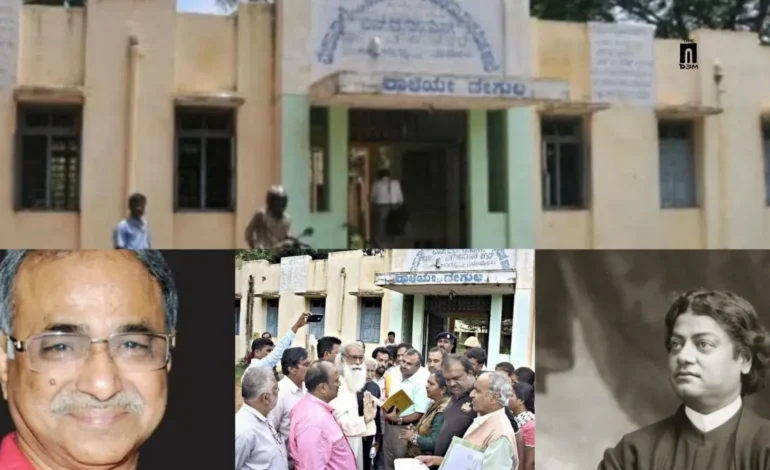
“Friends, Swami Vivekananda believed that educating the youth was a strong foundation for nation-building.” Prime Minister Narendra Modi said these words recently in Mysuru while inaugurating the Swami Vivekananda Cultural Youth Centre, built by the Ramakrishna Ashrama on Narayana Shastri Road, in the heart of the city.
It is a place steeped in Vivekananda’s Mysuru connection. The memorial stands adjoining the historic Niranjana Mutt, where Swami Vivekananda is recorded to have stayed during his visit to Mysuru in November 1892. Spread across about 36,591 square feet, the new memorial is meant to preserve his memory, his ideas and his vision for generations to come.
But there was a history beneath the memorial and words that remained unspoken.

The Prime Minister did not mention that the memorial stands on the very ground where a 140-year-old school once stood, a school that was among the earliest institutions in Asia established specifically for the education of girls. He did not mention that this was the Maharani’s School, established under the patronage of Maharani Kempananjammanni Devi of Mysuru at a time when sending a girl to school was itself a radical act. He did not mention the thousands of girls who had passed through its doors, carrying books in their hands and dreams in their hearts. He did not mention the protests, the petitions, the legal battle, the citizens who stood in the streets, the former students who refused to let their school disappear quietly. He did not mention that when the question arose of building a memorial to Vivekananda on that very land, Mysoreans did not say, “No memorial.” They said, “Let the memorial come. But let the school live too.”
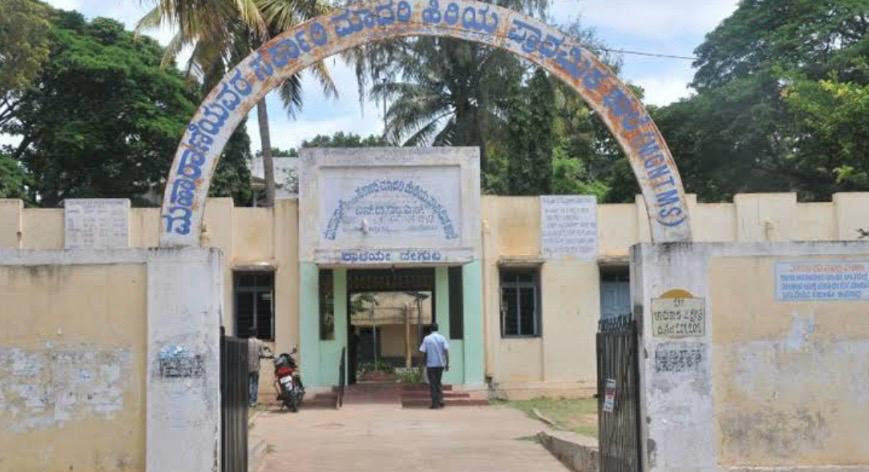
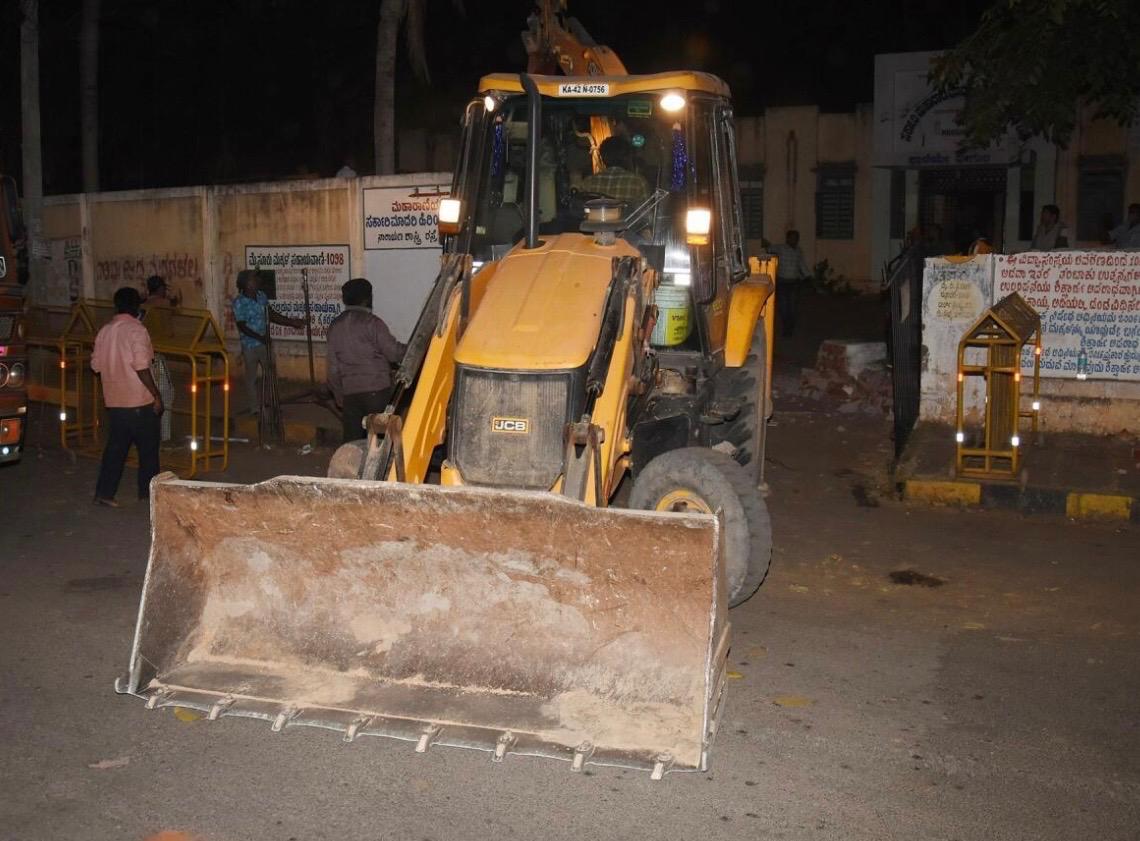
And he certainly did not mention the night when the school was finally brought down under heavy police protection. By morning, the walls were gone. But what disappeared that night was not merely a building. It was a chapter of Mysuru’s educational history. It was a place where generations of girls had learned to read, to think, to dream and perhaps, in their own small way, to believe that they could shape their own future. Today, a memorial stands there in Vivekananda’s name. But beneath it lies a school. And beneath that school lie generations of dreams.
But for the people fighting to save the school, the issue was never simply about opposing a memorial or questioning Vivekananda’s legacy. Their concern was that a historic educational institution should not have to disappear for the memorial to rise. What followed was a prolonged struggle involving former students, parents, citizens, Kannada organisations and social groups, who submitted petitions, held protests and pursued legal avenues in an attempt to find a way for both the memorial and the school to coexist.
The story of how the memorial came to occupy this land also has a political and administrative history. On the occasion of Swami Vivekananda’s 150th birth anniversary, the Ramakrishna Mutt proposed a Vivekananda Memorial and Cultural Centre on the premises of the historic New Type Model School (NTM School). The then BJP government, headed by Chief Minister Jagadish Shettar, approved the proposal in January 2013, paving the way for the project. A 50:50 arrangement was also worked out between the government and the Ramakrishna Ashrama in relation to the development of the site. In the end, however, the assurances that accompanied the project proved hollow: the historic NTM School was demolished, making way for the very memorial that had been proposed on its premises.
As a Mysorean, I carry a very personal sense of grief about what happened. And as the daughter of Rajasekhar Koti, the founder-editor of Andolana newspaper, I cannot think about the NTM School without remembering the people who fought, struggled and stood their ground to save it. Perhaps that is why this story is not merely a piece of Mysuru’s history for me. It is personal.
When I hear the word “education” being spoken from the very place where a historic school once stood, I remember my father, Rajasekhar Koti, and I remember the children he refused to let disappear along with their school.
And whenever I think of the long struggle to save that school, one particular morning comes back to me. It was an ordinary morning, like any other. I was busy getting my children ready for school and attending to the usual household work. It was around 8.30 a.m. when I received a call from Appaji.
“Papu, I’m near your house. Come outside.”
I was surprised. He rarely came to my house at that hour.
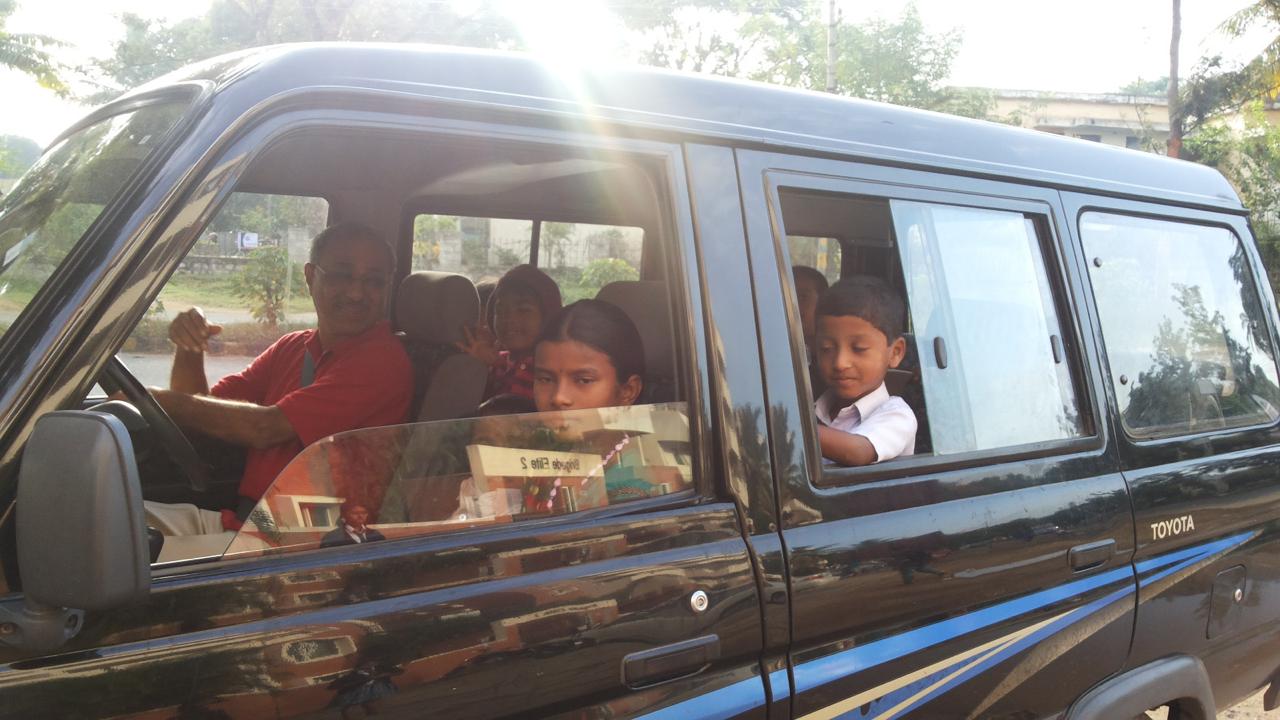
When I stepped out, I saw his Qualis parked in the apartment parking lot. But what caught my attention was not the car. It was what I saw inside it.
The car was filled with school children.
“Appaji, who are all these children?” I asked.
“They are children from NTM School,” he told me.
Their parents, frightened by everything that was happening around the school, had stopped sending them to classes. Appaji feared that if the number of students fell, the authorities would use that as a reason to merge or eventually shut down the school. So he had gone from house to house, met the parents and assured them, “Send your children to school. I will take responsibility for getting them there safely and bringing them back home.”
That morning was the first day he had taken on that responsibility. The children lived around my neighbourhood. He had gone to their homes, picked them up and was taking them to school when he stopped at my house. From that day on, they began calling him affectionately, “Driver Uncle.” Every morning, he picked them up from their homes and took them to school. Every evening, after classes, he brought them back safely.
A few days later, he even arranged a school vehicle at his own expense. For him, it was never merely about transportation. It was about keeping children connected to a school that was slowly being pushed towards extinction. It was his way of saying: You cannot save a school by saving only its walls. You save it by making sure its children continue to walk through its doors. Until the end of his life, Appaji continued that responsibility. He was not merely a supporter of the NTM School’s struggle. He became part of it.
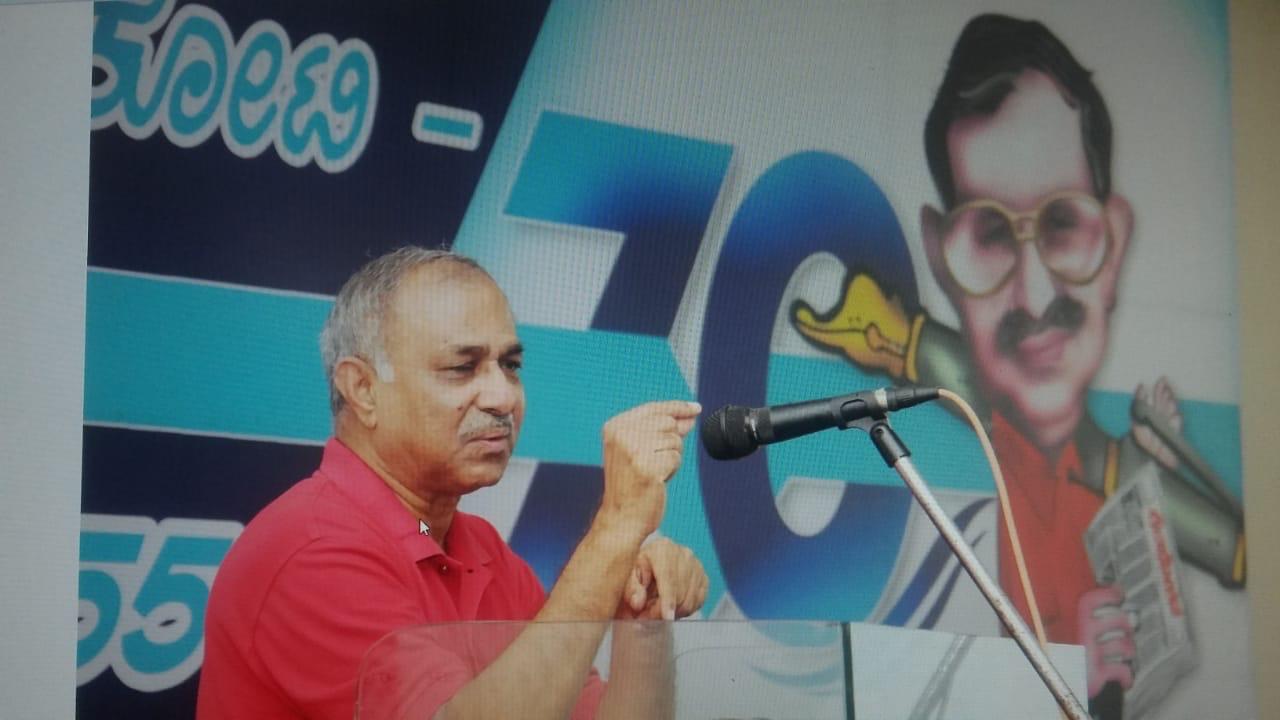
Every development concerning the school appeared in Andolana. Whenever protests were held, he went there and stood with the students, parents and activists. At one point, he even faced confrontation at the protest site. But he did not step back.
He supported the legal battle as well. And Appaji was not alone. Many Mysoreans—former students, citizens, Kannada organisations, progressive thinkers, farmers’ leaders and social organisations—came together to form the NTM School Save Struggle Committee. They organised protests, submitted petitions and held public discussions.
Perhaps the most fitting memorial to Vivekananda would have been a school that continued to educate children.
They were not fighting merely to save an old building. They were fighting to save a history of education. They were fighting to preserve an institution that had opened its doors to girls at a time when society had barely begun to imagine education as their right. They were fighting for the dreams of generations of children.
And that is why, whenever I hear someone speak about Vivekananda’s belief in education and nation-building, I cannot help but ask: If educating the young is indeed the foundation of nation-building, what did we build when we demolished a school to build a memorial?
If Vivekananda believed in awakening the potential within every human being, what kind of tribute is it to erase a place where generations of girls discovered their own potential? If a memorial is meant to keep a great man’s ideas alive, can it truly honour him by burying the very institution that embodied one of his deepest beliefs—education?
I wish the Prime Minister, while speaking about Vivekananda and the power of education, had also spoken about the school that once stood beneath that memorial. I wish someone had remembered the vision of a Maharani who, at a time when educating girls was far from the norm, believed that they deserved a school, a classroom and a future. I wish someone had remembered the girls who studied there. I wish someone had remembered the teachers who taught there. I wish someone had remembered the parents who struggled to keep their daughters in school. And I wish someone had remembered the people who fought until the very end to save it.
Because a memorial can preserve the memory of a man. A school preserves the future of a generation.
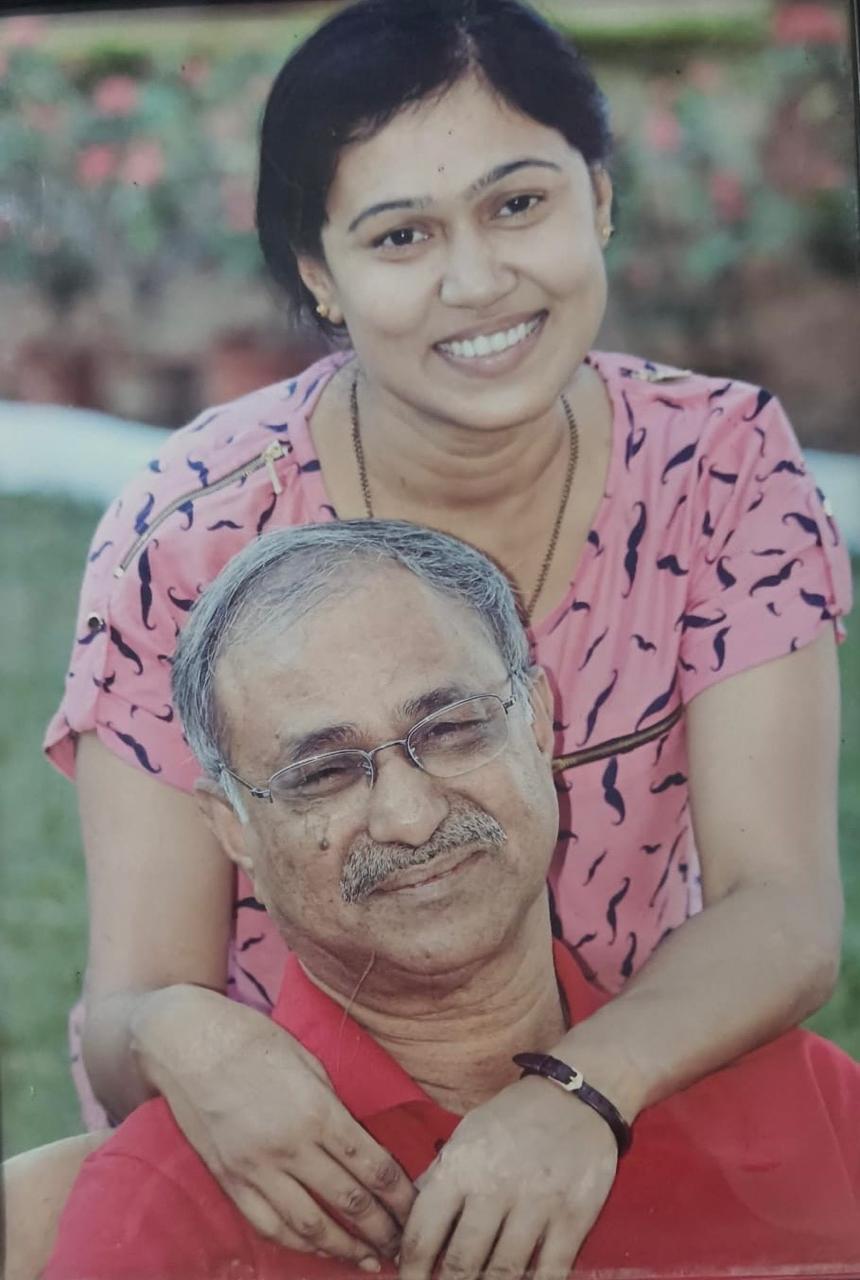
And perhaps that is the greatest irony of all. In Vivekananda’s name, a memorial rose. But in its shadow, a 140-year-old temple of education fell. As a Mysorean, I am sorry that we could not save that school. As Appaji’s daughter, I am sorry that despite all those voices, all those protests, all that resistance, we had to bow down before the inevitable. We lost the battle to save the school.
And somewhere beneath the stone, beneath the silence, I still hear the sound of a school bell and the voices of children calling my father, “Driver Uncle.”








A deeply moving and thought-provoking piece by Rashmi Koti. The demolition of a 140-year-old girls’ school in the name of building a Vivekananda memorial raises a fundamental question: if education and the awakening of young minds were central to Vivekananda’s vision, can we truly honour him by erasing a historic institution of education? A memorial preserves memory, but a school builds the future. This is not just about a building—it is about what kind of values we choose to remember and what kind of future we choose to build.