Potemkin Republic of India?

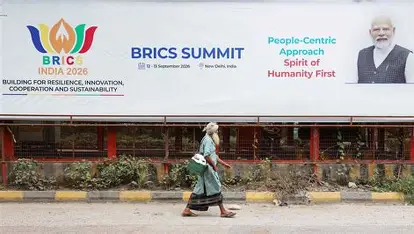
The practice of draping Delhi’s slums behind high curtains for visiting foreign dignitaries during the BRICS Summit reveals how urban governance increasingly privileges cosmetic nationalism over social equity, transforming systemic dispossession into a carefully managed visual spectacle for the global gaze.
In May 1896, outside Moscow, over half a million impoverished subjects gathered on the trench-riddled Khodynka Field to celebrate the coronation of Czar Nicholas II. Drawn by the promise of free bread, pretzels, and commemorative enamel cups, the destitute crowd surged in desperation, sparking a catastrophic stampede that trampled over 1,300 people to death. Yet the defining horror of the Khodynka tragedy was not merely the loss of life, but the imperial court’s callous aesthetic priority: refusing to let peasant deaths interrupt the diplomatic choreography, the Czar attended a lavish ball at the French embassy that very evening, dancing while carts were still hauling away corpses. To the Romanov dynasty, maintaining the pristine spectacle of imperial grandeur before visiting European nobility mattered vastly more than the starvation and blood of its own people.

A century earlier, Field Marshal Grigory Potemkin had codified this instinct into statecraft, erecting hollow, painted village facades along the banks of the Dnieper River to shield the eyes of Empress Catherine II from the agrarian misery of annexed Crimea. While history chronicled these Russian episodes as cautionary tales of authoritarian vanity, their foundational ethos has not vanished; it has merely migrated. In the contemporary capital of the world’s largest democracy, the twin ghosts of Khodynka and Potemkin have found an acute, physical reincarnation.
Ahead of another high-profile multilateral (BRICS) summit in New Delhi, municipal authorities moved swiftly under cover of night. Along the arterial stretches of Nelson Mandela Marg and Munirka Marg in South Delhi, ten-foot-tall plastic sheets—dyed white and purple—were erected to fence off Coolie Camp, an informal settlement housing nearly three hundred working-class households. During the previous G20 Summit, the very same settlement had been walled off behind green tarpaulin. The driving philosophy remains unchanged from 1896: the state must project a frictionless image of global prestige, and that curated illusion requires the enforced invisibility of the poor.
The Aesthetics of Exclusion
Urban planning in modern India has increasingly ceased to function as a vehicle for equitable civic welfare; it has been repurposed as a medium of visual choreography. When international delegations land, the host city ceases to belong to its inhabitants. Instead, public geography is partitioned into sterile theatrical corridors designed strictly for the high-speed vantage points of motorcades travelling at eighty kilometres an hour.
This spatial quarantine carries a bitter, visceral irony. Coolie Camp does not shelter an idle fringe detached from the city’s economic life; it is the primary domicile of municipal sanitation workers. These are the very women and men whose unremitting manual labour sweeps the avenues, cleans the stormwater drains, and manicures the flowerbeds that foreign dignitaries admire from air-conditioned sedans. In the calculus of summit diplomacy, the state eagerly exploits their labour to stage an immaculate capital, but immediately criminalises their physical existence.
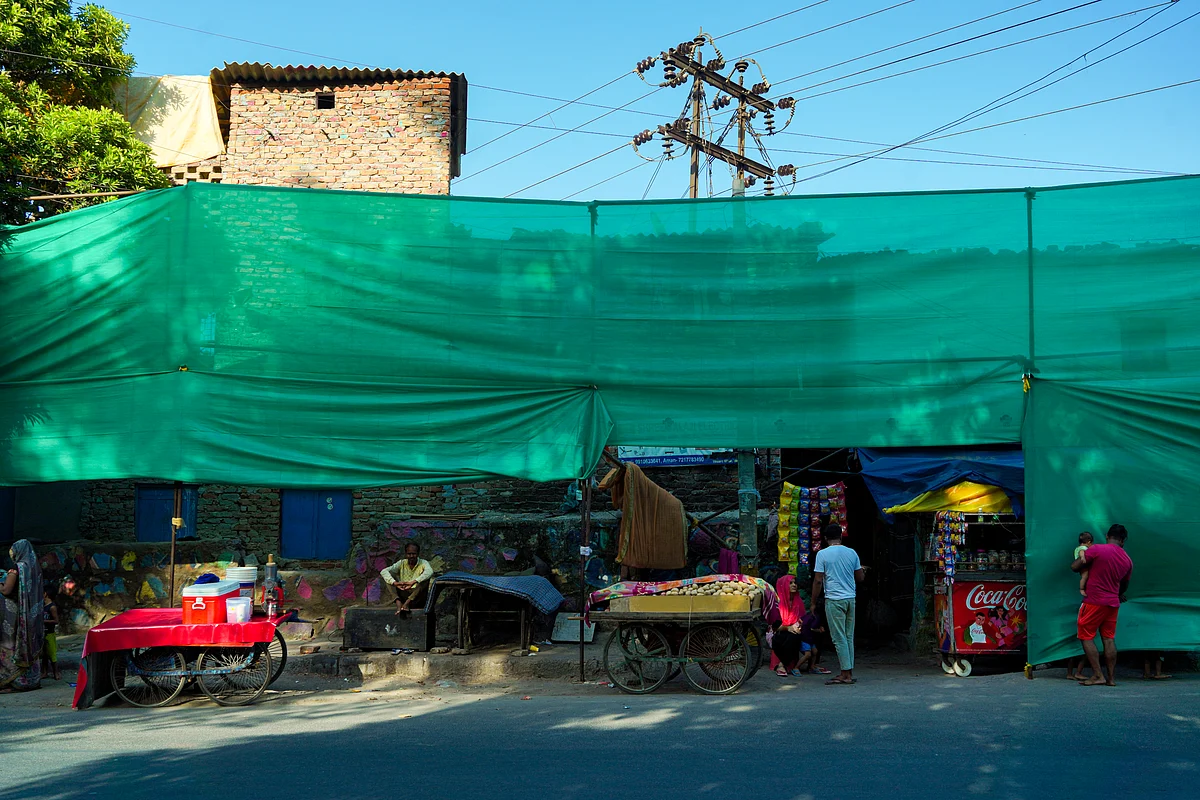
By cordoning off the perimeter and restricting movement to two heavily policed access points, the administrative apparatus did not merely obscure a sightline; it imposed an informal carceral regime on citizens who carry voter identity cards, hold ration entitlements, and possess an inalienable constitutional right to freedom of movement. As an aggrieved resident pertinently observed, if poor labourers are viewed as civic waste that must be swept beneath a decorative rug, on what moral authority does the political class court their franchise with folded hands during elections? The question cuts straight to the paradox of our electoral democracy: the working poor are courted as decisive numerical majorities at the ballot box, only to be barricaded as an architectural embarrassment the moment the votes are counted.
Manifestation of Economic Violence
To confront the sheets of Nelson Mandela Marg is to confront the political economy of contemporary India. What unfolded in Vasant Vihar is not a localised bureaucratic lapse, but the physical manifestation of structural economic violence documented by empirical economists and international observers alike.
In its successive inequality reports, Oxfam has repeatedly highlighted India’s grotesque distributional chasm: the top 1% commands over 40% of national wealth, while the bottom 50% survives on roughly 3%. The ten-foot curtain along the arterial road represents the physical boundary of this exact distribution curve. On one side lies an affluent diplomatic enclave, surrounded by luxury shopping arcades and private estates; on the other sits a densely packed settlement deprived of basic piped sanitation, secure housing tenure, and potable water. The curtain enables the state and its elite visitors to inhabit the world of the top percentile exclusively, unburdened by the moral discomfort of witnessing the bottom 50%, whose under-compensated labour subsidises that comfort.
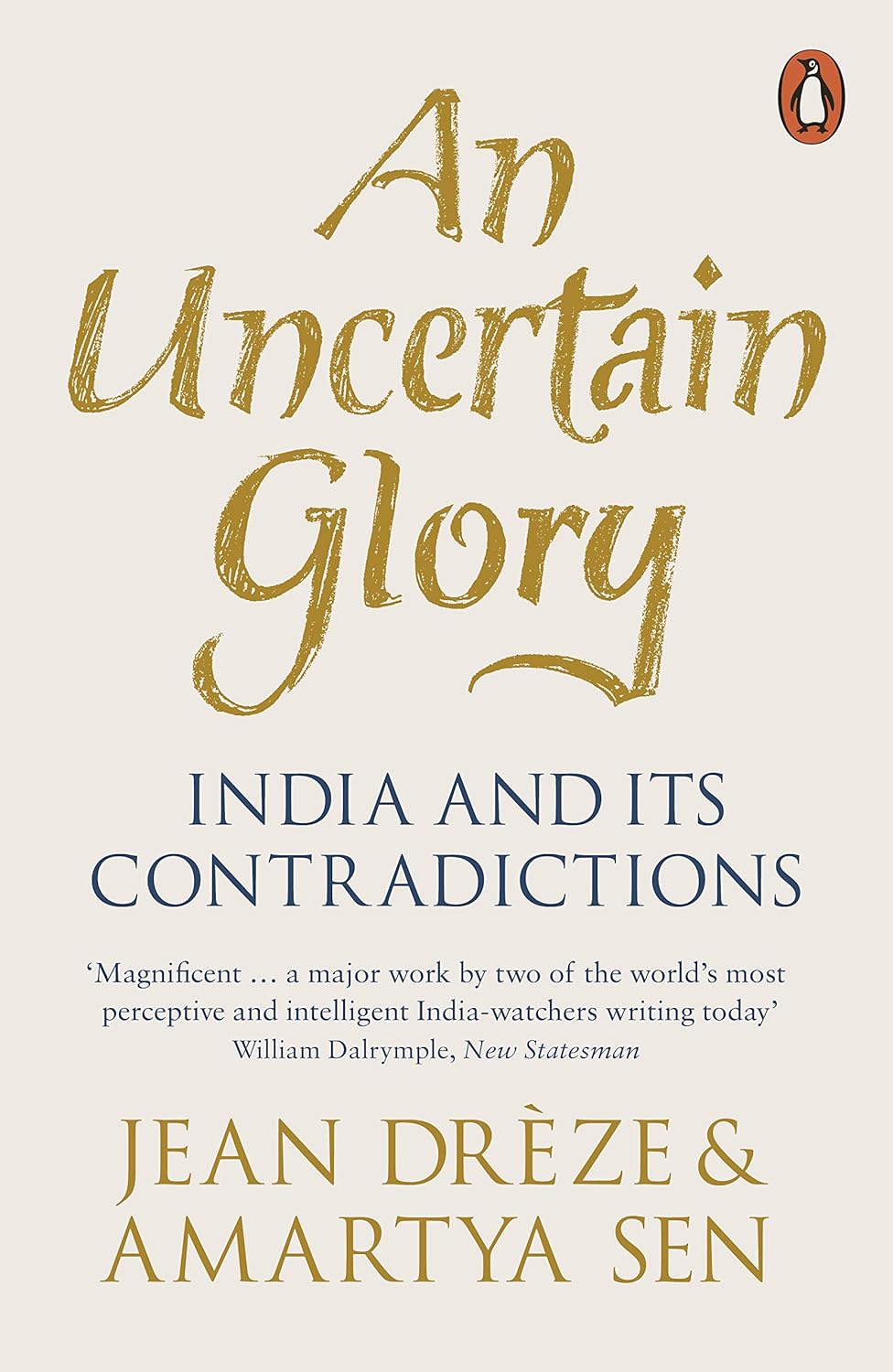
This visual partition lays bare what Amartya Sen and Jean Drèze have long critiqued as India’s acute “growth fetishism”—the tragic delusion that high GDP numbers can substitute for the expansion of basic human capabilities. In An Uncertain Glory: India and Its Contradictions, Sen and Drèze dissect how an extraordinary boom in headline wealth has been decoupled from public investment in elementary healthcare, public schooling, nutrition, and basic sanitation. The result is the entrenchment of “Two Indias”, where an affluent minority enjoys OECD-level living standards while the majority endures social deprivations comparable to those in poorer sub-Saharan nations. The curtain along Nelson Mandela Marg is the physical boundary of this capability failure: instead of channelling revenues into genuine public infrastructure, the state resorts to scenic design.
Moreover, as Abhijit Banerjee and Esther Duflo demonstrate in their studies on the micro-foundations of poverty, destitution in India is maintained through self-reinforcing systemic traps. The urban poor operate with no margin for error, lacking fair credit, secure land tenure, or social safety nets. Banerjee often highlights how policy failures stem from the toxic intersection of ideology, ignorance, and administrative inertia—where the state prefers high-visibility, paternalistic interventions over responsive institutional design. Slogans like ‘Jahan Jhuggi Wahan Makaan’ (where there is a slum, there shall be a home) routinely dissolve into bureaucratic apathy. The municipal resources squandered on renting kilometres of screening sheets, erecting scaffolding, and policing the perimeter reflect an administrative mindset that prioritises aesthetic containment over lifting citizens out of structural traps.
The Sinister Inversion of the Myth
While the historical comparison with Grigory Potemkin is compelling, what unfolds on the avenues of Delhi represents a far more sinister inversion of the original myth. Potemkin’s deception lay in the fabrication of unearned success; he assembled hollow, painted facades where nothing existed, indulging in an architectural fantasy to deceive an empress into believing development had preceded conquest.

The contemporary Indian state, by contrast, does not invent imaginary abundance; it enforces the violent erasure of existing human beings. It recognises precisely where destitution resides, maps its coordinates along the VIP motorcade routes, and drops a curtain to extinguish its visibility. This is not the fabrication of an illusion, but the state-sponsored censorship of material reality. Like the courtiers who insisted that the French embassy ball continue while Khodynka was cleared of bodies, the modern state believes that the sensibilities of the foreign dignitary must be protected from the sight of domestic precarity at all costs.
This aesthetic authoritarianism strikes at the core of our constitutional architecture. Part III of the Constitution guarantees the fundamental right to life with human dignity—a protection the Supreme Court in Olga Tellis definitively interpreted to encompass the right to livelihood and shelter. When public authorities shroud working citizens behind plastic tarpaulins, they deliberately strip them of their dignity, demoting human beings to visual blights. The message sent from the corridors of power is unmistakable: your labour is indispensable to the city’s survival, but your personhood is an affront to its global aspirations.
The persistent impulse to hide the poor behind decorative sheets betrays an acute ideological fragility at the centre of the state’s self-conception. A confident, mature republic does not regard its essential working class as an indignity to be barricaded from international sight; it treats their standard of living as the supreme measure of its democratic legitimacy.
Multilateral conferences are undeniably performative, calibrated to project diplomatic weight and showcase national ambition. Yet, when that ambition requires the physical quarantine of the very citizens who pave the roads and sanitise the avenues, the entire diplomatic edifice becomes morally hollow. The Romanovs discovered too late that a regime which prioritises imperial pageantry over human deprivation ultimately burns down the stage it constructed. No quantity of manicured ornamental palms, illuminated fountains, or ornate communiqués can obscure the profound ethical deficit of a regime that walls off its own workforce.
If India is to authentically realise its claim as a leading global power, it must immediately abandon the politics of the curtain. The true stature of a nation cannot be judged by how efficiently it sanitises the transit routes of foreign dignitaries, but by its courage to confront its internal inequalities directly. Genuine progress cannot be achieved through the deceit of scenic design. Until national policy expands the basic capabilities championed by Sen and Drèze, and dismantles the poverty traps analysed by Banerjee, erecting sheets to conceal our vulnerable will remain an act of institutional cowardice—a confession that our public pride cannot survive an encounter with the truth.