
Forging a BRICS Energy Cooperation: Fault Lines and Implications – 1

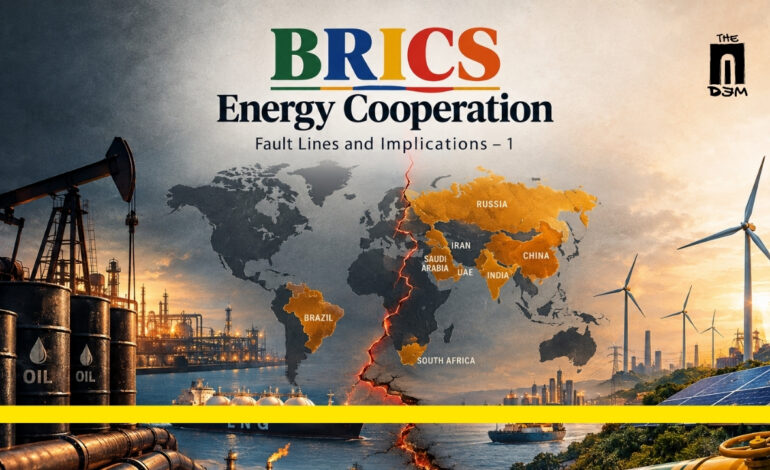
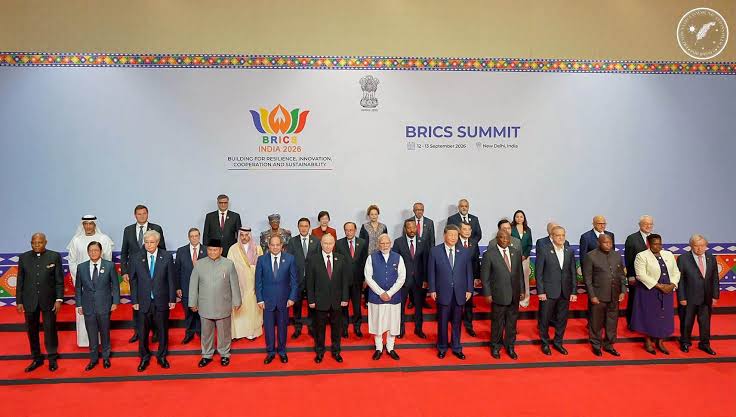
A key topic of discussion at the 18th BRICS Summit held in Delhi was the transformation of BRICS into a robust global energy partnership. The BRICS Energy Cooperation Roadmap 2025–2030, formulated during the 17th Summit, had already laid the necessary groundwork for these discussions. In the wake of the Delhi Summit, policy think tanks in member nations—including India—have been actively shaping public discourse on this subject. Online dialogues and articles in the print media are being strategically planned to foster consensus in this direction.
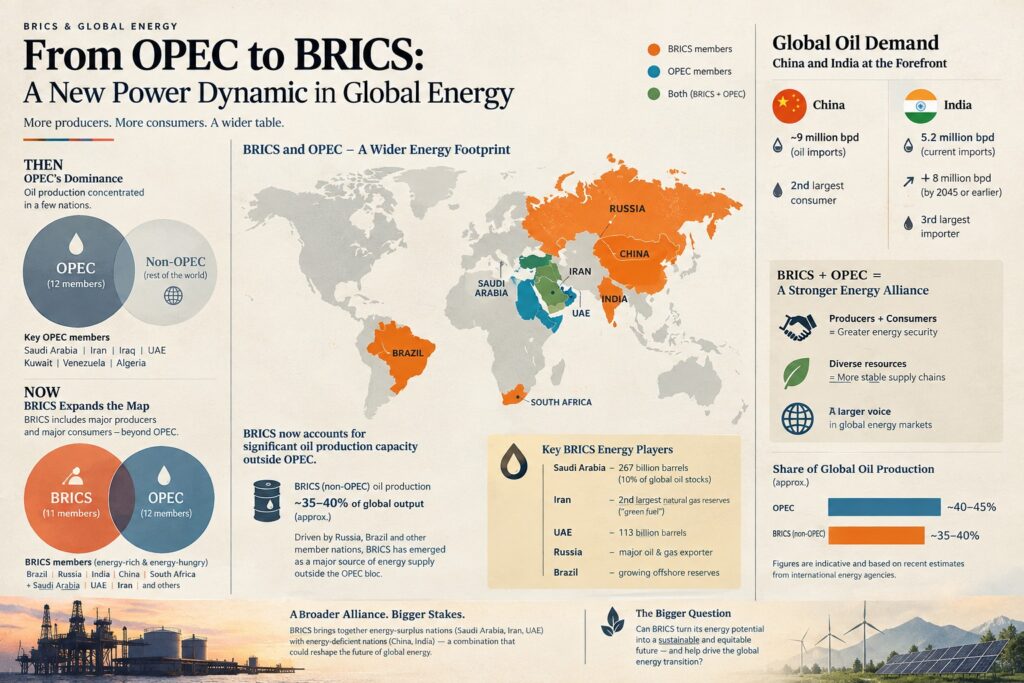
The core argument underlying these discussions is that the BRICS alliance holds the promise of a bright future for energy security among its member nations, including India. The momentum behind the consensus to form this new energy partnership stems from the fact that, apart from the United States—the world’s largest oil producer and consumer—BRICS is the only grouping that simultaneously encompasses major producers such as Saudi Arabia and Russia, as well as major importers such as China and India. BRICS includes nations such as Saudi Arabia, which holds 267 billion barrels of crude oil reserves and accounts for 10 per cent of global oil stocks; Iran, the owner of the world’s second-largest reserves of natural gas (often termed ‘green fuel’); and the UAE, with reserves of 113 billion barrels. It is against this backdrop that many view the BRICS alliance as a new energy powerhouse.
China and India are two key BRICS members with massive demand for oil and natural gas. Ranking second and third globally in oil consumption and imports respectively, both nations are currently at the forefront of global demand for hydrocarbon fuels. India, which currently imports 5.2 million barrels of oil per day, is projected to reach an import level of 8 million barrels per day by 2045 or earlier. Meanwhile, China’s current oil imports stand at approximately 9 million barrels per day.
This highlights the significance of the BRICS energy alliance, which brings together energy-surplus nations such as Saudi Arabia, Iran and the UAE with energy-deficient nations such as China and India. At the BRICS foreign ministers’ meeting held in May 2026, a proposal was put forward calling for “just, inclusive, orderly and equitable energy transitions, in line with national circumstances and development priorities.” This implies achieving a managed energy transition through the diversification of energy sources and the establishment of sustainable supply chains.
The reality, however, is that the vision of a ‘BRICS Energy cooperation’—championed by energy policy experts, including those from India—faces numerous practical and geopolitical challenges.
The potential of this alliance is constrained by the fact that BRICS is not a unified bloc like OPEC or OPEC+, and that the member nations hold widely divergent interests. While major oil and gas exporters such as Saudi Arabia, Russia, Iran, the UAE and Brazil prioritise high budget revenues and stable demand, major importers such as China and India prioritise affordable, reliable supplies and price stability. This disparity increases the likelihood that tensions among member nations could escalate at any time. Border disputes among member nations—particularly between India and China—further complicate coordination efforts.
India’s stated energy policy is grounded in the concepts of multipolarity and diversification. The policy outlines an approach that applies equally to technology, investment and energy security. In this context, multipolarity implies relying on a variety of sources to meet energy needs, while diversification refers to expanding the scope of renewable energy forms. However, placing excessive emphasis on platforms such as the BRICS energy alliance carries a significant risk of adversely affecting future energy security.
The aim here is not to analyse the practical challenges or potential geopolitical crises facing the concept of BRICS energy cooperation. Instead, the objective is to explain how this cooperation might impact the process of ‘decarbonisation’—a global consensus that is emerging to address contemporary challenges such as the climate crisis.
(To be continued)
Next Part “The BRICS Energy Cooperation and Decarbonisation” will be published soon.
Click here to join our WhatsApp group for latest updates.