


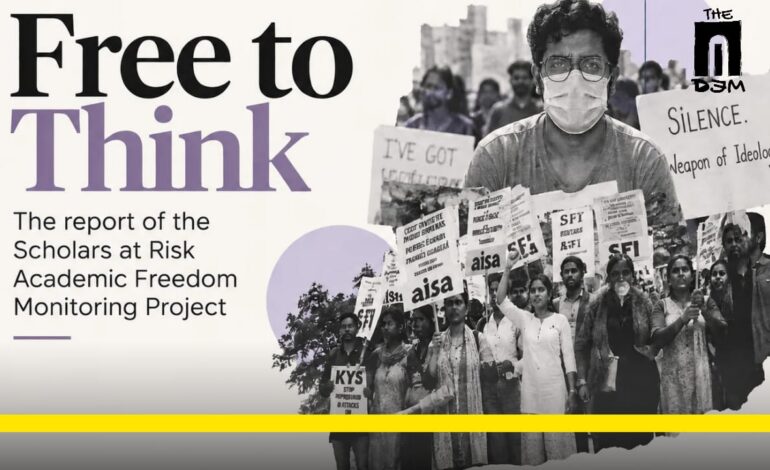
The ‘Free to Think 2026’ report by Scholars at Risk (SAR), which examines the challenges confronting the academic sector worldwide, provides a detailed account of the various problems facing India’s academic sphere. Based on the period from 1 July 2025 to 30 June 2026, the study rates academic freedom in India as “severely restricted.”
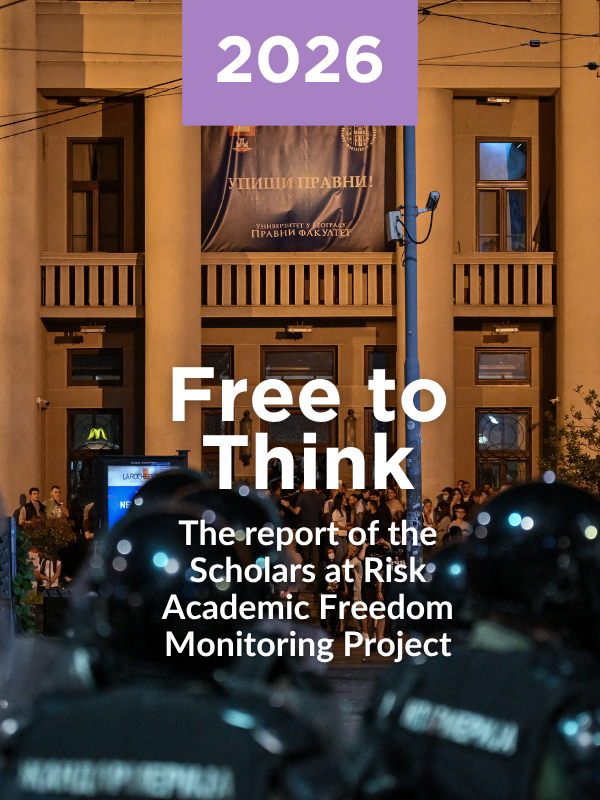
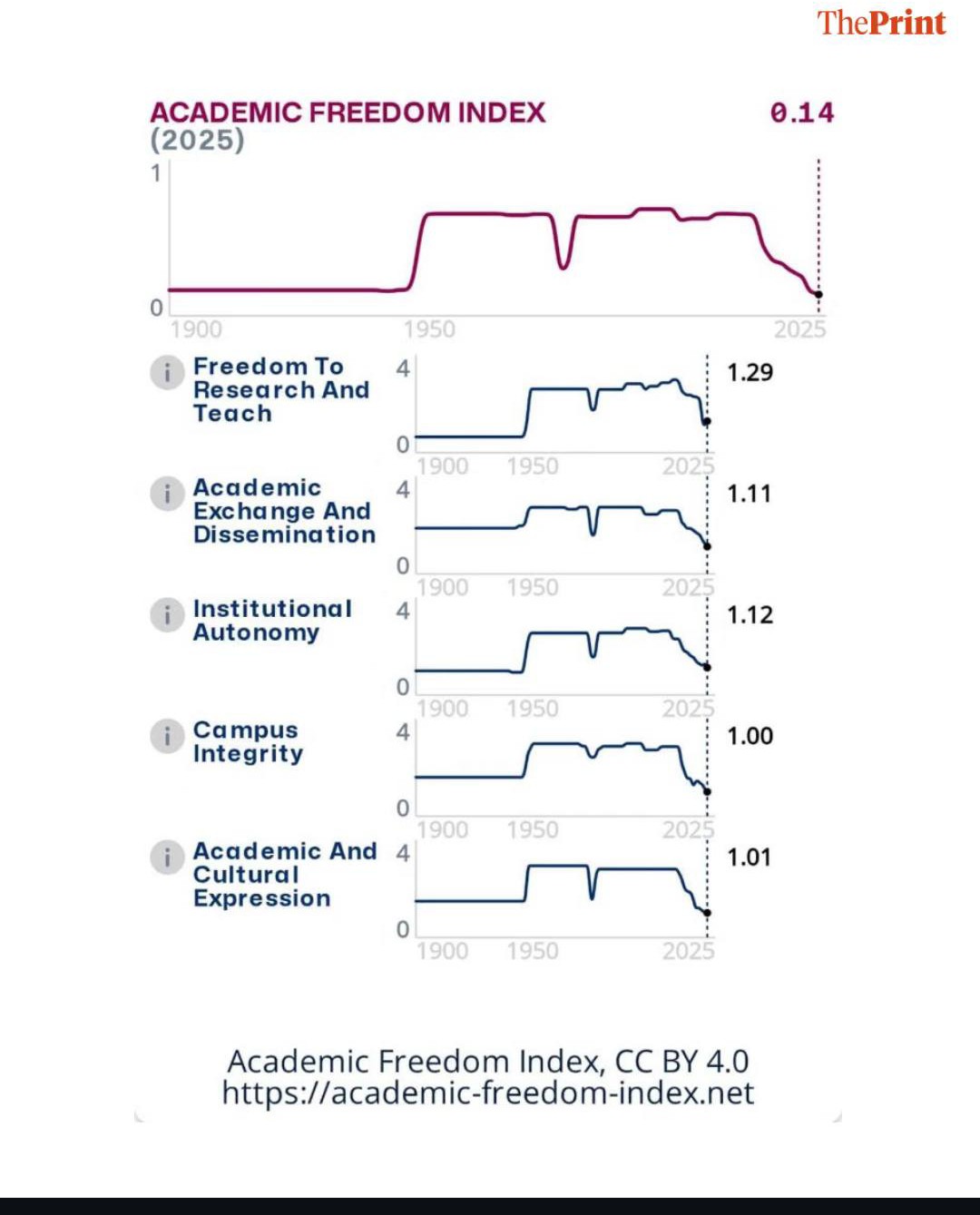
The report notes that the Academic Freedom Index (AFI) score has declined from 0.16 in 2024 to 0.14 in 2026. It attributes this drop primarily to the stringent restrictions imposed on research and teaching since 2022. Detailed indications on this subject appear in the India-specific section (pages 52–54) of the chapter titled “Regional Pressures on Higher Education Communities” in the approximately 130-page report.
India is identified as one of 22 countries displaying concerning trends in the academic domain. The report points to government interference in university operations that weakens institutional autonomy (for example, by influencing governance, curricula, and administration), as well as police excesses against student protests, as instances of direct repression.
The report describes the Indian situation as follows: The central government under the ruling Bharatiya Janata Party has expanded its authority over higher education. It has employed the University Grants Commission (UGC) as a primary instrument of influence. This includes policies that relax academic qualification norms for vice-chancellors and accelerate the casualisation of academic labour by removing the 10 per cent ceiling on non-permanent or contract faculty.
According to the report, the restrictions imposed by the government and institutions on research, teaching, and publication include the following:On 11 March 2026, the Supreme Court ordered a ban preventing three academic experts from receiving public funds related to curriculum development. These scholars had collaborated with the National Council of Educational Research and Training (NCERT) on a middle-school social science textbook that referred to “corruption in the judiciary.” The Court observed that this projected a negative image of the judicial system. The textbook was banned, and one academic (Michel Danino, a guest professor at IIT Gandhinagar) was removed from his position. The Court later modified the ban on 22 May 2026, allowing universities to decide independently on future involvement.

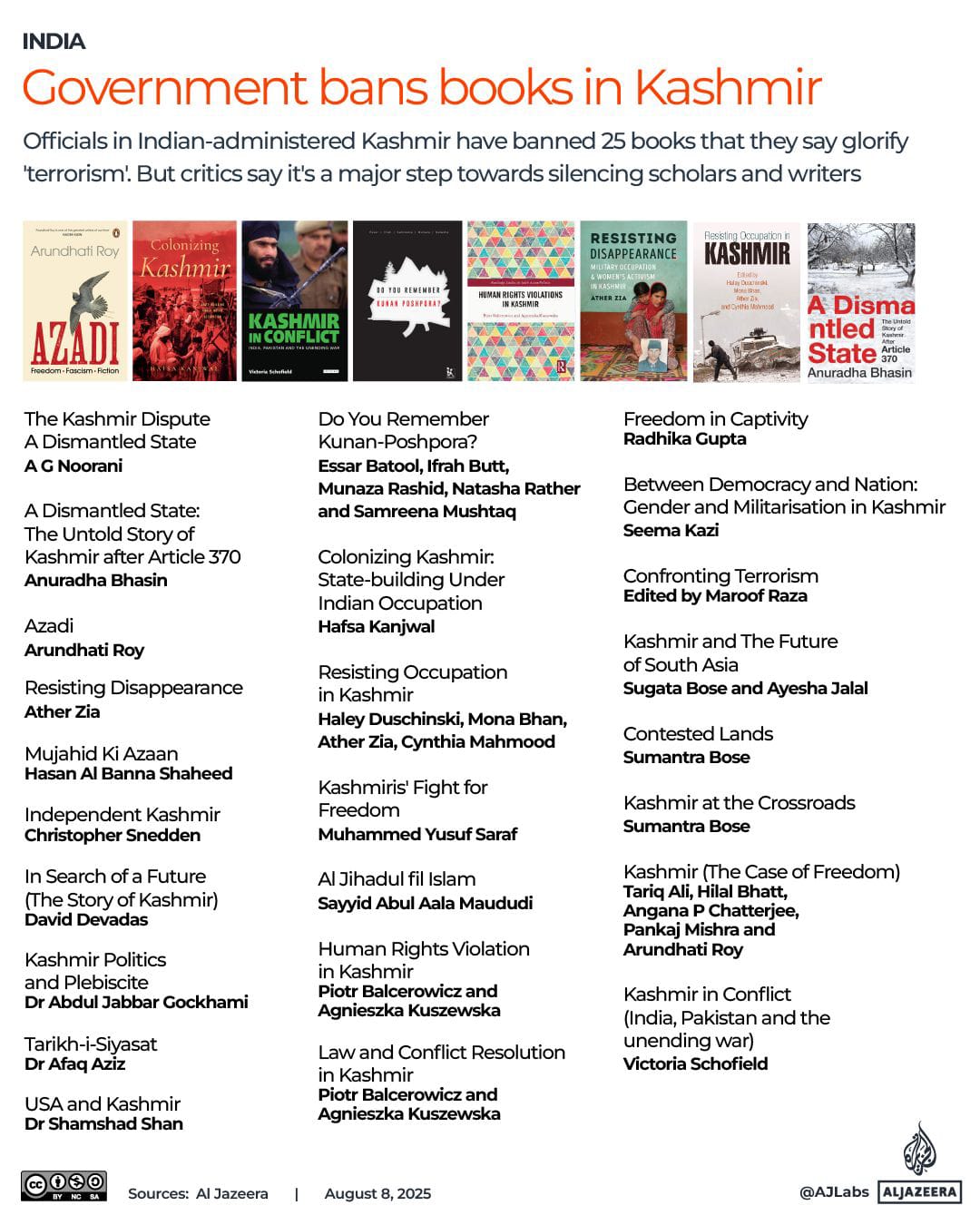
The Jammu and Kashmir government banned the sale, distribution, and possession of 25 books written by scholars, historians, and journalists that address Kashmir’s socio-political history, including enforced disappearances and feminist resistance.
Through dismissals, event cancellations, and policies restricting student expression, university authorities imposed various controls and suppressed dissent. South Asian University terminated Professor Snehashish Bhattacharya in September 2025 (following a two-year suspension) for “misconduct against university interests.” The charge stemmed from his having signed, along with others, a 2022 letter criticising the university’s handling of student protests.
SRM Institute of Science and Technology dismissed Assistant Professor Lora Santhakumar over WhatsApp status updates opposing war and criticising civilian deaths resulting from Indian military action in Pakistan.
Jamia Millia Islamia suspended Professor Virendra Balaji Shahrae for an examination question that asked students to discuss “atrocities against Muslim minorities in India.”
Universities such as Banaras Hindu University and Mumbai University cancelled lectures because of speakers’ criticisms of the BJP-led government. Delhi University cancelled a seminar on “Land, Property and Democratic Rights,” citing “administrative reasons.”
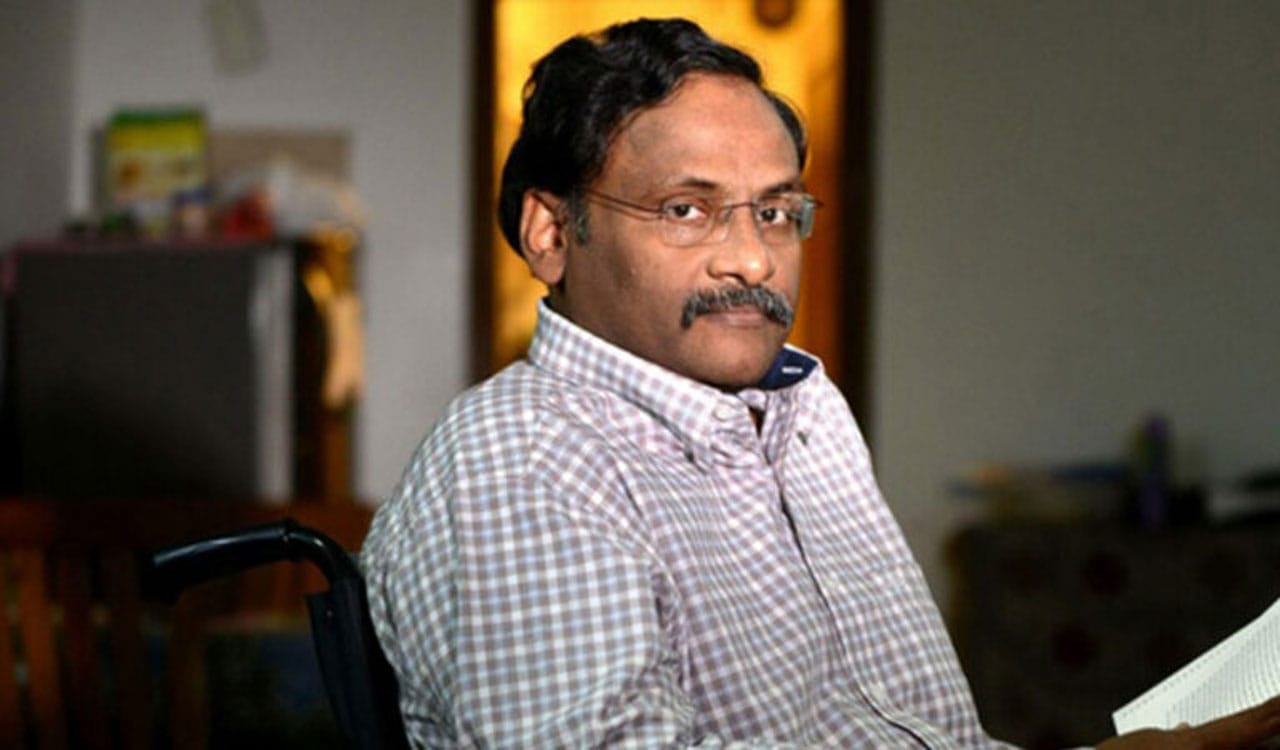
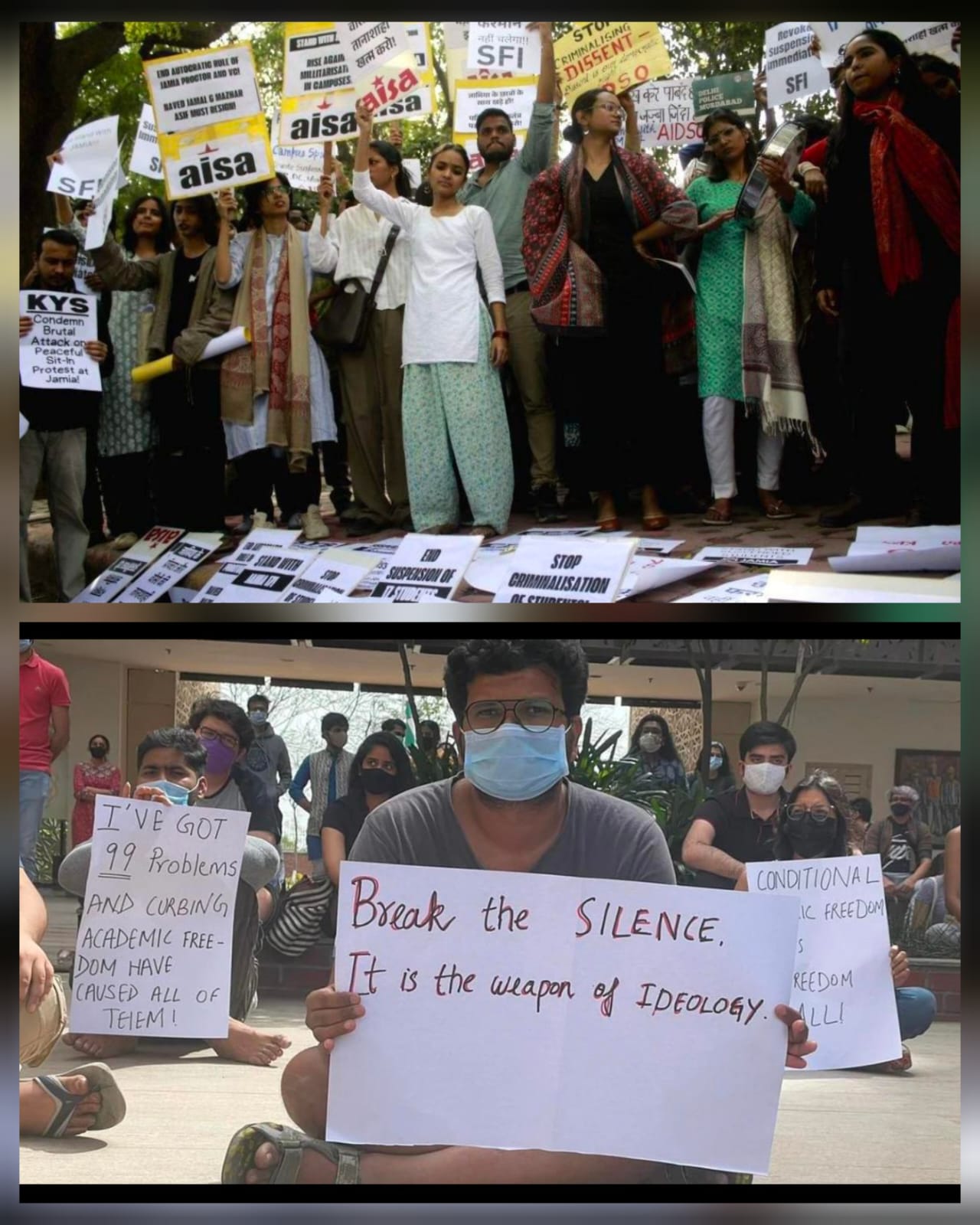
Student protests and campus conflicts faced pressure from authorities, the police, and opposing student organisations (particularly the political polarisation between the right-wing ABVP and left-wing groups such as AISA and NSUI). Institutions including the Tata Institute of Social Sciences (TISS) and Jamia Millia Islamia treated peaceful protests as punishable. For instance, TISS filed a police complaint over a memorial event for academic and activist G. N. Saibaba, leading to charges of unlawful assembly and promoting enmity; Jamia issued show-cause notices in connection with a demonstration marking the anniversary of the Citizenship Amendment Act.
Delhi University imposed a temporary complete ban on public meetings, rallies, and demonstrations (affecting cultural programmes and press conferences as well). It later made prior permission compulsory 72 hours in advance, warning that violations could result in expulsion or police action.
At Azim Premji University, non-student ABVP activists disrupted a discussion event (involving wall writings, slogan-shouting, and an alleged assault attempt); organisers faced police complaints, and one student was suspended for two years.
Clashes occurred during elections, protests (such as a Palestine solidarity rally), and other events; in some instances, teachers and students were injured. The police used force (including water cannons) and took people into custody against protests related to delayed elections, accreditation, and awareness programmes. There were also reports of the Delhi Police abducting student activists (who were later released).
Overall, the report evaluates these incidents as part of global trends of direct repression and state interference that generate fear, self-censorship, and diminished institutional autonomy. India is included in the list of countries where academic freedom is “severely restricted,” alongside places such as Hong Kong, Indonesia, and Pakistan.






When fear enters the classroom, knowledge begins to lose its freedom. The Scholars at Risk report’s findings on India’s academic environment are deeply concerning—self-censorship, institutional pressure and restrictions on dissent can weaken the very foundations of research and education. Universities must remain spaces where students and scholars can question, debate and think freely. Academic freedom is not a privilege; it is essential to a healthy democracy.